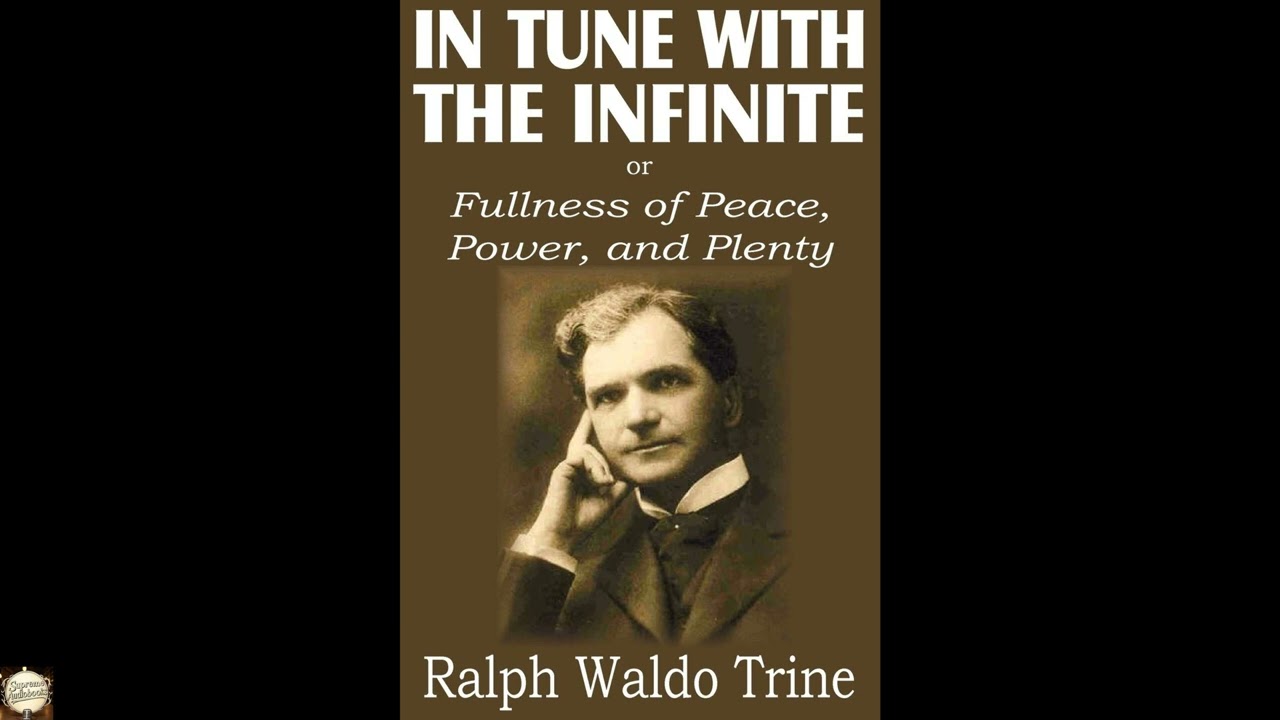
In Tune with the Infinite or Fullness of Peace, Power, and Plenty
Imagine a world where peace isn't merely an absence of conflict, but a tangible, ever-present force within you. Picture possessing power not through dominance, but through a profound connection to an underlying universal energy. Envision a life where plenty—of health, happiness, and material well-being—flows naturally as a consequence of alignment. This is the promise held within Ralph Waldo Trine's seminal work, In Tune with the Infinite or Fullness of Peace, Power, and Plenty. First published at the dawn of the twentieth century, its message resonates profoundly with those seeking solace and strength amidst modern complexities. More than a relic of a bygone era, this book offers a blueprint for personal transformation, a guide to tapping into one's inherent potential and cultivating a life of purpose and harmony. It speaks to the perennial human yearning for meaning and agency, making it as vital a read today as it was over a hundred years ago. The book begins by positing an ultimate, all-pervading divine principle—the Infinite Spirit—that permeates every aspect of existence, from the cosmos to the individual soul. Trine argues that human beings are not separate from this force but are integral parts of it, capable of drawing upon its wisdom and energy. The initial chapters lay the groundwork for understanding this interconnectedness, setting the stage for the book's central revelation: that our thoughts are not mere ephemeral musings, but potent forces that shape our reality. He asserts that the outer conditions of our lives are a direct reflection of our inner mental state, making positive, constructive thinking paramount to achieving desired outcomes. As the narrative of ideas progresses, Trine moves from abstract principles to practical applications. The core conflict he addresses is the widespread human tendency to live in discord with this universal law, allowing fear, worry, and negative thoughts to dictate circumstances. The "arc of the story" for the listener is a gradual awakening to one's innate creative power. Trine systematically dismantles the notion of limitations, guiding the reader through methods for cultivating mental attitudes conducive to health, attracting prosperity, and fostering inner peace. He does not offer a quick fix, but rather a profound philosophical shift, advocating for a deliberate, conscious alignment with the "Infinite" through focused intention, gratitude, and a belief in the inherent goodness of the universe. The book doesn't conclude with a sudden twist, but rather a reinforced sense of empowerment and a clear path forward for those willing to embrace its teachings. The author, Ralph Waldo Trine, was a prominent figure within the burgeoning New Thought movement in America during the late 19th and early 20th centuries. Born in Mount Morris, Illinois, in 1866, Trine’s intellectual curiosity led him through various educational pursuits, including studies at Knox College, Lombard College, and even a brief period at Harvard University. Though he initially considered a career in ministry, his path shifted towards writing and lecturing on spiritual and philosophical topics. His work was deeply influenced by the Transcendentalist thinkers who preceded him, particularly the very namesake he shared, Ralph Waldo Emerson, as well as the emerging psychological theories of the time and various Eastern philosophies. Trine quickly became one of the most widely read and influential proponents of New Thought, a spiritual philosophy that emphasizes the power of positive thinking, the divinity of humanity, and the ability to manifest one's desires through mental effort. His other notable works, such as What All the World's A-Seeking and The Higher Life, further expanded upon the principles introduced in In Tune with the Infinite. He wasn't an academic confined to lecture halls; rather, Trine was a popularizer of these ideas, making them accessible to a broad public. He travelled extensively, giving talks and reaching millions through his books, solidifying his place as a significant voice in the development of American spirituality and self-improvement literature. He passed away in 1958, leaving behind a legacy that continues to shape contemporary thought on personal development. One of the central themes Trine articulates is the power of thought itself. He illustrates this by suggesting that every thought we entertain acts as a magnet, drawing corresponding experiences into our lives. For instance, he discusses how persistent thoughts of illness can subtly contribute to poor health, while a steadfast focus on well-being can foster a more robust physical state. Another core idea is the interconnectedness of all things. Trine frequently uses metaphors of waves in an ocean or branches of a tree to explain that individual consciousness is merely a localized expression of a vast, unified cosmic intelligence. He implies that just as a drop of water contains the essence of the ocean, so too does each person possess the full potential of the Infinite Spirit. This leads naturally to the theme of spiritual abundance. Trine argues that lack and scarcity are not inherent states, but rather reflections of a disconnected mind. He presents the idea that the universe is inherently abundant and that by aligning one's thoughts and intentions with this universal principle, one can naturally attract not just material wealth, but also peace, love, and joy. The book also underscores personal responsibility, placing the onus on the individual to cultivate their inner world. Trine never suggests passive waiting; instead, he champions active mental work and conscious choice as the means to transforming one’s external reality, asserting that peace and power are not granted from an external source, but realized from within. In Tune with the Infinite emerged during a fascinating period in American history, roughly from the late 1890s through the early 1900s. The nation was grappling with the aftermath of rapid industrialization, urbanization, and a significant shift from an agrarian to an industrial society. Many individuals felt increasingly alienated and disconnected from traditional community structures and established religious institutions, which often struggled to address the challenges of modern life. Science was advancing at an incredible pace, sometimes clashing with entrenched dogma, creating a spiritual vacuum for many. This environment fostered a widespread search for personal meaning and control. Movements like Christian Science, Theosophy, and particularly New Thought gained traction by offering alternative frameworks for understanding the universe and humanity's place within it. These philosophies emphasized individual agency, mental causation, and the practical application of spiritual principles to everyday problems like health and finance. Trine’s book arrived at precisely the right moment, offering a hopeful and empowering message that resonated deeply with a populace eager for new pathways to peace, prosperity, and personal fulfillment outside of conventional religious or material pursuits. Listening to In Tune with the Infinite as an audiobook offers a uniquely personal and reflective experience. The spoken word enhances the contemplative nature of Trine's philosophy, allowing his gentle yet powerful assertions to wash over the listener with an almost meditative quality. With a run length of several hours, it's ideally suited for focused listening sessions, perhaps during a quiet morning or a commute, providing ample opportunity to absorb and ponder the concepts presented. The narrator's voice becomes a direct conduit for Trine's earnest and encouraging tone, bringing a comforting consistency to the work. Without the visual distraction of a page, one can more fully immerse in the author's arguments, paying close attention to the deliberate pacing of his ideas and the way he builds his case for a life lived in harmony with the highest good. The experience becomes less about speed-reading and more about thoughtful reception, allowing the profound insights to settle deeply into one's consciousness.
Enjoyed In Tune with the Infinite or Fullness of Peace, Power, and Plenty? A few ways to support us
Audible & Amazon links are affiliate; we may earn a small commission at no extra cost.
About this production
Human narration by a volunteer reader from LibriVox.org, the public-domain audiobook project. LibriVox volunteers record literary works whose copyright has expired in the United States, releasing the resulting recordings into the public domain.
In Tune with the Infinite or Fullness of Peace, Power, and Plenty by Ralph Waldo Tr. The underlying text is in the U.S. public domain. We do not republish any modern copyrighted edition, translation, or commentary.
The 4K cinematic visuals accompanying this audiobook are generated by an AI image model from prompts derived from the source text. No copyrighted photos, paintings, or stock footage are used. AI generation is disclosed on every video on our YouTube channel as required by YouTube's altered/synthetic content policy.
English subtitles are transcribed from the LibriVox recording with OpenAI Whisper. Translations into the 11 other supported languages are produced by Meta's NLLB-200 neural translation model. No human translator's copyrighted translation is used.
Questions about sourcing or rights? See our DMCA & Sourcing policy or contact us.
Enjoyed this audiobook?
If you'd like to own a copy of In Tune with the Infinite or Fullness of Peace, Power, and Plenty or hear a professionally produced edition, the links below help support free audiobook production at no extra cost to you.
As an Amazon Associate we earn from qualifying purchases. Audible / print links are affiliate.