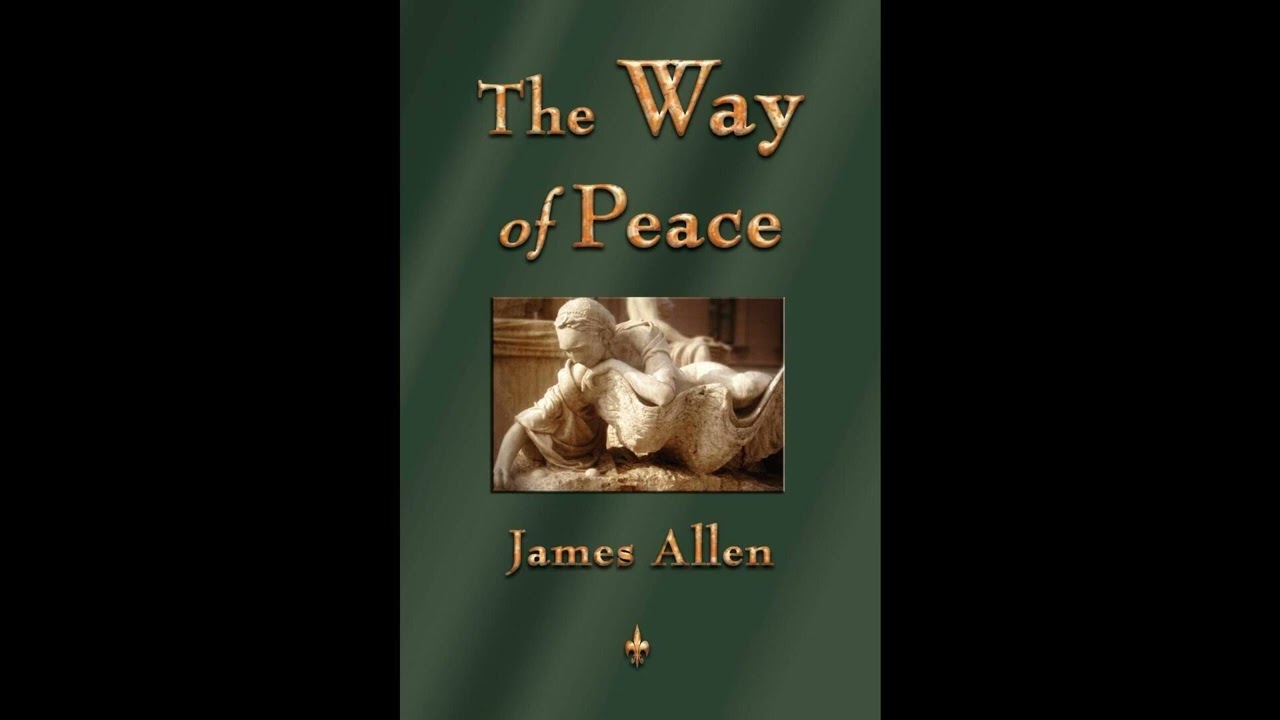
The Way of Peace
"The Way of Peace" by James Allen offers a profound, practical guide to finding inner tranquility amidst modern existence. For anyone navigating daily complexities—constant demands, external pressures, internal clamor—this small but mighty book provides a serene sanctuary, a mental compass pointing towards a calmer, more purposeful self. It speaks directly to the universal longing for serenity, positing that true peace is not a gift from external circumstances, but an achievable state cultivated from within. Its wisdom feels as urgent and relevant today as when first penned, offering clear principles for transforming disquiet into profound well-being, proving the path to a harmonious life begins with the dominion of one's own mind. Instead of a traditional narrative, "The Way of Peace" unfolds within the human mind, presenting stages in an individual’s development towards spiritual quietude. The "main character" is the seeker, the listener themselves, struggling with the "central conflict" of mental unrest—anxieties, frustrations, and sorrows. Allen delineates this disquiet, portraying it not as external imposition, but as a consequence of unexamined thoughts and uncontrolled emotions. The "story" begins with recognizing one's current state of inner turmoil, often characterized by a reactive mind, susceptible to every passing event. The arc of engagement moves through intellectual thresholds. The text guides the listener to understand the absolute power of thought, illustrating how every outer condition first takes root as an inner seed. It presents thought as the architect of destiny, whether for good or ill. The author introduces self-purification, where the seeker actively sheds negative thought patterns, prejudices, and fears, much like a gardener weeds a patch of earth. This process reveals how self-control—not suppression, but conscious direction—is the vital key to unlocking sustained calm. The narrative culminates in the promise of a mind liberated from passion and ego, arriving at unwavering peace that radiates outward into every aspect of life, focusing on initial steps and ongoing principles. James Allen, born in Leicester, England, in 1864, lived a life mirroring the self-reliant philosophy he espoused. His early years were marked by hardship; his father was murdered in America when James was a child, forcing his family into poverty and compelling him to leave school young to find work. This confrontation with adversity shaped his deep introspection and focus on personal fortitude. Allen initially worked as a private secretary for British manufacturing firms, pursuing literary and philosophical interests in his spare time. He was a keen reader, drawing inspiration from diverse thinkers, including Leo Tolstoy, Ralph Waldo Emerson, and ancient spiritual traditions. Around the turn of the 20th century, Allen left his corporate career to dedicate himself entirely to writing. He and his family moved to a small cottage in Ilfracombe, Devon, a simpler existence reflecting his commitment to quiet contemplation. Though he produced over twenty books, he achieved significant recognition for his influential 1903 work, "As a Man Thinketh." This slim volume condensed his ideas into accessible, potent maxims, establishing him as a pioneering voice in the New Thought and self-help movements. His writings emphasize the power of thought in shaping one's character and circumstances, an idea that resonated deeply and continues to do so today. James Allen passed away in 1912 at 47, leaving behind a profound legacy of practical spiritual literature, cementing his place as a foundational figure in inspirational writing. "The Way of Peace" articulates several central themes, chief among them personal responsibility. Allen argues that individuals are not merely victims of fate, but architects of their own inner worlds. He illustrates this by demonstrating how negative emotions like resentment or fear, rather than external forces, are cultivated within one's own mind. The book insists that by taking ownership of our thoughts and reactions, we gain the power to alter our emotional landscape, transforming inner chaos into calm. This idea is presented as an empowering invitation to mental sovereignty. Another significant theme is the causal power of thought. Allen continually emphasizes that "as a man thinketh in his heart, so is he." This isn't just about positive thinking, but about the profound way our dominant thoughts shape our character, actions, and ultimately, our reality. He shows that sustained peace isn't simply wished for, but systematically built through diligent cultivation of harmonious and constructive thoughts. If one consistently harbors thoughts of discord, the outer life will inevitably reflect that disquiet. Conversely, a mind focused on goodwill and tranquility will generate a corresponding outer experience. The text thereby frames mental discipline as the most fundamental form of ethical and practical living, making the inner life the true forge of one's destiny. "The Way of Peace" emerged during a period of immense societal transformation at the turn of the 20th century. Rapid industrialization in Britain and America led to social upheaval, urbanization, and a widening gap between traditional agrarian lifestyles and new realities of factory work and city dwelling. This era also saw questioning of established religious doctrines and a growing interest in alternative spiritual movements and self-improvement philosophies. People were searching for new meanings and practical guidance amidst modernity's shifting sands. Against this backdrop, movements like New Thought gained traction, offering an individualized, psychological approach to spirituality and well-being. James Allen's work fit perfectly. His emphasis on inner power, mental causation, and the individual's ability to shape their own destiny resonated deeply with a public looking for agency and practical solutions in an increasingly complex world. While steeped in a Protestant work ethic transformed into spiritual discipline, his ideas also contained echoes of Eastern philosophies concerning the mind's role in creating reality. His writings provided psychological self-help that was both philosophical and eminently practical, directly addressing the anxieties and aspirations of his time. To experience "The Way of Peace" as an audiobook is to receive its profound message in a uniquely intimate and reflective manner. Its concise length, often just a few hours, makes it an ideal companion for moments of quiet contemplation—during a morning walk, a commute, or as a gentle backdrop to daily tasks. The narration becomes a guiding voice, a steady presence allowing the listener to absorb Allen's principles without the distraction of a page. Pacing is crucial; a well-chosen narrator will allow space for profound ideas to settle, giving the listener time to consider their personal application. This isn't a book to rush; it's meant to be absorbed, considered, and returned to, making the auditory format suited for repeated listening and deeper integration. The gentle cadence of a thoughtful reading can transform the experience from merely understanding concepts to internalizing them, fostering a tranquil atmosphere conducive to the very peace the text champions.
Enjoyed The Way of Peace? A few ways to support us
Audible & Amazon links are affiliate; we may earn a small commission at no extra cost.
About this production
Human narration by a volunteer reader from LibriVox.org, the public-domain audiobook project. LibriVox volunteers record literary works whose copyright has expired in the United States, releasing the resulting recordings into the public domain.
The Way of Peace by James Allen. The underlying text is in the U.S. public domain. We do not republish any modern copyrighted edition, translation, or commentary.
The 4K cinematic visuals accompanying this audiobook are generated by an AI image model from prompts derived from the source text. No copyrighted photos, paintings, or stock footage are used. AI generation is disclosed on every video on our YouTube channel as required by YouTube's altered/synthetic content policy.
English subtitles are transcribed from the LibriVox recording with OpenAI Whisper. Translations into the 11 other supported languages are produced by Meta's NLLB-200 neural translation model. No human translator's copyrighted translation is used.
Questions about sourcing or rights? See our DMCA & Sourcing policy or contact us.
Enjoyed this audiobook?
If you'd like to own a copy of The Way of Peace or hear a professionally produced edition, the links below help support free audiobook production at no extra cost to you.
As an Amazon Associate we earn from qualifying purchases. Audible / print links are affiliate.