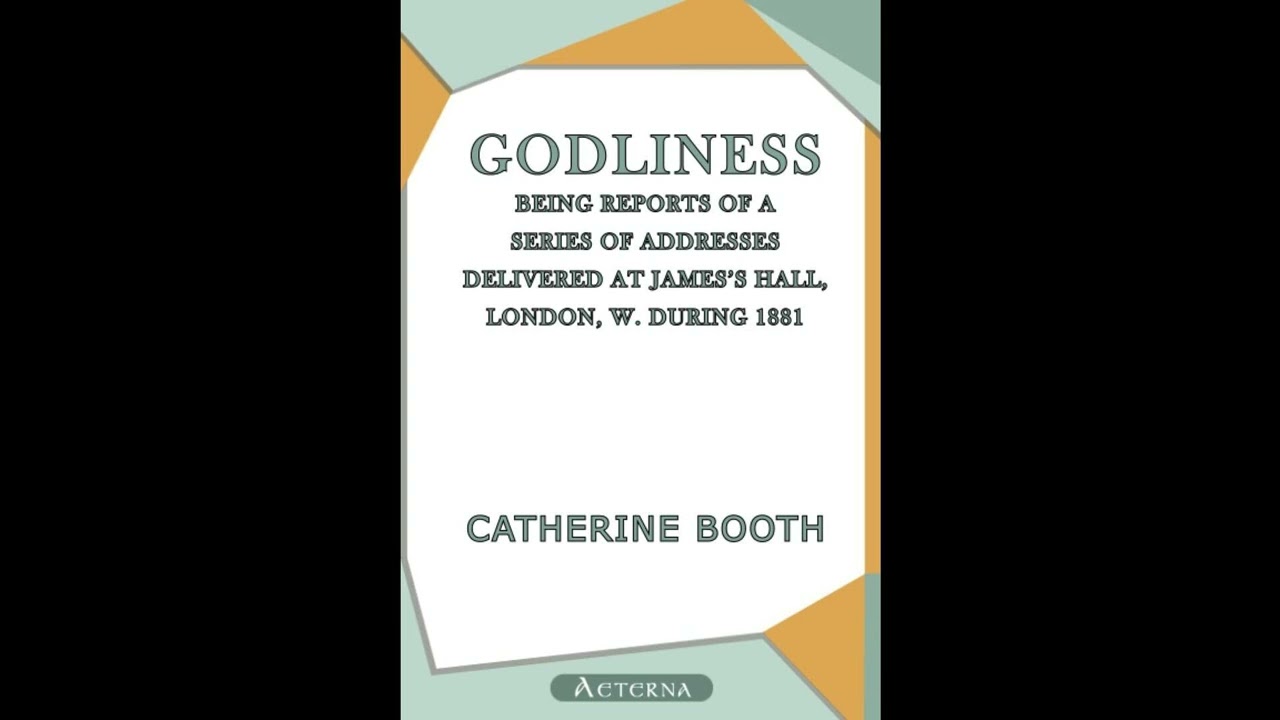
Godliness : being reports of a series of addresses delivered at James's Hall, London- Full Audiobook
The enduring human quest for a moral compass, for principles that anchor us amidst life’s currents, resonates through every era. While our challenges may evolve, the fundamental questions of how to live well, how to cultivate virtue, and how to contribute to a meaningful existence remain surprisingly constant. Godliness: being reports of a series of addresses delivered at James's Hall, London offers a direct and unfiltered window into precisely this search from a bygone age. It captures a moment when intellectual and spiritual guidance was sought not just in hushed sanctuaries, but in vibrant public forums, making complex ethical and theological considerations accessible to a broad and curious audience. Listening to these addresses today allows us to witness a living historical dialogue, providing profound insights into the moral architecture of a past society while simultaneously challenging us to reflect on our own pursuit of goodness in the modern world. The setting for these compelling discourses was James's Hall, a prominent venue in Piccadilly, London, during the late nineteenth and early twentieth centuries. This was not a secluded academic chamber, but a bustling public space, often filled with diverse audiences eager to engage with new ideas, hear celebrated speakers, and grapple with the pressing questions of their time. The "reports of a series of addresses" suggest a structured progression of thought, akin to a lecture series designed to systematically unpack the concept of "godliness." Far from a dry theological treatise, these talks aimed to illuminate what a life lived with spiritual purpose might entail, touching upon both individual piety and one's duties within the broader community. The speaker, though their name has not come down to us, clearly adopted the persona of a guide, someone wrestling with profound ethical questions and offering pathways toward a more virtuous existence. The core concern animating these addresses is the meaning and practical application of "godliness" in a rapidly changing world. The "conflict" here is not between two characters, but an internal and societal struggle: how to reconcile traditional faith with emerging scientific understanding, how to maintain moral integrity amidst industrial expansion and social upheaval, and how to translate abstract spiritual ideals into concrete, everyday actions. Each address in the series likely built upon the previous, gradually constructing a comprehensive vision of a life dedicated to higher principles. The arc of the work, therefore, is an intellectual and spiritual progression, moving from foundational concepts of faith and ethics to their manifestation in personal conduct, familial relations, and civic engagement. While there is no narrative ending in the traditional sense, the listener experiences a thoughtful unfolding of ideas, culminating in a deeper appreciation for the nuanced demands of a truly principled life. The precise identity of the author of these addresses has been lost to time, known only as the voice that resonated within the grand confines of James's Hall. This anonymity, rather than diminishing the work, adds a layer of universal appeal. It places the emphasis squarely on the message itself, rather than the messenger's personal renown, aligning with a long tradition of spiritual and philosophical writings where the insights offered transcend individual authorship. The very existence of "reports of a series of addresses" highlights the value placed on public discourse during this era. Before the ubiquity of radio or television, public lectures were a vital conduit for the dissemination of ideas, a form of collective intellectual and moral engagement that drew large crowds. James's Hall itself was a cornerstone of Victorian intellectual life, hosting everything from scientific lectures to political debates, and its association with these addresses underscores their significance within the broader cultural conversation about ethics and spirituality. To have one’s words transcribed and published after delivery suggests that the content was considered not merely ephemeral oratory, but substantive and enduring wisdom, worthy of wider circulation and repeated contemplation. This tradition of capturing and preserving public speeches was crucial in shaping public opinion and intellectual currents throughout the late nineteenth century. It allowed influential ideas to reach beyond the immediate audience, contributing to the broader dialogue that characterized the era's robust exchange of thought. The work thus stands as a testament not only to the anonymous orator’s insights but also to the era’s profound commitment to public education and the power of reasoned argument in addressing life's most fundamental questions. It illustrates how earnest inquiry and eloquent exposition could coalesce to guide individuals through complex moral terrain, solidifying its place within the canon of English moral philosophy and religious thought. One of the central themes running through these addresses is the very definition and practical cultivation of virtue. The speaker likely distinguishes between mere outward conformity to religious rites and a genuine, internal state of moral excellence. For example, rather than simply advocating for church attendance, the addresses might dissect the qualities of true humility, diligent service, or unfeigned charity, showing how these inner dispositions manifest in daily actions. A second prominent theme concerns the individual's role within society. In an age of increasing urbanization and social stratification, the addresses almost certainly grapple with how personal godliness translates into social responsibility. They might touch upon the duty to aid the poor, to advocate for justice, or to uphold civic integrity, framing these as extensions of one's spiritual commitment. Furthermore, the talks likely address the tension between traditional faith and the burgeoning scientific and intellectual movements of the late Victorian period. This era saw Darwin's theories challenge established beliefs and a growing secularism emerge. The speaker, therefore, would have been tasked with demonstrating the enduring relevance of spiritual principles in a world increasingly reliant on empirical observation. The addresses likely sought to provide a coherent framework for meaning and purpose that could withstand the intellectual pressures of the age. Finally, the very form of these "reports" underscores the theme of rhetoric as a powerful tool for moral persuasion. The carefully structured arguments, the appeals to reason and conscience, and the oratorical flourishes, even when filtered through transcription, exemplify the era's belief in the power of words to shape character and inspire action. The late nineteenth and early twentieth centuries in London represented a crucible of profound societal change, providing the essential backdrop for these addresses on godliness. This was an era of rapid industrialization, which transformed the urban landscape and created vast disparities in wealth and living conditions. Alongside the material progress, there was a growing intellectual ferment. Scientific advancements, particularly in biology and geology, challenged orthodox religious views, prompting a widespread reevaluation of faith and ethics. Politically, the British Empire was at its zenith, but internally, movements for social reform—addressing poverty, public health, and women’s suffrage—were gaining considerable momentum. These cultural shifts created a pressing need for moral guidance and spiritual grounding. In this context, public lecture halls like James's Hall emerged as crucial venues for intellectual exchange and moral leadership, filling a space often distinct from traditional pulpits or academic institutions. They offered a platform for prominent thinkers to address a wider, more diverse audience, fostering public discourse on critical issues. The demand for such addresses on "godliness" speaks to a populace grappling with how to integrate traditional moral frameworks into a rapidly modernizing world. These talks provided an opportunity for communal reflection, a space to explore how personal virtue could inform societal progress and how spiritual truths might navigate the challenges of a complex, evolving society, making the emergence of such a work not just timely, but vital. Listening to Godliness as an audiobook offers a uniquely immersive experience, allowing the listener to step back in time and virtually attend these pivotal addresses. The inherent oratorical nature of the original material translates exceptionally well to the spoken word, creating an intimacy and directness that printed text alone might not fully convey. With a run length of several hours, this allows for extended periods of thoughtful contemplation, much like the original audiences would have dedicated their evenings to these lectures. The narrator's voice becomes the conduit for these historical pronouncements, lending gravitas and clarity to the complex ideas being presented. Expect a measured, deliberate pacing, designed to allow the listener to absorb each point and reflect on its implications. There is no "dialogue" in the dramatic sense, but the sustained voice of the orator creates a powerful atmosphere, inviting reflection and offering a window into the intellectual and spiritual climate of a foundational period in British history.
Enjoyed Godliness : being reports of a series of addresses delivered at James's Hall, London- Full Audiobook? A few ways to support us
Audible & Amazon links are affiliate; we may earn a small commission at no extra cost.
About this production
Human narration by a volunteer reader from LibriVox.org, the public-domain audiobook project. LibriVox volunteers record literary works whose copyright has expired in the United States, releasing the resulting recordings into the public domain.
Godliness : being reports of a series of addresses delivered at James's Hall, London- Full Audiobook by Henry S. Lunn. The underlying text is in the U.S. public domain. We do not republish any modern copyrighted edition, translation, or commentary.
The 4K cinematic visuals accompanying this audiobook are generated by an AI image model from prompts derived from the source text. No copyrighted photos, paintings, or stock footage are used. AI generation is disclosed on every video on our YouTube channel as required by YouTube's altered/synthetic content policy.
English subtitles are transcribed from the LibriVox recording with OpenAI Whisper. Translations into the 11 other supported languages are produced by Meta's NLLB-200 neural translation model. No human translator's copyrighted translation is used.
Questions about sourcing or rights? See our DMCA & Sourcing policy or contact us.
View 10 famous quotes from this book →
Enjoyed this audiobook?
If you'd like to own a copy of Godliness : being reports of a series of addresses delivered at James's Hall, London- Full Audiobook or hear a professionally produced edition, the links below help support free audiobook production at no extra cost to you.
As an Amazon Associate we earn from qualifying purchases. Audible / print links are affiliate.