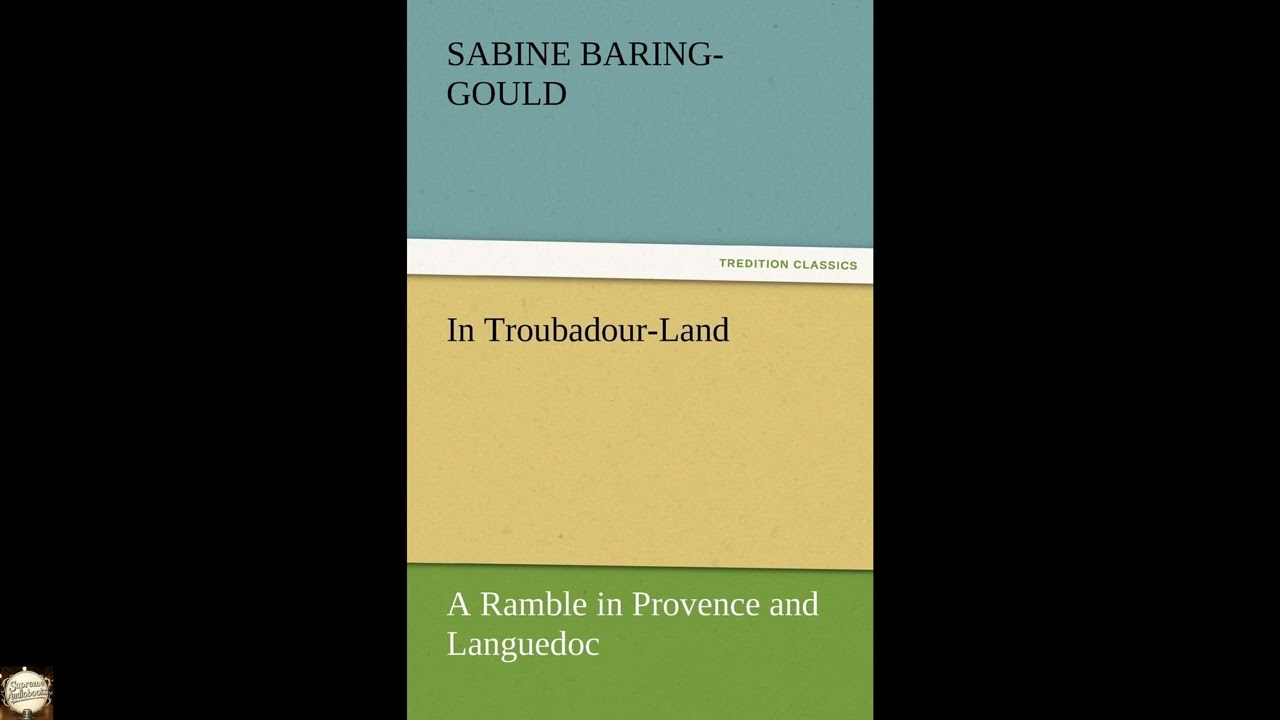
In Troubadour-Land a Ramble in Provence and Languedoc
Step into the sun-drenched landscapes of southern France with S. Baring-Gould’s In Troubadour-Land a Ramble in Provence and Languedoc, an extraordinary literary expedition that transcends the conventional travelogue. This isn't merely a guide to scenic routes; it's an invitation to wander through the very soul of a region steeped in history, romance, and the echoes of a distant, chivalric past. What makes Baring-Gould’s account so compelling for today’s listener is its unique blend of personal observation, meticulous scholarship, and a palpable yearning for the origins of European song and story. It offers not only a vivid picture of Provence and Languedoc as they were in the late nineteenth century, but also a profound reflection on how places retain the spirit of their past, reminding us that the ground beneath our feet often holds more tales than we imagine. The narrative unfolds as Baring-Gould himself becomes our guide, setting out on a meandering tour through the ancient territories that once comprised the heartland of the troubadours. His path leads him from the rugged hillsides of Languedoc, where the Cathar fortresses still loom, to the gentler, olive-groved plains of Provence. Along the way, he stops in sleepy villages, bustling market towns, and the ruins of once-grand castles and abbeys. Each location is more than a geographical point; it’s a portal to a bygone era, prompting Baring-Gould to weave together local legends, historical anecdotes, and detailed accounts of the medieval poets and their patrons. The journey isn't hurried; it’s a thoughtful progression, punctuated by detailed descriptions of the flora, fauna, and local customs that lend the region its unique character. While there isn't a traditional "plot" in the sense of fictional characters facing a central conflict, the overarching arc of the account is Baring-Gould's determined pursuit of the enduring legacy of the troubadours. His quest is to understand how these wandering poets, with their sophisticated verses of courtly love, satire, and political commentary, shaped not just the literature but the very cultural fabric of southern France. He examines the lives of figures like Bertran de Born, Arnaut Daniel, and the Countess of Die, bringing their personalities and their art into sharper focus. The "conflict," if one can call it that, lies in the intellectual challenge of resurrecting these voices from centuries of obscurity and demonstrating their profound influence on European civilization, all while observing the contemporary life of the region that still bears their subtle imprint. Sabine Baring-Gould (1834-1924) was a figure of truly astonishing intellect and prodigious output, an Anglican priest whose interests stretched far beyond the confines of his clerical duties. Born in Exeter, England, he was educated at Clare College, Cambridge, and ordained in 1864. His life was characterized by an insatiable curiosity about folklore, history, archaeology, theology, and literature. He was not just a scholar but a prolific author, producing over 1,200 publications during his lifetime—a staggering body of work that included historical novels, theological treatises, hagiographies, and numerous collections of folk songs. Among his most well-known contributions are the hymn "Onward, Christian Soldiers" and the seminal folkloric study The Book of Were-Wolves. Baring-Gould held a unique place in the literary and scholarly world of his time, often bridging the gap between academic research and accessible popular writing. His method combined rigorous historical investigation with a storyteller's flair, making complex subjects approachable. He meticulously collected and preserved English folk songs, influencing generations of folklorists, and his historical writings, such as this one, demonstrate his profound respect for the past and his ability to see its living connections to the present. He stands as a testament to the Victorian polymath, a scholar who embraced the breadth of human knowledge. One of the central themes that runs through In Troubadour-Land is the enduring power of place and how landscapes serve as repositories of human memory and history. Baring-Gould consistently ties the physical attributes of the land—the ruggedness of the Cévennes, the warmth of the Provençal sun, the winding course of the Rhône—to the events and artistic expressions that occurred there. For instance, he might describe a ruined castle perched precariously on a hill, then vividly reconstruct the medieval court that once thrived within its walls, drawing a direct line from the stones and the view to the songs of loyalty and longing that resonated there. His descriptions make the land itself feel like a character, silently bearing witness to centuries of human endeavor. Another significant theme is the reverence for cultural heritage and its transmission. Baring-Gould doesn't merely chronicle facts; he actively seeks out the remnants of troubadour culture in the contemporary customs, dialects, and even the character of the people he encounters. He highlights the idea that art, particularly poetry and song, is not just decoration but an integral part of a society's identity. He notes how specific turns of phrase in local speech or the melodies of ancient folk songs seem to echo the very verses composed by troubadours centuries prior, demonstrating a continuous, unbroken thread of cultural expression. This careful observation reinforces the notion that even as societies change, elements of their foundational art forms persist, shaping future generations. This work emerged during a fascinating period in European intellectual history, roughly the late nineteenth and early twentieth centuries, a time when Romanticism's lingering influence merged with a growing scholarly interest in regional histories, folklore, and the medieval past. The industrial revolution was reshaping the world, prompting many to look back at simpler, often idealized, times. There was a burgeoning sense of national and regional identity across Europe, leading to a renewed appreciation for local traditions, languages, and historical narratives that had been overshadowed by broader national histories. Specifically for Provence and Languedoc, this period saw the rise of the Félibrige movement, a literary and cultural revival led by Frédéric Mistral and other Provençal writers dedicated to restoring the Provençal language and celebrating its unique literary heritage, including that of the troubadours. Baring-Gould’s desire to trace the origins and impact of the troubadours resonated deeply with this contemporary movement. His book became a significant English-language contribution to the broader European effort to preserve and understand the specific cultural identities of its diverse regions, seeing them not as footnotes to grand history, but as integral, living parts of the continent’s artistic and social fabric. Listening to In Troubadour-Land as an audiobook offers a unique opportunity to immerse oneself in Baring-Gould's ramble as if journeying alongside him. The conversational yet erudite voice of the narrator brings his vivid descriptions and intellectual digressions to life, transforming what could be a dense historical text into a companionable tour. The several-hour length allows for a gradual unfolding of the regions, the histories, and the personalities discussed, encouraging a meditative form of listening. Listen for the narrator's pacing, which will mirror Baring-Gould's own unhurried progression through the sun-drenched landscapes. The vocal interpretation accentuates the evocative language and historical insights, conjuring the atmosphere of medieval courts, bustling markets, and silent ruins, making the past feel remarkably present.
Enjoyed In Troubadour-Land a Ramble in Provence and Languedoc? A few ways to support us
Audible & Amazon links are affiliate; we may earn a small commission at no extra cost.
About this production
Human narration by a volunteer reader from LibriVox.org, the public-domain audiobook project. LibriVox volunteers record literary works whose copyright has expired in the United States, releasing the resulting recordings into the public domain.
In Troubadour-Land a Ramble in Provence and Languedoc by S (Sabine) Baring-Gould. The underlying text is in the U.S. public domain. We do not republish any modern copyrighted edition, translation, or commentary.
The 4K cinematic visuals accompanying this audiobook are generated by an AI image model from prompts derived from the source text. No copyrighted photos, paintings, or stock footage are used. AI generation is disclosed on every video on our YouTube channel as required by YouTube's altered/synthetic content policy.
English subtitles are transcribed from the LibriVox recording with OpenAI Whisper. Translations into the 11 other supported languages are produced by Meta's NLLB-200 neural translation model. No human translator's copyrighted translation is used.
Questions about sourcing or rights? See our DMCA & Sourcing policy or contact us.
Enjoyed this audiobook?
If you'd like to own a copy of In Troubadour-Land a Ramble in Provence and Languedoc or hear a professionally produced edition, the links below help support free audiobook production at no extra cost to you.
As an Amazon Associate we earn from qualifying purchases. Audible / print links are affiliate.