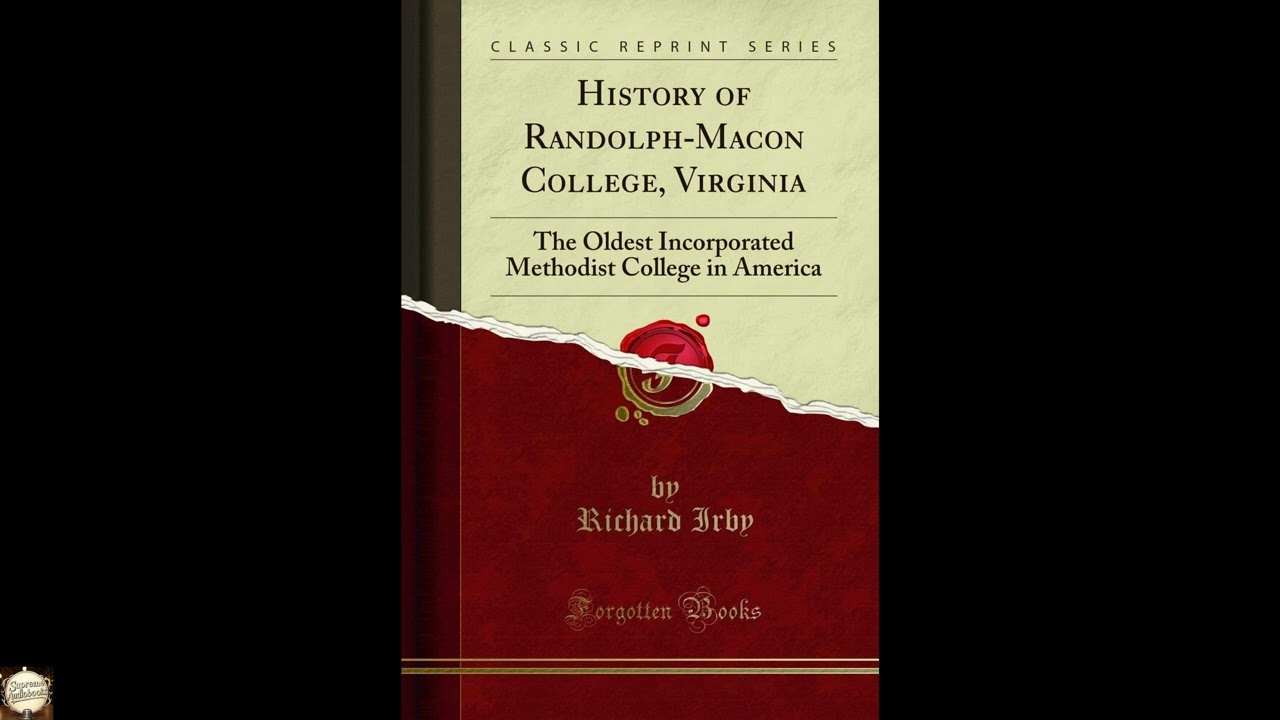
History of Randolph-Macon College, Virginia: The Oldest Incorporated Methodist Coll
"History of Randolph-Macon College, Virginia: The Oldest Incorporated Methodist Coll" is far more than a dry chronicle of an academic institution. It stands as a vital record, revealing the foundational spirit of American higher education, particularly in the South, and the enduring influence of faith in shaping intellectual landscapes. This book offers a singular perspective on the struggles and triumphs of establishing an enduring center of learning from the early nineteenth century onward. For anyone interested in the social history of Virginia, the evolution of Methodist thought, or the relentless pursuit of educational excellence against a backdrop of societal change, this account provides rich material for contemplation and understanding, illuminating how a single college can reflect the larger aspirations and challenges of a nation. The narrative arc commences with the nascent idea of a Methodist college in Virginia during the first decades of the 1800s—a period marked by rapid expansion and a fervent desire for structured education beyond traditional seminaries. It details the initial fervent discussions among prominent Methodist leaders and visionaries who sought to establish an institution that would fuse classical learning with a robust moral and spiritual foundation. The central challenge lies in transforming this grand ambition into a tangible reality: securing land, raising funds in a largely agricultural economy, attracting dedicated faculty, and formulating a curriculum that balanced theological instruction with liberal arts education. The "story" unfolds as these pioneers grapple with practicalities, political landscapes, and the sheer effort required to get a new college off the ground. As the years progress, the account charts the college's development from its incorporation in 1830, through its early academic endeavors, and its steady growth in influence. It reveals the often-turbulent path forward, characterized by periods of expansion alongside moments of profound uncertainty. The institution functions as the primary "character," undergoing a process of maturation as it seeks to define its academic identity and solidify its place within the Southern educational fabric. The challenges faced—economic downturns, the complexities of antebellum society, and ultimately the seismic shock of the Civil War—present recurring conflicts that test the college's resilience and commitment to its founding principles. The book describes not just the erection of buildings, but the cultivation of an intellectual community, a living legacy forged through generations of dedicated individuals. This particular history comes to us without an attributed author, a common occurrence for institutional histories compiled in the late nineteenth or early twentieth centuries. Such works were often the result of collective effort, drawing upon official records, faculty minutes, alumni recollections, and oral traditions meticulously gathered by dedicated individuals deeply invested in the institution's legacy. This anonymous authorship speaks to a communal sense of pride and a desire to create a definitive, authoritative record for future generations, rather than seeking personal acclaim. It suggests a work born of deep institutional loyalty, perhaps commissioned by the college itself, or undertaken by a committee of scholars and administrators whose individual contributions blended into a unified voice dedicated to preserving the story of their cherished Randolph-Macon. This tradition of undocumented authorship allows the institution itself to be the primary voice, a testament to its collective memory and the shared purpose of its community. One prominent theme threading through the narrative is the profound intersection of faith and education. Randolph-Macon College was conceived as a Methodist institution, and its history vividly demonstrates how religious conviction informed its pedagogical philosophy, its approach to student discipline, and its broader mission to cultivate not just scholars, but virtuous citizens. The book likely offers examples of how religious tenets guided curriculum development, ensuring a balance between scientific inquiry and moral instruction. Another significant theme is resilience in the face of adversity. The college endured periods of economic hardship, sectional strife leading to civil war, and the subsequent efforts of reconstruction. The text probably highlights specific instances—perhaps a dedicated president’s appeal for funds during a lean year, or the reopening of the campus after wartime disruption—that underscore the unwavering determination of its leadership and community to ensure its survival and continued operation. The historical backdrop against which this history was written and published is crucial to understanding its significance. The period after the American Civil War saw a renewed focus on establishing and strengthening educational institutions, particularly in the South, as a means of societal rebuilding and progress. Denominational colleges played a significant role in this effort, often serving as cultural anchors in their communities. The late nineteenth and early twentieth centuries also witnessed a broader trend in American society towards documenting institutional histories, cataloging achievements, and solidifying narratives of progress and origin. This particular history thus emerged from a cultural moment that valued institutional memory and saw the telling of an organization’s story as essential to its identity and continued relevance. It reflects a time when the roots of American higher education were being cemented, and the distinct character of individual colleges, particularly those with a religious foundation, was being carefully articulated. Listening to this account as an audiobook provides an immediate, immersive connection to the past. The several hours of narration allow for a measured, thoughtful presentation of the college's progression, giving the listener ample time to absorb the details of its founding, its key developments, and the personalities that shaped it. A skilled narrator brings the historical facts to life, lending appropriate gravitas to moments of challenge and a celebratory tone to periods of success. The pacing of the narration can highlight the earnest dedication of the early founders, the measured debates over academic policy, and the steady, sometimes arduous, march of time. It allows the listener to appreciate the scope of the institution’s creation and sustainment, perceiving the weight of historical events through the voice, making the enduring story of Randolph-Macon College feel less like a dry report and more like a living legacy.
Enjoyed History of Randolph-Macon College, Virginia: The Oldest Incorporated Methodist Coll? A few ways to support us
Audible & Amazon links are affiliate; we may earn a small commission at no extra cost.
About this production
Human narration by a volunteer reader from LibriVox.org, the public-domain audiobook project. LibriVox volunteers record literary works whose copyright has expired in the United States, releasing the resulting recordings into the public domain.
History of Randolph-Macon College, Virginia: The Oldest Incorporated Methodist Coll by Richard Irby. The underlying text is in the U.S. public domain. We do not republish any modern copyrighted edition, translation, or commentary.
The 4K cinematic visuals accompanying this audiobook are generated by an AI image model from prompts derived from the source text. No copyrighted photos, paintings, or stock footage are used. AI generation is disclosed on every video on our YouTube channel as required by YouTube's altered/synthetic content policy.
English subtitles are transcribed from the LibriVox recording with OpenAI Whisper. Translations into the 11 other supported languages are produced by Meta's NLLB-200 neural translation model. No human translator's copyrighted translation is used.
Questions about sourcing or rights? See our DMCA & Sourcing policy or contact us.
Enjoyed this audiobook?
If you'd like to own a copy of History of Randolph-Macon College, Virginia: The Oldest Incorporated Methodist Coll or hear a professionally produced edition, the links below help support free audiobook production at no extra cost to you.
As an Amazon Associate we earn from qualifying purchases. Audible / print links are affiliate.