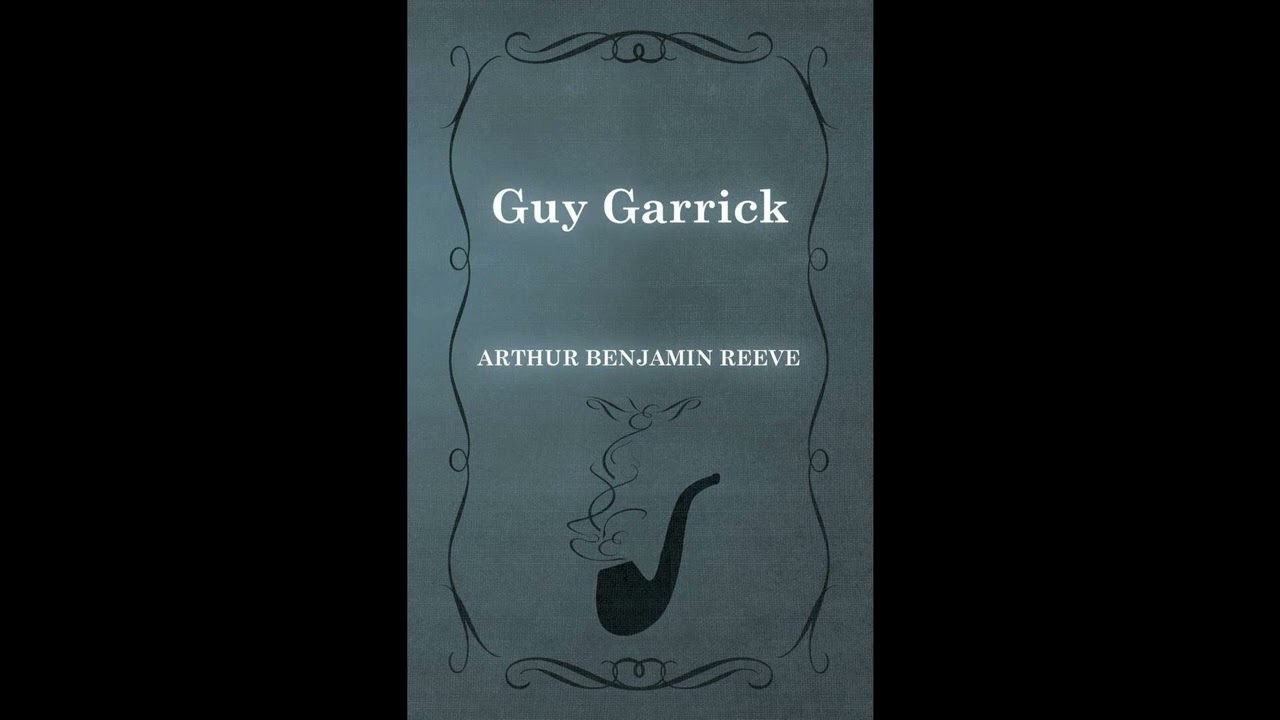
Guy Garrick
Step into the bustling, gaslit world of early twentieth-century American mystery with Arthur Benjamin Reeve’s “Guy Garrick,” an exhilarating collection of tales that brings the cutting edge of science to the murky depths of crime. This isn't just a series of puzzles to be solved; it is a fascinating glimpse into a historical moment when the mysteries of the human mind and the marvels of technology converged, offering new tools for justice and new anxieties about their potential misuse. Listeners today will find themselves drawn into a narrative style that, while rooted in its era, continues to resonate through its celebration of intellect, its keen observation of human nature, and its thrilling pursuit of truth in a world rapidly transforming. The book introduces us to Guy Garrick, a brilliant and methodical scientist who applies his formidable knowledge of chemistry, physics, and human psychology to unravel crimes that baffle conventional law enforcement. Set against a backdrop that evokes the burgeoning metropolises of the American East Coast—think New York’s burgeoning laboratories, its shadowy back alleys, and its opulent drawing rooms—each story presents a unique criminal challenge. From baffling disappearances that hint at impossible methods to seemingly supernatural occurrences with chillingly rational explanations, Garrick systematically sifts through clues, often employing groundbreaking scientific techniques that would have felt revolutionary to readers of his time. He’s not a rough-and-tumble street detective, but a cerebral investigator, using the precision of a laboratory to illuminate the chaos of human transgression. Across these cases, the central conflict consistently pits the apparent insolubility of a crime against Garrick’s unwavering faith in the power of logic and empirical evidence. He faces cunning adversaries, red herrings, and the skepticism of those who prefer simpler, less scientific solutions. The arc of these stories isn't necessarily a single overarching plot but rather a progression through diverse criminal scenarios, each demonstrating Garrick’s unique methodology. Listeners witness his meticulous gathering of data, his insightful deductions drawn from minute details, and his confrontations with the often-unexpected motivations behind even the most bizarre criminal acts, all leading to a satisfying unveiling of the truth without ever revealing the ultimate solution of any specific case. Arthur Benjamin Reeve, born in Long Island, New York, in 1880, carved a distinctive niche in the burgeoning field of detective fiction during the early 20th century. A graduate of Princeton University, Reeve began his career as a journalist, a profession that undoubtedly honed his observational skills and his ability to craft compelling narratives from factual details. This journalistic foundation lent a certain realism and immediacy to his fictional works, distinguishing them from some of the more purely fantastical tales of the era. His early experiences reporting on crime and forensic science likely ignited his interest in the scientific applications to criminal investigation, a theme that would become his enduring legacy. Reeve rose to considerable fame with his creation of Professor Craig Kennedy, often dubbed "the American Sherlock Holmes." These stories, frequently serialized in popular magazines like Cosmopolitan, captivated a wide audience with Kennedy’s reliance on forensic chemistry, psychology, ballistics, and other emerging scientific disciplines to solve crimes. While Guy Garrick is a distinct character, he shares Kennedy’s scientific rigor and intellectual curiosity, showcasing Reeve’s consistent approach to the detective genre. Reeve authored more than forty books before his death in 1936, including notable titles such as “The Silent Bullet,” “The Poisoned Pen,” and “The Dream Doctor,” establishing himself as a prolific and influential voice in the development of scientific detective fiction, paving the way for later generations of forensic-focused crime writers. “Guy Garrick” stands as a significant marker in the evolution of detective fiction, particularly for its ardent embrace of scientific methodology as a primary tool for crime-solving. One central theme running through the collection is the ascendancy of forensic science in the pursuit of justice. Garrick’s reliance on chemical analysis of traces left at a scene, his understanding of ballistics, or his application of psychological profiling to deduce a criminal’s motives exemplify how modern science was beginning to transform police work. For instance, in one instance, he might meticulously analyze dust particles found on a suspect’s shoe to link them to a specific location, or he might use a nascent form of handwriting analysis to identify a perpetrator. This focus elevates detection beyond mere observation, presenting it as an intellectual discipline grounded in empirical evidence. Another powerful theme is the impact of urban modernity and technological change on society and crime itself. The stories are steeped in the atmosphere of a rapidly industrializing America, where new technologies—from automobiles and telephones to increasingly sophisticated industrial machinery—create both unprecedented opportunities and new avenues for criminal activity. Garrick’s cases often involve criminals who cleverly exploit these advancements or victims who fall prey to the complexities of modern life. Furthermore, the recurring motif of rationality conquering the seemingly inexplicable threads through Garrick’s investigations. Many of the crimes he tackles initially appear to defy logic, perhaps hinting at supernatural forces or impossible circumstances, only for Garrick to meticulously peel back the layers and reveal a thoroughly scientific and logical explanation, reinforcing the era’s growing faith in scientific understanding. The period in which “Guy Garrick” was published, the immediate aftermath of World War I, marked a time of significant cultural, political, and social flux in America. The year 1919 found the nation grappling with the repercussions of a global conflict, rapid industrial expansion, and profound social shifts, including the burgeoning women's suffrage movement and heightened labor unrest. This era also witnessed a surge in the popularity of serialized fiction and pulp magazines, making detective stories a favorite form of escapism and intellectual engagement for a burgeoning middle class. Arthur Benjamin Reeve’s decision to infuse his mysteries with scientific elements was a direct reflection of a societal fascination with progress and innovation. People were witnessing groundbreaking scientific discoveries and technological advancements in their daily lives, and the idea that science could also be the key to unlocking the darkest human secrets resonated deeply, offering both reassurance in the power of human ingenuity and a frisson of excitement about the unknown. Listening to “Guy Garrick” as an audiobook provides an ideal conduit into this historical period and the intricate workings of the scientific detective’s mind. The narrator’s voice becomes central to conveying the deliberate pace of Garrick’s investigations, allowing listeners to fully absorb the details of each clue and the logic of each deduction. With a run length of several hours, the format is perfect for extended periods of focused listening, perhaps during a commute or while engaging in quiet tasks around the home, allowing the complex plots to unfold without interruption. A skilled narrator can distinguish between the various characters—from the earnest police inspectors to the often-deceptive suspects—bringing their dialogue and personalities to life, creating a more immersive experience. The atmospheric descriptions of early 20th-century settings, combined with the unfolding of scientific evidence, are painted vividly through sound, enhancing the suspense and intellectual thrill of each compelling case.
Enjoyed Guy Garrick? A few ways to support us
Audible & Amazon links are affiliate; we may earn a small commission at no extra cost.
About this production
Human narration by a volunteer reader from LibriVox.org, the public-domain audiobook project. LibriVox volunteers record literary works whose copyright has expired in the United States, releasing the resulting recordings into the public domain.
Guy Garrick by Arthur Benjamin Reeve. The underlying text is in the U.S. public domain. We do not republish any modern copyrighted edition, translation, or commentary.
The 4K cinematic visuals accompanying this audiobook are generated by an AI image model from prompts derived from the source text. No copyrighted photos, paintings, or stock footage are used. AI generation is disclosed on every video on our YouTube channel as required by YouTube's altered/synthetic content policy.
English subtitles are transcribed from the LibriVox recording with OpenAI Whisper. Translations into the 11 other supported languages are produced by Meta's NLLB-200 neural translation model. No human translator's copyrighted translation is used.
Questions about sourcing or rights? See our DMCA & Sourcing policy or contact us.
Enjoyed this audiobook?
If you'd like to own a copy of Guy Garrick or hear a professionally produced edition, the links below help support free audiobook production at no extra cost to you.
As an Amazon Associate we earn from qualifying purchases. Audible / print links are affiliate.