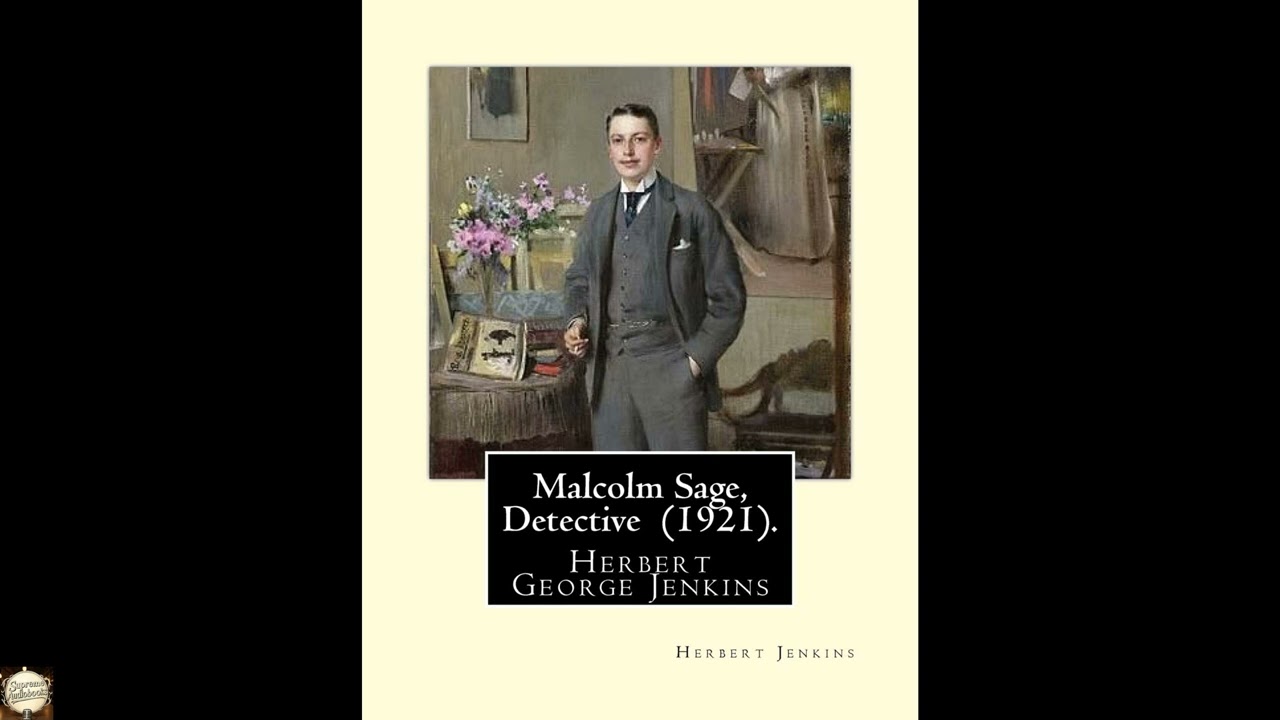
Malcolm Sage, Detective (1921). By: Herbert Jenkins: Herbert George Jenkins
Step back into an era when gaslight flickered on London's cobblestone streets and the most perplexing crimes were solved not by brute force, but by the cool, precise application of logic. Herbert Jenkins's Malcolm Sage, Detective, published in 1921, introduces listeners to one of the early twentieth century's most quietly formidable figures of deduction. This collection of cases doesn't just offer a series of intellectual puzzles; it presents a fascinating blueprint for the modern detective story, revealing how the very fabric of crime fiction was being woven in the aftermath of a global war. For anyone who appreciates the sheer satisfaction of a well-constructed mystery, or who wishes to understand the foundations upon which later giants of the genre would build, Sage's methodical genius offers a compelling and utterly engaging experience, as relevant today for its cleverness as it was a century ago. Set against the backdrop of a Britain slowly recovering from the seismic shock of the Great War, Malcolm Sage operates within a world where order is deeply valued, and disruptions to it, particularly those involving crime, demand an almost scientific approach. Our protagonist, Malcolm Sage, is no flamboyant showman. He is often presented as a somewhat austere, almost academic figure, known less for dramatic confrontations and more for his unparalleled powers of observation and razor-sharp intellect. He works less like a private eye chasing shadows and more as a consulting mind, frequently brought in by Scotland Yard or individuals bewildered by events that defy conventional explanation. The stories within this collection typically present Sage with seemingly impossible scenarios: a jewel theft from a supposedly secure vault, a murder in a locked room where no entry or exit seems possible, or a baffling disappearance leaving behind only contradictory clues. Each narrative begins by establishing the bewildering circumstances of the crime, introducing a cast of suspects — from nervous housekeepers to arrogant aristocrats, all with their own secrets and motivations. Sage’s method is one of meticulous inquiry, patiently sifting through alibis, examining physical evidence with a surgeon’s precision, and piecing together the psychological profiles of those involved, until the obscured truth gradually comes into focus. The arc of each story demonstrates the inevitable triumph of reason over deception, as Sage peels back layers of falsehood to expose the simple, often human, core of the crime, always without revealing the ultimate, satisfying conclusion prematurely. The author behind this clever collection was Herbert George Jenkins, a figure whose contributions to early twentieth-century British literature extend far beyond his own written works. Born in London in 1876, Jenkins initially pursued a career in journalism before making his significant mark in the world of publishing. He worked for a time with John Lane at the renowned Bodley Head publishing house, an experience that undoubtedly shaped his understanding of the literary landscape. In 1912, Jenkins established his own imprint, Herbert Jenkins Ltd., which quickly became a significant player in the British publishing scene. As a publisher, Jenkins possessed an uncanny knack for spotting popular talent, most famously becoming the initial British publisher for P.G. Wodehouse, helping to launch the beloved Jeeves and Wooster stories that continue to delight readers today. Beyond his editorial vision, Jenkins was also a prolific author himself. While Malcolm Sage, Detective showcases his ability to craft intelligent mysteries, he was also known for his humorous "Bindle" series, featuring the adventures of a Cockney railway porter, demonstrating his versatility across genres. His relatively short life, ending in 1923 at the age of 47, makes his output and influence all the more remarkable, cementing his place as a pivotal, if sometimes understated, figure in British literary history, bridging the Victorian era’s literary traditions with the burgeoning tastes of the interwar period. At its core, Malcolm Sage, Detective enacts several enduring themes pertinent to both its era and ours. One central theme is the triumph of intellect over chaos and human folly. Sage consistently demonstrates that even the most elaborate deceptions and acts of violence can be unraveled by a superior mind. For instance, in one of his cases, a seemingly perfect alibi is dismantled not by a lucky break, but by Sage's precise calculations of travel time and human reaction, showing how sheer logical deduction can restore order. Another significant theme is the nature of truth and the deceptive power of appearances. The stories repeatedly illustrate how easily people can be misled by what they see and hear, and how the actual facts often lie hidden beneath layers of carefully constructed illusion. A classic example is a seemingly accidental death that, through Sage's careful re-examination of the scene, reveals subtle evidence of foul play, exposing the truth behind a carefully staged accident. Furthermore, the book highlights the evolving "science" of detection during this period. Sage’s methods are presented as modern and systematic, moving beyond mere intuition to embrace forensic observation and psychological insight. He pays meticulous attention to details that others overlook—the type of dust on a shoe, the specific phrasing of a nervous witness, or the minute alteration of a document. These concrete examples of Sage's methodology underscore the emerging professionalization of detective work. Finally, a subtle thread of social commentary runs through the narratives. While not overtly political, the cases often provide glimpses into the class structures and societal anxieties of post-WWI Britain, with crimes frequently touching upon issues of inheritance, reputation, and the hidden vices of the respectable classes, offering a quiet window into the moral landscape of the early 1920s. When Malcolm Sage, Detective appeared in 1921, Britain was just six years out from the end of the First World War. This interwar period was marked by a complex mix of relief, mourning, and a desire to reconstruct a sense of stability and order after immense upheaval. Culturally, there was a growing appetite for popular entertainment and escapism, and detective fiction provided both. The public, perhaps weary of grand narratives and real-world uncertainties, gravitated towards stories that promised a definite solution, where logic ultimately prevailed over disorder. Sherlock Holmes, though his stories predated Sage, had already established the public’s fascination with brilliant detectives, and writers like Jenkins were building upon this foundation, experimenting with new types of investigators and case structures. The literary world of the 1920s was also witnessing the early stirrings of what would become the Golden Age of Detective Fiction, a period characterized by intricate plotting, fair play, and the establishment of specific tropes and "rules" for the genre. Jenkins's work fits squarely into this formative moment, contributing to the development of the "armchair detective" and the "scientific detective" archetypes. The emergence of Malcolm Sage, with his cool intellect and focus on methodical investigation, reflects a broader societal turn towards scientific reasoning and a belief in the power of human ingenuity to solve even the most baffling problems, offering a comforting sense of control in a world that had recently experienced such profound chaos. Listening to Malcolm Sage, Detective as an audiobook offers a particular kind of immersion into this foundational period of detective fiction. A skilled narrator can bring Sage’s precise, measured voice to life, allowing listeners to almost feel the detective’s calm authority as he meticulously unpicks a tangled web of lies. The several hours of content make this an ideal companion for a long commute, a quiet evening by the fire, or while engaged in routine tasks, providing a consistent stream of intellectual engagement. Pay close attention to the pacing of the narration, which often mirrors the deliberate speed of Sage's own investigations, allowing the clues to unfold gradually. Listen for the subtle shifts in tone that distinguish the various characters, from the nervous stammer of a suspect to the confident pronouncements of the inspector. The dialogue, steeped in the language and idioms of the early 1920s, paints a vivid picture of the era, while the atmosphere — be it the hush of a country estate or the bustling anonymity of London — is rendered palpable through carefully modulated voice work, truly transporting you to a time when every shadow held a secret.
Enjoyed Malcolm Sage, Detective (1921). By: Herbert Jenkins: Herbert George Jenkins? A few ways to support us
Audible & Amazon links are affiliate; we may earn a small commission at no extra cost.
About this production
Human narration by a volunteer reader from LibriVox.org, the public-domain audiobook project. LibriVox volunteers record literary works whose copyright has expired in the United States, releasing the resulting recordings into the public domain.
Malcolm Sage, Detective (1921). By: Herbert Jenkins: Herbert George Jenkins by Herbert George Jenkins. The underlying text is in the U.S. public domain. We do not republish any modern copyrighted edition, translation, or commentary.
The 4K cinematic visuals accompanying this audiobook are generated by an AI image model from prompts derived from the source text. No copyrighted photos, paintings, or stock footage are used. AI generation is disclosed on every video on our YouTube channel as required by YouTube's altered/synthetic content policy.
English subtitles are transcribed from the LibriVox recording with OpenAI Whisper. Translations into the 11 other supported languages are produced by Meta's NLLB-200 neural translation model. No human translator's copyrighted translation is used.
Questions about sourcing or rights? See our DMCA & Sourcing policy or contact us.
Enjoyed this audiobook?
If you'd like to own a copy of Malcolm Sage, Detective (1921). By: Herbert Jenkins: Herbert George Jenkins or hear a professionally produced edition, the links below help support free audiobook production at no extra cost to you.
As an Amazon Associate we earn from qualifying purchases. Audible / print links are affiliate.