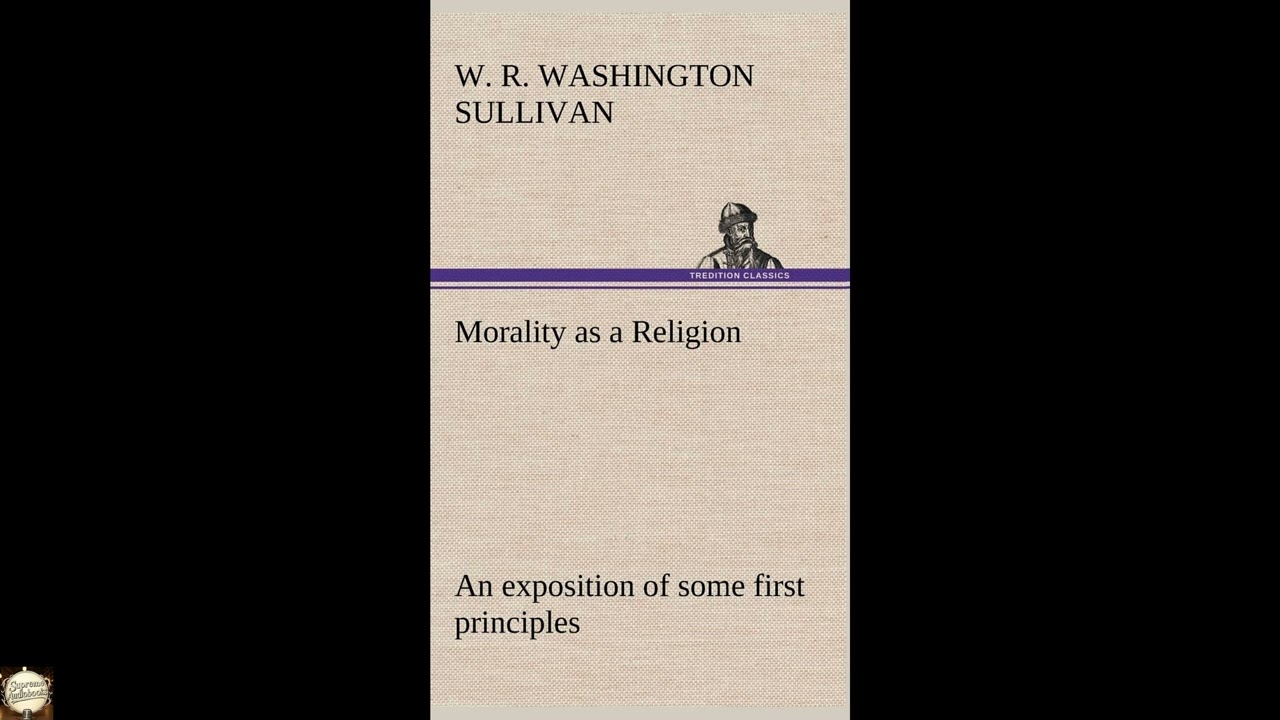
Morality as a Religion An exposition of some first principles
In an age where the foundations of belief are often shaken and the quest for meaning frequently feels fragmented, a work like W R Washington Sul's Morality as a Religion An exposition of some first principles emerges not just as a historical curiosity, but as a strikingly pertinent guide. This is a text that dares to confront one of humanity's most enduring questions: what truly grounds our ethics, inspires our noblest acts, and gives purpose to our existence? Sul posits a radical yet profoundly logical answer, suggesting that the very principles of morality possess an inherent power—a capacity to inspire devotion, forge community, and provide ultimate meaning—much like the world's great religions. For anyone grappling with the ethical dilemmas of contemporary life, seeking a stable framework beyond dogma, or simply desiring a deeper understanding of human motivation, Sul’s compelling analysis offers not just answers, but an entirely new way to frame the conversation. The exposition begins by setting a stage where conventional religious authority, while perhaps still present, no longer holds an undisputed monopoly on defining right and wrong or furnishing life with ultimate significance. In this intellectual landscape, Sul identifies a profound yearning, a human necessity for a binding framework that transcends mere social convention or utilitarian calculus. The author introduces the core intellectual conflict by asking whether moral duties can stand on their own, commanding the same reverence and commitment traditionally reserved for divine mandates. Sul does not seek to dismantle faith, but rather to distill its essential, motivating essence and demonstrate how such profound dedication can be found within the sphere of purely ethical reasoning. As the argument unfolds, the "main characters" become the fundamental principles themselves: justice, compassion, integrity, and responsibility. Sul treats these concepts not as abstract ideals but as potent forces, capable of shaping individual lives and societies with the same transformative power attributed to spiritual revelations. The author systematically examines how these principles are not merely rules to be followed, but inherent values to be cherished, cultivated, and upheld with an almost sacred fervor. The systematic arc of the story involves building a case, brick by careful brick, illustrating how a life ordered by such profound moral conviction can provide an unwavering compass, offering solace, purpose, and a sense of belonging, irrespective of supernatural belief systems. The early sections of the text lay the groundwork by dissecting the components of both traditional religion and secular ethics, preparing the way for the grand synthesis that forms the work's central thesis without revealing its ultimate conclusions. W R Washington Sul stands as a pivotal figure in the history of ethical philosophy, recognized for an uncompromising intellectual rigor and a singular focus on the foundations of human conduct. While specific dates of his life are not firmly established in historical records, he is understood to have been a scholar of considerable influence, active during an era marked by profound re-evaluations of societal structures and the role of traditional institutions. Sul was known for his systematic approach to complex problems, an attribute evident in the meticulous construction of Morality as a Religion. He was not merely a critic of prevailing thought but a constructive builder, intent on providing robust alternative frameworks for understanding human purpose. His work is considered a cornerstone in the development of modern secular ethics, influencing subsequent generations of thinkers who sought to reconcile reason with the innate human need for meaning. Sul’s intellectual milieu was one of philosophical ferment, where thinkers were increasingly questioning inherited dogmas and seeking universal principles applicable across diverse cultures and changing times. His place in the intellectual canon is secured by his pioneering efforts to articulate a comprehensive moral system that could inspire the same loyalty and profound commitment as a religious worldview, yet entirely grounded in human reason and experience. Though little is known about his personal life beyond his formidable intellect, his enduring legacy rests on this work, which continues to challenge and inform ethical discourse across the centuries, demonstrating the profound influence a single, well-argued premise can wield. The text enacts several profound themes, each contributing to its lasting resonance. One central theme is The Autonomy of Morality, asserting that ethical principles possess an intrinsic authority separate from divine command or social utility. Sul illustrates this by presenting situations where individuals, stripped of external pressures, still recognize an inherent imperative to act justly or compassionately. Another crucial theme is The Search for Ultimate Meaning, which the author demonstrates by comparing the psychological and social functions of religion—providing purpose, community, and a sense of the sacred—with the potential of a deeply internalized moral code to fulfill these same human needs. Sul systematically outlines how devotion to ethical ideals can generate the same profound sense of reverence and dedication as traditional worship. Furthermore, the work addresses The Reconciliation of Reason and Reverence, striving to show how a rational approach to ethics does not necessitate a cold, calculating framework, but can instead foster a deep, almost spiritual connection to universal values. Sul achieves this through carefully constructed arguments that build an emotional resonance for concepts like duty and altruism. For example, he details how consistent acts of benevolence, performed from a place of genuine moral conviction rather than expectation of reward, cultivate a profound inner peace and contribute to a flourishing society. A final theme, subtly woven throughout, is The Construction of Identity through Ethics. Sul argues that one's moral commitments are not external adornments but fundamental aspects of selfhood, illustrating how individuals who live by their ethical principles develop a coherent sense of purpose and integrity, providing a powerful sense of identity in an often chaotic world. The emergence of Morality as a Religion can be understood as a response to profound shifts in intellectual and societal landscapes that have recurred across various epochs. While its precise historical origin remains elusive, the very nature of its inquiry suggests it arose during a period of significant re-evaluation—a time when traditional sources of authority, whether political, scientific, or religious, were undergoing intense scrutiny. Such a work would typically surface when scientific advancements began to challenge established cosmologies, or when diverse cultural encounters necessitated a more universal ethical framework than those rooted in specific traditions. It reflects an intellectual moment when thinkers sought to ground human values in something immutable and universally accessible, moving beyond contingent beliefs to establish principles verifiable by reason and experience. This type of philosophical inquiry frequently arises when societies grapple with the need for cohesion and meaning in the face of rapid change, questioning how to foster collective purpose and individual virtue in an increasingly pluralistic or secularized world. Morality as a Religion speaks to an enduring human concern for foundational truths, reflecting an intellectual tradition that seeks to build ethical systems from first principles, rather than inheriting them without question. It resonates with the spirit of critical inquiry that has characterized many pivotal moments in human thought, proposing a bold solution to the perennial challenge of creating a meaningful and ethical existence. Listening to Morality as a Religion as an audiobook offers a singular opportunity to absorb its complex arguments with focused attention. The narration provides a vital interpretive layer, guiding listeners through Sul’s systematic exposition with clarity and deliberate pacing. The run length, several hours in duration, is perfectly suited for extended periods of contemplation, allowing the ideas to marinate and resonate. As the voice articulates each carefully reasoned point, listeners can appreciate the subtle rhetorical choices and the logical flow of the argument, much like attending a masterclass in ethical thought. Pay particular attention to the narrator’s emphasis on key terms and the measured cadence, which underscores the gravity of Sul's philosophical claims. The spoken word brings a unique intimacy to this classic text, transforming what might otherwise be a dense read into an engaging, intellectually stimulating experience, fostering an atmosphere of profound inquiry and thoughtful engagement.
Enjoyed Morality as a Religion An exposition of some first principles? A few ways to support us
Audible & Amazon links are affiliate; we may earn a small commission at no extra cost.
About this production
Human narration by a volunteer reader from LibriVox.org, the public-domain audiobook project. LibriVox volunteers record literary works whose copyright has expired in the United States, releasing the resulting recordings into the public domain.
Morality as a Religion An exposition of some first principles by W R Washington Sul. The underlying text is in the U.S. public domain. We do not republish any modern copyrighted edition, translation, or commentary.
The 4K cinematic visuals accompanying this audiobook are generated by an AI image model from prompts derived from the source text. No copyrighted photos, paintings, or stock footage are used. AI generation is disclosed on every video on our YouTube channel as required by YouTube's altered/synthetic content policy.
English subtitles are transcribed from the LibriVox recording with OpenAI Whisper. Translations into the 11 other supported languages are produced by Meta's NLLB-200 neural translation model. No human translator's copyrighted translation is used.
Questions about sourcing or rights? See our DMCA & Sourcing policy or contact us.
Enjoyed this audiobook?
If you'd like to own a copy of Morality as a Religion An exposition of some first principles or hear a professionally produced edition, the links below help support free audiobook production at no extra cost to you.
As an Amazon Associate we earn from qualifying purchases. Audible / print links are affiliate.