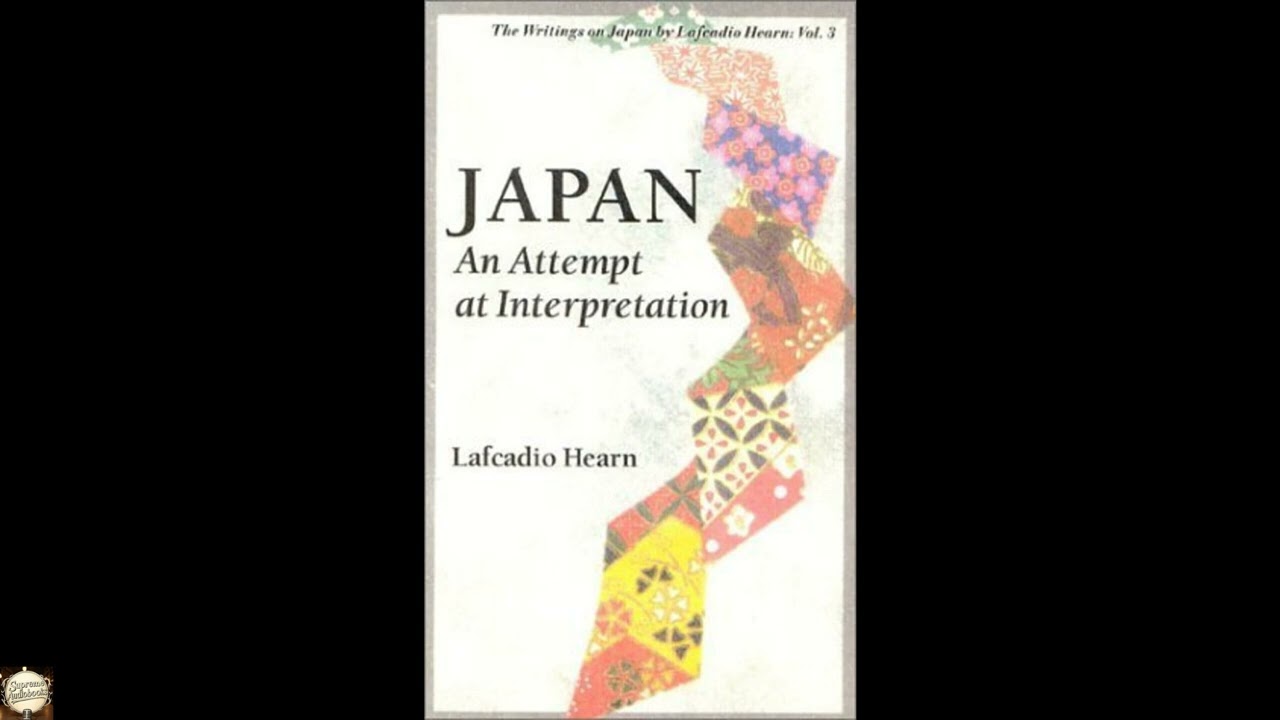
Glimpses of an Unfamiliar Japan: Second Series
Step into a world poised delicately between ancient custom and the stirrings of modernity, a Japan glimpsed through the discerning eyes of a remarkable foreigner. Lafcadio Hearn's Glimpses of an Unfamiliar Japan: Second Series is not merely a collection of essays; it is an act of deep cultural empathy, an attempt to distill the essence of a civilization opening its doors after centuries of isolation. For listeners today, this audiobook offers a profound meditation on the power of observation, the allure of the exotic, and the quiet melancholy of traditions facing an uncertain future. It provides a unique, irreplaceable record of a bygone era, reminding us of the enduring human need to understand and connect with what seems utterly different from ourselves. This volume, following Hearn's initial observations, continues to unfold the varied landscapes, daily rhythms, and spiritual depths of Japan in the late 19th century. The setting primarily encompasses the quieter, more traditional areas of Japan, particularly the provinces and remote villages, far from the rapidly Westernizing cities. Hearn positions himself as the central consciousness, a keen observer whose curiosity leads him into Shinto shrines, Buddhist temples, humble homes, and public gatherings. There is no conventional plot with a singular protagonist facing a clear antagonist; instead, the book presents a series of meticulously crafted vignettes and reflections. Each chapter serves as a discrete window, allowing the listener to witness a specific aspect of Japanese life: a village festival, a ghost story told by the fire, a philosophical discourse on a Zen garden, or a detailed account of local customs and superstitions. The overarching "story" is Hearn's own unfolding understanding, his deepening connection to a culture that initially felt alien but gradually became his adopted home. The journey through the book is marked by a palpable sense of wonder and a gentle melancholy, as Hearn captures the beauty of transient moments and the subtle poetry of daily existence. He introduces us to the ordinary people he meets – a kindly priest, a wise old woman, a curious child – each interaction adding another brushstroke to his detailed portrait. The central “conflict,” if one can call it that, resides in the inherent tension between Hearn’s Western analytical mind and the intuitive, often mystical, worldview of the Japanese. He strives not just to describe, but to feel and interpret this unfamiliar world, to bridge the cultural chasm for his Western readers. His narrative arc involves moving from initial fascination to a more profound, almost spiritual, identification with the land and its people, always with an awareness of the changes that loom on the horizon for this ancient culture. Lafcadio Hearn, born Patrick Lafcadio Hearn in 1850 on the Greek island of Lefkada, was a man of diverse origins and a life marked by significant transitions. His father was an Irish surgeon, and his mother a Greek woman. After a challenging childhood, which included losing an eye in a playground accident and being largely self-educated, Hearn immigrated to the United States in his late teens. He began his career as a journalist in Cincinnati and later became known for his vivid, often sensational, reporting from New Orleans, where he immersed himself in Creole culture and folklore. This period fostered his lifelong fascination with the exotic, the supernatural, and the marginalized. Before arriving in Japan in 1890, he also spent two years writing in the French West Indies, further honing his literary voice and his ability to render foreign landscapes and customs with evocative prose. Hearn's arrival in Japan was initially as a journalist, but he soon found employment as a teacher in Matsue, Izumo Province, a region still steeped in ancient traditions. It was here that his profound connection to Japan truly began. He married Koizumi Setsu, a Japanese woman, became a Japanese citizen, and adopted the name Koizumi Yakumo. This deep integration into Japanese society allowed him unparalleled insight into its culture, folklore, and spiritual life. His extensive body of work on Japan, which includes the well-known Kwaidan: Stories and Studies of Strange Things and Japan: An Attempt at Interpretation, established him as one of the most significant interpreters of Japanese culture to the West. He died in Japan in 1904, leaving behind a legacy that continues to shape our understanding of a pivotal moment in Japanese history and cross-cultural literature. Among the many compelling themes running through Glimpses of an Unfamiliar Japan: Second Series, the theme of cultural observation and interpretation stands out. Hearn, as an outsider, painstakingly records details of daily life, religious ceremonies, and local customs that a native might overlook. For instance, his meticulous descriptions of a Shinto purification ritual or the quiet dignity of a traditional tea house serve not just as picturesque scenes, but as a deep dive into the underlying spiritual and social structures. He does not simply report; he attempts to convey the meaning and feeling behind what he sees, making the foreign comprehensible without stripping it of its unique mystery. Another prominent theme is the beauty of transience, often referred to in Japanese aesthetics as mono no aware. Hearn frequently pauses to describe the ephemeral loveliness of cherry blossoms, the shifting mists over a mountain landscape, or the fleeting expressions of joy or sorrow on a villager's face. These moments are imbued with a bittersweet appreciation for the impermanence of beauty, echoing a core sensibility of Japanese art and philosophy. Moreover, the book is steeped in the folklore and the supernatural, a subject Hearn found endlessly fascinating. He recounts numerous ghost stories, legends of mythical creatures, and tales of spirits inhabiting the natural world, illustrating how deeply these beliefs were woven into the fabric of everyday Japanese life. Listeners will encounter detailed accounts of folk deities and superstitions that animate the landscape and provide a moral framework for the villagers. He might, for example, narrate a local tale about a haunted willow tree or a fox spirit, demonstrating how these stories provided comfort, fear, and explanation for phenomena beyond human understanding. Finally, a pervasive undercurrent of the book is the clash of tradition and modernity. Hearn arrived in Japan during a period of immense change, and he often laments the erosion of old customs, the replacement of traditional wooden structures with Western-style buildings, and the loss of what he perceived as the spiritual purity of ancient Japan. His writings often serve as a poignant elegy for a disappearing world, capturing moments that he knew were on the verge of vanishing forever under the tide of modernization. This book emerged during a critical juncture in both Japanese and Western history. In the late nineteenth century, Japan had recently undergone the Meiji Restoration (1868), ending centuries of feudal rule and initiating a rapid period of industrialization and Westernization. The country, once isolated, was now aggressively seeking to absorb Western science, technology, and political systems to establish itself as a global power. Culturally, this meant a complex interplay between a fervent embrace of the new and a deep-seated resistance to abandoning ancient ways. For Western audiences, Japan was a land of immense curiosity and often romanticized mystery, a place that felt both ancient and newly accessible. Hearn’s works, including this series, served as a crucial bridge, offering intimate and nuanced portraits of a Japan that was rapidly transforming, providing insights far beyond the typical travelogue. His unique perspective, combining journalistic observation with a poetic sensibility and a deep personal commitment to his adopted home, resonated profoundly with readers eager to understand the enigmatic "Orient." Listening to Glimpses of an Unfamiliar Japan: Second Series as an audiobook transforms the experience into an even more intimate encounter with Hearn's observations. The descriptive nature of his prose, often rich with atmospheric detail and subtle emotion, gains considerable depth when voiced by a skilled narrator. The several hours of content allow for unhurried immersion, making it ideal for quiet contemplation or as a companion during long commutes. Listen for the pacing of the narration to mirror Hearn’s own reflective and deliberate style, allowing the imagery to build gradually. A good voice actor will capture the wonder, the occasional melancholy, and the keen observational power in Hearn’s writing, bringing life to the recounted conversations, the sounds of temple bells, and the hushed tones of folklore. The auditory experience can truly transport you to the misty mountains, the rustling bamboo groves, and the ancient shrines of Hearn's cherished Japan.
Enjoyed Glimpses of an Unfamiliar Japan: Second Series? A few ways to support us
Audible & Amazon links are affiliate; we may earn a small commission at no extra cost.
About this production
Human narration by a volunteer reader from LibriVox.org, the public-domain audiobook project. LibriVox volunteers record literary works whose copyright has expired in the United States, releasing the resulting recordings into the public domain.
Glimpses of an Unfamiliar Japan: Second Series by Lafcadio Hearn. The underlying text is in the U.S. public domain. We do not republish any modern copyrighted edition, translation, or commentary.
The 4K cinematic visuals accompanying this audiobook are generated by an AI image model from prompts derived from the source text. No copyrighted photos, paintings, or stock footage are used. AI generation is disclosed on every video on our YouTube channel as required by YouTube's altered/synthetic content policy.
English subtitles are transcribed from the LibriVox recording with OpenAI Whisper. Translations into the 11 other supported languages are produced by Meta's NLLB-200 neural translation model. No human translator's copyrighted translation is used.
Questions about sourcing or rights? See our DMCA & Sourcing policy or contact us.
Enjoyed this audiobook?
If you'd like to own a copy of Glimpses of an Unfamiliar Japan: Second Series or hear a professionally produced edition, the links below help support free audiobook production at no extra cost to you.
As an Amazon Associate we earn from qualifying purchases. Audible / print links are affiliate.