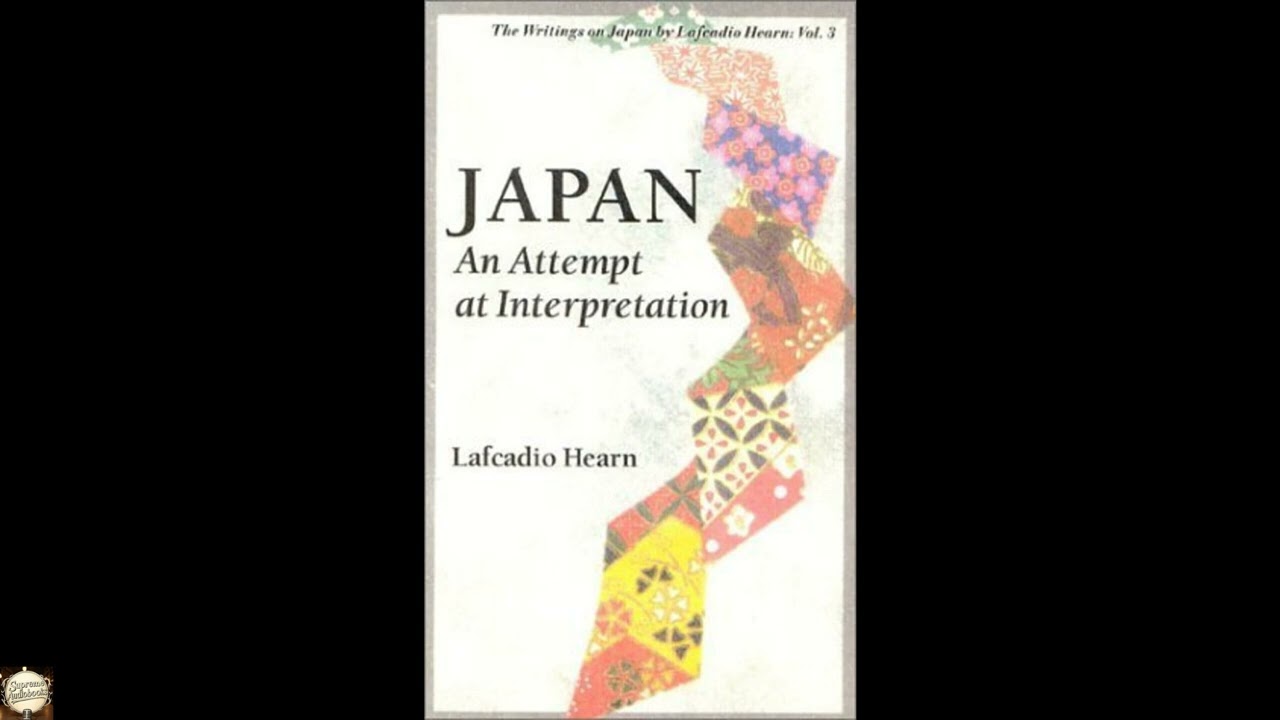
Japan: An Attempt at Interpretation
Lafcadio Hearn's "Japan: An Attempt at Interpretation" offers an unparalleled window into a Japan transforming at the turn of the twentieth century. More than a simple travelogue, this collection represents a profound act of cultural translation, an earnest endeavor to understand a nation then largely a mystery to the Western world. For anyone seeking to grasp modern Japan's unique identity – the delicate balance between ancient traditions and sudden modernity – Hearn's insightful, often elegiac prose remains startlingly relevant. His observations illuminate the interplay of religion, custom, and aesthetic, providing a crucial perspective on how a society navigates profound change while striving to preserve its core essence. This book is a meditation on cultural perception, asking what it means to truly understand a different civilization. When Lafcadio Hearn arrived in Japan in 1890, he found himself consumed by a society on the cusp of radical change. "Japan: An Attempt at Interpretation" captures his intellectual and emotional engagement, charting his efforts to penetrate its surface and articulate its deeper currents. The work unfolds as a series of meticulously observed vignettes and analytical discourses, moving through facets of Japanese life. We witness Hearn's initial impressions of its visual beauty—architecture, gardens, graceful movements—which gradually give way to a deeper investigation of the forces that shaped this unique society. He strives to understand the underlying philosophical and religious frameworks animating daily existence, from ancestor reverence to the pervasive influence of Buddhist and Shinto beliefs. Hearn acts as both an appreciative observer and a subtle critic, acutely aware of the delicate balance between Japan's ancient spiritual inheritance and the relentless march of Western progress. He documents folk tales, local customs, and the quiet dignity of everyday life, often contrasting these with encroaching industrialization. His central preoccupation becomes the struggle to articulate the spirit of "old Japan" before it is irrevocably altered. He examines the concept of kami, the ancestral cult, and the artistic sensibility permeating everything from a teacup to a temple. The "story" of this book, then, is Hearn's personal quest to make intelligible the spirit of a land where the past still held immense sway. His arc is one of deepening immersion and empathy, culminating in a synthesized vision of Japan’s enduring spiritual core. Lafcadio Hearn, born Patricios Lefcadio Tessima Cassimati Hearn in 1850 on the Greek Ionian island of Lefkada, led a life as varied as the cultures he sought to illuminate. The son of an Irish surgeon major and a Greek mother, Hearn experienced a tumultuous childhood marked by abandonment and poverty. Largely self-educated and marked by the loss of an eye, he made his way to the United States at nineteen, finding work as a journalist in Cincinnati and New Orleans. There, his vivid prose and keen interest in marginalized cultures—Creole life, Caribbean folklore—distinguished his writing, showcasing an early fascination with the exotic and supernatural. Hearn's life took its most decisive turn in 1890 when he traveled to Japan. What was intended as a temporary stay became his permanent home. He married Koizumi Setsu, became a naturalized Japanese citizen in 1896, adopting the name Koizumi Yakumo, and took up a teaching position. From this unique vantage point—an outsider who became an insider—he produced the works for which he is most remembered, including Glimpses of Unfamiliar Japan (1894) and Kwaidan (1904). Hearn is remembered as one of the earliest and most influential Western interpreters of Japan, employing literary artistry to convey the beauty and mystery of a rapidly vanishing culture before his death in 1904. His place in the literary canon is that of a bridge-builder, blending journalistic observation with poetic sensibility and deep respect for his adopted homeland. At its heart, "Japan: An Attempt at Interpretation" grapples with cultural preservation against the tide of modernity. Hearn vividly portrays his concern that old Japan's unique spiritual and aesthetic qualities were being eroded by Western ideas and technology. He laments the decline of traditional festivals or the replacement of handcrafted items with mass-produced goods, seeing in these shifts a fundamental loss of cultural soul. He details the quiet beauty of a secluded Shinto shrine, implicitly contrasting it with modernized port cities, presenting it as vulnerable and precious. The resilience of folk beliefs, despite official modernization policies, underscores this central tension. Another core theme is the spiritual and aesthetic underpinning of Japanese life. Hearn dedicates passages to describing ancestor worship, nature spirits (kami), and the intricate rituals of Buddhism and Shinto. He explains how these beliefs manifested not just in grand temples, but in daily existence: the way a garden is tended, respect for an old tree, the quiet dignity of a funeral procession. "The Religion of the Home" illustrates how spiritual practice integrated deeply into family life. Hearn reveals a profound aesthetic sensibility informing everything from craftsmanship to social interaction, arguing that an appreciation for beauty and harmony defined the Japanese spirit. These themes highlight Hearn's deep respect for a culture he sought to explain before its irreversible change. "Japan: An Attempt at Interpretation" emerged during a period of immense upheaval for the nation. Following the Meiji Restoration of 1868, Japan embarked on rapid modernization, transforming from an isolated feudal society into an industrial power. This process, spanning the late nineteenth and early twentieth centuries, involved adopting Western technologies and political systems. Hearn arrived just two decades after this transformation began, witnessing its profound effects. His work captures this historical moment where traditional customs, though vital, faced palpable threats from progress and international engagement. At the same time, Western perceptions of Japan were largely exoticized. Hearn's unique position—an outsider who integrated deeply, marrying locally and becoming a citizen—allowed him to offer a far more nuanced and empathetic interpretation than most contemporary Western accounts. He explained the spiritual and psychological logic behind Japanese customs to a global audience, providing crucial context for a nation rapidly asserting itself on the world stage. To experience "Japan: An Attempt at Interpretation" as an audiobook is to invite Hearn's observations directly into your mind. A skilled narrator can make his distinctive voice and contemplative pacing resonate, bringing out the quiet reverence in descriptions of ancient customs, the gentle humor in anecdotes, and the profound melancholia in reflections on disappearing traditions. Listeners can absorb these detailed accounts at a pace encouraging reflection, allowing the "several hours" runtime for sustained immersion. This transforms a historical account into a deeply personal cultural encounter, letting Hearn's carefully constructed atmosphere envelop you.
Enjoyed Japan: An Attempt at Interpretation? A few ways to support us
Audible & Amazon links are affiliate; we may earn a small commission at no extra cost.
About this production
Human narration by a volunteer reader from LibriVox.org, the public-domain audiobook project. LibriVox volunteers record literary works whose copyright has expired in the United States, releasing the resulting recordings into the public domain.
Japan: An Attempt at Interpretation by Lafcadio Hearn. The underlying text is in the U.S. public domain. We do not republish any modern copyrighted edition, translation, or commentary.
The 4K cinematic visuals accompanying this audiobook are generated by an AI image model from prompts derived from the source text. No copyrighted photos, paintings, or stock footage are used. AI generation is disclosed on every video on our YouTube channel as required by YouTube's altered/synthetic content policy.
English subtitles are transcribed from the LibriVox recording with OpenAI Whisper. Translations into the 11 other supported languages are produced by Meta's NLLB-200 neural translation model. No human translator's copyrighted translation is used.
Questions about sourcing or rights? See our DMCA & Sourcing policy or contact us.
Enjoyed this audiobook?
If you'd like to own a copy of Japan: An Attempt at Interpretation or hear a professionally produced edition, the links below help support free audiobook production at no extra cost to you.
As an Amazon Associate we earn from qualifying purchases. Audible / print links are affiliate.