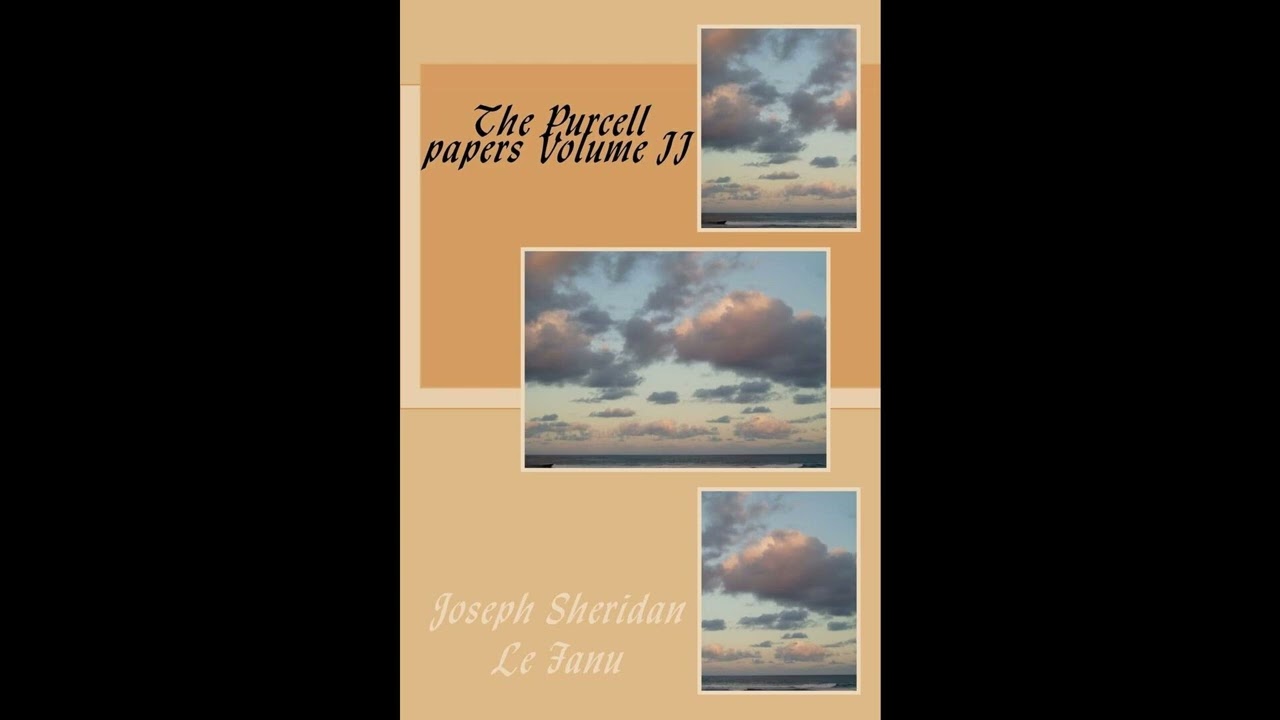
The Purcell papers Volume II
Enter the shadowy, spectral world of Joseph Sheridan Le Fanu’s The Purcell Papers Volume II, a collection of chilling tales that stand as a cornerstone of gothic and supernatural fiction. Long before the modern psychological thriller, Le Fanu was masterfully weaving narratives that unsettlingly blurred the line between the external ghostly manifestation and the internal torment of the mind. This volume offers listeners an opportunity to immerse themselves in the deep, melancholic dread that permeates the author’s singular vision, revealing how old fears and anxieties continue to resonate within us, making these stories as potent today as they were in their original publication. For anyone seeking the origins of sophisticated horror, or simply a collection of compelling, eerie narratives, this audiobook promises an experience of profound, lingering unease. The stories gathered in The Purcell Papers Volume II are presented as a compilation of manuscripts collected by the elderly and scholarly Father Purcell, a parish priest in the secluded, atmospheric landscapes of rural Ireland. Through his meticulous observations and interpretations, a series of accounts unfold, each hinting at dark histories and unresolved mysteries embedded within decaying Anglo-Irish estates and the lives of their often-doomed inhabitants. Listeners will encounter an array of characters, from the outwardly respectable but secretly tormented gentry to isolated scholars dabbling in forbidden knowledge, and even ordinary folk whose lives are irrevocably altered by encounters with the uncanny. The settings themselves often become characters: crumbling manor houses steeped in generations of secrets, windswept bogs that conceal forgotten tragedies, and dimly lit chambers where shadows seem to hold their breath. Central to many of these narratives is a slow, insidious build-up of dread rather than sudden shocks. A common arc involves an individual, often a curious outsider or an heir returning to an ancestral home, who gradually uncovers a history of sin, injustice, or dark pacts. This discovery then unleashes a spectral presence or a supernatural curse that relentlessly stalks its victim, often leading to paranoia, madness, or a grim fate. The central conflict frequently arises from the characters' attempts to rationalize or escape the inexplicable, only to find themselves ensnared by forces beyond their comprehension. These are not tales of simple good versus evil; instead, they often depict the consequences of human frailty, greed, and the inescapable burden of a troubled past, all illuminated by an Irish gothic sensibility that remains distinct and powerful. Joseph Sheridan Le Fanu, born in Dublin in 1814, was a pivotal figure in the development of supernatural literature. Descended from a distinguished Anglo-Irish Protestant family, related to the playwright Richard Brinsley Sheridan, Le Fanu initially pursued a career in law. However, his true calling lay in literature and journalism. Throughout his life, he was a prolific writer, contributing widely to various periodicals and eventually becoming the proprietor and editor of several prominent Irish newspapers, including The Dublin University Magazine. His literary output began in the 1830s with poetry, but it was his ghost stories and gothic novels, published largely in the mid to late 19th century, that cemented his lasting legacy. Le Fanu’s personal life also cast a shadow over his work. After the premature death of his beloved wife, Susanna, in 1858, he became increasingly reclusive, earning him the nickname "The Invisible Prince." This period of grief and introspection coincided with some of his most profound and unsettling fiction. His other notable works include the seminal vampire novella Carmilla, which predates Bram Stoker’s Dracula and heavily influenced it, as well as the novels Uncle Silas and The House by the Churchyard. Le Fanu passed away in Dublin in 1873, leaving behind a body of work that significantly shaped the gothic genre, moving it toward a more subtle, psychological form of horror that would influence generations of writers. The stories in The Purcell Papers Volume II keenly address several enduring themes. One prominent thread is the psychological impact of the supernatural, where the line between ghostly manifestation and mental breakdown is deliberately blurred. Le Fanu excels at depicting characters whose sanity erodes under the weight of ambiguous terrors, suggesting that the most frightening specters often reside within the human mind itself. For instance, tales often feature protagonists who are slowly driven to paranoia by unseen forces or persistent, unsettling sensations, making the internal dread as potent as any external threat. Another key theme is the decay of the Anglo-Irish gentry, a social class to which Le Fanu himself belonged. Many of his settings are crumbling ancestral homes, acting as metaphors for a dying aristocracy burdened by its own history of privilege, corruption, and the lingering consequences of its actions. The hauntings often represent the karmic retribution for past injustices committed by the family. Furthermore, Le Fanu consistently highlights the power of inherited guilt and ancestral curses. His narratives frequently show characters suffering for the sins of their forefathers, suggesting that malevolent energies or moral failings can permeate generations. A spectral presence, tied to a long-forgotten crime, may re-emerge to torment a descendant, creating a sense of inescapable fate. Finally, an abiding characteristic is ambiguity, as Le Fanu often refrains from fully explaining the supernatural elements. He leaves the reader, and the characters, to question whether the horrors are truly otherworldly or products of delusion, historical trauma, or some other hidden truth. This refusal to provide easy answers only intensifies the unsettling atmosphere and the lingering impression the stories leave. These stories emerged from the heart of Victorian Ireland, a period marked by profound social and political upheaval. The mid-19th century witnessed the devastating Great Famine, a catalyst for massive emigration and a reshaping of Irish society, alongside ongoing debates about national identity and the relationship with Britain. Le Fanu, writing from within the Protestant Ascendancy, often infused his stories with the anxieties of a class feeling its power wane, facing a changing world while grappling with a complex historical legacy. This era also saw a resurgence of interest in gothic literature and the supernatural, perhaps as a response to the rapid industrialization, scientific advancements that challenged traditional faith, and the psychological impact of urban life. In the literary world, the mid-Victorian period was ripe for the development of the ghost story as a distinct genre. While earlier gothic novels focused on external horrors and romantic melodrama, writers like Le Fanu began to emphasize internal psychological states, a more subtle use of atmosphere, and a greater exploration of dread rather than mere terror. His work can be seen as a bridge between the overt horrors of Horace Walpole and Ann Radcliffe and the more refined, intellectually unsettling ghost stories that would follow from authors like M.R. James. Le Fanu’s acute sensitivity to the nuances of Irish folklore and history also provided his tales with a unique flavor and depth, distinguishing them from their English counterparts and embedding them firmly in their time and place. Listening to The Purcell Papers Volume II as an audiobook offers a uniquely immersive experience, perfectly suited to Le Fanu’s brand of atmospheric horror. The narrator’s voice becomes paramount in conveying the slow-burn dread and subtle psychological tension that are hallmarks of these stories. Listeners will want to pay close attention to the pacing, which can skillfully build a sense of impending doom, allowing the unsettling details to seep in rather than rushing to a climax. The careful enunciation of the often archaic or formal language, combined with distinct characterizations, helps to transport one directly into the misty, decaying landscapes of 19th-century Ireland. The run length, several hours in total, encourages sustained immersion, making it ideal for quiet evenings or long journeys where one can fully surrender to the meticulously crafted atmosphere and Le Fanu’s understated yet profoundly unsettling voice.
Enjoyed The Purcell papers Volume II? A few ways to support us
Audible & Amazon links are affiliate; we may earn a small commission at no extra cost.
About this production
Human narration by a volunteer reader from LibriVox.org, the public-domain audiobook project. LibriVox volunteers record literary works whose copyright has expired in the United States, releasing the resulting recordings into the public domain.
The Purcell papers Volume II by Joseph Sheridan Le Fanu. The underlying text is in the U.S. public domain. We do not republish any modern copyrighted edition, translation, or commentary.
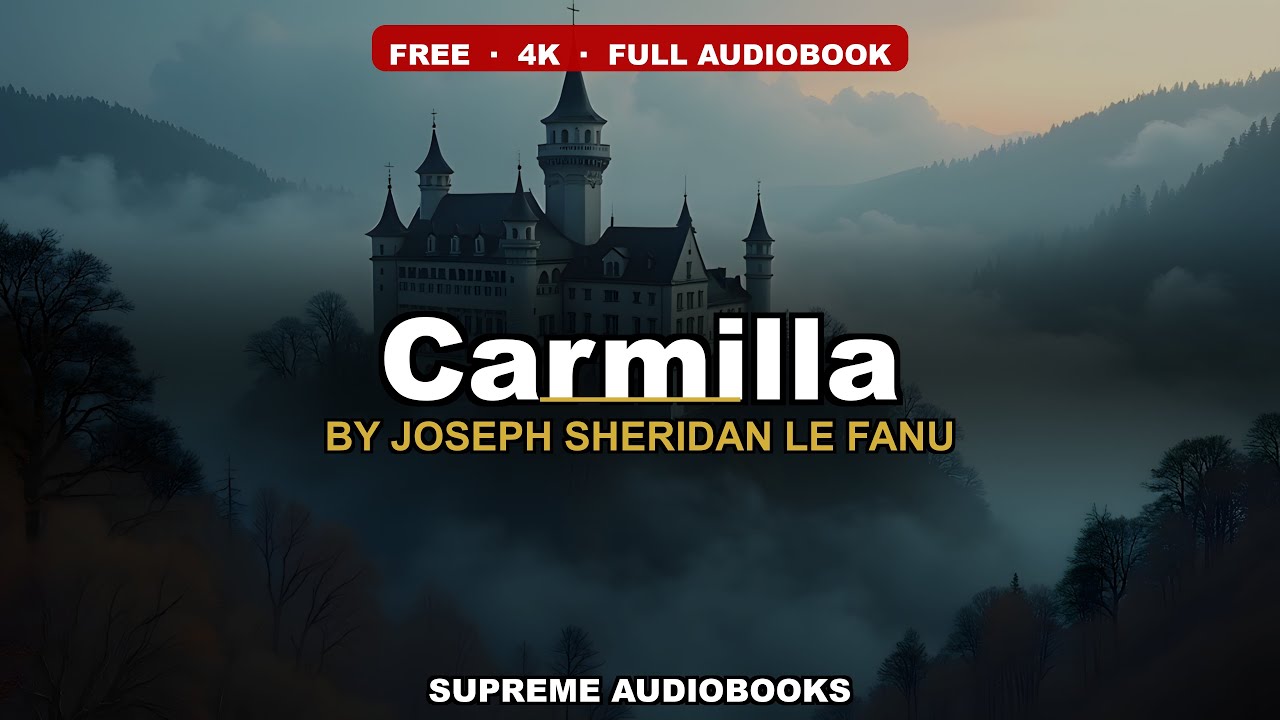
The 4K cinematic visuals accompanying this audiobook are generated by an AI image model from prompts derived from the source text. No copyrighted photos, paintings, or stock footage are used. AI generation is disclosed on every video on our YouTube channel as required by YouTube's altered/synthetic content policy.
English subtitles are transcribed from the LibriVox recording with OpenAI Whisper. Translations into the 11 other supported languages are produced by Meta's NLLB-200 neural translation model. No human translator's copyrighted translation is used.
Questions about sourcing or rights? See our DMCA & Sourcing policy or contact us.
Enjoyed this audiobook?
If you'd like to own a copy of The Purcell papers Volume II or hear a professionally produced edition, the links below help support free audiobook production at no extra cost to you.
As an Amazon Associate we earn from qualifying purchases. Audible / print links are affiliate.