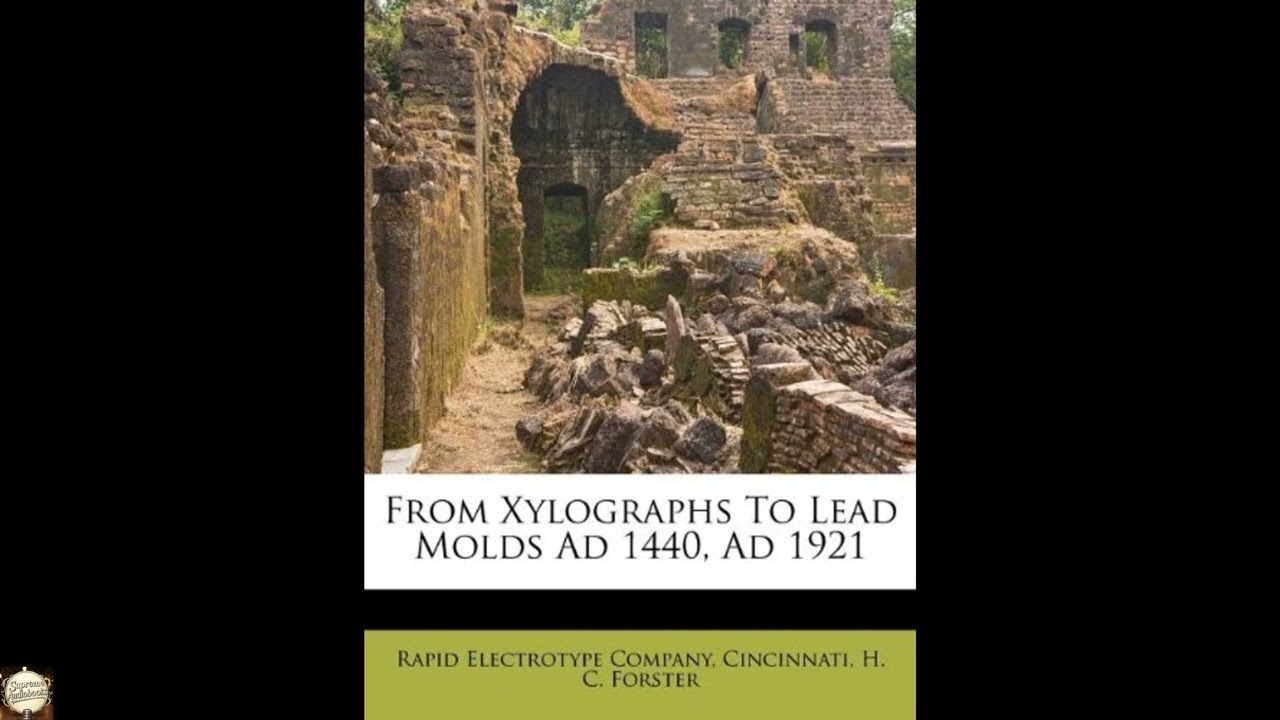
From Xylographs To Lead Molds Ad 1440, Ad 1921
"From Xylographs To Lead Molds Ad 1440, Ad 1921" may seem a dry recitation of historical facts, but this singular volume opens a fascinating window into the very mechanics of how human knowledge and artistry have been reproduced and disseminated across centuries. It is a sweeping narrative tracing the evolution of printing technology, from painstaking hand-carved woodblocks to sophisticated industrial processes. Why care today? Because this story reveals how ideas, images, and information broke free from scarcity, laying the groundwork for mass communication. These foundational shifts offer profound insight into our present-day digital landscape, showing how every innovation in sharing information builds upon a long chain of human invention. The narrative of "From Xylographs To Lead Molds" unfolds with the precision of a craftsman. It begins in the mid-15th century, illustrating the crucial role of the xylograph – the woodcut – in creating early printed images and simple texts. We witness the laborious process: an artisan carefully incising lines into a wooden block, each cut determining the fate of a printed page. These early forms, primarily religious images and playing cards, represent the nascent desire for reproducible content. The story progresses through the seismic shift introduced by Johannes Gutenberg and his movable type. Here, the focus moves from carving entire pages to assembling individual characters, allowing for unprecedented flexibility and speed in producing written text. The book shows how his invention spurred a continuous quest for efficiency and durability in the printing trade, driving the need for methods to duplicate printing surfaces without wearing out original type. This drive for greater scale and fidelity ultimately culminates in the sophisticated world of electrotyping, the technology perfected by the work's author. Listeners are guided through the chemical and electrical marvels that allowed for the creation of durable copper-faced plates, capable of enduring hundreds of thousands of impressions. The book describes the process from initial impression into soft wax or lead, to graphite dusting, and finally, the electrolytic bath. This progression reveals how craft evolved into an industrial process, making possible mass production of books, magazines, and advertisements that defined the early 20th century. The entity behind "From Xylographs To Lead Molds Ad 1440, Ad 1921" is a corporate collective: the Rapid Electrotype Company. This work functions as both a historical record and a testament to industrial prowess. Rapid Electrotype emerged as a significant player in the booming American printing industry during the late nineteenth and early twentieth centuries, providing the essential service of creating electrotype plates—precise metal duplicates. These allowed publishers to print vast quantities of books, magazines, and newspapers without risking wear on costly original type-settings. Operating from key industrial centers, the company’s growth paralleled the increasing demand for printed materials, from textbooks to advertising. While it did not produce "novels" or "poems," its contributions are evident in the millions of pages it helped bring to press. Through this publication, Rapid Electrotype Company positioned itself as a chronicler of its specialized field, presenting a meticulously researched historical lineage that culminated in its own advanced techniques. It stands as a unique voice—the collective embodiment of an industrial process, documenting technological advancements that defined an era of rapid expansion. One compelling theme in "From Xylographs To Lead Molds" is the relentless drive towards technological evolution. The book illustrates how each successive printing innovation—from the chisel of the xylographer to Gutenberg's movable type, then to stereotyping and electrotyping—represented a significant leap in efficiency and fidelity. For instance, the painstaking work of cutting a single woodblock, taking days, is contrasted with the factory-floor precision of an electrotyping plant, producing hundreds of duplicate plates swiftly. This progression highlights humanity's continuous quest to overcome physical limitations and accelerate information sharing. The work also powerfully enacts the theme of the democratization of knowledge. Before the printing press, books were rare, costly treasures. More efficient reproduction methods, detailed in the book, steadily chipped away at this exclusivity. When electrotyping made it possible to print massive, affordable runs of books and magazines, literature, news, and educational materials reached homes across society. The book argues that technological advancement in printing was a direct catalyst for cultural and educational expansion, profoundly altering public discourse and literacy. The steps involved in multiplying text illustrate how print extended the reach of ideas. To understand the emergence of "From Xylographs To Lead Molds," one must place it within the context of the early twentieth century, a period of profound industrial expansion and the ascendance of mass media. The years leading up to and immediately following 1921 witnessed America's economic boom, the rise of modern advertising, and an insatiable public appetite for printed materials—from newspapers to books. Publishers faced unprecedented demands for speed, volume, and quality. This era also marked a peak in scientific management and a fascination with technological progress. Specialized companies often produced publications to document their contributions or celebrate their craft. "From Xylographs To Lead Molds" fits this tradition, emerging from an industrial environment where print reproduction's perfection was a commercial imperative and a source of professional pride. It stands as a testament to the era’s belief in progress through innovation. To experience "From Xylographs To Lead Molds" as an audiobook is to immerse oneself in a detailed historical account guided by a voice that brings clarity to complex technical descriptions. The narration carries listeners through centuries of innovation with steady pacing, allowing ample time to conjure images of craftsmen laboring over woodblocks or the precise chemical processes of an electrotyping factory. The several hours of listening provide a substantial, unhurried examination. A well-modulated voice breathes life into technical details, transforming them into a compelling narrative of human ingenuity and industrial growth. The auditory experience can evoke the atmosphere of workshops and print shops, underscoring the sounds and efforts that accompanied printing's transformation.
Enjoyed From Xylographs To Lead Molds Ad 1440, Ad 1921? A few ways to support us
Audible & Amazon links are affiliate; we may earn a small commission at no extra cost.
About this production
Human narration by a volunteer reader from LibriVox.org, the public-domain audiobook project. LibriVox volunteers record literary works whose copyright has expired in the United States, releasing the resulting recordings into the public domain.
From Xylographs To Lead Molds Ad 1440, Ad 1921 by Rapid Electrotype Company. The underlying text is in the U.S. public domain. We do not republish any modern copyrighted edition, translation, or commentary.
The 4K cinematic visuals accompanying this audiobook are generated by an AI image model from prompts derived from the source text. No copyrighted photos, paintings, or stock footage are used. AI generation is disclosed on every video on our YouTube channel as required by YouTube's altered/synthetic content policy.
English subtitles are transcribed from the LibriVox recording with OpenAI Whisper. Translations into the 11 other supported languages are produced by Meta's NLLB-200 neural translation model. No human translator's copyrighted translation is used.
Questions about sourcing or rights? See our DMCA & Sourcing policy or contact us.
Enjoyed this audiobook?
If you'd like to own a copy of From Xylographs To Lead Molds Ad 1440, Ad 1921 or hear a professionally produced edition, the links below help support free audiobook production at no extra cost to you.
As an Amazon Associate we earn from qualifying purchases. Audible / print links are affiliate.
More Audiobooks

Graining And Marbling: A Series Of Practical Treatises On Material, Tools And Applia- Full Audiobook
Sketches from Concord and Appledore
Manners and monuments of prehistoric peoples
Great Inventions And Discoveries (1911)