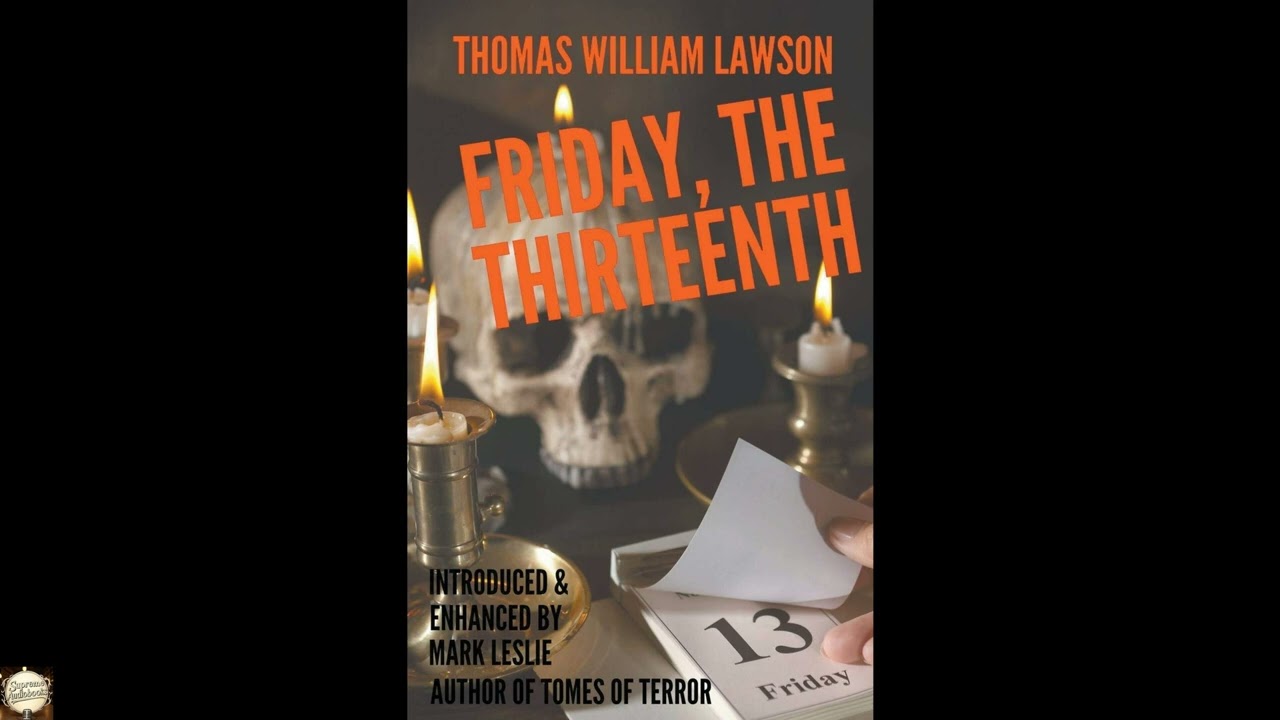
Friday, the Thirteenth
Some days are simply marked for chaos, etched into the calendar with an invisible, ominous hand. For the world of high finance at the turn of the 20th century, no date carried more foreboding than Friday, the Thirteenth. Thomas William Lawson, a man who not only observed but actively shaped the cutthroat arena of Wall Street, plunges listeners directly into the heart of this superstition and its terrifying potential. His novel, Friday, the Thirteenth, is far more than a simple tale of bad luck; it is a gripping, prescient examination of a system teetering on the brink, where fortunes are won and lost in the blink of an eye, and the human spirit is tested by the relentless pressures of greed and fear. This book remains startlingly relevant, a vivid illustration of how the collective psychology of the market can amplify both irrational belief and rational calculation into catastrophic consequence, a lesson that resonates powerfully with every boom and bust cycle since its original publication. The story unfolds in the high-stakes, gaslit world of early 20th-century New York City, where the ticker tape machine dictated destinies and the whisper of a rumor could send stocks plummeting. At the center of this maelstrom is Barton L. Holt, a powerful and audacious stockbroker who dares to challenge the established order. Holt is a man of intense conviction, driven by a deep-seated desire to expose and break the stranglehold of a shadowy, all-powerful financial syndicate. His plan is audacious: to orchestrate a market manipulation on the most ill-omened day of the calendar, hoping to exploit both the inherent weaknesses of the system and the superstitions that grip even the most hardened speculators. As the fateful day dawns, the tension mounts within Holt's lavish Wall Street office and across the financial district. Allies prove unreliable, enemies reveal their cunning, and the sheer scale of Holt's ambition threatens to consume him entirely. Every transaction, every shouted order, every shift in the market's pulse is a move in a grand, dangerous chess game played for unimaginable sums. Holt navigates a labyrinth of betrayal, strategic maneuvers, and personal sacrifice, his resolve constantly tested by the relentless pressure. The narrative pulls listeners into the frenetic energy of the trading floor and the quiet, calculating moments behind closed doors, building a compelling picture of a man wrestling not only with financial giants but also with his own conscience and the relentless march of fate. Thomas William Lawson, the author, was a truly remarkable figure of his era, born in Charlestown, Massachusetts, in 1860. Far from being a detached observer, Lawson was a self-made millionaire who achieved his vast wealth as a prominent financier and copper magnate, operating directly within the very Wall Street circles he would later so sharply criticize. His rise was meteoric, a testament to his keen business acumen and daring financial strategies. Yet, Lawson underwent a profound transformation, moving from a position of immense power within the financial establishment to becoming one of its most outspoken and celebrated critics. Lawson became a leading figure in the muckraking movement, a style of investigative journalism that sought to expose corruption and social injustice in early 20th-century America. His most famous non-fiction work, Frenzied Finance, published serially in Everybody's Magazine beginning in 1904, was an explosive exposé detailing the intricate web of deceit, manipulation, and unethical practices that underpinned much of the era's corporate finance. Friday, the Thirteenth emerged from this same wellspring of experience and moral conviction, allowing Lawson to channel his intimate knowledge of the market's dark underbelly into a fictional narrative that felt startlingly real. His place in the literary canon is unique, bridging the world of practical finance with the realm of social commentary and reform-minded fiction. He passed away in 1925, leaving behind a legacy of both financial daring and powerful social critique. At its core, Friday, the Thirteenth dissects the destructive power of unbridled greed and the moral compromises inherent in a capitalist system driven solely by profit. Lawson illustrates this vividly through Barton L. Holt's increasingly desperate strategies, showing how even a man with initially noble intentions can be drawn into ethically dubious actions by the sheer momentum of the market. Holt’s gamble, for example, is not merely about making money, but about dismantling a corrupt system—yet the methods he employs often mirror those of his adversaries, blurring the lines between hero and villain. The novel also powerfully interrogates the interplay between superstition and rationalism. While the narrative cleverly uses the titular date to heighten suspense, it ultimately suggests that human fear, overconfidence, and collective belief—whether in a cursed day or in an unshakeable market trend—are far more potent forces than any preordained fate. The frantic selling and buying on the trading floor, driven by rumor and panic, exemplify how belief can directly manifest as financial reality, often with devastating human cost. The book arrived at a pivotal moment in American history, following the Gilded Age's immense concentration of wealth and power into the hands of a few industrial titans and financiers. The period after the Civil War had seen a rapid expansion of industry and a largely unregulated financial sector, leading to immense fortunes but also widespread corruption, monopolies, and severe economic downturns. Public distrust of "trusts" and powerful corporations was growing, fueling the Progressive Era's call for reform. Lawson’s work emerged directly from this cultural milieu, capitalizing on a public eager for insider accounts of the financial world's shadowy dealings. His fictional narrative tapped into real anxieties about market manipulation and the vulnerability of ordinary investors, serving as both entertainment and a powerful piece of social commentary that resonated deeply with the era's reformist spirit. It was a story born of its time, but its concerns about financial ethics and human nature persist. Listening to Friday, the Thirteenth as an audiobook offers a particularly immersive experience, perfectly suiting the narrative's high-octane drama and its detailed portrayal of a bygone era. The several hours of listening time allow the listener to fully absorb the mounting tension and complex machinations that characterize Holt's audacious plan. A skilled narrator can brilliantly convey the rapid-fire dialogue of the trading floor, the hushed intensity of private conversations among conspirators, and the protagonist’s inner turmoil as he grapples with the enormous stakes. The vocal nuances can differentiate between the shrewd, calculating voices of the financiers and the desperate, hurried tones of the clerks, truly bringing the atmosphere of early 20th-century Wall Street to life. Pay close attention to the shifts in pacing—from moments of quiet, strategic planning to the overwhelming chaos of market crashes—and how the narration uses these shifts to amplify the story's powerful themes of ambition, risk, and the unpredictable nature of fate.
Enjoyed Friday, the Thirteenth? A few ways to support us
Audible & Amazon links are affiliate; we may earn a small commission at no extra cost.
About this production
Human narration by a volunteer reader from LibriVox.org, the public-domain audiobook project. LibriVox volunteers record literary works whose copyright has expired in the United States, releasing the resulting recordings into the public domain.
Friday, the Thirteenth by Thomas WIlliam Lawson. The underlying text is in the U.S. public domain. We do not republish any modern copyrighted edition, translation, or commentary.
The 4K cinematic visuals accompanying this audiobook are generated by an AI image model from prompts derived from the source text. No copyrighted photos, paintings, or stock footage are used. AI generation is disclosed on every video on our YouTube channel as required by YouTube's altered/synthetic content policy.
English subtitles are transcribed from the LibriVox recording with OpenAI Whisper. Translations into the 11 other supported languages are produced by Meta's NLLB-200 neural translation model. No human translator's copyrighted translation is used.
Questions about sourcing or rights? See our DMCA & Sourcing policy or contact us.
Enjoyed this audiobook?
If you'd like to own a copy of Friday, the Thirteenth or hear a professionally produced edition, the links below help support free audiobook production at no extra cost to you.
As an Amazon Associate we earn from qualifying purchases. Audible / print links are affiliate.