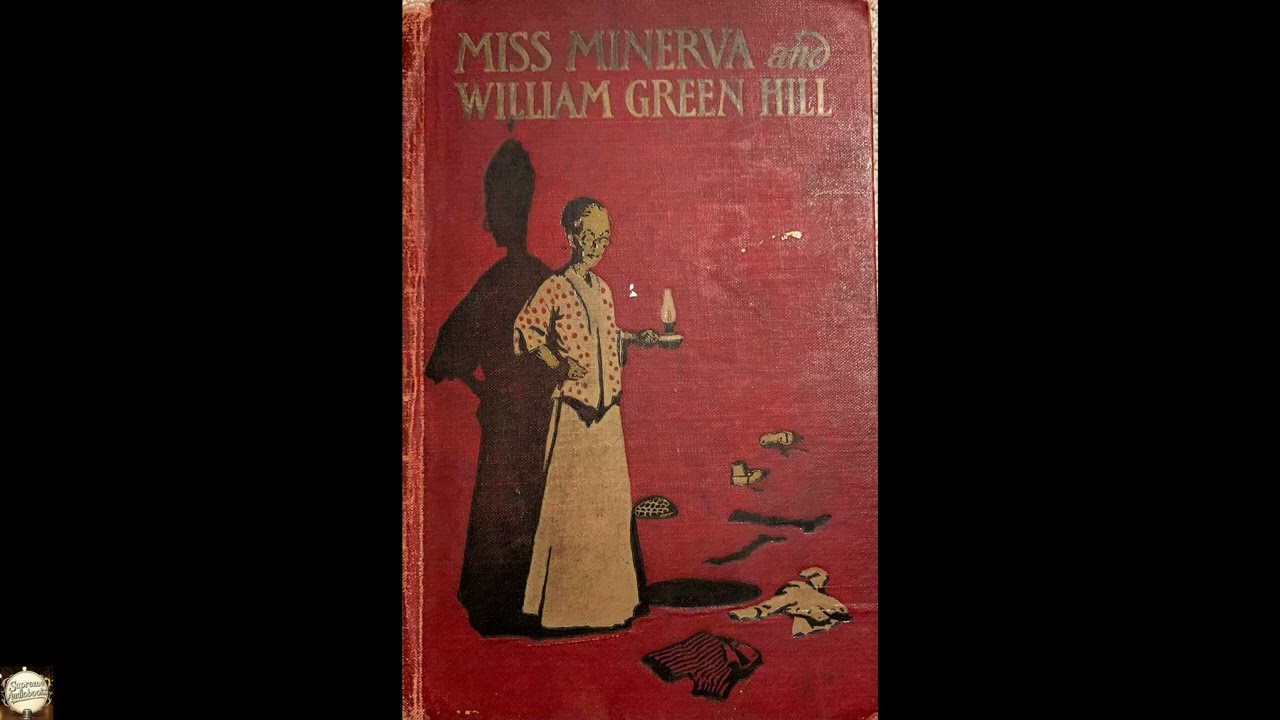
Miss Minerva and William Green Hill
Step into a world where the genteel manners of the Old South collide with the boundless energy of childhood in Frances Boyd Calhoun’s beloved tale, Miss Minerva and William Green Hill. This delightful story, first published in 1909, offers more than just a nostalgic glimpse into a bygone era; it serves up a hearty helping of humor and a thoughtful observation on the delightful friction between generations. Listeners today will find themselves charmed by the quaint customs and the ever-present sparkle of wit, reminding us that while times may change, the fundamental joys and exasperations of family life remain wonderfully constant. The story unfolds in a quiet Southern town, a place where neighborly gossip flows as freely as sweet tea and every resident plays a part in the community's gentle rhythm. At the heart of this world resides Miss Minerva, a woman of impeccable propriety, whose life runs on a meticulous schedule and a strict adherence to etiquette. Her meticulously ordered existence is thrown into delightful disarray with the arrival of her young grand-nephew, William Green Hill. William is a boy bursting with curiosity, a natural inclination for mischief, and an imagination that knows no bounds. He sees the world as a grand playground, a place ripe for adventure and experiment, much to Miss Minerva’s polite but profound consternation. From the moment William steps onto her porch, Miss Minerva’s carefully constructed world begins to tilt. His attempts to “improve” things—whether it’s giving a haircut to the family dog, attempting to make new clothes for a scarecrow, or rearranging the pantry shelves—lead to a series of comedic misunderstandings and minor catastrophes. The central conflict lies in the humorous tug-of-war between Miss Minerva’s desire to mold William into a proper young gentleman and William’s unwavering commitment to his own brand of innocent, often chaotic, ingenuity. As the story progresses, we watch as William’s antics, though trying, begin to subtly chip away at Miss Minerva’s rigid exterior, revealing the warmth and affection that lie beneath her formidable demeanor. The narrative follows their day-to-day encounters, painting a vivid picture of small-town life through William’s eyes and Miss Minerva’s increasingly exasperated, yet ultimately loving, responses. Frances Boyd Calhoun, born Frances Boyd Caldwell in 1866 in Calhoun, Georgia, was a writer whose observations of Southern life brought smiles to countless readers. She was the daughter of Reverend Green Hill Caldwell and Mary Ann Elizabeth Boyd Caldwell. After marrying Joseph C. Calhoun, she became a prolific author, primarily known for her endearing "Miss Minerva" series, which began with Miss Minerva and William Green Hill. This initial book proved so popular that it spawned several sequels, including Miss Minerva’s Baby, Miss Minerva’s Gowns, and Miss Minerva Broadcasts Her Bit, among others, cementing her place in the literary landscape of the early 20th century. Calhoun’s writing style often placed her within the tradition of Southern regionalist authors, celebrated for their "local color" and their affectionate portrayals of small-town communities. She possessed a keen ear for dialogue and a gentle touch for characterization, infusing her stories with a warmth and authenticity that resonated deeply with her audience. Her work, while often categorized as children's literature due to the presence of young protagonists, held a broader appeal, charming adults with its wit and nostalgic charm. Calhoun lived until 1945, leaving behind a legacy of humorous, heartwarming stories that continue to delight new generations. The enduring appeal of Miss Minerva and William Green Hill rests on its artful presentation of several relatable themes. One central idea is the perennial clash and eventual understanding between different generations. Miss Minerva represents the world of established rules and tradition, while William embodies the spirit of youthful spontaneity and unfettered imagination. Their interactions highlight the humor in their opposing viewpoints, but also the love that bridges the divide, showing how patience and an open heart can foster mutual respect. Another prominent theme is the beauty and comfort of community life in a bygone era. The town itself acts as a character, with neighbors often drawn into William’s escapades, illustrating how a close-knit society both supports and gently judges its members. For example, when William decides to "help" the local farmer by picking all his green watermelons, the town's reaction shifts from initial shock to a collective, good-natured amusement. Beyond generational differences, the book tenderly captures the essence of childhood innocence and the boundless wellspring of mischief that often accompanies it. William’s actions are never malicious; they stem from a genuine desire to understand or improve his surroundings, albeit with often disastrous results in adult eyes. His adventures, like his ingenious attempts to "cook" a frog or his earnest efforts to make a new dress for a doll from valuable fabric, remind us of the unfiltered logic of a child's mind. The novel also touches on the subtle changes within individuals, as Miss Minerva, despite her strictness, gradually softens and finds joy in William’s unique perspective, even as she attempts to rein it in. These themes are woven into the fabric of daily life, presenting a portrait of character and circumstance with a gentle hand. Frances Boyd Calhoun’s book emerged during a fascinating period in American literary and cultural history. Published in 1909, it arrived in the decades following the American Civil War and Reconstruction, a time when the South was actively shaping its identity in the face of immense change. The book reflects a certain strain of Southern literature from this era—one that often presented an idealized, sometimes nostalgic, view of small-town life, emphasizing manners, community bonds, and a gentle humor. It predates the grittier, more realistic Southern Gothic literature that would gain prominence later in the 20th century, offering instead a picture of a society trying to preserve its genteel traditions amidst modernization. The burgeoning market for popular fiction, particularly for stories that could appeal to both children and adults, provided fertile ground for Calhoun’s lighthearted yet meaningful narrative. Listening to Miss Minerva and William Green Hill as an audiobook offers a particular kind of pleasure. The story, with its emphasis on witty dialogue and the specific cadence of Southern speech, truly comes to life through skilled narration. You can hear the exasperation in Miss Minerva’s carefully modulated tones, the innocent eagerness in William Green Hill’s questions, and the distinctive voices of the various townspeople. The gentle, unhurried pacing of the narration mirrors the atmosphere of the story itself, allowing you to settle into the rhythms of this charming world. Over the course of several hours, you will appreciate how the performer brings out the humor and warmth of Calhoun's prose, making the experience akin to listening to a favorite relative recount a beloved family anecdote, ensuring every chuckle and every moment of tenderness resonates clearly.
Enjoyed Miss Minerva and William Green Hill? A few ways to support us
Audible & Amazon links are affiliate; we may earn a small commission at no extra cost.
About this production
Human narration by a volunteer reader from LibriVox.org, the public-domain audiobook project. LibriVox volunteers record literary works whose copyright has expired in the United States, releasing the resulting recordings into the public domain.
Miss Minerva and William Green Hill by Frances Boyd Calhoun. The underlying text is in the U.S. public domain. We do not republish any modern copyrighted edition, translation, or commentary.
The 4K cinematic visuals accompanying this audiobook are generated by an AI image model from prompts derived from the source text. No copyrighted photos, paintings, or stock footage are used. AI generation is disclosed on every video on our YouTube channel as required by YouTube's altered/synthetic content policy.
English subtitles are transcribed from the LibriVox recording with OpenAI Whisper. Translations into the 11 other supported languages are produced by Meta's NLLB-200 neural translation model. No human translator's copyrighted translation is used.
Questions about sourcing or rights? See our DMCA & Sourcing policy or contact us.
Enjoyed this audiobook?
If you'd like to own a copy of Miss Minerva and William Green Hill or hear a professionally produced edition, the links below help support free audiobook production at no extra cost to you.
As an Amazon Associate we earn from qualifying purchases. Audible / print links are affiliate.
![Children's Classics in Dramatic Form, Book Two. [1909] by Augusta Stevenson — free full audiobook](https://img.youtube.com/vi/h4bTKUeuO7U/maxresdefault.jpg)