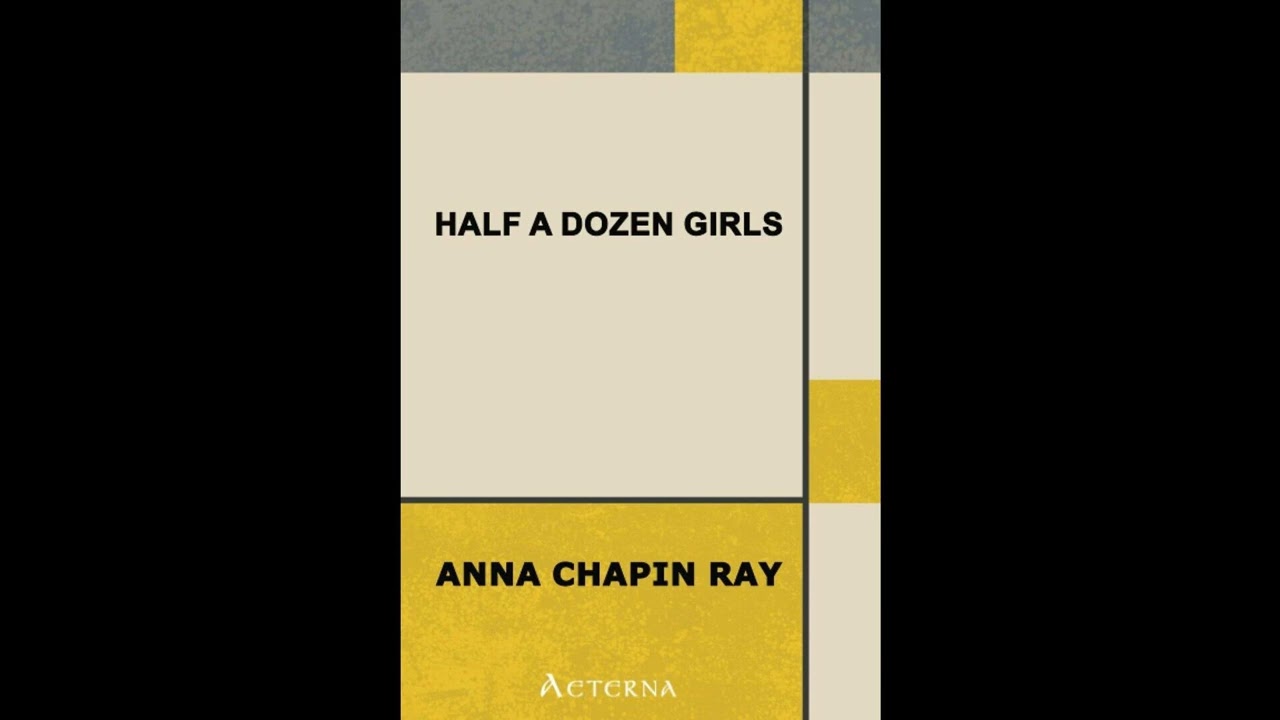
Half a Dozen Girls
Step into a quiet corner of the late nineteenth century with Anna Chapin Ray's Half a Dozen Girls, a delightful and perceptive story that continues to resonate with anyone who remembers the challenges and joys of growing up. This classic of children's literature, first published in 1890, offers more than just a nostalgic glance back at a bygone era; it serves as a profound meditation on the enduring power of friendship, the awkward dance of self-discovery, and the formative experiences that shape young lives. While the world outside Miss Olivia's schoolhouse has changed dramatically, the heart of this tale—the universal trials of adolescence and the search for one's place within a community—remains as fresh and pertinent as ever, inviting listeners to reflect on their own coming-of-age stories and the bonds that endure. The story unfolds within the charming, somewhat secluded world of Miss Olivia's school, a haven where six young women—Emily, Rose, Margaret, Felicia, Eleanor, and Theodora—gather for lessons and life. Each girl arrives with her own distinct personality, background, and set of quirks, setting the stage for both camaraderie and gentle friction. Emily, initially shy and introspective, often acts as the quiet observer, while the impulsive and good-hearted Rose brings a burst of energy to their group. Margaret is the earnest, studious one, Felicia possesses a touch of vanity and social ambition, Eleanor is practical and reliable, and Theodora, the youngest, views the world with wide-eyed innocence. Their initial interactions are marked by the formation of natural cliques, minor misunderstandings, and the occasional clash of wills that are so typical of young people finding their footing together. As the school year progresses, the girls face a series of small but significant trials. They grapple with academic struggles, the sting of perceived slights, the burden of responsibility, and the sometimes-difficult process of understanding one another’s differing perspectives. From a misunderstanding over a shared possession to the quiet anxieties of exam season, their daily lives provide ample opportunities for personal growth. Miss Olivia, a wise and gentle presence, guides them not just in their studies, but in the more subtle lessons of kindness, patience, and mutual respect. The narrative carefully charts their progress, showing how individual struggles are overcome through shared experience and how their initial differences gradually give way to a deeper, more genuine affection. The true arc of the story lies in their transformation from six disparate individuals into a cohesive and supportive circle of friends, a process that teaches them invaluable lessons about character, empathy, and the meaning of true companionship. Anna Chapin Ray, the gifted author behind Half a Dozen Girls, was born in East Haddam, Connecticut, in 1848, and lived until 1931. Her literary career flourished in the late nineteenth and early twentieth centuries, a period when literature for young readers, particularly young women, was gaining significant traction. Ray was educated at the renowned Miss Porter's School in Farmington, Connecticut, an experience that undoubtedly informed her nuanced understanding of girls' school life and the dynamics of female friendships. While she did not achieve the same level of enduring fame as some of her contemporaries, her works were widely read and appreciated in their time, known for their wholesome narratives and strong moral compass. Ray's writing often centered on the themes of character development, domesticity, and the moral education of young women, aligning her with a tradition of authors who sought to both entertain and instruct their audience. Her other notable books include Phebe, Her Profession (1893), Teddy, Her Book (1898), and Nathalie's Chum (1899), all of which continued her exploration of girlhood and the challenges of growing into womanhood. Ray's contribution to the literary landscape lies in her sensitive portrayal of inner lives and her commitment to crafting stories that celebrated virtue, resilience, and the quiet heroism of everyday life, earning her a cherished place in the canon of classic children's literature. The novel skillfully brings to life several profound themes that resonate beyond its historical setting. Friendship, perhaps the most central theme, is demonstrated through the evolving relationship between the six girls. Initially, we see budding rivalries and a struggle for individual recognition, such as when Felicia's proud nature clashes with Emily's diffidence. Yet, over time, a spirit of collective support emerges, exemplified when the girls unite to help one another through a difficult school project, moving beyond initial personal grievances to a shared sense of purpose and affection. Another significant theme is character development and moral growth. Each girl faces internal conflicts that test her resolve and encourage self-reflection. Rose, for instance, learns to temper her impulsiveness, while Emily gains confidence in expressing her thoughts and feelings. These transformations are not dramatic shifts but gradual awakenings, subtly illustrated through their daily interactions and the gentle guidance of Miss Olivia, showcasing how small choices and interactions cumulatively build a person's inner strength and integrity. The cultural and literary landscape of 1890, when Half a Dozen Girls first appeared, provides essential context for its creation and reception. America was emerging from the Gilded Age, a period marked by rapid industrialization, social change, and the solidification of Victorian ideals. For young women, education was increasingly valued, though still largely focused on character building and social graces rather than purely academic pursuits for a professional future. There was a burgeoning market for children's literature that aimed to instill moral values and proper conduct, often wrapped in engaging narratives. Authors like Louisa May Alcott had already paved the way for "girls' stories" that championed strong female characters and the importance of domestic virtues and education. Anna Chapin Ray's work fit perfectly into this tradition, offering parents and educators a wholesome story that encouraged empathy, diligence, and the cultivation of a good heart amidst the challenges of youth. The book emerged as a response to and a reflection of a society that prized integrity and wholesome development in its younger generations, particularly its daughters. Listening to Half a Dozen Girls as an audiobook offers a unique and intimate way to experience this gentle narrative. With a run length of several hours, it provides ample time for the story to unfold at a comfortable, unhurried pace, allowing listeners to fully immerse themselves in the late Victorian atmosphere of Miss Olivia's school. A skilled narrator will bring each of the six distinct girls to life, lending individual voices to Emily's quiet observations, Rose's spirited declarations, and Felicia's more refined tones, making their developing personalities tangible through sound. The nuances of the dialogue, which is crucial to conveying the girls' burgeoning friendships and occasional disagreements, can be truly appreciated through expert vocal performance, capturing their innocence, their occasional anxieties, and their genuine affection for one another. This auditory format creates an inviting and nostalgic atmosphere, allowing the listener to feel like an honorary seventh member of the group, present for every whispered confidence, shared laugh, and quiet moment of understanding that defines this enduring tale of girlhood.
Enjoyed Half a Dozen Girls? A few ways to support us
Audible & Amazon links are affiliate; we may earn a small commission at no extra cost.
About this production
Human narration by a volunteer reader from LibriVox.org, the public-domain audiobook project. LibriVox volunteers record literary works whose copyright has expired in the United States, releasing the resulting recordings into the public domain.
Half a Dozen Girls by Anna Chapin Ray. The underlying text is in the U.S. public domain. We do not republish any modern copyrighted edition, translation, or commentary.
The 4K cinematic visuals accompanying this audiobook are generated by an AI image model from prompts derived from the source text. No copyrighted photos, paintings, or stock footage are used. AI generation is disclosed on every video on our YouTube channel as required by YouTube's altered/synthetic content policy.
English subtitles are transcribed from the LibriVox recording with OpenAI Whisper. Translations into the 11 other supported languages are produced by Meta's NLLB-200 neural translation model. No human translator's copyrighted translation is used.
Questions about sourcing or rights? See our DMCA & Sourcing policy or contact us.
Enjoyed this audiobook?
If you'd like to own a copy of Half a Dozen Girls or hear a professionally produced edition, the links below help support free audiobook production at no extra cost to you.
As an Amazon Associate we earn from qualifying purchases. Audible / print links are affiliate.