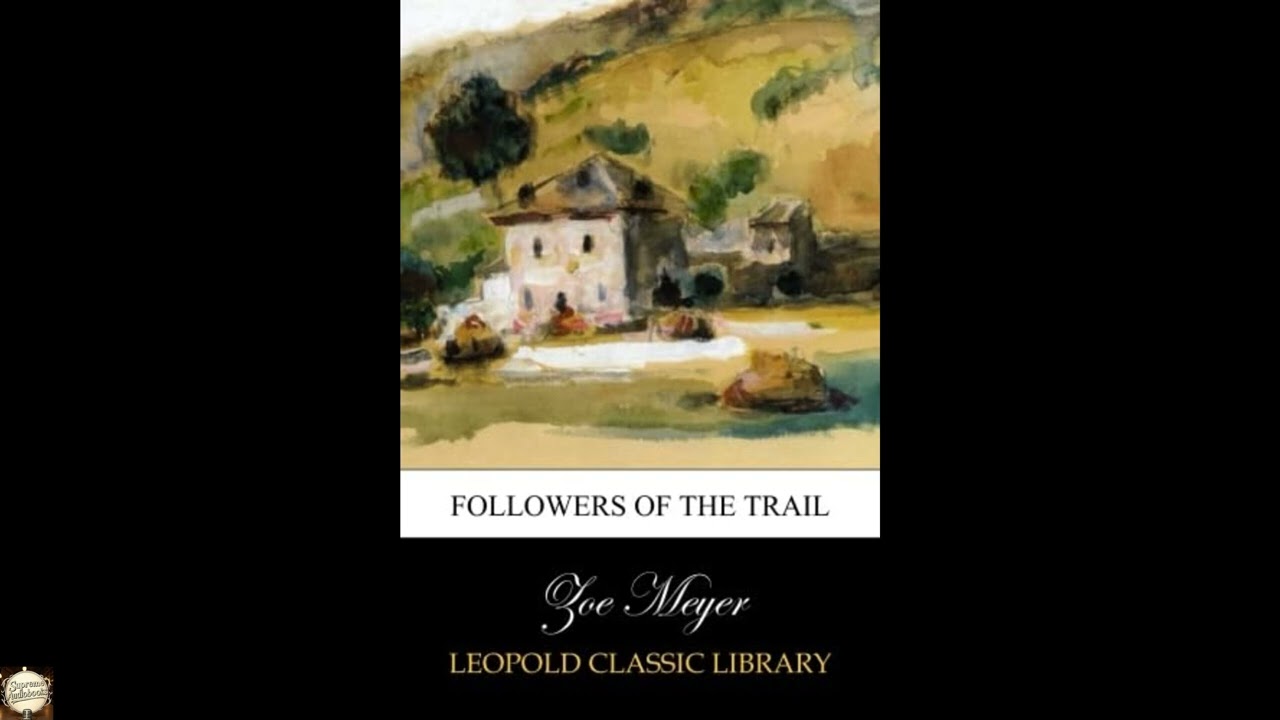
Followers of the Trail
“Followers of the Trail” stands as a towering achievement in American letters, a testament to the human spirit’s enduring capacity for hope and hardship against a backdrop of sweeping change. Zoe Meyer’s seminal work, a staple of classic literature, invites listeners into a world where resilience is etched into the landscape and personal choices ripple through entire communities. This is more than just a historical narrative; it is a profound meditation on progress, loss, and the unyielding bonds that define us, offering lessons on adapting to a shifting world that resonate powerfully even today. Listeners will discover not merely a story, but a reflection of their own struggles and triumphs in the face of life’s inexorable flow. The story unfolds in the windswept expanse of the American West, in a nascent settlement known as Haven’s End, during a period when the vast, untamed wilderness was rapidly giving way to the march of civilization. Our central figure is Elara Vance, a woman of formidable will and quiet dignity, who, alongside her steadfast husband Thomas, has poured her very soul into carving a life from the unforgiving plains. They arrived with little more than a dream and the clothes on their backs, joining a small collective of families united by a shared vision of prosperity and independence. The novel captures the rhythms of their lives—the backbreaking toil of planting and harvest, the simple joys of community gatherings, and the constant vigilance required to protect their homes from nature’s whims and encroaching elements. Their fragile existence is increasingly threatened not by the land itself, but by forces far beyond their control. The looming presence of the Iron Serpent—the railroad—casts a long shadow, promising connection and progress while simultaneously threatening to uproot their hard-won tranquility. The arrival of land speculators and a powerful, opportunistic corporate entity intent on seizing vital water rights ignites a bitter struggle. Elara, along with her neighbors, finds herself at the forefront of this fight, not just for their farms, but for the very soul of Haven’s End and the principles upon which it was founded. As alliances are tested and betrayals emerge, the community must decide whether to cling to the fading dream of self-sufficiency or embrace an uncertain future defined by outside influences. The narrative builds with a compelling tension, illustrating the sacrifices made and the moral compromises faced by ordinary people caught in the crucible of extraordinary change. Zoe Meyer, the visionary author behind "Followers of the Trail," emerged as a distinctive voice in American letters during the late nineteenth and early twentieth centuries. Born into a modest family in rural Ohio, she experienced firsthand the profound societal shifts that transformed the nation from an agrarian society to an industrial powerhouse. Her early life, marked by keen observation of local farming communities and a deep engagement with their oral histories, profoundly shaped her literary perspective. Meyer’s education, though unconventional for a woman of her time, included extensive reading of the European realists and American regionalists, influences evident in her meticulous attention to detail and her empathetic portrayal of ordinary lives. She spent several years teaching in a one-room schoolhouse in Nebraska, a period that further immersed her in the struggles and spirit of the frontier settlers and their descendants. Meyer's literary career was not prolific in terms of sheer volume, but each of her works, including "The River’s Memory" and "Homestead Echoes," contributed to her growing reputation as a chronicler of the American heartland. She was often associated with the burgeoning movement of American Realism, though her writing possessed a lyrical quality and an underlying philosophical depth that set her apart. She was celebrated for her ability to infuse everyday struggles with epic significance, elevating the lives of farmers, pioneers, and small-town residents to the status of heroic figures in their own right. Her work is now recognized as essential for understanding the psychological and social transformations of the era, securing her a permanent and cherished place within the literary canon as a champion of authentic American storytelling. "Followers of the Trail" dissects several crucial themes that remain strikingly relevant. One prominent theme is the resilience of the human spirit in the face of overwhelming adversity. This manifests in Elara Vance's unwavering determination to protect her home and community, even as external forces seem insurmountable. Consider the vivid scene where, after a devastating hailstorm, the families of Haven’s End gather not in despair, but to methodically assess the damage, share what little they have left, and begin the arduous process of rebuilding, their collective will forged stronger by shared suffering. This communal act of defiance against nature’s fury speaks volumes about their inner fortitude. Another powerful theme is the inevitable march of progress and its impact on traditional ways of life. The railroad and the land speculators represent the encroaching industrial age, threatening to erase the agrarian existence the settlers have so painstakingly built. Meyer beautifully illustrates this through the character of young Caleb Vance, Elara’s son, who feels the pull of the distant cities and their promise of new opportunities, creating a poignant tension between loyalty to his roots and the allure of the unknown. His internal conflict symbolizes the larger societal dilemma of a nation grappling with its own modernization, highlighting the often-painful trade-offs inherent in advancement. The novel also expertly handles the theme of community versus self-interest, as characters are forced to choose between the collective good and personal gain, often with profound consequences for the entire settlement. The historical backdrop against which "Followers of the Trail" was conceived and published was one of profound upheaval in American society. The period following the Civil War saw an unprecedented acceleration of westward expansion, coupled with rapid industrialization and urbanization. The myth of the untamed frontier was giving way to fenced-in ranches, railways, and commercial enterprises. This era also witnessed the rise of powerful corporations and increasing economic disparity, leading to intense debates about land ownership, natural resources, and the rights of the common farmer against powerful business interests. Literary movements of the time, particularly Realism and Naturalism, sought to depict life as it truly was, often focusing on the struggles of ordinary people against societal forces and environmental challenges. Meyer’s work emerged from this fertile ground, a direct response to her observations of these seismic shifts and her desire to give voice to those often overlooked in the grand narratives of progress. She captured the dying embers of one way of life and the uncertain dawn of another, offering a crucial perspective on a nation in flux. Listening to "Followers of the Trail" as an audiobook offers a uniquely immersive experience, allowing the story’s unhurried pace and rich characterizations to unfold with profound impact. The narrator’s voice becomes the very wind across the plains, the creak of a wagon wheel, or the hushed murmurs of a community gathered around a hearth. With several hours of thoughtful narration, listeners can truly settle into the world of Haven’s End, allowing the subtle nuances of dialogue and the evocative descriptions of the landscape to paint vivid pictures in their minds. Pay particular attention to the narrator’s ability to differentiate the various characters, from Elara’s quiet strength to Thomas’s weathered pragmatism, and the underlying current of anxiety that often permeates their exchanges. The audio format enhances the novel's atmospheric quality, drawing one into the profound silence of the open country, occasionally punctuated by the sounds of labor or the distant, ominous whistle of an approaching train, deepening the emotional resonance of this enduring classic.
Enjoyed Followers of the Trail? A few ways to support us
Audible & Amazon links are affiliate; we may earn a small commission at no extra cost.
About this production
Human narration by a volunteer reader from LibriVox.org, the public-domain audiobook project. LibriVox volunteers record literary works whose copyright has expired in the United States, releasing the resulting recordings into the public domain.
Followers of the Trail by Zoe Meyer. The underlying text is in the U.S. public domain. We do not republish any modern copyrighted edition, translation, or commentary.
The 4K cinematic visuals accompanying this audiobook are generated by an AI image model from prompts derived from the source text. No copyrighted photos, paintings, or stock footage are used. AI generation is disclosed on every video on our YouTube channel as required by YouTube's altered/synthetic content policy.
English subtitles are transcribed from the LibriVox recording with OpenAI Whisper. Translations into the 11 other supported languages are produced by Meta's NLLB-200 neural translation model. No human translator's copyrighted translation is used.
Questions about sourcing or rights? See our DMCA & Sourcing policy or contact us.
Enjoyed this audiobook?
If you'd like to own a copy of Followers of the Trail or hear a professionally produced edition, the links below help support free audiobook production at no extra cost to you.
As an Amazon Associate we earn from qualifying purchases. Audible / print links are affiliate.