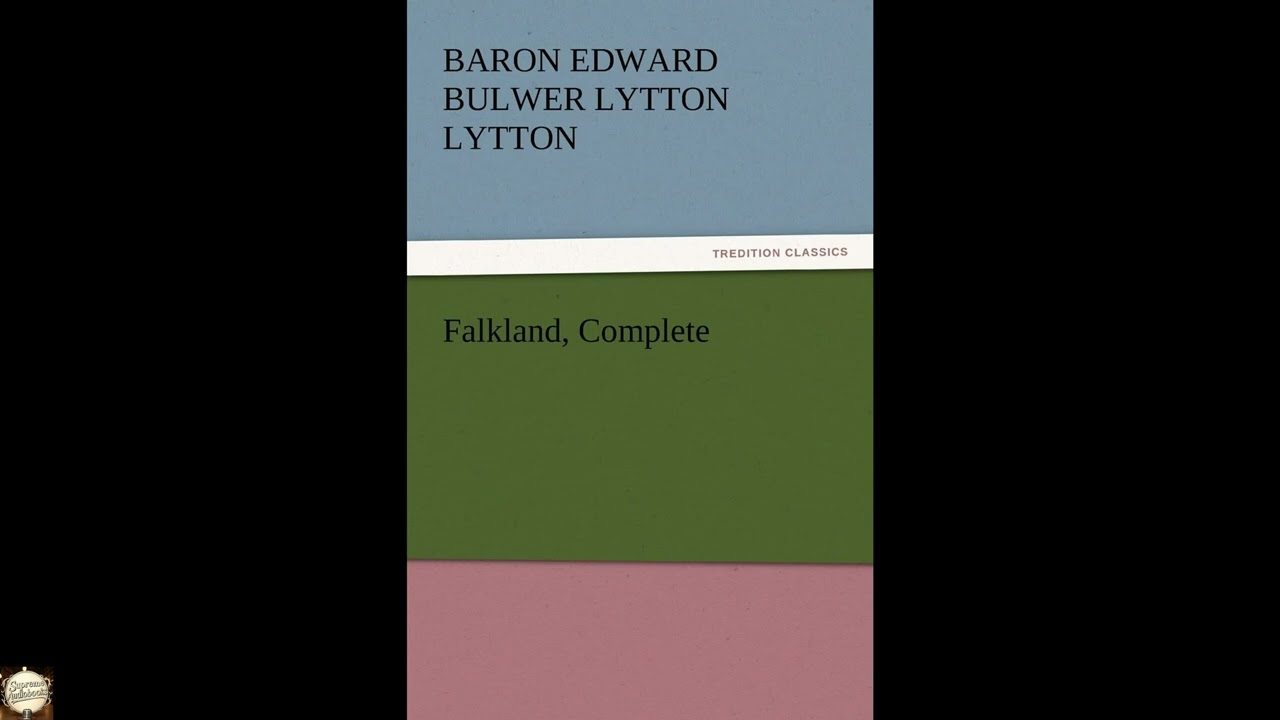
Falkland, Complete
In a world often defined by superficial appearances and rigid social codes, what happens when two souls find a profound connection that violates every convention? This is the central question posed by Edward Bulwer-Lytton’s Falkland, Complete, a novel that pierces through the glittering surface of Regency society to expose the profound melancholies and desperate passions simmering beneath. Originally published in the heady days of Romanticism, this story asks us to consider the price of forbidden love, the weight of societal judgment, and the ultimate search for personal happiness against a backdrop of unforgiving moral expectations. It is a potent reminder that the heart’s desires have always clashed with the dictates of decorum, creating conflicts as relevant to us today as they were to its first readers. The narrative introduces us to the eponymous Falkland, a man of refined intellect and deep emotional sensitivity, yet one burdened by a pervasive sense of world-weariness and disillusionment with society. He moves through the elite circles of Georgian England and the sophisticated salons of France, observing the vanity and hypocrisy around him with a cynical eye. His life seems destined for a solitary, introspective path until he encounters Emily Clavering. Emily is a woman of quiet grace and virtue, unhappily married to Sir John Clavering, a man described as honorable but lacking the intellectual and emotional depth to truly connect with his wife. Their marriage, a product of social arrangement rather than mutual affection, leaves Emily in a state of quiet resignation. Falkland and Emily are drawn to each other with an irresistible force, their shared sensibilities and unspoken yearnings forging an instant, profound bond. Their connection quickly deepens from intellectual understanding to a passionate, yet clandestine, love. The novel meticulously details the blossoming of this illicit affection, exploring the delicate dance of stolen glances, veiled conversations, and the agonizing awareness of the dangers they face. Their secret meetings become their only refuge from the oppressive reality of their circumstances, a fragile haven built on a foundation of increasing peril. As their feelings intensify, so too does the tension, pushing them toward a precipice where their personal desires threaten to collide violently with the unyielding moral framework of their society, risking scandal, ruin, and heartbreak for all involved. The author of this compelling drama was Edward Bulwer-Lytton (1803-1873), a figure whose life was as colorful and dramatic as any of his fictional creations. Born into an aristocratic family, he inherited a baronetcy and later became a baron, serving as a Member of Parliament and even as Colonial Secretary. His public life was marked by political ambition and social prominence, yet his private existence was often turbulent. He endured a famously acrimonious marriage to Rosina Doyle Wheeler, which ended in a scandalous separation and public accusations of cruelty and infidelity from both sides. This personal experience undoubtedly informed his frequent portrayal of unhappy marriages and the complexities of human relationships in his fiction. Bulwer-Lytton was a remarkably prolific writer, producing a vast body of work across various genres, including historical novels like The Last Days of Pompeii and Rienzi, Gothic tales such as Eugene Aram, and social commentaries like Pelham. He was a leading figure in the "Silver Fork" school of fiction, which focused on the manners and morals of the upper classes, often with a satirical edge. Though immensely popular in his day, his reputation suffered somewhat in later years, partly due to his penchant for elaborate prose and sometimes melodramatic plots. Nevertheless, his literary output left a significant mark, influencing many writers and contributing substantially to the development of the English novel. His work often grappled with themes of social class, ambition, love, and fate, reflecting the rapidly changing Victorian world around him. Falkland is a powerful examination of forbidden love, presenting it not as mere transgression, but as a profound yearning for genuine connection in a world that often denies it. The text vividly portrays Falkland’s internal conflict, torn between his passionate affection for Emily and the societal strictures that deem their love a sin. An early scene, perhaps, shows Falkland’s solitary walks, where his philosophical musings repeatedly return to the emptiness of life without true companionship, foreshadowing his eventual devotion to Emily. Another key theme is disillusionment with society, particularly its hypocrisy and superficiality. Bulwer-Lytton deftly contrasts the outward politeness of high society with the underlying currents of gossip, judgment, and moral rigidity. The quiet suffering of Emily Clavering, trapped in a loveless marriage while maintaining a façade of propriety, underscores this critique, illustrating the personal cost of upholding appearances. Additionally, the novel grapples with the destructive power of passion when it conflicts with duty, and the idea of personal fate or destiny. Falkland often muses on the idea that certain individuals are doomed to melancholy or intense, ultimately tragic, loves. The very structure of the novel, focusing on the inevitable consequences of their secret, amplifies this sense of impending doom. The narrative’s atmosphere of melancholic reflection and its focus on intense emotional states exemplify the Romantic literary tradition, where individual feeling and profound sentiment were elevated above cold reason or social convention. The book, therefore, serves as both a compelling story and a literary artifact illuminating the concerns of its era. Published in 1827, Falkland emerged during the tail end of the Regency era and the dawn of the Victorian age in England—a period characterized by significant social and cultural shifts. It was a time when the exuberance and moral laxity of the Regency gave way to a growing emphasis on Victorian earnestness and moral rectitude, though the undercurrents of the former still flowed strongly. The novel's themes of intense emotion, individual suffering, and rebellion against societal norms perfectly aligned with the burgeoning Romantic movement, which had seen the rise of poets like Lord Byron and Percy Bysshe Shelley, figures known for their passionate verses and often controversial lifestyles. Bulwer-Lytton, who was deeply influenced by Byron, channeled much of that era's fascination with the melancholic hero and the doomed love affair into his prose. The popularity of the "Silver Fork" novel also provided a receptive audience for stories that both critiqued and reveled in the lives of the upper classes. Falkland captures this specific cultural moment, reflecting the anxieties and desires of a society wrestling with changing moral landscapes and the enduring power of human emotion. Listening to Falkland, Complete as an audiobook offers a singular opportunity to immerse oneself in its eloquent prose and profound emotional landscape. The narrator's voice becomes the conduit for Bulwer-Lytton's often rich and reflective language, bringing to life the inner turmoil of Falkland and the quiet desperation of Emily. Listen for the subtle nuances in the narrator’s delivery that distinguish between the characters’ voices, particularly in their poignant dialogues and Falkland’s extensive introspective passages. The pacing of the narration will likely mirror the novel's deliberate unfolding, allowing the listener ample time to absorb the philosophical undercurrents and the intricate emotional development of the plot. The run length, several hours in total, makes it an ideal companion for extended periods of contemplation—perhaps during a long drive or a quiet evening at home—where the building atmosphere of longing and impending consequence can fully envelop the listener, transforming a written story into a deeply resonant auditory experience.
Enjoyed Falkland, Complete? A few ways to support us
Audible & Amazon links are affiliate; we may earn a small commission at no extra cost.
About this production
Human narration by a volunteer reader from LibriVox.org, the public-domain audiobook project. LibriVox volunteers record literary works whose copyright has expired in the United States, releasing the resulting recordings into the public domain.
Falkland, Complete by Baron Edward Bulwer Lytton Lytton. The underlying text is in the U.S. public domain. We do not republish any modern copyrighted edition, translation, or commentary.
The 4K cinematic visuals accompanying this audiobook are generated by an AI image model from prompts derived from the source text. No copyrighted photos, paintings, or stock footage are used. AI generation is disclosed on every video on our YouTube channel as required by YouTube's altered/synthetic content policy.
English subtitles are transcribed from the LibriVox recording with OpenAI Whisper. Translations into the 11 other supported languages are produced by Meta's NLLB-200 neural translation model. No human translator's copyrighted translation is used.
Questions about sourcing or rights? See our DMCA & Sourcing policy or contact us.
Enjoyed this audiobook?
If you'd like to own a copy of Falkland, Complete or hear a professionally produced edition, the links below help support free audiobook production at no extra cost to you.
As an Amazon Associate we earn from qualifying purchases. Audible / print links are affiliate.