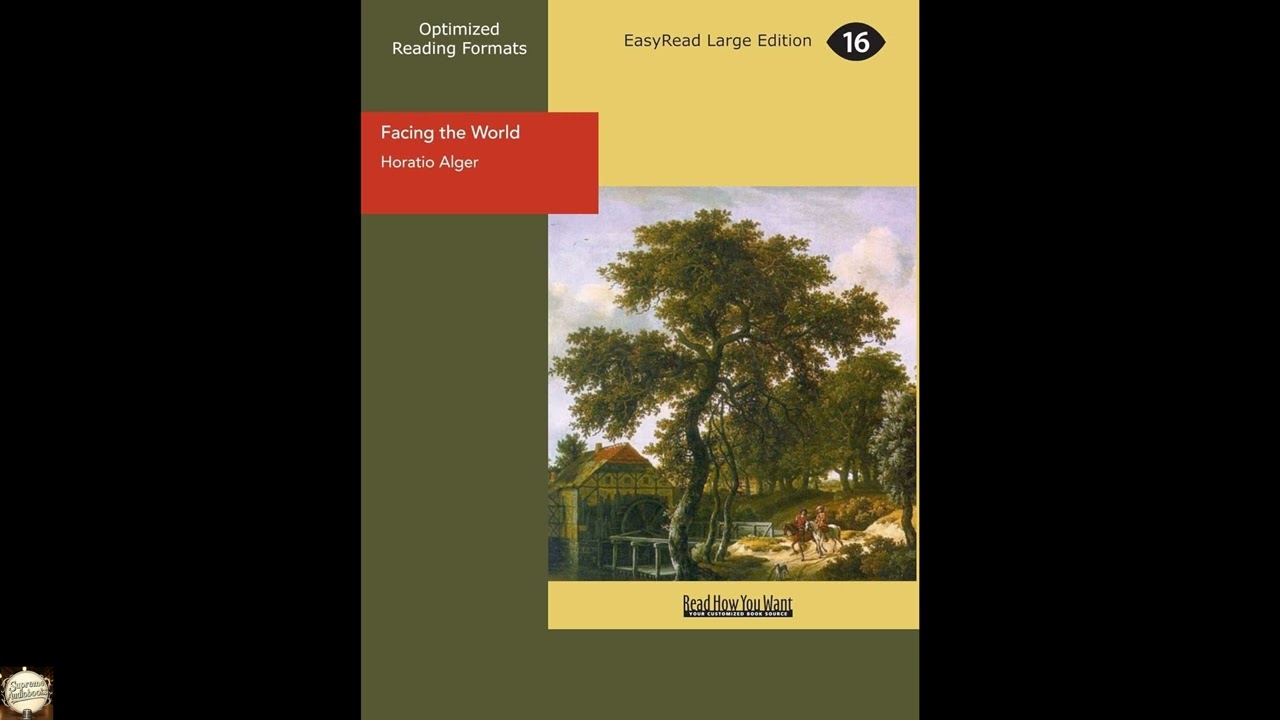
Facing the World
Horatio Alger's Facing the World arrives as a resonant whisper from a bygone era, yet its core message speaks with surprising clarity to anyone striving for a foothold in today's rapidly changing landscape. More than a simple story of overcoming adversity, it presents a compelling portrait of self-reliance, moral fortitude, and the unyielding belief that honest effort can pave the way to success. This isn't just a historical curiosity; it’s a narrative blueprint for character, a testament to the power of perseverance when all odds seem stacked against a hopeful individual, offering a perspective that continues to inspire those who must confront their own challenges head-on. The narrative introduces young Ben Carter, a boy from humble beginnings, cast into a bustling, often unforgiving world with little more than his wits and an earnest disposition. He quickly learns the harsh realities of poverty and the struggle for survival in a growing metropolis. Without family or financial support, Ben’s initial endeavors are marked by hardship, as he grapples with finding steady work and a safe place to lay his head. He encounters both the benevolence of strangers and the predatory nature of those who would exploit the vulnerable. The story meticulously details his early attempts at various jobs – running errands, selling newspapers, performing odd tasks – each experience a trial in his budding character. Ben's central conflict revolves around his unwavering commitment to honesty and hard work in a world where shortcuts and deceit often seem more profitable. Despite temptations and setbacks, he consistently chooses the path of integrity. This steadfastness gradually begins to attract the attention of upright citizens who recognize his intrinsic worth. The arc of the story follows Ben as he navigates these challenges, demonstrating his capacity for growth and his refusal to succumb to despair. He builds small networks of support and slowly but surely begins to ascend the ladder of opportunity, always through legitimate means, showcasing the power of a good reputation earned through consistent, upright conduct. The author, Horatio Alger Jr. (1832-1899), remains an iconic, if sometimes controversial, figure in American letters. Born in Revere, Massachusetts, and educated at Harvard Divinity School, Alger initially pursued a career as a Unitarian minister. However, a scandal involving young boys led to his resignation, and he subsequently relocated to New York City. It was there, amidst the city's burgeoning population and its visible class disparities, that Alger found his true calling: writing moralistic tales for young readers. He became an ardent advocate for the city's many impoverished street children, often working directly with them, and their struggles deeply informed his prolific output. His other notable works, such as Ragged Dick, Luck and Pluck, and Tattered Tom, cemented his reputation as the primary chronicler of the "rags-to-riches" narrative, a powerful myth that profoundly shaped American identity during the Gilded Age. Alger's stories, though often criticized for their formulaic plots, played a significant role in popular culture, championing the virtues of industriousness and probity. His narratives, while sometimes simplifying complex social issues, provided millions of readers with optimistic visions of upward mobility. He crafted a distinct literary niche, becoming synonymous with the American Dream, popularizing the idea that any young person, regardless of birthright, could achieve success through a combination of pluck, hard work, and good fortune, thus securing his enduring, if sometimes debated, place in the canon of American literature. Facing the World enacts several core themes with a directness characteristic of Alger's style. First among these is self-reliance. Ben Carter embodies this from the outset; he does not wait for a benefactor but actively seeks solutions to his own problems, whether it's finding a place to sleep or earning a meager meal. An early scene finds him diligently searching for odd jobs, demonstrating his initiative rather than succumbing to begging. Second, the book robustly champions the theme of virtue rewarded. Time and again, Ben's honesty and kindness, even in the face of temptation or injustice, lead to unexpected positive outcomes. For instance, his decision to return a lost sum of money, though he desperately needed it himself, results in an appreciative reward and the respect of a person who later proves instrumental in his betterment. A third powerful theme is perseverance against adversity. Ben faces numerous disappointments, from losing a job through no fault of his own to being swindled by unscrupulous characters. Yet, he never allows these setbacks to break his spirit, consistently finding the resolve to try again. This relentless optimism, coupled with his good character, gradually shifts his fortunes, underscoring Alger's belief that resilience is a crucial ingredient for success. The narrative consistently shows that even small acts of integrity and sustained effort can accumulate into substantial progress, affirming the moral universe Alger so carefully constructed for his readership. This work emerged during the late nineteenth century, a period of immense social and economic transformation in the United States, often referred to as the Gilded Age. Following the Civil War, America experienced rapid industrialization, burgeoning urbanization, and waves of immigration. This era created both unprecedented opportunities and stark inequalities, with vast fortunes being made alongside widespread urban poverty. Culturally, there was a strong emphasis on individual initiative and the Protestant work ethic, alongside anxieties about social mobility and the moral decay of city life. Alger's stories, with their clear moral lessons and optimistic portrayals of young men rising from destitution to respectability, provided a reassuring narrative framework in a time of great flux. They offered a hopeful vision that appealed to a public grappling with the complexities of a new industrial society, reflecting a widespread cultural belief in the "self-made man." Listening to Facing the World as an audiobook offers a singular opportunity to immerse oneself in this foundational American narrative. A skilled narrator breathes vibrant life into Ben Carter's earnest struggles, the distinctive voices of the various characters he encounters, and the detailed descriptions of a bustling, bygone era. The several-hour run length makes it an ideal companion for commutes, long walks, or quiet evenings, allowing for a sustained engagement with the story without demanding visual attention. Listen for the narrator's pacing, which can emphasize the earnestness of Ben’s dialogue or the descriptive qualities of Alger's prose, evoking the atmosphere of gas lamps and horse-drawn carriages. The audio format allows the listener to fully appreciate the narrative’s directness and the straightforward moral philosophy that shaped generations of readers, bringing the classic storytelling tradition vividly to life.
Enjoyed Facing the World? A few ways to support us
Audible & Amazon links are affiliate; we may earn a small commission at no extra cost.
About this production
Human narration by a volunteer reader from LibriVox.org, the public-domain audiobook project. LibriVox volunteers record literary works whose copyright has expired in the United States, releasing the resulting recordings into the public domain.
Facing the World by Horatio Alger. The underlying text is in the U.S. public domain. We do not republish any modern copyrighted edition, translation, or commentary.
The 4K cinematic visuals accompanying this audiobook are generated by an AI image model from prompts derived from the source text. No copyrighted photos, paintings, or stock footage are used. AI generation is disclosed on every video on our YouTube channel as required by YouTube's altered/synthetic content policy.
English subtitles are transcribed from the LibriVox recording with OpenAI Whisper. Translations into the 11 other supported languages are produced by Meta's NLLB-200 neural translation model. No human translator's copyrighted translation is used.
Questions about sourcing or rights? See our DMCA & Sourcing policy or contact us.
Enjoyed this audiobook?
If you'd like to own a copy of Facing the World or hear a professionally produced edition, the links below help support free audiobook production at no extra cost to you.
As an Amazon Associate we earn from qualifying purchases. Audible / print links are affiliate.