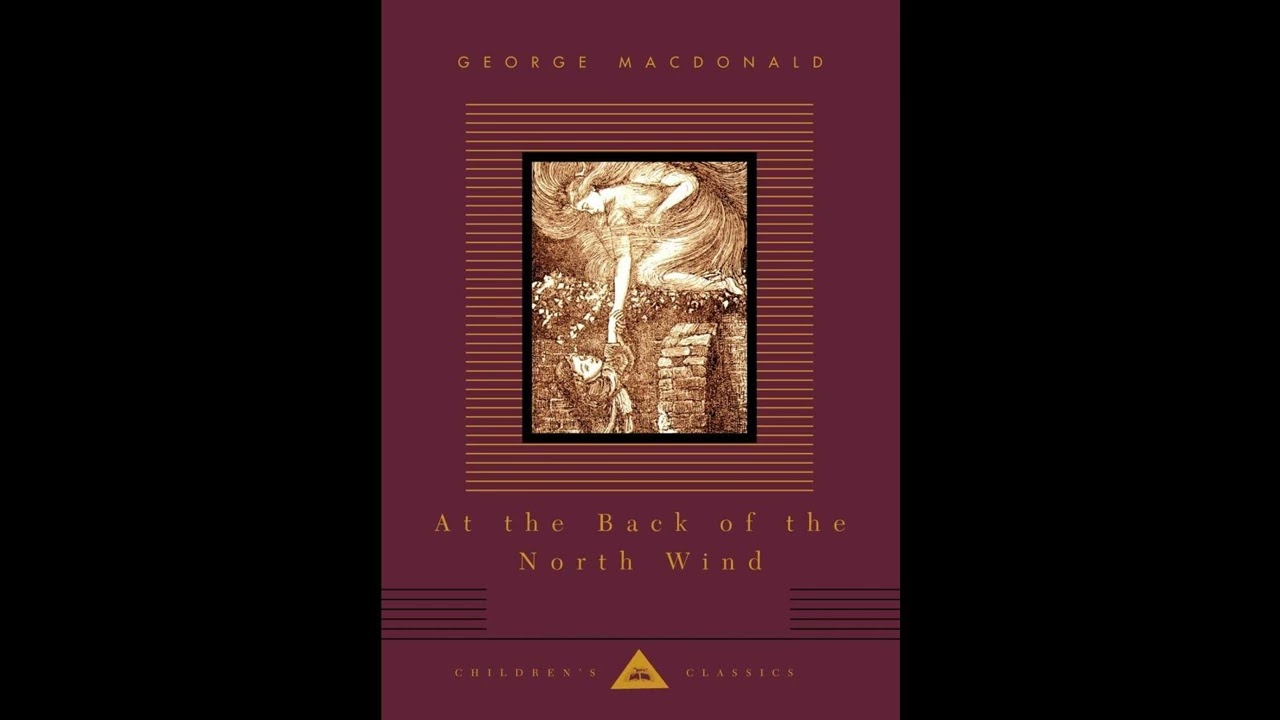
At the Back of the North Wind: Illustrated
Step into a world where the ordinary meets the miraculous, where the biting chill of the wind hides a benevolent spirit, and a young boy's pure heart unlocks secrets beyond the veil of reality. George MacDonald's At the Back of the North Wind is more than a children's story; it is a profound philosophical allegory that invites listeners of all ages to reconsider their understanding of suffering, compassion, and the interconnectedness of existence. This celebrated work, first published in the late nineteenth century, continues to resonate today by offering solace and insight into the human condition, presenting a vision of divine love that transforms adversity into grace. It challenges us to look beyond the surface of things, to find beauty and purpose in the seemingly harsh realities of life, and to embrace the transformative power of faith and imagination. The story introduces us to Diamond, a small boy of humble origins living in a stable in a bustling city. His life, though simple, is anything but mundane, for Diamond possesses a unique sensitivity, an ability to hear and see things others cannot. One night, a peculiar hole appears in the wall of his attic room, and through it, he discovers a most unusual companion: the North Wind herself. She is a magnificent, powerful, and often stern figure, appearing sometimes as a beautiful woman, sometimes as a force of nature. Diamond soon finds himself caught up in a series of extraordinary experiences, as North Wind takes him on her errands across the land and even into the heavens. These aerial excursions with North Wind are central to Diamond's growth. He witnesses a wide array of human experiences: the despair of the poor, the sorrow of the grieving, the joy of the simple-hearted. He watches North Wind carry souls away, sometimes gently, sometimes with a tempestuous force, learning that her seemingly destructive actions are always part of a greater, loving design. Diamond's unique perspective allows him to understand the meaning behind events that would otherwise appear cruel or random. His encounters are not passive observations; they are lessons in empathy, in the nature of divine will, and in the profound mystery of life and death, shaping his understanding of the world and his place within it. George MacDonald, born in 1824 in Huntly, Aberdeenshire, Scotland, remains a towering figure in the development of modern fantasy literature. A man of deep Christian faith, he studied theology at King's College, Aberdeen, and later at Highbury College, London, before briefly serving as a Congregational minister. His unconventional theological views, particularly regarding universal salvation, led to his eventual resignation from the ministry. This turning point propelled him fully into a literary career, where he found his true calling as a writer, poet, and lecturer. MacDonald authored a substantial body of work, including realistic novels such as Robert Falconer, poetry collections, and influential essays, but he is perhaps best remembered for his imaginative prose. Works like Phantastes (considered by many to be the first fantasy novel for adults), The Princess and the Goblin, and Lilith established him as a visionary. His profound spiritual insights, combined with an unparalleled gift for storytelling, allowed him to create worlds that were both wondrous and morally resonant. He served as a significant mentor and inspiration to many literary giants, including C.S. Lewis, who famously said MacDonald's works "baptized his imagination," and J.R.R. Tolkien, cementing his enduring place as a foundational figure in speculative fiction. At its core, At the Back of the North Wind grapples with the concept of suffering, presenting it not as arbitrary pain but as an instrument of divine love and purification. Diamond's sometimes uncomfortable encounters with North Wind, whether experiencing cold or witnessing distress, are always framed within a larger benevolent purpose. For instance, when North Wind appears to destroy a ship, Diamond is shown that the souls within are being gently released to a better place, transforming the terror of the storm into an act of compassion. This challenges conventional notions of good and evil, suggesting that even destructive forces can serve a higher, loving intention. Another prominent theme is the transformative power of imagination and spiritual perception. Diamond’s ability to perceive North Wind, to converse with her, and to fly through the air is not dismissed as mere childish fantasy; it is presented as a genuine gift, a way of seeing the world more fully than those bound by purely material understanding. His pure-hearted innocence allows him to transcend physical limitations and perceive spiritual truths, making him a vehicle for a deeper understanding of reality. This is evident in his simple, direct conversations with North Wind, where profound theological and philosophical ideas are discussed with an innocent clarity. The book also quietly insists on the nature of death as a gentle transition, an embrace of a larger existence, rather than a fearsome end, offering a comforting perspective on loss. Published in 1871, At the Back of the North Wind emerged during the height of the Victorian era, a period marked by rapid industrialization, social unrest, and a growing skepticism towards traditional religious beliefs. Darwin's theories had shaken many established notions, and scientific rationalism was gaining ground, often at the expense of spiritual conviction. MacDonald's work provided a powerful counter-narrative to the prevailing materialism. It offered a reaffirmation of spiritual truths, the beauty of faith, and the enduring power of imagination in a world increasingly focused on the tangible and empirical. In the literary sphere, this was a time when children's literature was evolving beyond purely didactic moral tales. MacDonald, along with contemporaries like Lewis Carroll, began to write stories that prioritized wonder and imagination, using fantasy as a sophisticated vehicle for deeper philosophical and theological inquiry. At the Back of the North Wind stood as a testament to the belief that fantastical narratives could offer profound insights into the human spirit and the nature of the divine, challenging the purely realistic trends in much of the literature of the day and laying groundwork for future generations of fantasy writers. To hear At the Back of the North Wind as an audiobook is to gain an entirely new dimension of engagement with its tender, philosophical narrative. The several hours of listening time allow for a gradual immersion into Diamond's unusual world, providing ample space for contemplation. Arthur Hughes's narration brings a calming, thoughtful presence to the prose, allowing the listener to absorb MacDonald's intricate language and the nuances of Diamond's spiritual awakening. Pay close attention to the distinct voices Hughes crafts for the various characters, especially the powerful, multifaceted voice given to North Wind herself—at once stern, comforting, and mysterious. The pacing of the narration beautifully captures the dreamlike flow of Diamond's experiences, enhancing the atmospheric descriptions and the allegorical weight of his encounters. It’s an auditory experience that accentuates the story’s warmth, its sometimes unsettling wonder, and its enduring message of hope and compassion.
Enjoyed At the Back of the North Wind: Illustrated? A few ways to support us
Audible & Amazon links are affiliate; we may earn a small commission at no extra cost.
About this production
Human narration by a volunteer reader from LibriVox.org, the public-domain audiobook project. LibriVox volunteers record literary works whose copyright has expired in the United States, releasing the resulting recordings into the public domain.
At the Back of the North Wind: Illustrated by Arthur Hughes by George MacDonald. The underlying text is in the U.S. public domain. We do not republish any modern copyrighted edition, translation, or commentary.
The 4K cinematic visuals accompanying this audiobook are generated by an AI image model from prompts derived from the source text. No copyrighted photos, paintings, or stock footage are used. AI generation is disclosed on every video on our YouTube channel as required by YouTube's altered/synthetic content policy.
English subtitles are transcribed from the LibriVox recording with OpenAI Whisper. Translations into the 11 other supported languages are produced by Meta's NLLB-200 neural translation model. No human translator's copyrighted translation is used.
Questions about sourcing or rights? See our DMCA & Sourcing policy or contact us.
Enjoyed this audiobook?
If you'd like to own a copy of At the Back of the North Wind: Illustrated or hear a professionally produced edition, the links below help support free audiobook production at no extra cost to you.
As an Amazon Associate we earn from qualifying purchases. Audible / print links are affiliate.