Egyptian Ideas of the Future Life
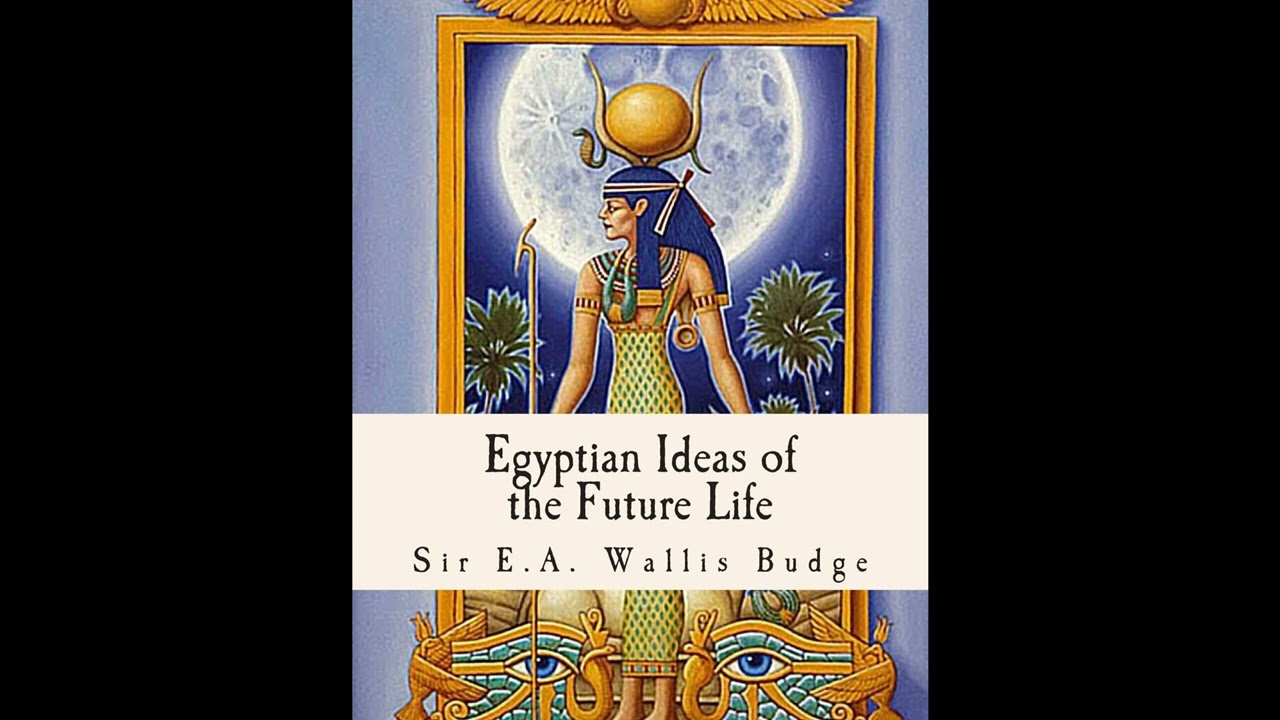
What did the ancients believe came after life? For centuries, humanity has grappled with the profound mystery of death and the possibility of an existence beyond it. Few civilizations pursued answers with the dedicated fervor and complex artistry of the ancient Egyptians, whose entire culture was meticulously structured around the promise of an afterlife. Sir E.A. Wallis Budge’s "Egyptian Ideas of the Future Life" offers a remarkable window into this ancient obsession, presenting a meticulously researched and accessible account of one of history's most sophisticated eschatologies. This isn't merely an academic exercise; it’s an invitation to ponder the universal human yearning for immortality and how a society millennia ago confronted its own mortality, building an entire sacred architecture—both physical and spiritual—to bridge the gap between this world and the next. Its insights remain strikingly relevant, prompting us to consider our own beliefs about what lies beyond the veil. Budge’s book does not present a narrative in the traditional sense, but rather systematically reconstructs the ancient Egyptian understanding of post-mortem existence. It sets the scene in the fertile Nile Valley, the crucible of Egyptian civilization, where the annual rhythms of life and death, inundation and renewal, deeply influenced their worldview. The "main characters" in this grand cosmic drama are the deceased individuals, from pharaohs to commoners, who must navigate a perilous underworld. They strive to achieve eternal life alongside the gods, particularly Osiris, the resurrected deity who presided over the dead. The central conflict lies in the deceased’s struggle to overcome the dangers and judgments of the Duat – the Egyptian underworld – to achieve a blessed existence in the Field of Reeds, a paradisiacal land of abundance. The book traces the historical development of these beliefs, beginning with the earliest dynastic periods and the rather exclusive royal access to divinity after death, as evidenced in the Pyramid Texts. Budge shows how these beliefs gradually became more democratized, allowing non-royal individuals to aspire to similar post-mortem transformations, eventually leading to the Coffin Texts and, most famously, the papyri we collectively call the Book of the Dead. He outlines the various trials and transformations awaiting the soul: the journey through the underworld, the encounters with terrifying demons and helpful deities, and ultimately, the climactic scene of the Weighing of the Heart against the Feather of Ma'at. The "arc" of the story, as meticulously documented by Budge, is the elaborate, ritualistic path a deceased Egyptian hoped to follow to achieve a glorious rebirth and endure forever. Sir E.A. Wallis Budge (1857-1934) stands as a towering figure in the history of Egyptology and Assyriology. Born in Bodmin, Cornwall, England, Budge demonstrated an early aptitude for languages, particularly Hebrew and Syriac, which attracted the attention of prominent figures who helped secure his education at Christ's College, Cambridge. His career was largely defined by his long tenure at the British Museum, where he eventually became Keeper of Egyptian and Assyrian Antiquities from 1894 until his retirement in 1924. During this influential period, he traveled extensively, acquiring vast collections of cuneiform tablets, papyri, and ancient artifacts, many of which remain foundational to the Museum’s holdings today. Budge was not merely an acquirer of antiquities; he was a prolific scholar, translator, and popularizer of ancient Near Eastern cultures. His contributions include seminal editions and translations of Egyptian and Mesopotamian texts, most notably his monumental translation of "The Egyptian Book of the Dead." Other significant works include "The Gods of the Egyptians" and "Egyptian Language: Easy Lessons in Egyptian Hieroglyphics." He was instrumental in making ancient texts accessible to a wider English-speaking audience, bridging the gap between specialized academic research and public interest. Although some of his translations and interpretations have been revised by subsequent generations of scholars with new methodologies and discoveries, Budge's foundational work and his sheer dedication to the study of these ancient civilizations cemented his place as an indispensable pioneer in the fields of Egyptology and comparative religion. The central themes woven through "Egyptian Ideas of the Future Life" are both profound and universally resonant. One dominant theme is the deep human yearning for immortality. Budge demonstrates how Egyptian mortuary rituals, from the elaborate mummification process to the detailed spells and prayers in the Book of the Dead, were all designed to secure eternal life for the deceased. For instance, the spells to enable the deceased to "go forth by day" exemplify the desire for freedom and continued existence in a perfected form. Another vital theme is the evolving relationship between religious belief and social structure. Initially, only the pharaoh was assured of a divine afterlife, as reflected in the exclusive Pyramid Texts. However, Budge illustrates how these divine privileges slowly became "democratized," expanding to nobles and eventually to all who could afford the proper burial rites, showing a societal shift in accessibility to salvation. Furthermore, the book highlights the powerful role of ritual and magic in ancient Egyptian thought. The precise recitation of spells, the placement of amulets, and the correct performance of funerary rites were not mere symbolic acts; they were seen as essential, active components in ensuring a successful passage to the afterlife. Budge frequently cites specific spells from various texts, detailing their purpose, such as the "spell for not dying a second time" or the "spell for providing a boat in the underworld," underscoring the Egyptians' practical approach to navigating the unknown. His work is significant not only for its detailed presentation of these beliefs but also for its broader contribution to comparative religion. By collecting and organizing these ancient ideas, Budge provided a crucial reference for understanding the development of eschatological thought, offering parallels and contrasts with later monotheistic traditions and illuminating the foundational human questions that transcend cultures and eras. This work emerged during a fascinating period of intense public and academic interest in ancient Egypt, roughly spanning the late nineteenth and early twentieth centuries. Following Jean-François Champollion's decipherment of the Rosetta Stone in the 1820s, the veil of mystery over hieroglyphs began to lift, fueling what became known as "Egyptomania" across Europe and America. Archaeological excavations were gaining momentum, unearthing spectacular tombs and temples, and bringing to light vast quantities of previously unreadable texts. Culturally, there was a widespread fascination with the exotic, the ancient, and the spiritual, often intertwined with imperial ambitions and the collection of artifacts for grand museums like the British Museum, where Budge worked. The period also saw the rise of comparative religion as a serious field of study, moving beyond purely theological interpretations to examine different belief systems scientifically. Budge's work was perfectly positioned within this intellectual climate, providing scholarly yet accessible material that both educated and captivated a public hungry for knowledge about this once-lost civilization. Listening to "Egyptian Ideas of the Future Life" as an audiobook offers a uniquely immersive experience, perfectly suited to the density and historical weight of the subject matter. The narrator’s voice becomes a guide through the labyrinthine concepts of ancient Egyptian cosmology, helping to differentiate complex names of gods, demons, and texts. The several hours of runtime allow for a sustained engagement, enabling the listener to gradually absorb the intricacies of millennia-old beliefs without feeling rushed. A skilled narrator will provide the necessary pacing, allowing time for contemplation of Budge's detailed descriptions of rituals, myths, and translations. Their nuanced delivery can evoke the solemnity and wonder inherent in these ancient ideas, transforming academic prose into an atmospheric journey into the minds of those who lived and died by the Nile, giving voice to a civilization’s enduring hope for tomorrow.
Enjoyed Egyptian Ideas of the Future Life? A few ways to support us
Audible & Amazon links are affiliate; we may earn a small commission at no extra cost.
About this production
Human narration by a volunteer reader from LibriVox.org, the public-domain audiobook project. LibriVox volunteers record literary works whose copyright has expired in the United States, releasing the resulting recordings into the public domain.
Egyptian Ideas of the Future Life by Sir E.A. Wallis Budge. The underlying text is in the U.S. public domain. We do not republish any modern copyrighted edition, translation, or commentary.
The 4K cinematic visuals accompanying this audiobook are generated by an AI image model from prompts derived from the source text. No copyrighted photos, paintings, or stock footage are used. AI generation is disclosed on every video on our YouTube channel as required by YouTube's altered/synthetic content policy.
English subtitles are transcribed from the LibriVox recording with OpenAI Whisper. Translations into the 11 other supported languages are produced by Meta's NLLB-200 neural translation model. No human translator's copyrighted translation is used.
Questions about sourcing or rights? See our DMCA & Sourcing policy or contact us.
Enjoyed this audiobook?
If you'd like to own a copy of Egyptian Ideas of the Future Life or hear a professionally produced edition, the links below help support free audiobook production at no extra cost to you.
As an Amazon Associate we earn from qualifying purchases. Audible / print links are affiliate.