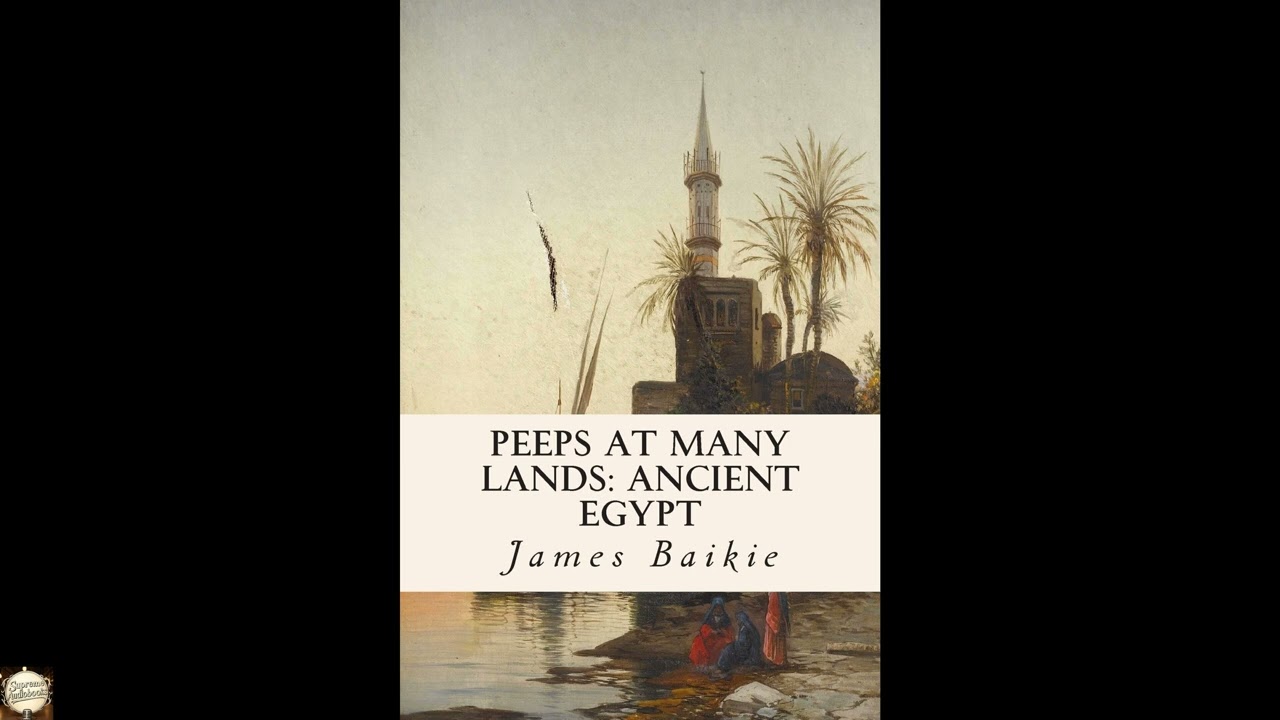
Peeps at Many Lands: Ancient Egypt
Ancient Egypt calls to us across millennia, a civilization of monumental ambition, profound spiritualism, and daily life both familiar and utterly alien. We stand before its pyramids and temples, gaze upon its hieroglyphs, and wonder at the minds that conceived such wonders. James Baikie's Peeps at Many Lands: Ancient Egypt offers a welcoming hand into this distant world, not as a dry academic treatise, but as a meticulously observed tour guided by a keen and sympathetic eye. For listeners today, this classic provides not only a foundational understanding of one of history’s most influential cultures but also a unique lens through which to observe how the late Victorian and Edwardian eras viewed, interpreted, and presented antiquity to a curious public. It’s a chance to witness the birth of popular archaeology, presented with an earnest enthusiasm that remains infectious. Baikie sets his scene along the life-giving ribbon of the Nile, presenting ancient Egypt not as a static museum piece but as a dynamic society that grew, flourished, and adapted over thousands of years. The listener is introduced to the land’s geography—the fertile black land bordering the stark red desert—which shaped its people’s worldview and practices. The narrative then progresses through the earliest dynasties, charting the unification of Upper and Lower Egypt under the pharaohs and the gradual establishment of a complex religious and social structure. Baikie illuminates the roles of various societal strata, from the god-kings themselves, through the scribes, priests, and soldiers, down to the farmers and craftsmen whose labor sustained the vast empire. It is a comprehensive overview, moving from grand political narratives to intimate glimpses of daily existence. The book continues by detailing the incredible achievements of Egyptian engineering and artistry. Baikie describes the construction of the pyramids, the ingenuity required to quarry and transport massive stone blocks, and the careful planning that went into these eternal resting places. Listeners learn about the pantheon of gods and goddesses—Ra, Osiris, Isis, Anubis—and the elaborate rituals associated with their worship and the afterlife. The text explains the process of mummification, the purpose of tomb paintings, and the significance of various amulets and offerings, all designed to secure safe passage into the Field of Reeds. The arc of the narrative follows the major historical periods: the Old Kingdom, the Middle Kingdom, and the New Kingdom, highlighting their distinct characteristics, key pharaohs, and significant cultural developments, painting a vivid picture of a civilization profoundly concerned with order, continuity, and eternity. James Baikie (1866-1931) was a Scottish Egyptologist and minister whose life spanned a period of immense public fascination with ancient discoveries. Born in Edinburgh, he pursued theological studies and became a Free Church minister, serving in parishes across Scotland. However, his profound interest lay in the ancient world, particularly Egypt. Baikie dedicated a significant portion of his intellectual life to synthesizing and popularizing archaeological findings, making complex historical narratives accessible to a broader audience. He was not an excavator in the field but a scholar who meticulously studied the work of others, distilling their findings into engaging prose. His literary output was considerable, including works such as Sea-Kings of Crete, Ancient Egypt (a more extensive treatment than the Peeps volume), and A Century of Excavation in Palestine. Baikie’s position as a minister and scholar allowed him to bridge the academic and public spheres. He wrote with a clarity and enthusiasm that resonated with the general reader, particularly children and young adults, for whom the "Peeps at Many Lands" series was specifically designed. His works represent an important strand in early 20th-century popular education, where scholarly knowledge was increasingly made available outside university walls, often framed for an Anglo-centric audience eager to learn about distant lands and their histories. His clear, descriptive style, devoid of academic jargon, established him as a significant popularizer of Egyptology, contributing to the widespread public engagement with ancient cultures during a golden age of archaeological discovery. One of the central themes running through Peeps at Many Lands: Ancient Egypt is the overwhelming human desire for immortality. Baikie illustrates this through detailed descriptions of the funerary practices that dominated Egyptian culture. He explains how the elaborate mummification process, the construction of monumental tombs like the pyramids, and the inclusion of extensive grave goods and spells from the Book of the Dead were all designed to ensure the deceased's eternal survival in the afterlife. For instance, he details the meticulous removal of organs, the lengthy drying with natron, and the wrapping in linen bandages, each step a testament to the belief that the physical body was essential for the spirit's continuation. This steadfast focus on life beyond death pervades the text, demonstrating a civilization entirely organized around preparing for eternity. Another prominent theme is the ingenious practicality and artistic brilliance of the ancient Egyptians. Baikie repeatedly emphasizes how their advanced understanding of astronomy, mathematics, and engineering allowed them to construct structures that defy belief even today. He describes, for example, the precise alignment of the Great Pyramid to the cardinal points, the careful planning of irrigation systems to harness the Nile's annual inundation, and the exquisite craftsmanship evident in their statuary, jewelry, and papyrus scrolls. The sheer scale and enduring presence of their architectural and artistic legacy, from the temples of Karnak to the delicate goldwork of Tutankhamun's tomb, serve as a testament to their ability to combine functionality with profound aesthetic sensibility, leaving behind a civilization that continues to inspire awe and wonder. When James Baikie wrote Peeps at Many Lands: Ancient Egypt in the early 20th century, the world was in the throes of a profound fascination with archaeology and the cultures it unearthed. This period, roughly from the late 19th century through the 1920s, saw a dramatic increase in excavations and discoveries, notably in Egypt. The British Empire's influence over Egypt brought the land into closer cultural proximity for Western audiences, fueling a surge of public interest known as "Egyptomania." Grand exhibits of artifacts toured major cities, and newspapers regularly published updates from sites like those in the Valley of the Kings. This surge of interest created a demand for accessible literature that could explain these discoveries to a general audience, especially younger readers. Baikie’s book emerged directly from this cultural milieu. It was part of the highly successful "Peeps at Many Lands" series published by A. & C. Black, which aimed to introduce children and adolescents to various countries and historical periods through engaging, illustrated narratives. The series reflected an Edwardian educational philosophy that valued broadening horizons and fostering a sense of global awareness, albeit often through a lens shaped by contemporary imperial perspectives. Baikie’s writing satisfied the public’s thirst for knowledge about distant wonders, capitalizing on the excitement generated by figures like Howard Carter and the impending discovery of Tutankhamun's tomb, by offering a clear, descriptive, and often romanticized portrayal of ancient Egyptian life and belief. Listening to Peeps at Many Lands: Ancient Egypt as an audiobook offers a unique way to connect with Baikie's engaging prose and the enduring mysteries of this ancient civilization. The spoken word allows the listener to absorb the intricate details of pharaonic rule, the nuances of religious belief, and the wonders of monumental architecture without the visual distraction of a printed page. A skilled narrator brings Baikie's thoughtful descriptions to life, providing a consistent, guiding voice through the thousands of years of Egyptian history. The run length of several hours makes this perfect for extended listening sessions, whether during a long commute, while engaging in household tasks, or simply relaxing at home. The measured pacing of the narration permits time to visualize the bustling markets of Thebes, the silent grandeur of the pyramids, or the solemn rituals along the Nile, fostering an immersive atmosphere that transforms the academic into an immediate experience. It is a chance to hear history unfold, chapter by chapter, with a clarity and presence that only the human voice can provide.
Enjoyed Peeps at Many Lands: Ancient Egypt? A few ways to support us
Audible & Amazon links are affiliate; we may earn a small commission at no extra cost.
About this production
Human narration by a volunteer reader from LibriVox.org, the public-domain audiobook project. LibriVox volunteers record literary works whose copyright has expired in the United States, releasing the resulting recordings into the public domain.
Peeps at Many Lands: Ancient Egypt by James Baikie. The underlying text is in the U.S. public domain. We do not republish any modern copyrighted edition, translation, or commentary.
The 4K cinematic visuals accompanying this audiobook are generated by an AI image model from prompts derived from the source text. No copyrighted photos, paintings, or stock footage are used. AI generation is disclosed on every video on our YouTube channel as required by YouTube's altered/synthetic content policy.
English subtitles are transcribed from the LibriVox recording with OpenAI Whisper. Translations into the 11 other supported languages are produced by Meta's NLLB-200 neural translation model. No human translator's copyrighted translation is used.
Questions about sourcing or rights? See our DMCA & Sourcing policy or contact us.
Enjoyed this audiobook?
If you'd like to own a copy of Peeps at Many Lands: Ancient Egypt or hear a professionally produced edition, the links below help support free audiobook production at no extra cost to you.
As an Amazon Associate we earn from qualifying purchases. Audible / print links are affiliate.