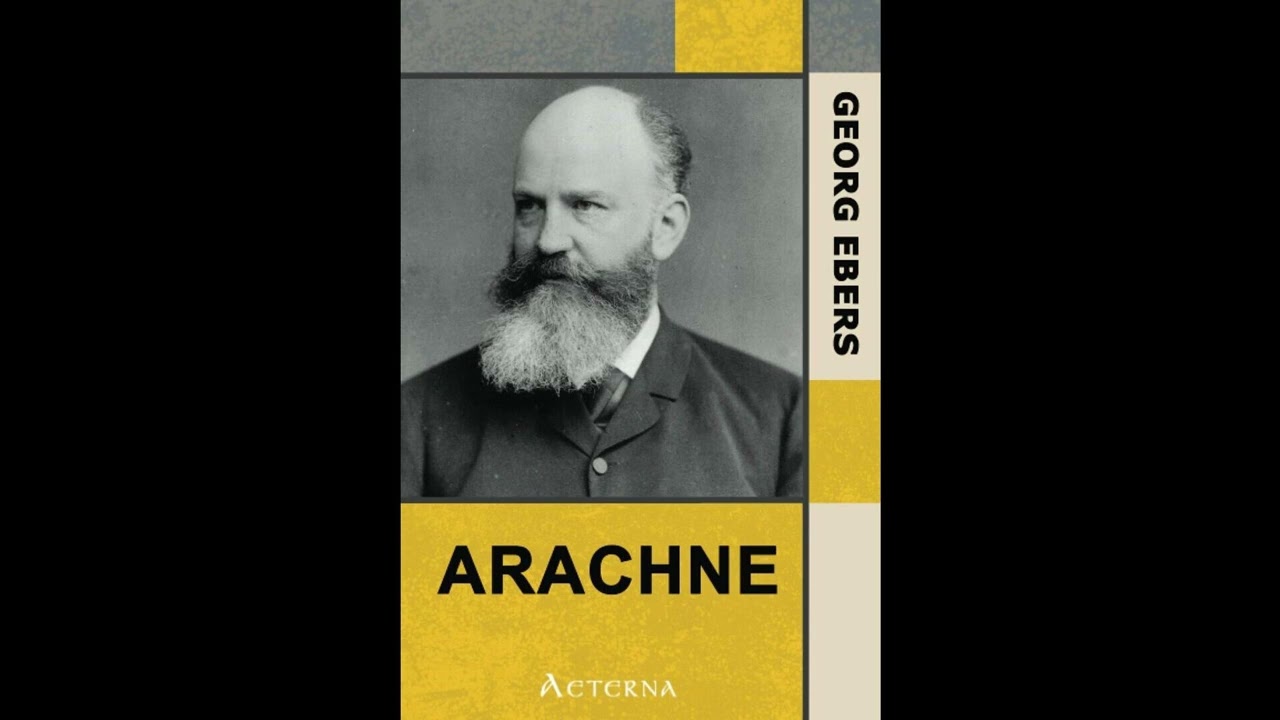
Arachne — Complete
Step into the sun-drenched, bustling world of ancient Alexandria, a crucible of art, ambition, and cultural collision, brought vividly to life by Georg Ebers in Arachne — Complete. This acclaimed historical novel transports listeners to an era of unparalleled intellectual and artistic flourishing, where the genius of Greece met the ancient wisdom of Egypt under the reign of the Ptolemies. Why should modern listeners care about a story from the second century BCE, filtered through the lens of a nineteenth-century German scholar? Because it speaks to the universal struggles of creation, the power of love against societal tides, and the enduring human desire to leave an indelible mark on the world, all painted against a backdrop of grand historical detail and political intrigue that remains as compelling today as it was when first penned. Our narrative unfolds in the magnificent city of Alexandria, jewel of the Nile, during the prosperous rule of Ptolemy II Philadelphus. Here, the young and gifted Greek sculptor Phidias arrives, brimming with ambition and the fervent desire to carve his name into history. He is a man driven by the classical ideals of beauty and form, determined to realize his artistic vision in marble. His path soon crosses that of Arachne, a woman of extraordinary beauty and prodigious skill in weaving, whose designs seem to capture the very essence of myth and nature within her threads. Her artistry, while different in medium, mirrors Phidias's own passion for creation, drawing them together with an undeniable force. Their burgeoning affection, however, faces significant challenges in a society marked by stark cultural divides and the rigid hierarchies of the court. Phidias, a Greek, finds himself drawn to an Egyptian woman, a pairing that defies convention and invites the scrutiny of those who guard tradition and power. Their love becomes entwined with the complex politics of Ptolemaic Alexandria, where jealous rivals, court schemers, and the very weight of cultural expectations threaten to unravel their fragile bond. As Phidias strives for artistic recognition and Arachne grapples with her own identity and place, the novel masterfully orchestrates a series of events that test their resilience, their loyalty, and the very nature of their art, leading them through a maze of personal and public trials that challenge the strength of their spirits. Georg Ebers, the author, was a German Egyptologist and novelist whose life and career—spanning from 1837 to 1898—were dedicated to illuminating the ancient world. Born in Berlin, Ebers initially pursued law but soon shifted his academic focus to Oriental languages and archaeology, a decision that would define his legacy. He became a professor of Egyptology at the University of Leipzig, a testament to his profound scholarly achievements. Perhaps his most significant contribution to academic knowledge was his discovery and acquisition of the Ebers Papyrus in Luxor in 1873, one of the oldest and most important medical papyri from ancient Egypt, offering invaluable insights into the medical practices of the time. Beyond his groundbreaking academic work, Ebers possessed a unique talent for transforming his deep knowledge of ancient Egypt into compelling narrative fiction. Beginning with Eine ägyptische Königstochter (An Egyptian Princess) in 1864, he authored a series of historical romances that captivated a wide European audience. His novels, including Uarda and Homo Sum, were celebrated for their meticulous historical accuracy, vivid descriptions, and dramatic storytelling, making him a household name in the late nineteenth century. Ebers played a pivotal role in popularizing Egyptology, making the complex history and daily life of ancient civilizations accessible and exciting to the general public, establishing him as a significant figure in the historical fiction genre. Arachne — Complete showcases several powerful themes that resonate deeply. One central idea is the very nature of artistic creation and ambition. Through Phidias, listeners witness the sculptor's agonizing pursuit of ideal form, his struggles with recalcitrant marble, and the driving force behind his desire for immortality through his work. Similarly, Arachne's skill as a weaver, crafting narratives and beauty with thread, highlights a different yet equally profound creative impulse. A particularly poignant scene might describe Phidias working late into the night, wrestling with a statue, his frustration and eventual breakthrough reflecting the universal trials of the creative spirit. Another prominent theme is the clash of cultures and identities. Alexandria, as depicted, is a melting pot where Greek rationalism and aesthetics collide with Egyptian mysticism and age-old traditions. The relationship between Phidias and Arachne embodies this tension, forcing them to reconcile their differing backgrounds and worldviews. The narrative also examines the complexities of love across societal divides, illustrating how personal affection can challenge—and be challenged by—entrenched social norms and political pressures, providing a compelling portrayal of devotion tested by external forces. The late nineteenth century, when Ebers penned Arachne — Complete in 1887, was a period marked by an intense fascination with ancient civilizations across Europe, often referred to as "Egyptomania." This interest was spurred by Napoleon's expeditions, the decipherment of hieroglyphs by Champollion, and a string of spectacular archaeological discoveries that brought the grandeur of ancient Egypt into public consciousness. Museums filled with artifacts, and tales of pharaohs and pyramids captured the popular imagination. Ebers’s historical novels emerged precisely within this cultural milieu, perfectly aligning with the public's thirst for knowledge and romanticized accounts of antiquity. His unique position as both a respected Egyptologist and a skilled storyteller allowed him to bridge the gap between academic scholarship and popular entertainment. He offered readers not just exciting plots but also a meticulously researched glimpse into the daily lives, customs, and political landscapes of civilizations long past, thereby satisfying both intellectual curiosity and a longing for escapist historical romance. Listening to Arachne — Complete as an audiobook offers a singular opportunity to immerse oneself entirely in Ebers’s meticulously crafted ancient world. With a run length of several hours, it's an ideal companion for extended periods of focused listening—long drives, thoughtful walks, or quiet evenings at home. A skilled narrator breathes life into the diverse cast of characters, differentiating voices and lending distinct personalities to the Greek artists, Egyptian weavers, and Alexandrian courtiers. Listen for the subtle shifts in pacing as the story moves from tranquil scenes of artistic creation to moments of high drama and political intrigue, allowing the narrative’s atmosphere to build. The expressive delivery of dialogue and descriptive passages will transport you directly to the sun-drenched plazas and shaded courtyards of Ptolemaic Alexandria, making this historical romance an unforgettable sonic experience.
Enjoyed Arachne — Complete? A few ways to support us
Audible & Amazon links are affiliate; we may earn a small commission at no extra cost.
About this production
Human narration by a volunteer reader from LibriVox.org, the public-domain audiobook project. LibriVox volunteers record literary works whose copyright has expired in the United States, releasing the resulting recordings into the public domain.
Arachne — Complete by Georg Ebers. The underlying text is in the U.S. public domain. We do not republish any modern copyrighted edition, translation, or commentary.
The 4K cinematic visuals accompanying this audiobook are generated by an AI image model from prompts derived from the source text. No copyrighted photos, paintings, or stock footage are used. AI generation is disclosed on every video on our YouTube channel as required by YouTube's altered/synthetic content policy.
English subtitles are transcribed from the LibriVox recording with OpenAI Whisper. Translations into the 11 other supported languages are produced by Meta's NLLB-200 neural translation model. No human translator's copyrighted translation is used.
Questions about sourcing or rights? See our DMCA & Sourcing policy or contact us.
Enjoyed this audiobook?
If you'd like to own a copy of Arachne — Complete or hear a professionally produced edition, the links below help support free audiobook production at no extra cost to you.
As an Amazon Associate we earn from qualifying purchases. Audible / print links are affiliate.