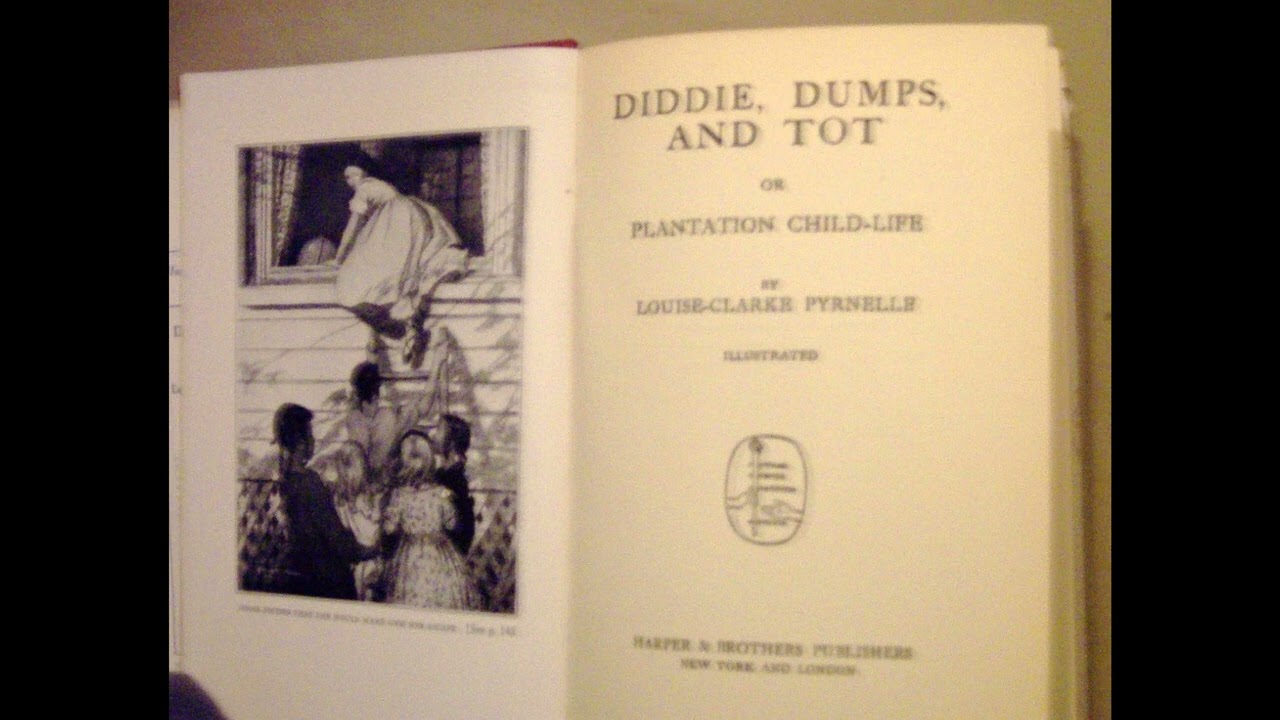
Diddie, Dumps, and Tot; or, Plantation child-life
Step back in time to the Antebellum South, not through grand narratives of war or politics, but through the innocent eyes of children. Louise-Clarke Pyrnelle’s Diddie, Dumps, and Tot; or, Plantation child-life offers a rare, if idealized, glimpse into the daily routines and playful adventures of youngsters growing up on a large Southern plantation before the Civil War. This audiobook isn't just a charming period piece; it’s a significant cultural artifact that allows listeners to directly confront the complex historical memory of an era often simplified by later generations. It presents a particular vision of the past, one filtered through the nostalgia of its author, making it an invaluable resource for understanding how the “Old South” was remembered and presented in the decades following the conflict that reshaped America. Engaging with this story means engaging with a vital part of American literary and social history, prompting reflection on childhood, memory, and the powerful role of storytelling in shaping our understanding of the past. The story unfolds on a sprawling Alabama plantation, a world unto itself where the rhythms of daily life are dictated by the seasons, the crops, and the large community of both white landowners and enslaved people. Our central figures are three white children: Diddie, the sensible older sister; Dumps, the adventurous and often mischievous middle child; and Tot, the youngest, a curious and somewhat timid observer. Their days are filled with the simple wonders of childhood – chasing butterflies through sun-drenched fields, telling ghost stories around evening fires, and inventing elaborate games that transform the plantation into a realm of endless possibility. A significant part of their upbringing and play involves interactions with the enslaved children of the plantation, like little Aunt Charity and Wash, who are often their closest companions in games and discoveries. Through a series of vignettes, the narrative follows Diddie, Dumps, and Tot as they navigate their world, learning lessons from their parents, the devoted “Mammy” who cares for them, and the various characters who inhabit their plantation home. The book details their small-scale dramas—a lost pet, a forbidden adventure into the woods, the joy of a holiday celebration, or the apprehension caused by a scary tale told in the dark. These seemingly small events build a picture of a childhood steeped in tradition, natural beauty, and a specific social order, all observed with a child’s capacity for wonder. The story subtly illustrates the dynamics of the plantation environment, focusing on the day-to-day interactions and the developing personalities of the children, all while painting a picture of a society that, from the author's retrospective view, appears harmonious and structured. The narrative avoids any grand overarching conflict, instead relying on the cumulative effect of these individual moments to build a sense of a lost way of life, culminating not in a dramatic resolution but in a gentle farewell to an era. Louise-Clarke Pyrnelle, born in 1850 in what is now Clayton, Alabama, was a child of the South who experienced firsthand the pre-Civil War plantation system. Her life spanned a period of immense change in American history, from the stability of the cotton kingdom through the upheaval of the war and Reconstruction, into the dawn of the twentieth century. She drew deeply from her own childhood memories to pen Diddie, Dumps, and Tot, which was first published in 1887. Though this remains her most widely known work, Pyrnelle also wrote other stories and sketches, often centered on Southern life and folklore. She belonged to a generation of Southern writers who, in the aftermath of the Confederacy's defeat, sought to preserve and often romanticize the image of the Old South through literature. Pyrnelle’s writing can be situated within the "plantation tradition" of Southern literature, a movement characterized by its nostalgic portrayal of antebellum life, typically emphasizing idyllic relationships between white landowners and enslaved people, and benevolent paternalism. While her contributions to the broader literary canon may not be extensive beyond this particular volume, Diddie, Dumps, and Tot serves as a quintessential example of this genre and a significant primary source for understanding the cultural narratives that emerged from the post-Reconstruction South. Her work, like that of other contemporary authors, helped shape popular perceptions of the Southern past for decades, both within and outside the region. At its core, Diddie, Dumps, and Tot powerfully enacts the theme of childhood innocence and discovery. The children, whether learning the names of flowers, listening to animal fables, or concocting elaborate games, represent a state of pure experience unburdened by adult concerns. For instance, a scene where Diddie, Dumps, and Tot hide in a cornfield, imagining themselves as explorers in a vast wilderness, perfectly illustrates their capacity for turning everyday surroundings into a world of adventure, a common thread in children's literature that Pyrnelle captures with genuine warmth. Another central theme is the idealization of Southern plantation life. The book presents a highly romanticized version of the antebellum plantation, depicting a seemingly tranquil and ordered society where everyone—from the white family to the enslaved "servants"—appears content with their place. The character of Mammy, who provides loving care and wise counsel to the children, serves as a prime example of this idealization, a recurring figure in plantation literature who represents the benevolent side of the master-slave relationship as imagined by authors of Pyrnelle’s era. Furthermore, the narrative foregrounds folklore and superstition as integral parts of childhood and community life. The children's belief in hants (ghosts), conjure women, and various omens are woven throughout their daily experiences. An evening spent listening to stories of "Raw-Head-and-Bloody-Bones" around the fire, told by older children or adults, not only entertains but also subtly transmits cultural beliefs and anxieties. Finally, the book is a testament to the power of nostalgia and memory, as Pyrnelle reconstructs her own childhood experiences through a filter of longing for a lost era. The very act of writing the book is an act of remembering, seeking to preserve a particular vision of the past that the author felt was fading. The pervasive tone of fondness for the plantation, even amidst its inherent social inequalities, clearly demonstrates how memory can shape narrative, especially when recollecting a period of one's formative years. The publication of Diddie, Dumps, and Tot in 1887 placed it squarely within a critical period in American history known as the "Redemption" era, following the Reconstruction of the South. During this time, many Southern writers and intellectuals actively sought to craft a narrative that justified the Confederacy's cause, romanticized the antebellum South, and downplayed the brutalities of slavery. This movement, often termed the "Lost Cause," aimed to rebuild Southern identity and pride after the devastation of the Civil War. Pyrnelle's book emerged directly from this cultural milieu, serving as a popular example of literature that painted a benevolent picture of plantation life, emphasizing harmonious relationships, paternalistic care for enslaved people, and a generally idyllic past. It resonated with a wide audience, both North and South, who were either nostalgic for a perceived simpler time or eager to believe in a less morally complex version of American history. The work offered a comforting vision that stood in stark contrast to the harsh realities of slavery, helping to shape public perception and historical memory for decades to come. Listening to Diddie, Dumps, and Tot as an audiobook offers a uniquely immersive means of connecting with this historical document. The spoken word brings the characters to life, allowing the listener to hear the distinct voices of Diddie, Dumps, and Tot, as well as the various adults and other children who populate their world. A skilled narrator can deftly handle the dialects and speech patterns that reflect the period and region, adding an authentic layer to the storytelling, even while acknowledging that such representations are filtered through the author's perspective. The multi-hour length of the recording provides ample opportunity to settle into the gentle rhythm of plantation life as depicted, allowing the individual vignettes to build a cumulative atmosphere. Pay close attention to the narrator’s pacing, which can subtly highlight the children’s carefree spirit during their games or emphasize the quiet wonder of their discoveries. The dialogue, filled with period-specific charm and expressions, becomes particularly vivid when spoken, transporting the listener directly into the sensory world of a bygone Southern childhood.
Enjoyed Diddie, Dumps, and Tot; or, Plantation child-life? A few ways to support us
Audible & Amazon links are affiliate; we may earn a small commission at no extra cost.
About this production
Human narration by a volunteer reader from LibriVox.org, the public-domain audiobook project. LibriVox volunteers record literary works whose copyright has expired in the United States, releasing the resulting recordings into the public domain.
Diddie, Dumps, and Tot; or, Plantation child-life by Louise-Clarke Pyrnelle. The underlying text is in the U.S. public domain. We do not republish any modern copyrighted edition, translation, or commentary.
The 4K cinematic visuals accompanying this audiobook are generated by an AI image model from prompts derived from the source text. No copyrighted photos, paintings, or stock footage are used. AI generation is disclosed on every video on our YouTube channel as required by YouTube's altered/synthetic content policy.
English subtitles are transcribed from the LibriVox recording with OpenAI Whisper. Translations into the 11 other supported languages are produced by Meta's NLLB-200 neural translation model. No human translator's copyrighted translation is used.
Questions about sourcing or rights? See our DMCA & Sourcing policy or contact us.
Enjoyed this audiobook?
If you'd like to own a copy of Diddie, Dumps, and Tot; or, Plantation child-life or hear a professionally produced edition, the links below help support free audiobook production at no extra cost to you.
As an Amazon Associate we earn from qualifying purchases. Audible / print links are affiliate.