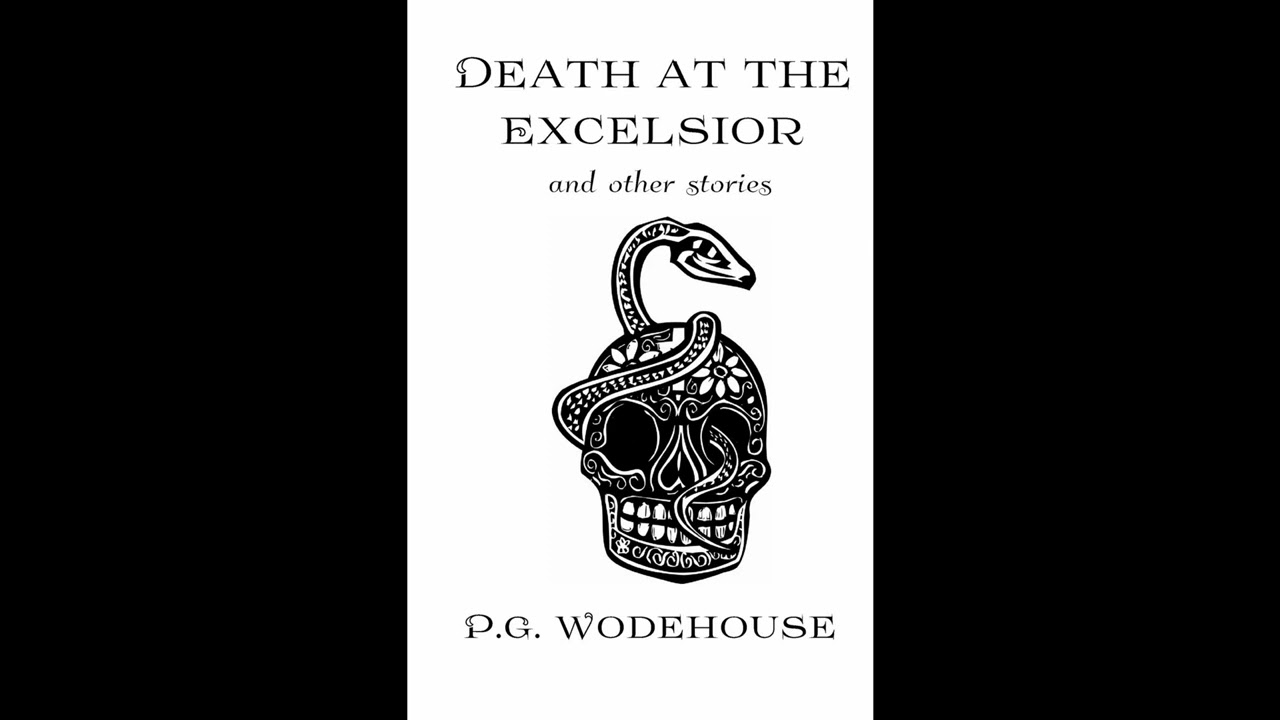
Death at the Excelsior: And Other Stories
For anyone seeking pure literary delight, a balm for the spirit, or simply a good laugh, P.G. Wodehouse remains an unrivaled master. His particular genius for crafting stories that are utterly absurd, yet grounded in human foibles and delivered with exquisite prose, shines brightly in "Death at the Excelsior: And Other Stories." This collection presents a wonderful opportunity to immerse oneself in Wodehouse's early comic vision, showcasing the budding talent that would define a century of humor. It offers a glorious escape into a sun-drenched, silly world, proving that wit and laughter are indeed among the best antidotes to the complexities of modern existence. These short stories transport listeners to a quintessential Wodehouse landscape, often peopled by an amiable if slightly dim-witted stratum of society—young gentlemen with insufficient funds but ample charm, formidable aunts with iron wills, American millionaires, and resourceful valets. The settings shift between the comfortable, if sometimes chaotic, interiors of London clubs, the idyllic but surprisingly fraught English country houses, and occasionally the more boisterous milieu of the theatrical world. Each narrative typically opens with a character, usually well-meaning but prone to misadventure, finding themselves in an awkward social or financial predicament. Perhaps a young man needs to impress a stern uncle to secure an inheritance, or an aspiring poet must navigate a romantic entanglement complicated by an overbearing guardian, or a simple request leads to a cascade of farcical misunderstandings. The central conflicts are never matters of grave consequence, but rather the pressing, if ridiculous, issues of maintaining appearances, securing a proper engagement, winning a sporting prize, or avoiding a social faux pas of epic proportions. The humor springs from the characters’ earnest attempts to navigate these minor crises, which inevitably spiral into increasingly convoluted and hilarious situations. The title story, "Death at the Excelsior," for instance, hints at the kind of dramatic, yet ultimately light-hearted, setups Wodehouse relishes, where the "death" might be of a reputation, a plan, or merely a metaphor for a thoroughly embarrassing turn of events, rather than an actual tragedy. Listeners can expect to follow these hapless but endearing figures as they stumble through a maze of mistaken identities, misinterpreted conversations, and unexpected intrusions, all building towards a resolution that is almost always satisfyingly witty, even if not entirely conventional. P.G. Wodehouse, born Pelham Grenville Wodehouse in Guildford, Surrey, England, in 1881, lived a long and remarkably prolific life dedicated to comedy. His early education at Dulwich College provided material for his popular school stories. After a brief stint as a bank clerk, he quickly abandoned the financial world for the more appealing prospects of journalism and fiction. He contributed regularly to publications like Punch and The Globe, honing his distinctive style and developing the unique comedic voice that would become his hallmark. Wodehouse spent considerable time moving between England and the United States, allowing him to observe and lampoon the social eccentricities of both nations, enriching his gallery of characters. His literary output was immense, comprising over ninety books, hundreds of short stories, and even musical comedies. While "Death at the Excelsior" showcases his early talent, Wodehouse became internationally renowned for his iconic series featuring Jeeves and Bertie Wooster, including The Code of the Woosters and Right Ho, Jeeves, as well as his Blandings Castle novels, like Summer Lightning, which follow the absurd antics of Lord Emsworth and his prize pig, Empress of Blandings. His later life was marked by a controversial period during World War II when, interned in France by the Germans, he made several humorous radio broadcasts from Berlin. Though later cleared of any disloyalty, this incident shadowed his later career until he received a knighthood shortly before his death in 1975. Wodehouse firmly established himself as a singular literary figure, crafting a world apart from contemporary literary trends, renowned for his inimitable style and an unwavering commitment to pure humor. Wodehouse’s stories, including those within "Death at the Excelsior," enact several enduring themes, foremost among them being the power of escapism and the creation of an idealized comedic universe. His narratives consciously steer clear of life's darker realities, instead presenting a benign, often absurdly charming world where major troubles rarely arise, and minor ones are always resolved with a clever turn of phrase or an unexpected stroke of luck. For example, financial difficulties, a common predicament for his young gentlemen, are typically overcome not through hard work but through sudden inheritances or the unexpected generosity of a distant relative. This consistent avoidance of genuine hardship creates a comforting, sunlit atmosphere that offers listeners a reprieve from their own daily concerns. Another prominent theme is the subtle satire of the English upper classes and their leisurely pursuits. Wodehouse, with a deft touch and without malice, gently pokes fun at the preoccupations of the idle rich, their rigid social conventions, and their often hilarious lack of practical common sense. Whether it’s an aristocratic fop agonizing over a perfectly creased trouser or a dowager duchess obsessed with the breeding of a prize pig, Wodehouse highlights the triviality of their concerns while simultaneously celebrating their endearing eccentricities. The precise and often elaborate language he uses to describe these characters and their predicaments only heightens the comedic effect, making the absurd seem utterly believable. His work also champions the triumph of wit and ingenuity, often embodied by characters like the omniscient butler who subtly guides his employers out of predicaments. The period when P.G. Wodehouse rose to prominence, from the early decades of the twentieth century onward, was one of tremendous social and political upheaval. The world saw two devastating global wars, the rise of new technologies, and radical shifts in social structures. Yet, Wodehouse deliberately chose to construct a literary world that largely remained untouched by these cataclysmic changes. His work emerged as a direct counterpoint to the growing seriousness and existential angst that permeated much of the modernist literature of his time. Readers and listeners, grappling with rapid industrialization, the aftershocks of global conflict, and accelerating societal transformation, found solace and immense enjoyment in Wodehouse's unfailingly optimistic and humorous narratives. His stories became a cherished refuge, a source of dependable joy, fulfilling a deep cultural need for laughter and lighthearted entertainment amidst an increasingly complex world. This demand for entertaining, well-crafted serial fiction in popular magazines also perfectly suited Wodehouse's prolific short story output. Listening to "Death at the Excelsior: And Other Stories" as an audiobook offers a particularly rich and immersive experience. Clocking in at several hours, it provides ample opportunity to truly settle into Wodehouse's unique universe, making it an ideal companion for a long commute, a relaxing afternoon, or as an engaging backdrop to daily tasks. A skilled narrator becomes essential in bringing Wodehouse’s meticulously crafted prose to life, capturing the nuanced wit, the subtle irony, and the distinctive cadences of his characters. Listen for the pacing, which can heighten the comedic tension as situations spiral out of control, and for the distinct voices given to each character—the bumbling hero, the formidable aunt, the wise-cracking companion. The dialogue, a hallmark of Wodehouse's genius, will shine, its absurd logic and perfect comedic timing enhanced by a talented vocal performance. A good narration will also underscore the atmosphere of gentle humor and cheerful escapism that defines Wodehouse's work, allowing you to fully appreciate the sunlit, silly world he created.
Enjoyed Death at the Excelsior: And Other Stories? A few ways to support us
Audible & Amazon links are affiliate; we may earn a small commission at no extra cost.
About this production
Human narration by a volunteer reader from LibriVox.org, the public-domain audiobook project. LibriVox volunteers record literary works whose copyright has expired in the United States, releasing the resulting recordings into the public domain.
Death at the Excelsior: And Other Stories by P.G. Wodehouse. The underlying text is in the U.S. public domain. We do not republish any modern copyrighted edition, translation, or commentary.
The 4K cinematic visuals accompanying this audiobook are generated by an AI image model from prompts derived from the source text. No copyrighted photos, paintings, or stock footage are used. AI generation is disclosed on every video on our YouTube channel as required by YouTube's altered/synthetic content policy.
English subtitles are transcribed from the LibriVox recording with OpenAI Whisper. Translations into the 11 other supported languages are produced by Meta's NLLB-200 neural translation model. No human translator's copyrighted translation is used.
Questions about sourcing or rights? See our DMCA & Sourcing policy or contact us.
Enjoyed this audiobook?
If you'd like to own a copy of Death at the Excelsior: And Other Stories or hear a professionally produced edition, the links below help support free audiobook production at no extra cost to you.
As an Amazon Associate we earn from qualifying purchases. Audible / print links are affiliate.