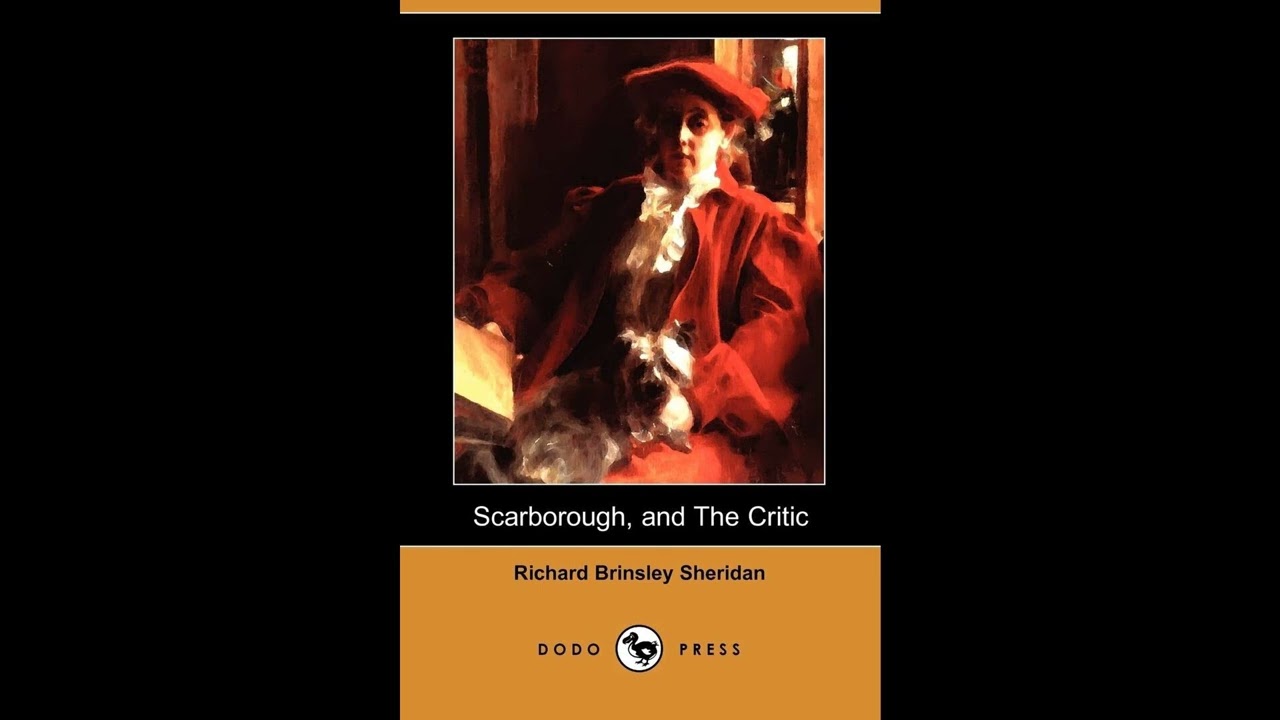
A Trip to Scarborough, and the Critic: Or, a Tragedy Rehearsed
Step into the bustling, gossipy world of late eighteenth-century London theatre with a double bill of wit and theatrical absurdity from Richard Brinsley Sheridan. This collection brings together A Trip to Scarborough, a lively adaptation of a Restoration comedy, and The Critic: Or, a Tragedy Rehearsed, a brilliant piece of meta-theatre that skewers the dramatic conventions and pretensions of its age. These plays, though written over two centuries ago, speak volumes about human vanity, social performance, and the eternal comedy of artistic ambition. They invite us to laugh at the characters on stage, the critics in the boxes, and perhaps even a little at ourselves, reminding us that the follies of fashion and the ego of authorship are perennial sources of amusement. A Trip to Scarborough introduces us to the lively and complicated world of Lord Foppington, a foppish nobleman whose only serious pursuit is his own appearance, and the convoluted romantic entanglements surrounding his family. Young Fashion, Lord Foppington's impoverished younger brother, concocts a scheme to marry his brother's intended, Miss Hoyden, a naive country heiress, by posing as Lord Foppington himself. This plan sets in motion a delightful series of mistaken identities, hurried elopements, and farcical confrontations, all set against the backdrop of Scarborough—a fashionable seaside resort—and London society. Amidst the chaos, various couples navigate their affections, social expectations, and the ever-present threat of scandal, demonstrating how easily appearances can be manipulated and how quickly reputations can be made or unmade. The play masterfully blends humor with a touch of sentimentalism, keeping its audience guessing about who will end up with whom, and whether true love or material gain will ultimately prevail. Following this rollicking comedy, The Critic: Or, a Tragedy Rehearsed takes us behind the scenes, offering a satirical glimpse into the world of theatrical production and criticism. The play opens in the morning room of Mr. Dangle, a passionate amateur theatre critic, where he and his cynical friend Mr. Sneer dissect the latest stage productions and gossip about the London dramatic scene. Their conversation is interrupted by the arrival of Mr. Puff, a flamboyant playwright notorious for his "puffing" – his elaborate self-promotion and manipulation of public opinion. Puff has come to read his new, soon-to-be-produced tragedy, The Spanish Armada, to Dangle and Sneer. The second act then transitions to the stage of the Drury Lane Theatre, where Puff directs a rehearsal of his melodramatic and utterly absurd tragedy. We witness the actors struggling with his bombastic lines, the stage manager dealing with logistical nightmares, and Puff himself offering a running, self-aggrandizing commentary on his own genius and the dramatic devices he employs, all to the increasing bewilderment of Dangle and Sneer. The play escalates into a glorious send-up of every theatrical cliché imaginable, from overblown patriotic speeches to melodramatic deaths and improbable stage directions, climaxing with a literal naval battle on stage. The author of these memorable works, Richard Brinsley Sheridan, was a towering figure of the late eighteenth century, not only as a playwright but also as a politician and theatre manager. Born in Dublin in 1751, he moved to England with his family as a young man. His early life was marked by a romantic elopement with the beautiful singer Elizabeth Ann Linley, a story that itself possessed the drama of a stage play. Sheridan quickly established himself as a brilliant wit and wordsmith, penning his first great success, The Rivals, in 1775. This was followed rapidly by other acclaimed comedies, including the iconic The School for Scandal in 1777, which cemented his reputation as one of the finest comedic playwrights in the English language. Sheridan's genius extended beyond writing. In 1776, he purchased a share in the Theatre Royal, Drury Lane, one of London's premier playhouses, eventually becoming its sole owner and manager. He juggled this demanding role with a burgeoning political career, entering Parliament as a Whig Member for Stafford in 1780. Sheridan became renowned as a powerful orator, delivering speeches that captivated the House of Commons and the public alike, particularly during the impeachment trial of Warren Hastings. Despite his successes, his later life was plagued by financial difficulties, exacerbated by the devastating fire that destroyed Drury Lane in 1809. He passed away in 1816, leaving behind a legacy of brilliant comedies that remain cornerstones of English theatre. Both A Trip to Scarborough and The Critic stand as monuments to Sheridan's sharp observational skills and his ability to construct ingenious comic scenarios. A central theme running through both plays is the satire of social and theatrical pretension. In A Trip to Scarborough, characters like Lord Foppington epitomize the superficiality of fashionable society, obsessed with appearances and empty status symbols. His ludicrous speeches on fashion and his general cluelessness offer a humorous commentary on the values of the upper classes. Similarly, The Critic meticulously dissects the affected posturing of playwrights and critics alike. Puff, with his self-serving explanations of dramatic art and his blatant reliance on clichés, serves as a hilarious emblem of artistic vanity, while Dangle and Sneer represent the often-arbitrary and gossip-driven nature of critical opinion. Another significant theme enacted in these plays is meta-theatre and the artifice of performance. The Critic is a prime example, literally a play about a play. By staging a rehearsal, Sheridan pulls back the curtain, allowing the audience to witness the mechanics of dramatic illusion being constructed and deconstructed. Puff's relentless commentary on his own play — how he crafts suspense, uses dramatic pauses, or creates poignant moments — constantly reminds us that what we are watching is a carefully constructed performance, prompting us to reflect on the nature of reality versus representation. Even in A Trip to Scarborough, the disguises and mistaken identities highlight how individuals "perform" different roles in society, often blurring the lines between their true selves and the characters they wish to present to the world. These plays emerged during the late Georgian era in England, a period of significant cultural and political ferment. The 1770s saw a shift in theatrical tastes, moving away from the bawdiness of earlier Restoration comedies towards a more "sentimental" style, which often prioritized moralizing and emotional displays over sharp wit. Sheridan, while often incorporating sentimental elements, distinguished himself by reviving and refining the biting wit and intricate plotting of the comedy of manners. The Critic, in particular, can be seen as a direct response to the burgeoning theatrical landscape, where new plays were constantly being produced, critics wielded considerable influence, and the public was deeply engaged with the stage. It also speaks to the broader eighteenth-century fascination with satire as a tool for social commentary, using humor to expose folly and hypocrisy in both public and private life. Listening to A Trip to Scarborough, and the Critic: Or, a Tragedy Rehearsed as an audiobook offers a uniquely immediate and engaging experience, especially given their original form as stage plays. The performance aspect is paramount here; professional narration breathes life into Sheridan's exquisite dialogue, ensuring that every carefully crafted pun, every sarcastic aside, and every dramatic flourish lands with perfect timing. The several hours of runtime allow for an unhurried appreciation of the intricate plots and the subtle nuances of character development. Listen for the distinct voices given to characters like the blustering Puff, the exasperated Mr. Sneer, or the ridiculously affected Lord Foppington—these vocal interpretations enhance the comedy and underscore the individual eccentricities of each figure. The rapid-fire exchanges, the dramatic pauses, and the sheer theatricality of the dialogue come alive through expert vocal artistry, transporting listeners directly to the vibrant, witty, and slightly absurd world of Sheridan's London stage.
Enjoyed A Trip to Scarborough, and the Critic: Or, a Tragedy Rehearsed? A few ways to support us
Audible & Amazon links are affiliate; we may earn a small commission at no extra cost.
About this production
Human narration by a volunteer reader from LibriVox.org, the public-domain audiobook project. LibriVox volunteers record literary works whose copyright has expired in the United States, releasing the resulting recordings into the public domain.
A Trip to Scarborough, and the Critic: Or, a Tragedy Rehearsed by Richard Brinsley. The underlying text is in the U.S. public domain. We do not republish any modern copyrighted edition, translation, or commentary.
The 4K cinematic visuals accompanying this audiobook are generated by an AI image model from prompts derived from the source text. No copyrighted photos, paintings, or stock footage are used. AI generation is disclosed on every video on our YouTube channel as required by YouTube's altered/synthetic content policy.
English subtitles are transcribed from the LibriVox recording with OpenAI Whisper. Translations into the 11 other supported languages are produced by Meta's NLLB-200 neural translation model. No human translator's copyrighted translation is used.
Questions about sourcing or rights? See our DMCA & Sourcing policy or contact us.
Enjoyed this audiobook?
If you'd like to own a copy of A Trip to Scarborough, and the Critic: Or, a Tragedy Rehearsed or hear a professionally produced edition, the links below help support free audiobook production at no extra cost to you.
As an Amazon Associate we earn from qualifying purchases. Audible / print links are affiliate.