Culture and Anarchy
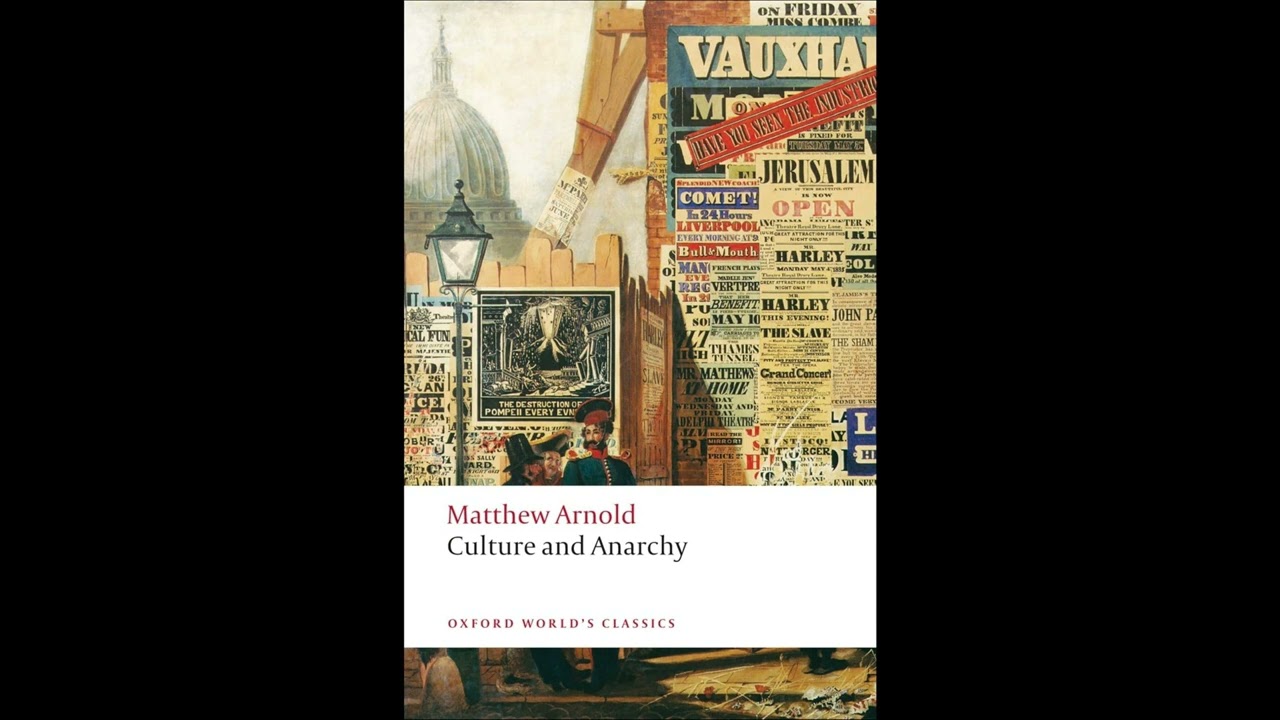
What happens when a society, driven by an almost limitless zeal for individual liberty, begins to fray at the seams? When traditional sources of authority crumble, and new social classes rise to prominence without a shared vision for the common good? Matthew Arnold’s Culture and Anarchy, published in 1869, directly confronts these questions, offering not merely a social critique but a powerful, enduring argument for the necessity of culture as a unifying and elevating force. This book, a foundational text of Victorian prose, challenges us to consider what truly constitutes a flourishing society, urging us to look beyond immediate political struggles and material progress to embrace a higher ideal of human perfection. Its insights into the tension between freedom and order, individual will and collective purpose, resonate with striking clarity in our own fragmented modern world. Arnold begins by observing what he perceives as a dangerous state of "anarchy" in mid-Victorian England. The nation, he posits, is increasingly fragmented, with various social classes — the aristocratic "Barbarians," the complacent middle-class "Philistines," and the unrefined "Populace" — each pursuing their own narrow interests without a guiding principle for the collective good. Political reforms, particularly the expansion of suffrage, while seemingly progressive, threaten to unleash further chaos by empowering groups unprepared to lead. Arnold sees a society addicted to the notion of "doing as one likes," where individual impulses are prioritized over the pursuit of collective excellence and reasoned thought. This unchecked individualism, he argues, leads not to true freedom but to a dangerous disintegration of social bonds and a decline in public standards. To counter this looming disorder, Arnold introduces "culture" as the essential antidote. However, his definition of culture is far grander and more profound than mere aesthetic appreciation or intellectual learning. For Arnold, culture is "the study of perfection," an internal process of self-improvement aimed at developing one’s "best self." It involves a spontaneous play of consciousness, a pursuit of sweetness (beauty, amiability) and light (intelligence, reason) in all aspects of life, seeking to understand the world as it truly is, free from prejudice and partisan spirit. He views culture not as a class-bound pursuit, but as a universal aspiration, a means by which individuals can transcend their narrow class interests and contribute to the moral and intellectual elevation of society as a whole, guided by the "bent for seeing things as they are." Matthew Arnold, born in 1822 in Laleham, Middlesex, was the eldest son of the renowned Dr. Thomas Arnold, headmaster of Rugby School. This formidable paternal legacy profoundly shaped his own intellectual and moral development, instilling in him a deep commitment to education and public service. Educated at Rugby and then Balliol College, Oxford, Arnold initially pursued a career in poetry, publishing influential collections such as The Strayed Reveller, and Other Poems (1849) and Empedocles on Etna, and Other Poems (1852), which included his celebrated elegy "Thyrsis" and the poignant "Dover Beach." His early verse often grappled with themes of spiritual isolation and the loss of faith in a rapidly modernizing world. In 1851, Arnold was appointed an Inspector of Schools, a position he held for 35 years until shortly before his death in 1888. This demanding role, which required extensive travel and firsthand observation of the English educational system, deeply informed his social criticism and his understanding of the challenges facing Victorian society. It was during this period that he transitioned increasingly from poetry to prose, becoming one of the most significant literary and social critics of his age. His critical prose works, including Essays in Criticism (First Series, 1865; Second Series, 1888) and Literature and Dogma (1873), cemented his reputation as a "sage writer" who sought to educate and guide his contemporaries. Arnold stands as a towering figure of Victorian intellectual life, a bridge between the Romantic sensibilities of his poetic youth and the rigorous, often moralistic, social commentary of his mature years. A central theme in Culture and Anarchy is the tension between "Hebraism" and "Hellenism," two ancient forces Arnold identifies as fundamental drives in human nature. Hebraism, characterized by strictness of conscience, moral discipline, and a focus on "doing," emphasizes righteousness and obedience to a divine law. An example of this is the Puritanical drive for moral reform that Arnold saw as prevalent in English society, often leading to a narrow-minded zeal without intellectual breadth. In contrast, Hellenism represents the spontaneity of consciousness, intellectual curiosity, and a focus on "knowing," emphasizing beauty, intelligence, and the pursuit of truth for its own sake. The ancient Greeks are, for Arnold, the epitome of Hellenism. While both forces are essential, Arnold argues that Victorian England suffered from an overemphasis on Hebraism, leading to a neglect of critical thinking and aesthetic appreciation, and thereby hindering true social progress. Another vital theme is the critique of "Philistinism," a term Arnold popularized to describe the materialistic, complacent, and intellectually provincial middle class that had become dominant in England. Arnold portrays the Philistines as being absorbed in industrial production, wealth accumulation, and narrow religious dogma, often mistaking material prosperity for true civilization. He famously illustrates their lack of "sweetness and light" by citing the example of the British preoccupation with railroad expansion and economic statistics as indicators of national greatness, while neglecting genuine intellectual and spiritual growth. The book also frequently returns to the idea of the "State" as a potential instrument for promoting culture, arguing that the collective best self of a nation, acting through an enlightened government, could provide the necessary guidance and authority to elevate society above sectarian interests and individual caprice. Culture and Anarchy emerged at a pivotal moment in English history, the late 1860s, a period of profound social and political upheaval. The Second Reform Act of 1867 had significantly expanded the franchise, granting voting rights to a substantial portion of the urban working class. This democratic shift, coupled with rising industrialization, rapid urbanization, and the decline of traditional religious certainties in the wake of Darwinism and biblical criticism, created widespread anxiety about the future of British society. Arnold, writing amidst this ferment, perceived a society dangerously close to unraveling. The publication of John Stuart Mill's On Liberty just a decade earlier had championed individual freedom, and Arnold’s work can be read, in part, as a thoughtful rejoinder, arguing that unchecked liberty without a guiding principle of perfection could lead to chaos rather than true progress. He sought to reassert the importance of shared values and intellectual discipline in an age that celebrated individualism and material advance. Listening to Culture and Anarchy as an audiobook offers a unique opportunity to engage with Arnold's intricate arguments and precise prose. The sustained flow of his reasoning, often building through careful examples and counter-arguments, benefits immensely from a skilled narrator who can articulate his subtle ironies and thoughtful cadences. The several hours of listening time allow for a deep immersion into his Victorian sensibility and his vision for cultural uplift, free from the distractions of the page. A good narration will highlight Arnold's occasionally satirical tone when discussing the "Philistines" or the "Barbarians," while also conveying the genuine earnestness of his call for "sweetness and light." The spoken word brings forth the oratorical quality inherent in much of Arnold’s writing, transforming a dense intellectual treatise into a compelling and accessible conversation about the perennial challenges of building a civilized society.
Enjoyed Culture and Anarchy? A few ways to support us
Audible & Amazon links are affiliate; we may earn a small commission at no extra cost.
About this production
Human narration by a volunteer reader from LibriVox.org, the public-domain audiobook project. LibriVox volunteers record literary works whose copyright has expired in the United States, releasing the resulting recordings into the public domain.
Culture and Anarchy by Matthew Arnold. The underlying text is in the U.S. public domain. We do not republish any modern copyrighted edition, translation, or commentary.
The 4K cinematic visuals accompanying this audiobook are generated by an AI image model from prompts derived from the source text. No copyrighted photos, paintings, or stock footage are used. AI generation is disclosed on every video on our YouTube channel as required by YouTube's altered/synthetic content policy.
English subtitles are transcribed from the LibriVox recording with OpenAI Whisper. Translations into the 11 other supported languages are produced by Meta's NLLB-200 neural translation model. No human translator's copyrighted translation is used.
Questions about sourcing or rights? See our DMCA & Sourcing policy or contact us.
Enjoyed this audiobook?
If you'd like to own a copy of Culture and Anarchy or hear a professionally produced edition, the links below help support free audiobook production at no extra cost to you.
As an Amazon Associate we earn from qualifying purchases. Audible / print links are affiliate.