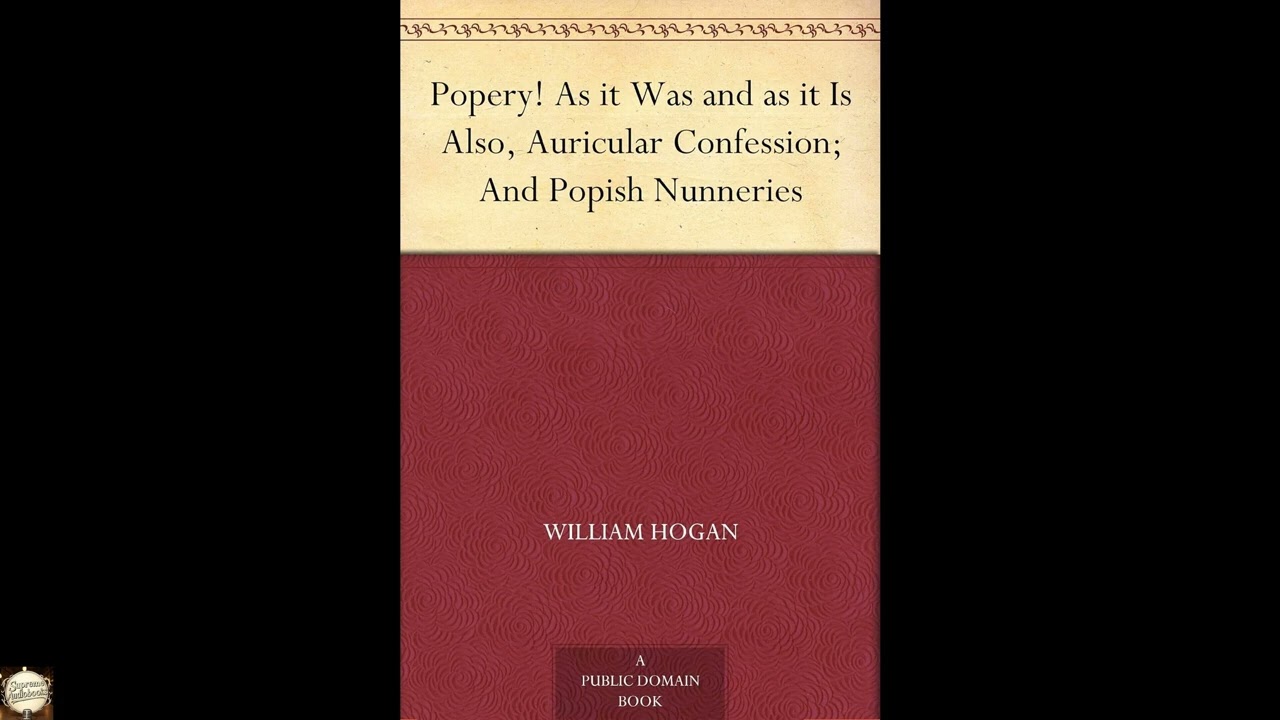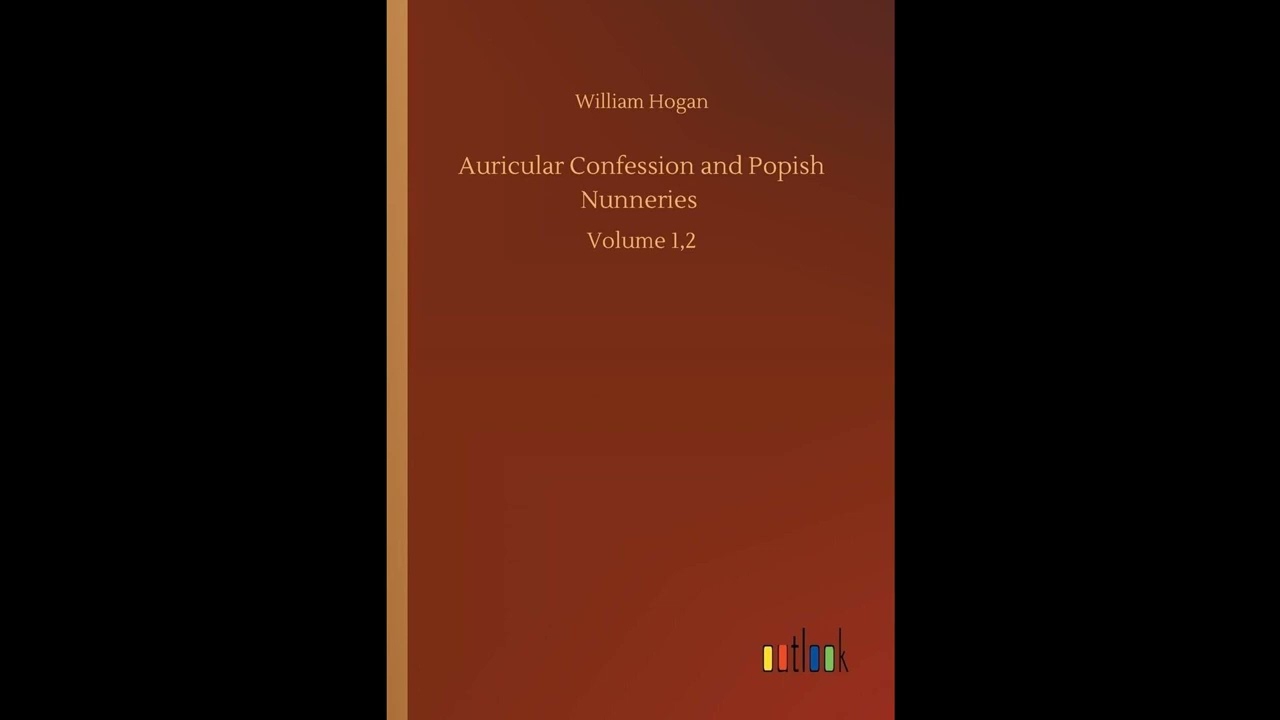
Auricular Confession and Popish Nunneries: Volume 1,2
Step into a turbulent chapter of American history with William Hogan’s Auricular Confession and Popish Nunneries: Volume 1,2, a work that ignited fierce debate and shaped public opinion in the nineteenth century. This isn't merely a book; it's a historical artifact, a polemic from a former insider designed to unmask what its author saw as the inherent dangers and abuses within the Roman Catholic Church. For today's listener, it offers a stark window into the origins of religious and cultural anxieties that echo through modern discussions of authority, freedom of conscience, and the complex interplay between religious institutions and democratic society. To understand the roots of suspicion and the rhetoric that once fueled nativist movements, one must confront the arguments presented within these pages, absorbing a perspective that was both widely consumed and deeply polarizing. Hogan’s extensive treatise sets its scene not in a specific physical location, but within the perceived spiritual and social landscape of a burgeoning American nation encountering a growing Catholic presence. The central figures are less traditional characters and more the institutional entities Hogan critiques: the system of auricular confession and the cloistered world of "Popish Nunneries." Hogan, as the authoritative voice, guides the reader through what he presents as a detailed exposé, building his arguments from a position of former clerical experience. The narrative unfolds as a series of denunciations, examining how the practice of confession allegedly grants priests undue power over individuals, particularly women, by delving into their most intimate thoughts and actions. He portrays it as a tool for control, potentially undermining family structures and individual autonomy, rather than a sacrament of spiritual solace. From the confessional, Hogan shifts his focus to the convents, painting a picture of these cloistered institutions as places of potential coercion, moral compromise, and financial exploitation. He argues against their very existence within a free society, questioning the true voluntariness of a nun's vows and the conditions of their daily lives. Hogan weaves together anecdotal accounts, often presented as direct testimonies, alongside his theological and sociological critiques, asserting that the secrecy surrounding these institutions invites abuse. The central conflict of the work pits the perceived rigid, secretive, and manipulative nature of the Catholic Church, as articulated by Hogan, against the ideals of individual liberty, transparency, and Protestant moral values that he champions as foundational to American republicanism. The arc of the story is Hogan’s systematic dismantling of these Catholic practices, presenting his case with an earnest, unwavering conviction designed to persuade his predominantly Protestant audience of the inherent dangers these institutions posed to American society. He never provides a neat resolution, but rather a call to action based on his alarming revelations. William Hogan, born in Ireland in 1780, lived a life marked by profound religious transformation and public controversy. Ordained a Catholic priest, he emigrated to the United States in the early nineteenth century, serving in various parishes. His most notable clerical post was at St. Mary's in Philadelphia, where he became embroiled in the infamous "Hogan Schism" of the 1820s. This conflict involved lay trustee rights versus episcopal authority, with Hogan aligning himself with the lay congregants, leading to his eventual excommunication from the Catholic Church. This pivotal event marked a dramatic shift in his career and personal convictions. Following his excommunication, Hogan became one of the most prolific and vocal anti-Catholic polemicists of his era. He leveraged his past as a priest to lend authenticity to his critiques, publishing numerous books and pamphlets that attacked various aspects of Catholic doctrine and practice. His other significant works include Synopsis of Popery (1837) and Popery, As It Was and As It Is (1853), all contributing to a substantial body of literature that fueled nativist sentiment in mid-nineteenth-century America. Hogan’s writing positioned him firmly within the literary landscape of religious controversialists and political agitators, making him a figure of considerable influence—and infamy—in shaping public discourse during a period of intense religious and cultural tension. His legacy rests not on literary artistry in the traditional sense, but on his profound impact as a political and social commentator. Among the several crucial themes Hogan articulates, the tension between authority and individual liberty stands out. Hogan consistently argues that practices like auricular confession and the monastic vows taken in nunneries fundamentally strip individuals of their autonomy. He alleges, for instance, that priests, through the confessional, gain an invasive power over the consciences and personal decisions of parishioners, thereby compromising their independent thought. For women in convents, Hogan describes a life where personal will is entirely subsumed under the authority of superiors, restricting their freedom of movement, communication, and even their ability to leave the institution should they desire. This theme directly contrasts Catholic hierarchical structures with what Hogan presents as American ideals of self-determination and personal freedom. A related theme is secrecy versus transparency. Hogan portrays the Catholic Church as an inherently clandestine institution, operating behind closed doors, a characteristic he views as antithetical to a democratic society. The privacy of the confessional booth, for example, becomes not a sacred space but a site of hidden influence and potential manipulation. Similarly, the cloistered walls of the convent, meant to provide spiritual sanctuary, are recast as barriers behind which abuses can occur without public scrutiny. Hogan suggests that this lack of openness breeds suspicion and allows for moral and financial corruption to fester, contrasting it with a public sphere where institutions should be accountable and visible. He frequently levels accusations of moral failings among the clergy and nuns, presenting these as direct consequences of an unchecked, secretive environment. This work emerged during a particularly volatile period in American history, roughly from the 1830s through the 1850s, a time when the nation grappled with rapid demographic and social change. The mid-nineteenth century saw unprecedented waves of Irish and German Catholic immigrants arriving in the United States, seeking refuge and opportunity. This influx dramatically increased the Catholic population, challenging the existing Protestant cultural hegemony and sparking widespread anxiety among many native-born Americans. This period also witnessed the rise of nativist political movements, such as the Know-Nothing Party, which explicitly campaigned against immigration and Catholic influence, often on the grounds that Catholics held allegiance to the Pope over the U.S. Constitution. Culturally, America was still deeply shaped by Protestant revivalism, and many viewed Catholicism with suspicion, seeing it as an autocratic, foreign threat to republican values and individual liberty. The perceived secrecy of Catholic institutions like convents and the hierarchical structure of the Church were often presented as antithetical to American democracy. Hogan’s writings were not merely reflective of this context; they actively shaped it. His books provided a powerful voice for anti-Catholic sentiment, offering what was presented as an "insider’s account" to confirm existing fears and prejudices. His arguments became instrumental in fueling public discourse that sometimes boiled over into acts of violence, such as the burning of the Ursuline Convent in Charlestown, Massachusetts, in 1834, an event that predates Hogan’s specific work but embodies the spirit it fostered. His works thus served as both a product of and a catalyst for the intense religious and cultural conflicts of the era. Listening to Auricular Confession and Popish Nunneries as an audiobook offers a unique way to engage with its potent historical arguments. A skilled narrator can bring Hogan’s fervent conviction and polemical style to life, allowing the listener to truly experience the impassioned rhetoric that once galvanized an entire segment of the American population. The sustained run length, spanning several hours, makes it an ideal choice for listeners who prefer to immerse themselves in significant historical documents over extended periods, perhaps during commutes or focused listening sessions at home. The vocal performance can highlight Hogan’s earnestness, his indignation, and the calculated construction of his arguments, guiding the listener through complex historical grievances and social commentary. A narrator can subtly distinguish Hogan’s direct pronouncements from the alleged testimonies he incorporates, giving texture to the atmosphere of debate and revelation that pervades the work. It allows one to confront the raw energy of nineteenth-century religious conflict, hearing the weight of accusations and the urgency behind calls for reform as they might have resonated with contemporary audiences.
Enjoyed Auricular Confession and Popish Nunneries: Volume 1,2? A few ways to support us
Audible & Amazon links are affiliate; we may earn a small commission at no extra cost.
About this production
Human narration by a volunteer reader from LibriVox.org, the public-domain audiobook project. LibriVox volunteers record literary works whose copyright has expired in the United States, releasing the resulting recordings into the public domain.
Auricular Confession and Popish Nunneries: Volume 1,2 by William Hogan. The underlying text is in the U.S. public domain. We do not republish any modern copyrighted edition, translation, or commentary.
The 4K cinematic visuals accompanying this audiobook are generated by an AI image model from prompts derived from the source text. No copyrighted photos, paintings, or stock footage are used. AI generation is disclosed on every video on our YouTube channel as required by YouTube's altered/synthetic content policy.
English subtitles are transcribed from the LibriVox recording with OpenAI Whisper. Translations into the 11 other supported languages are produced by Meta's NLLB-200 neural translation model. No human translator's copyrighted translation is used.
Questions about sourcing or rights? See our DMCA & Sourcing policy or contact us.
View 10 famous quotes from this book →
Enjoyed this audiobook?
If you'd like to own a copy of Auricular Confession and Popish Nunneries: Volume 1,2 or hear a professionally produced edition, the links below help support free audiobook production at no extra cost to you.
As an Amazon Associate we earn from qualifying purchases. Audible / print links are affiliate.