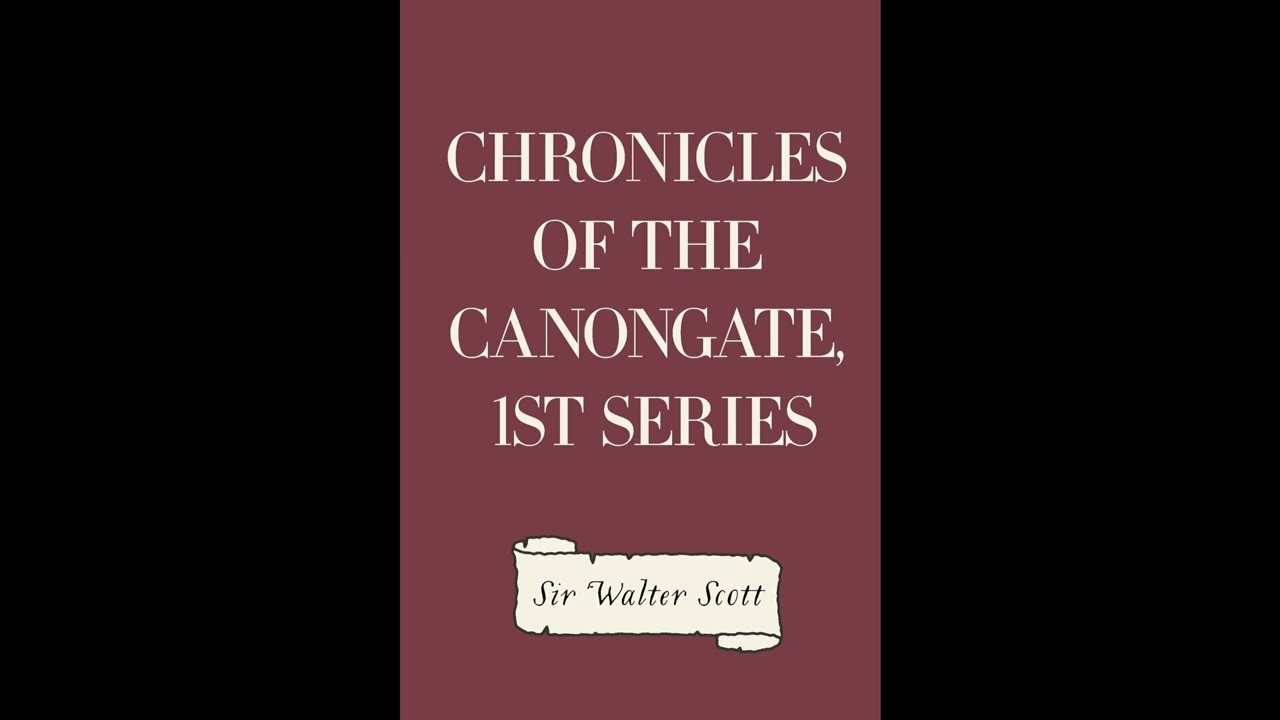
Chronicles of the Canongate, 1st Series
Step into a lost world of Scottish lore and human drama, presented not by a distant historian, but through the eyes of a genial, fictional editor named Chrystal Croftangry. Sir Walter Scott's Chronicles of the Canongate, 1st Series offers a fascinating collection of tales that transport listeners to the heart of 18th-century Scotland and beyond, revealing the clash of cultures, the stubborn grip of tradition, and the universal struggles of individuals caught between duty and desire. This work, often overlooked in favor of Scott's grander novels, provides a unique lens into his narrative genius, showcasing his versatility and his enduring fascination with the textures of national character and the echoes of history in personal lives. It is a work that speaks to the power of stories themselves, and the way they shape our understanding of who we are and where we come from. The collection is framed by the musings of Chrystal Croftangry, a Scottish laird residing in Edinburgh's historic Canongate. He serves as the amiable, slightly eccentric editor of these "chronicles," introducing each story with his own observations on human nature, Scottish society, and the art of narration itself. The first tale, "The Highland Widow," plunges into the stark, unforgiving landscape of the Scottish Highlands shortly after the 1745 Jacobite Rising. It centers on Elspat MacTavish, an aging widow whose fierce loyalty to ancient clan customs and her deceased husband's memory creates an insurmountable chasm between her and her son, Hamish. Elspat's attempts to guide Hamish into a life that honors their ancestors clash violently with his desire for a more conventional existence, leading to a profound domestic tragedy rooted in cultural obstinacy and maternal love gone awry. Following this powerful opening, "The Two Drovers" shifts focus to a pair of cattle drovers: the burly English Harry Wakefield and the more restrained, yet equally proud, Scottish Robin Oig M'Combich. Their friendship, forged on the long, arduous paths to market, faces an ultimate test when a misunderstanding over a borrowed pasture spirals into a point of honor that neither man, shaped by vastly different cultural codes, can easily yield. The narrative explores the stark differences in legal and personal justice between the English common law and the ingrained Highland sense of insult and retribution. Finally, "The Surgeon's Daughter" transports us further afield, from the genteel society of Perthshire, Scotland, to the exotic and often perilous colonial India of the late 18th century. It follows the story of Menie Gray, a young woman whose destiny becomes entwined with that of her ambitious suitor, Doctor Adam Hartley, and the enigmatic Richard Middlemas. Their path leads them through the treacherous social landscape of British India, confronting them with moral compromises, unforeseen betrayals, and the harsh realities of ambition and sacrifice in a distant land. Each story, distinct in its setting and specific characters, nevertheless echoes Croftangry's initial reflections on human frailties and strengths. Sir Walter Scott, born in Edinburgh in 1771, was a towering figure in British literature, often credited with popularizing the historical novel. From a young age, Scott was fascinated by the oral traditions, ballads, and legends of the Scottish Borders, a passion fueled by a childhood battle with polio that left him with a lifelong limp but a sharp intellect and prodigious memory. He initially pursued a legal career, becoming an advocate and later a sheriff-depute, but his true calling lay in letters. His early literary endeavors focused on poetry, including popular works like "The Lay of the Last Minstrel" and "Marmion," which celebrated Scottish history and landscape with romantic flair. However, it was with the anonymous publication of Waverley in 1814 that Scott truly launched a new literary genre. His subsequent novels, such as Ivanhoe, Rob Roy, and The Heart of Midlothian, cemented his reputation as a master storyteller, intertwining meticulous historical detail with compelling human drama. He brought figures from the past to vivid life, immersing readers in different eras and cultures. Scott became a national icon, lauded for his contributions to Scottish national identity and for establishing a template for historical fiction that writers across Europe and America would emulate for generations. Despite later financial difficulties stemming from business ventures, he continued to write prolifically until his death in 1832, leaving behind an unparalleled legacy. The narratives in Chronicles of the Canongate are profoundly shaped by themes of cultural clash and the struggle between tradition and modernity. In "The Highland Widow," Elspat's unyielding adherence to ancient Highland customs — particularly her fierce insistence on martial honor and revenge — directly opposes her son Hamish's desire to integrate into a more "civilized" Lowland world. This clash is not merely a generational divide but a fundamental conflict between two distinct ways of life, highlighting the tragic consequences of failing to bridge such deep-seated differences. Similarly, "The Two Drovers" dramatically stages the difference between English legal justice and the Scottish Highland code of honor. When an argument escalates, Harry Wakefield expects a conventional pugilistic resolution, while Robin Oig views an insult as demanding a far more severe, deeply personal response, ultimately leading to a courtroom where their differing cultural assumptions are laid bare. Another central theme concerns the power of storytelling and the construction of identity through narrative. Chrystal Croftangry's framing device emphasizes the subjective nature of history and the way personal anecdotes and local legends shape our understanding of events. He presents these chronicles not as objective truths but as tales passed down, each imbued with the personality of its narrator and the cultural context of its origin. This meta-narrative layer invites reflection on how stories define communities and individuals, acting as conduits for memory, morality, and identity across generations, even when those stories speak of profound shifts and losses. When Scott published Chronicles of the Canongate, 1st Series in 1827, Britain was a nation grappling with its industrial future while simultaneously looking back to a romanticized past. The Napoleonic Wars had concluded a decade prior, and a sense of national self-reflection was prevalent. There was a burgeoning interest in folk traditions and national character, fueled by the Romantic movement, which Scott himself had played a significant role in shaping. Scotland, in particular, was experiencing a revival of interest in its unique history and cultural identity, even as the old Highland way of life, with its clan structures and Gaelic language, was steadily diminishing under the influence of the broader British state. Scott, at this point in his career, was also facing immense personal and financial pressures, having revealed his authorship of the Waverley novels and taken on the debts of his printing and publishing enterprises. This collection, with its framing device of an aging laird reflecting on and presenting stories, can be seen as Scott's way of returning to his roots as a collector of Scottish lore, but with a fresh narrative approach that allowed him to explore diverse settings and characters without the commitment of a full-length novel. It appeared at a time when he was creatively prolific yet personally challenged, making the themes of change and memory particularly poignant. Listening to Chronicles of the Canongate as an audiobook offers a singular opportunity to immerse oneself in Scott's distinctive prose and the evocative atmospheres he creates. A skilled narrator breathes life into Chrystal Croftangry's genial, sometimes rueful voice, establishing the intimate tone of the overarching narrative. The varying regional accents and dialects across the three stories—from the stark Gaelic inflections of the Highlands to the more formal tones of colonial India—are brought to the fore, deepening the listener's connection to each character's background and emotional landscape. The pacing, shifting from the slow build of cultural tension in "The Highland Widow" to the brisk, fateful march of "The Two Drovers" and the sprawling scope of "The Surgeon's Daughter," becomes an experience in itself, allowing the nuances of Scott's storytelling to unfold with natural rhythm. Over several hours of listening, the listener can truly sink into the detailed historical settings and the profound human conflicts, hearing the very echoes of an age.
Enjoyed Chronicles of the Canongate, 1st Series? A few ways to support us
Audible & Amazon links are affiliate; we may earn a small commission at no extra cost.
About this production
Human narration by a volunteer reader from LibriVox.org, the public-domain audiobook project. LibriVox volunteers record literary works whose copyright has expired in the United States, releasing the resulting recordings into the public domain.
Chronicles of the Canongate, 1st Series by Sir Walter Scott. The underlying text is in the U.S. public domain. We do not republish any modern copyrighted edition, translation, or commentary.
The 4K cinematic visuals accompanying this audiobook are generated by an AI image model from prompts derived from the source text. No copyrighted photos, paintings, or stock footage are used. AI generation is disclosed on every video on our YouTube channel as required by YouTube's altered/synthetic content policy.
English subtitles are transcribed from the LibriVox recording with OpenAI Whisper. Translations into the 11 other supported languages are produced by Meta's NLLB-200 neural translation model. No human translator's copyrighted translation is used.
Questions about sourcing or rights? See our DMCA & Sourcing policy or contact us.
Enjoyed this audiobook?
If you'd like to own a copy of Chronicles of the Canongate, 1st Series or hear a professionally produced edition, the links below help support free audiobook production at no extra cost to you.
As an Amazon Associate we earn from qualifying purchases. Audible / print links are affiliate.