Starr, of the Desert
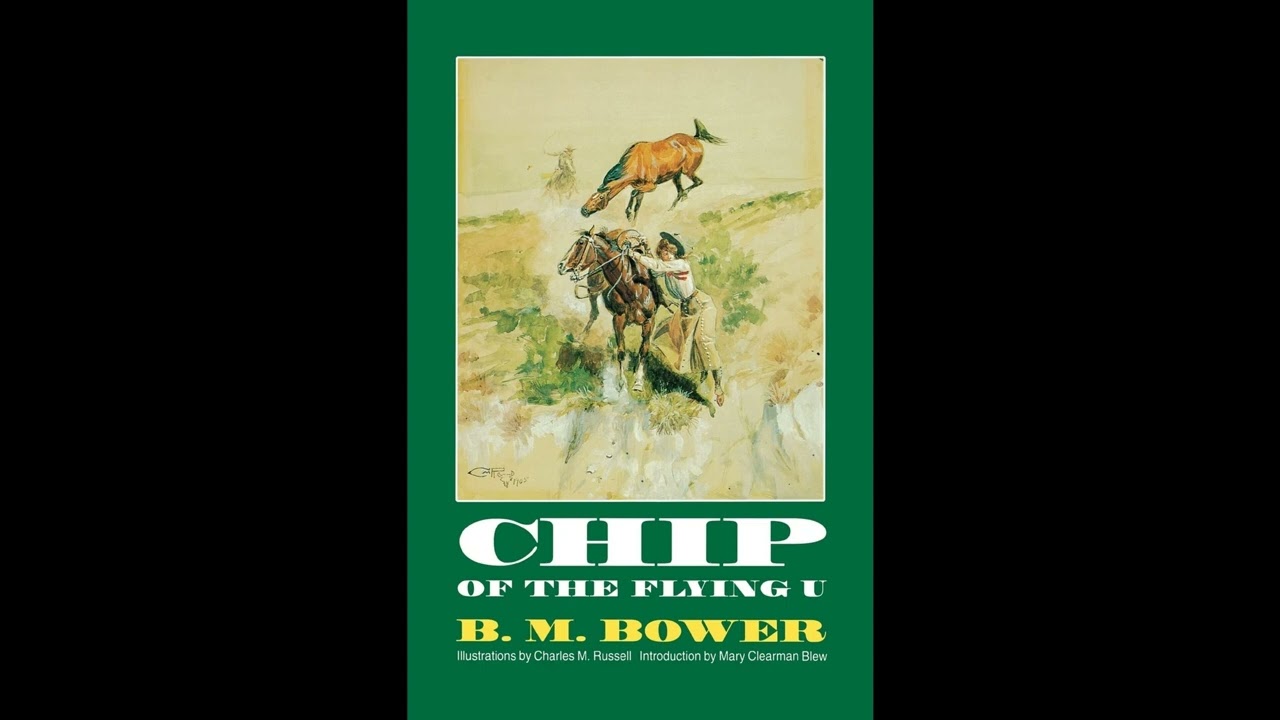
The vast, sun-scorched canvas of the American West has long held a singular grip on the imagination, shaping stories of independence, struggle, and the human spirit tested against formidable odds. Among the earliest and most authentic voices to bring this world to life was B.M. Bower, and her novel, Starr, of the Desert, stands as a testament to the enduring allure of that landscape and the tenacious characters forged within it. This is more than just a Western; it is a foundational piece of a genre that continues to speak to our yearning for self-reliance and our fascination with untamed places. It offers a clear, unsentimental window into a specific moment in American history, presenting a heroine who defies expectations and a setting that demands respect. Listening to this story today is to connect with the very roots of a cultural narrative that defines a significant part of the American identity, revealing the grit and the grandeur behind the myths. Set against the stark, magnificent backdrop of the American Southwest, a land of endless horizons, sudden dangers, and breathtaking beauty, Starr, of the Desert introduces a world where survival is a daily art. Our central figure is Starr, a woman of uncommon resilience and spirit, who arrives in this remote and often hostile environment, not as a helpless damsel, but as a force to be reckoned with. She comes to the desert with a determination to carve out her own existence, a desire for independence that sets her apart from many women of her time, and indeed, many characters in the popular fiction of the era. The narrative quickly establishes her in this rugged landscape, demonstrating her skill and resolve as she navigates the challenges of homesteading, ranching, and simply living in a place where nature itself often seems an antagonist. Starr soon finds herself entangled in the lives of the various figures who populate this remote corner of the world: gruff but honorable cowboys, calculating landowners, and perhaps a figure of lawlessness whose presence complicates the fragile peace. A central conflict arises, often stemming from Starr's very presence and her refusal to conform to the established norms for women in such a demanding setting. She faces threats to her land, her livelihood, and her personal safety, forcing her to rely on her wits, her courage, and her growing understanding of the desert's unwritten rules. As the story unfolds, relationships are forged and tested under pressure, loyalties are questioned, and Starr must repeatedly prove her strength and capability, not only to others but to herself, as she fights to maintain her hard-won independence and protect what she has built in this wild land. B.M. Bower was the pen name of Bertha Muzzy Sinclair, an American author born in 1871 in rural Minnesota. Her life, much like her fiction, was inextricably linked to the American West. She spent her formative years living on ranches in Montana, an experience that provided her with an unparalleled authenticity and insight into the daily lives of cowboys, ranchers, and the vast, often lonely, expanses of the frontier. This firsthand knowledge distinguished her work from many contemporaries who wrote about the West from an outsider's romanticized perspective. Bower’s writing career began in the early 1900s, and her first novel, Chip of the Flying U, published in 1906, was an immediate success, establishing her as a significant voice in the nascent genre of Western fiction. She would go on to write more than sixty novels during her prolific career, becoming one of the most widely read authors of Westerns. Her work chronicled a period of immense change in America, as the frontier officially closed and the rugged individualism of the West began to transition into a more settled existence. She specialized in "cowboy stories," often featuring strong, independent protagonists – a quality particularly notable in her female characters – and depicting the challenges and adventures of life on the range with an honest, often humorous, eye. Bower passed away in 1940, leaving behind a substantial body of work that continues to be celebrated for its realism and its contribution to the Western literary tradition. Starr, of the Desert powerfully enacts several core themes central to both the Western genre and the broader American experience. Foremost among these is the theme of self-reliance and the forging of identity through hardship. Starr's decision to live and work in the desert, often alone, showcases her fierce independence. For instance, her determination to manage her own ranch, making all crucial decisions regarding livestock and land, demonstrates a resolute spirit that rejects traditional gender roles and societal expectations. She must rely on her own judgment and physical capabilities, navigating disputes and natural challenges without the conventional support systems, thereby solidifying her sense of self in direct proportion to her ability to survive and thrive. Another compelling theme present is the enduring conflict between humanity and the untamed natural world. The desert itself functions as a formidable character, a relentless force that shapes every aspect of life. Bower’s descriptions frequently highlight the scarcity of water, the brutal heat, and the unforgiving terrain that constantly threatens to overwhelm those who dare to settle there. A scene might depict Starr meticulously conserving every drop of water, or facing down a sudden, violent dust storm, illustrating the constant, visceral struggle to impose human will on an environment that cares little for human endeavor. This relentless natural pressure underscores the fragility of human life and the profound respect demanded by such a harsh landscape. The period when B.M. Bower was writing, primarily the early 20th century, was a fascinating juncture in American history, deeply influencing the emergence of works like Starr, of the Desert. The official declaration of the "closing of the frontier" by the U.S. Census Bureau in 1890 had a profound cultural impact, creating a sense of nostalgia for a vanishing way of life. Americans were increasingly looking back at the era of expansion with a mix of longing and romanticism, even as the realities of industrialization and urbanization reshaped the country. In the literary world, the Western genre was solidifying its place as a popular form of escapist fiction, moving beyond the dime novel to more complex narratives. Bower's works, published during this time, offered a distinct perspective. While many writers indulged in overly romanticized tales of cowboys and outlaws, Bower, with her firsthand experience, brought a more grounded and authentic voice to her stories. Her work resonated with a public eager for tales of adventure and individualism, reflecting the national mythos of rugged self-sufficiency, but she infused these narratives with a realism that portrayed the West not just as a land of heroism, but also of hard work, isolation, and genuine danger. An audiobook presentation of Starr, of the Desert offers an unparalleled way to experience this classic tale. With several hours of narration, it is a perfect companion for long commutes, a quiet afternoon of chores, or simply unwinding as the day ends. A skilled narrator can bring out the quiet expanse of the desert, letting the listener feel the vastness and the isolation through subtle changes in pacing and tone. The grit of Starr's character, her determination and her moments of vulnerability, can be powerfully conveyed through voice, adding an emotional depth that enhances the written word. Listen for the particular inflections in dialogue that define the characters, from the terse wisdom of a seasoned cowboy to the occasional vulnerability hidden beneath a gruff exterior. The atmospheric details—the imagined sounds of wind across the plains, the creak of saddle leather, the distant lowing of cattle—all come alive in the mind's ear, transporting the listener directly into the heart of Bower's vivid, unvarnished American West.
Enjoyed Starr, of the Desert? A few ways to support us
Audible & Amazon links are affiliate; we may earn a small commission at no extra cost.
About this production
Human narration by a volunteer reader from LibriVox.org, the public-domain audiobook project. LibriVox volunteers record literary works whose copyright has expired in the United States, releasing the resulting recordings into the public domain.
Starr, of the Desert by B. M. Bower. The underlying text is in the U.S. public domain. We do not republish any modern copyrighted edition, translation, or commentary.
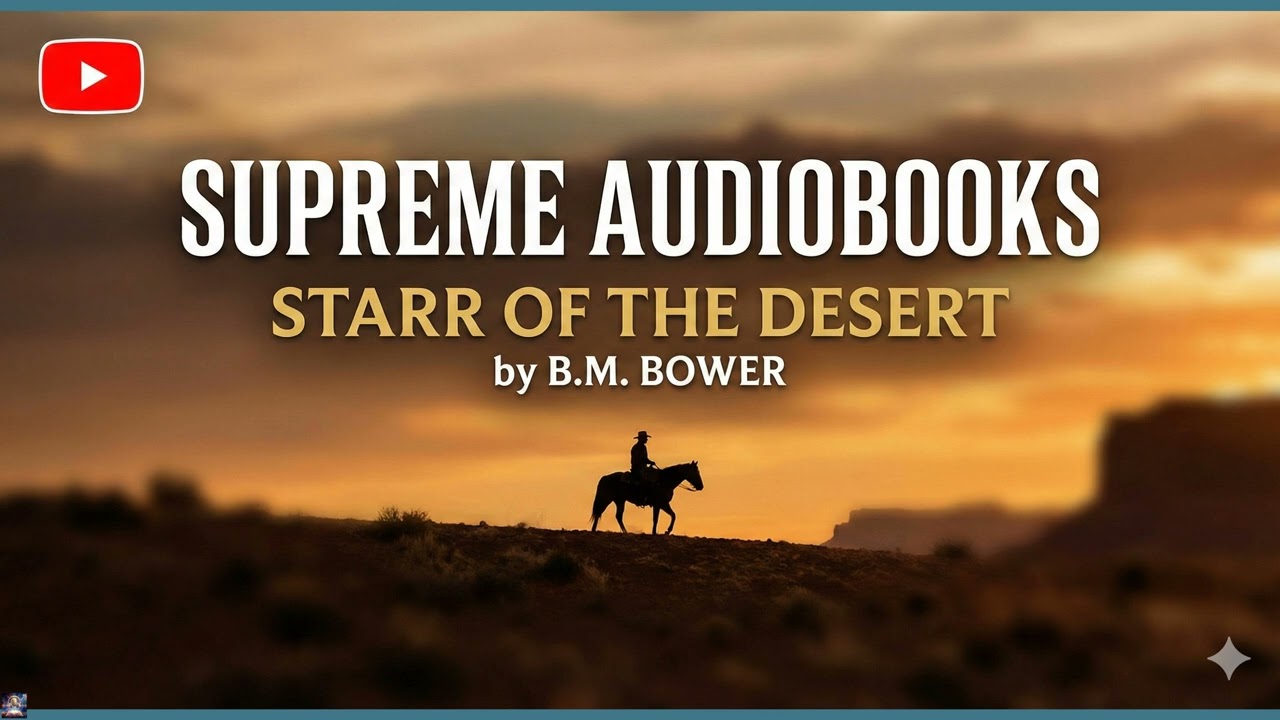
The 4K cinematic visuals accompanying this audiobook are generated by an AI image model from prompts derived from the source text. No copyrighted photos, paintings, or stock footage are used. AI generation is disclosed on every video on our YouTube channel as required by YouTube's altered/synthetic content policy.
English subtitles are transcribed from the LibriVox recording with OpenAI Whisper. Translations into the 11 other supported languages are produced by Meta's NLLB-200 neural translation model. No human translator's copyrighted translation is used.
Questions about sourcing or rights? See our DMCA & Sourcing policy or contact us.
Enjoyed this audiobook?
If you'd like to own a copy of Starr, of the Desert or hear a professionally produced edition, the links below help support free audiobook production at no extra cost to you.
As an Amazon Associate we earn from qualifying purchases. Audible / print links are affiliate.