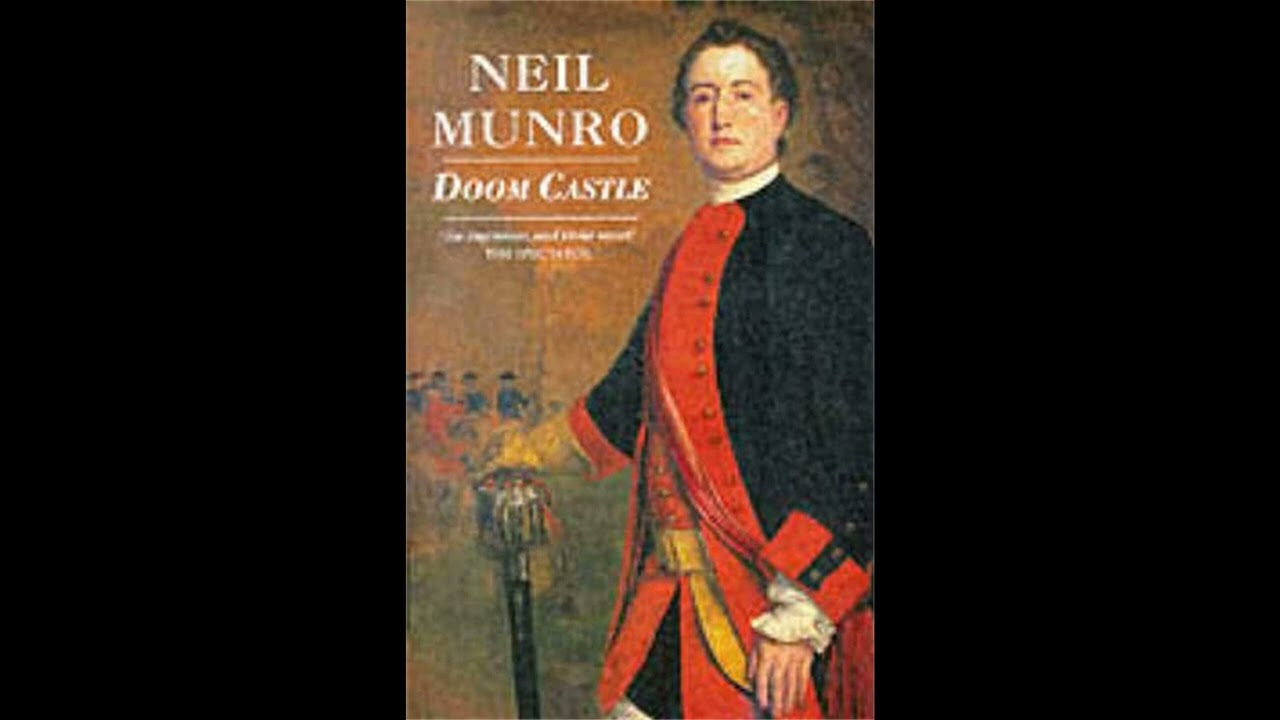
Doom Castle
Step into the shadowed heart of the Scottish Highlands with Neil Munro's Doom Castle, a classic of atmospheric suspense and gothic romance that beckons listeners to a realm where ancient curses linger and love blossoms amidst peril. First published at the turn of the 20th century, this compelling narrative invites us to a remote corner of Scotland, where the past exerts a powerful, often dangerous, hold over the present. It is a story that speaks to our enduring fascination with ancestral secrets, the clash between rational thought and haunting legend, and the lengths to which individuals will go for honor and affection. For anyone drawn to tales that weave historical drama with psychological tension and a touch of the uncanny, Doom Castle offers an experience both chilling and profoundly human, resonating still with its depiction of human frailties and strengths against a grand, unforgiving landscape. The tale unfolds in the desolate, windswept region of Argyll, Scotland, in the turbulent years following the French Revolution. Our narrator, the astute and pragmatic Colin Cameron, a lawyer's agent, finds himself dispatched to the forbidding Doom Castle, a place steeped in local superstition and a history of dark deeds. His mission initially seems straightforward: to finalize arrangements for the marriage of the mysterious French émigré, Count Victor de Montaigne, to the equally enigmatic Lady Doom, a woman he has never seen, whose very name evokes dread. As Cameron arrives, the castle itself is a character—a decaying, isolated fortress that seems to breathe with secrets, its walls echoing with whispers of a family curse that has claimed lives for generations. The Count, an honorable yet haunted figure, is deeply entrenched in the melancholy of his circumstances, wrestling with a sense of duty and a growing unease about his unseen bride and the castle's grim reputation. Cameron, a man of logic and reason, initially dismisses the local folklore surrounding Doom Castle. Yet, as he becomes more deeply involved in the Count's affairs, he finds himself increasingly ensnared by the pervasive atmosphere of dread. Strange occurrences, veiled threats, and the conflicting stories of the castle's inhabitants begin to chip away at his skepticism. He encounters a cast of compelling characters: the local laird, a man deeply connected to the region's ancient past; the enigmatic woman who lives in seclusion within the castle; and the various Highland folk whose loyalty and motives are often obscured by their own histories and allegiances. The central conflict steadily builds as Cameron endeavors to unearth the truth behind the “curse,” piecing together fragments of a forgotten crime and the motivations of those who seek to perpetuate its legacy, all while a tender, unexpected romance begins to flower amidst the shadows, promising both solace and further complications. The narrative gradually tightens, drawing the reader into a web of intrigue where appearances are deceiving and the true danger may lie not in ghosts, but in the lingering shadows of human vengeance and deceit. The author behind this compelling drama was Neil Munro (1863-1930), a prominent figure in Scottish literature whose body of work painted a vivid picture of his homeland. Born in Inveraray, Argyllshire, Munro possessed an intimate understanding of the Gaelic language and the rich cultural heritage of the Scottish Highlands, which deeply informed his writing. Though he moved to Glasgow and established a career in journalism, becoming the editor of the Glasgow Evening News, his heart and imagination remained tethered to the landscapes and characters of his youth. His literary output included novels, short stories, and poetry, often balancing a keen observational eye with a romantic sensibility. Munro is perhaps best known for his "Para Handy" tales, humorous maritime stories that captured the wit and spirit of Clyde puffer captains, but his historical romances, like John Splendid, Gilian the Dreamer, and Doom Castle, cemented his place as a master of atmospheric prose and character development. He stood apart from some of his contemporaries in the "Kailyard School," offering a more robust and less sentimental portrayal of Scottish life, often grappling with the complexities of historical change and cultural identity. His narratives frequently celebrated the resilience and distinctiveness of the Highland character, while also acknowledging the inevitable march of progress and the fading of old ways, securing his legacy as a significant voice who preserved the essence of Gaelic Scotland for a wider audience. At its core, Doom Castle enacts several enduring themes. One major thread is the persistent weight of the past upon the present. The very structure of Doom Castle, with its decaying grandeur and inherited gloom, stands as a concrete representation of how historical events, ancestral deeds, and lingering legends can shape the lives of future generations. Characters constantly grapple with the burdens of their lineage, finding themselves either bound by tradition or seeking to break free from its grip. For example, Count Victor de Montaigne arrives burdened not only by his personal history as an émigré but also by the very curse that seems to govern his impending marriage, forcing him into an inescapable confrontation with the castle's dark legacy. Another central theme is the nature of identity and the deceptive power of appearances. Throughout the story, characters wear various masks, whether by necessity, design, or inherited role. The mystery of Lady Doom herself, hidden from sight, becomes a potent symbol of unknown truths and concealed selves. Colin Cameron, with his legalistic mind, must constantly distinguish between the superstitious rumors of the Highlanders and the tangible evidence of human intent, discovering that the most terrifying forces often stem not from spectral beings but from the hidden motives and long-held grievances of the living. This constant interplay between what is seen and what is genuinely true lends the narrative its palpable tension and psychological depth. Doom Castle was published in 1901, a time when Scotland, and indeed Britain, was undergoing significant cultural and social shifts. The Victorian era had just closed, and the dawn of the Edwardian age brought with it a sense of both continuity and impending change. Industrially, Scotland was a powerhouse, yet there was a deep-seated nostalgia for a romanticized Highland past—a past that was rapidly eroding due to the Highland Clearances and emigration. Munro wrote this novel against a backdrop of these contrasting realities: the modern, urbanized Scotland he inhabited as a journalist, and the wild, traditional Scotland that filled his imagination. The novel's setting in the late 18th century, a period immediately following the tumultuous Jacobite risings and during the early stages of the French Revolution's impact on European aristocracy, allowed Munro to comment on themes of displacement, the decay of old orders, and the struggle to forge new identities in a changing world, all while appealing to a public still enamored with historical fiction and the gothic revival that had seen a resurgence in popularity. Listening to Doom Castle as an audiobook transforms the text into an immediate and deeply atmospheric experience. The length, encompassing several hours, allows the intricate plot to unfold at a measured pace, perfect for extended listening sessions during commutes, long walks, or quiet evenings by the fire. A skilled narrator will bring to life the distinct voices of the Scottish Highlands—the local laird, the wary castle retainers, and the pragmatic Colin Cameron—each imbued with a unique cadence and personality. The descriptive prose, rich with images of windswept moors, the creaking timbers of the castle, and the pervasive chill of a lingering secret, truly comes alive when read aloud, painting vivid mental pictures. Pay attention to the narrator’s use of pauses and subtle inflections, as these will amplify the growing sense of unease and the gradual revelation of the castle’s secrets, drawing you into its shadows with every whispered legend and dramatic dialogue.
Enjoyed Doom Castle? A few ways to support us
Audible & Amazon links are affiliate; we may earn a small commission at no extra cost.
About this production
Human narration by a volunteer reader from LibriVox.org, the public-domain audiobook project. LibriVox volunteers record literary works whose copyright has expired in the United States, releasing the resulting recordings into the public domain.
Doom Castle by Neil Munro. The underlying text is in the U.S. public domain. We do not republish any modern copyrighted edition, translation, or commentary.
The 4K cinematic visuals accompanying this audiobook are generated by an AI image model from prompts derived from the source text. No copyrighted photos, paintings, or stock footage are used. AI generation is disclosed on every video on our YouTube channel as required by YouTube's altered/synthetic content policy.
English subtitles are transcribed from the LibriVox recording with OpenAI Whisper. Translations into the 11 other supported languages are produced by Meta's NLLB-200 neural translation model. No human translator's copyrighted translation is used.
Questions about sourcing or rights? See our DMCA & Sourcing policy or contact us.
Enjoyed this audiobook?
If you'd like to own a copy of Doom Castle or hear a professionally produced edition, the links below help support free audiobook production at no extra cost to you.
As an Amazon Associate we earn from qualifying purchases. Audible / print links are affiliate.