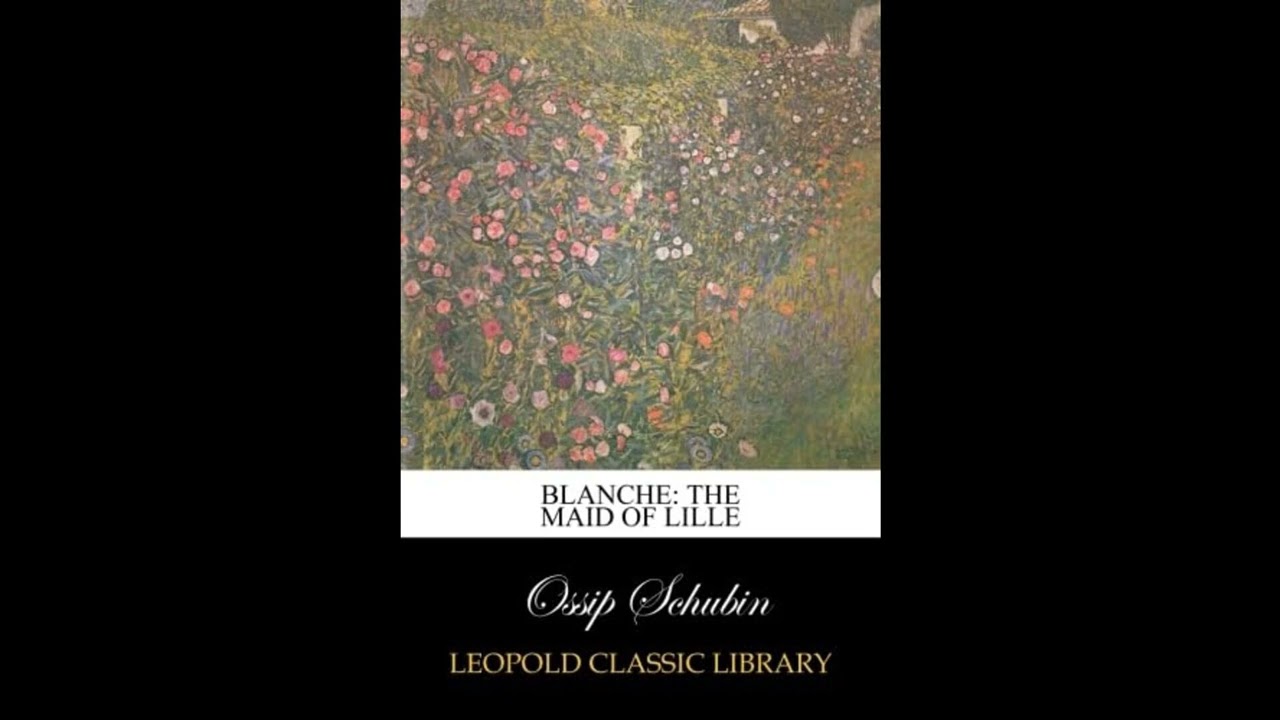
Blanche: The Maid of Lille
Hidden in the annals of European classic literature, a voice as keen and observant as any of her male contemporaries waits to be rediscovered. Ossip Schubin's Blanche: The Maid of Lille stands as a testament to the enduring power of personal resolve in the face of societal pressures, a narrative that, despite its late 19th-century origins, speaks with startling clarity to modern listeners. This novel offers more than just a glimpse into a bygone era; it presents a deeply human story of a young woman navigating the complexities of class, expectation, and affection in a world undergoing rapid transformation. It is a compelling example of how a skilled author can turn individual struggles into a mirror reflecting broader human truths, making it a work whose emotional resonance remains undimmed by time. The story unfolds in the historic French city of Lille, a place of cobbled streets, grand boulevards, and a quiet sense of tradition, yet also a city touched by the shifting currents of the industrial age. Here we meet Blanche, a young woman whose inner strength and unwavering spirit belie her modest background. She is not a figure of high society, but rather one who embodies the integrity and quiet ambition of the working people, earning her the affectionate designation of "the Maid of Lille." Her world is one of daily duties and subtle social stratifications, where every interaction can carry the weight of expectation and every aspiration risks crossing invisible lines. Blanche's central conflict emerges from the tension between her own authentic self and the rigid societal norms that seek to define her. Her intelligence and grace draw the attention of individuals from higher social circles, sparking a quiet romance that threatens to upend the established order of her life. This connection, however innocent, forces her to confront the prejudices and limitations imposed by her birth. The narrative charts Blanche's journey as she grapples with difficult choices, wrestling with matters of loyalty, personal honor, and the powerful allure of a love that transcends class boundaries. Throughout, she must find her own path, demonstrating a remarkable resilience in the face of judgment and adversity, all while protecting her true self amidst a world that often misunderstands her. The author behind this compelling portrait was Aloisia Kirschner, known to the literary world by her pen name, Ossip Schubin. Born in Prague in 1854, Schubin was an Austrian novelist whose extensive travels across Europe—from Italy to Russia—provided a rich backdrop for her keen observations of human nature and societal structures. Her background in aristocratic circles, coupled with her facility for multiple languages, gave her a unique vantage point from which to portray the manners and mores of the European elite, as well as the lives intertwined with them. Schubin was a prolific writer, known for works such as Gloria Victis! and Asbeïn, which often featured international settings and characters grappling with moral dilemmas and social expectations. Schubin’s literary approach placed her firmly within the realist movement of the late 19th century, a period when writers sought to depict life as it truly was, often with a focus on psychological depth and social commentary. Her works were characterized by sharp dialogue, intricate plotting, and a subtle critique of societal hypocrisy. She had a particular talent for portraying strong female characters who, like Blanche, navigated complex social landscapes with courage and intelligence. Though perhaps less widely read today than some of her male contemporaries, Schubin held a significant place in her time as a voice that contributed substantially to the evolving landscape of European fiction, offering nuanced perspectives on the human condition that were both insightful and prescient. Blanche: The Maid of Lille serves as a powerful lens through which to examine several enduring themes. One prominent thread is the intricate interplay of social class and individual agency. Blanche’s constant struggle to maintain her dignity and pursue her own path, despite the constraints of her societal position, vividly illustrates the challenges faced by many in a stratified world. For instance, a scene might depict her quiet refusal to accept a patronizing offer, choosing instead to rely on her own ingenuity. Another central theme involves the nature of love and sacrifice. The affection Blanche develops, likely across social divides, forces her to weigh personal happiness against duty or reputation, showing the profound choices individuals must make when their hearts lead them somewhere society disapproves. Consider a moment where she contemplates a future that might require abandoning her family or her roots for the sake of a relationship. Furthermore, the book subtly explores the evolving role of women in society, presenting Blanche not as a passive recipient of fate, but as an active participant in shaping her own destiny, demonstrating an inner resilience that challenges conventional expectations for women of her era. This might be seen in her quiet determination to learn a skill or manage a household, proving her capabilities beyond traditional roles. The late 19th century, the era in which Schubin was writing, was a period of immense change across Europe. Industrially, societies were transforming at an unprecedented rate, leading to shifts in class structures and heightened awareness of social inequalities. Culturally, realism was flourishing, moving literature away from romantic idealism towards a more unflinching portrayal of life’s realities. Politically, nations were grappling with the aftermath of conflicts like the Franco-Prussian War, and nationalism was a potent force. This created a fertile ground for stories that examined the individual’s place within a rapidly modernizing world, particularly in established cities like Lille. Schubin’s work emerged from this confluence, offering a distinctly Austrian perspective on broader European concerns, and providing a literary space for the exploration of characters who grappled with the tensions between tradition and progress, personal desire and societal demand. Her voice, alongside other female authors of the time, brought a crucial dimension to the era's literary conversations, offering insights often overlooked by their male counterparts. Listening to Blanche: The Maid of Lille as an audiobook offers a unique opportunity to immerse oneself fully in its richly drawn world. The "several hours" run time allows for a sustained narrative experience, perfect for long commutes, thoughtful walks, or quiet evenings. A skilled narrator will undoubtedly bring Blanche’s quiet strength and determination to life, carefully distinguishing between the various societal voices that populate the bustling city of Lille. Pay close attention to the subtle shifts in tone and inflection during dialogue, which will underscore the social nuances and unspoken tensions of the era. The pacing of the narration often reflects the deliberate, detailed storytelling style of classic literature, inviting listeners to savor each development and absorb the atmospheric details. This format breathes new life into a forgotten classic, allowing the listener to truly connect with Blanche's journey and experience the beauty and depth of Schubin's prose in an immediate, engaging way, transforming the text into a vibrant, audible experience.
Enjoyed Blanche: The Maid of Lille? A few ways to support us
Audible & Amazon links are affiliate; we may earn a small commission at no extra cost.
About this production
Human narration by a volunteer reader from LibriVox.org, the public-domain audiobook project. LibriVox volunteers record literary works whose copyright has expired in the United States, releasing the resulting recordings into the public domain.
Blanche: The Maid of Lille by Ossip Schubin. The underlying text is in the U.S. public domain. We do not republish any modern copyrighted edition, translation, or commentary.
The 4K cinematic visuals accompanying this audiobook are generated by an AI image model from prompts derived from the source text. No copyrighted photos, paintings, or stock footage are used. AI generation is disclosed on every video on our YouTube channel as required by YouTube's altered/synthetic content policy.
English subtitles are transcribed from the LibriVox recording with OpenAI Whisper. Translations into the 11 other supported languages are produced by Meta's NLLB-200 neural translation model. No human translator's copyrighted translation is used.
Questions about sourcing or rights? See our DMCA & Sourcing policy or contact us.
Enjoyed this audiobook?
If you'd like to own a copy of Blanche: The Maid of Lille or hear a professionally produced edition, the links below help support free audiobook production at no extra cost to you.
As an Amazon Associate we earn from qualifying purchases. Audible / print links are affiliate.