Awful Disclosures: Of the HOTEL DIEU NUNNERY OF MONTREAL
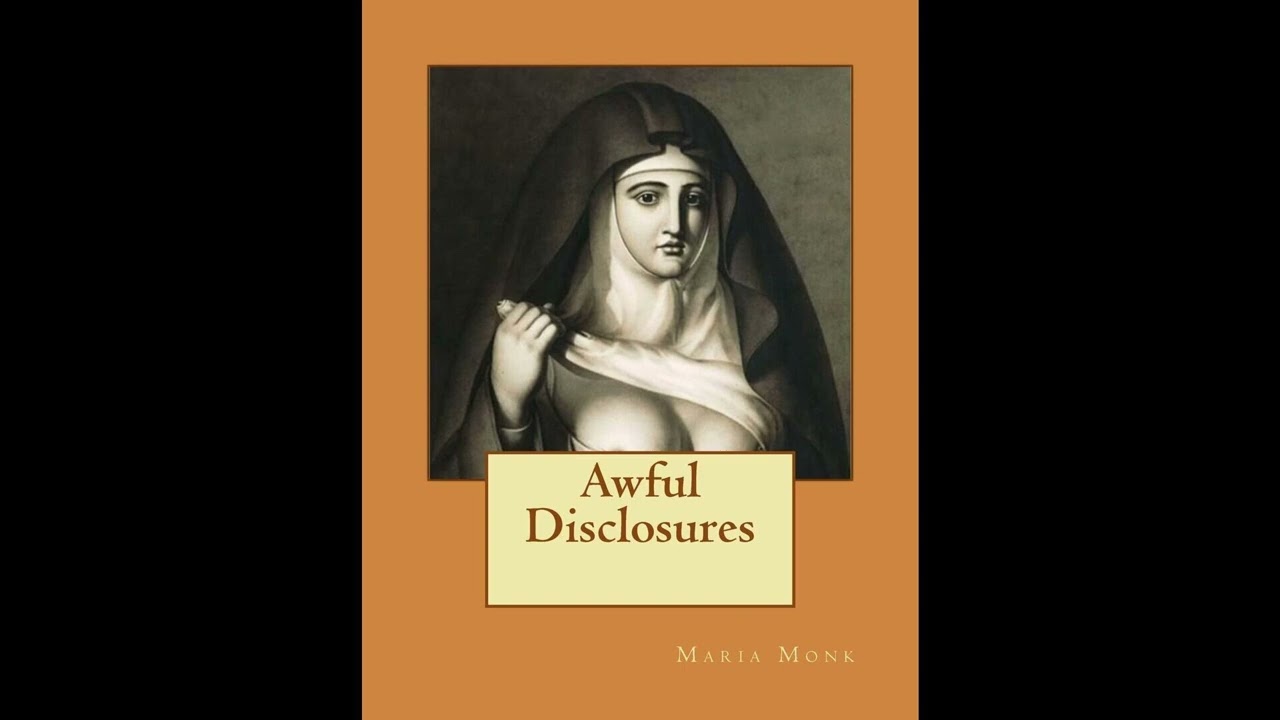
Step into a world where piety collides with alleged perversion, where solemn vows reportedly mask unspeakable acts, and a young woman’s confession ignited a firestorm of controversy that continues to echo through history. Maria Monk’s Awful Disclosures: Of the Hotel Dieu Nunnery of Montreal is not merely a book; it is a document that shook a nation, a sensationalist account that became a flashpoint in the cultural battles of its time, and a chilling testament to the power of a single voice to challenge entrenched institutions. More than a century and a half after its initial publication, this infamous narrative compels listeners to confront questions of truth, institutional power, religious freedom, and the enduring human fascination with secrets hidden behind sacred walls. It forces us to consider the stories we choose to believe, the voices we amplify, and the anxieties that shape public discourse, making it a profoundly relevant listen for today's complex world. The narrative centers on Maria Monk, a young woman living in early 19th-century Montreal. Raised initially within the Protestant faith, she recounts her conversion to Catholicism and her subsequent entry into the austere Hotel Dieu Nunnery. From the outset, Monk describes an environment far removed from the serene piety one might expect. She details the rigid routines, the isolation from the outside world, and the gradual stripping away of her former identity. The convent, depicted as a labyrinthine structure with secret passages and hidden chambers, soon becomes a place of increasing dread rather than spiritual solace. As Maria recounts, the true horror of her situation begins to manifest itself. She alleges that beneath the veneer of religious devotion, the convent concealed a horrifying secret life of sexual depravity and infanticide. Priests, she claims, would visit the nuns through secret passages, coercing them into sexual acts, and any resulting offspring were tragically murdered and secretly buried within the convent grounds. Maria paints a stark picture of a clandestine world governed by fear and absolute control, where the Mother Superior wielded unquestioned authority, and any dissent or attempt to leave was met with severe punishment. Her story builds in tension as she details her growing terror and her desperate, often thwarted, attempts to escape the perceived prison of the convent walls, culminating in a dramatic bid for freedom and the public sharing of her explosive revelations. The woman behind the disclosures, Maria Monk, emerged into public consciousness with the publication of her book in 1836. Born in Quebec, likely in Montreal, her early life was marked by poverty and, by some accounts, a history of mental and physical health struggles. Her exact birth and death dates, like much of her personal history, remain shrouded in the controversies that followed her. Upon the book's release, Monk quickly became a figure of intense public interest and scrutiny. She was championed by anti-Catholic activists and nativist groups in the United States, who saw her narrative as irrefutable proof of the perceived dangers of Catholicism and its institutions. Conversely, she was vehemently denounced by Catholic authorities and numerous skeptics who questioned the veracity of her claims, leading to public investigations, counter-statements, and even accusations of fraud. Maria Monk’s subsequent life was as tumultuous as her initial claims. She was involved in further scandals, allegations of prostitution, and disputes with her publishers. Despite, or perhaps because of, the ongoing public debate about her credibility, Awful Disclosures became a publishing sensation, selling hundreds of thousands of copies and cementing Monk’s place, however dubious, in American literary history. She is remembered not for a broad body of work, but almost solely for this one inflammatory text, which stands as a prime example of the sensationalist "convent narrative" genre popular in the antebellum period—a genre designed to confirm Protestant fears about Catholic influence and morality. Her dramatic personal story, intertwined with her controversial claims, ultimately ended in poverty and a premature death in a New York prison or asylum in the mid-19th century. The enduring power of Awful Disclosures stems from its forceful enactment of several significant themes. Foremost among these is anti-Catholicism and nativism, which pulsed through American society in the 1830s. Monk’s allegations directly played into deeply ingrained Protestant fears of a foreign, autocratic Catholic Church threatening American democracy and moral values. Her descriptions of secret tunnels and the forced disappearance of infants, for instance, fed into widespread anxieties about Catholic secrecy and supposed moral corruption, portraying convents not as places of spiritual devotion but as alien, dangerous enclaves within a Protestant nation. Another prominent theme is female vulnerability and institutional power. Maria, depicted as a naive and relatively uneducated young woman, is presented as utterly powerless against the monolithic authority of the convent and the church. Her inability to escape or even communicate freely with the outside world underscores the fear of women being trapped and exploited by powerful, often male-dominated, religious institutions, unable to resist or reveal their plight. Furthermore, the book confronts themes of sexual hypocrisy and perceived moral corruption. Monk's graphic allegations of priests violating their celibacy vows and nuns being forced into sexual servitude provided a shocking counter-narrative to the public image of clerical purity and conventual sanctity. The scenes she describes, involving unwanted advances and the tragic consequences of illicit unions, were designed to expose a profound moral failing hidden beneath a veneer of piety. Finally, the entire controversy surrounding the book raises crucial questions about truth versus deception. Was Maria Monk telling the unvarnished truth, or was she a tool in a larger propaganda war, or even a perpetrator of a calculated hoax? The very existence of Awful Disclosures forces the listener to grapple with the unreliable nature of testimony, the ease with which fear and prejudice can be manipulated, and the challenge of discerning fact from fiction, especially when powerful institutions are involved. The early decades of the 19th century in America provided fertile ground for a work like Awful Disclosures. This was a period marked by significant social and political upheaval, including a burgeoning nativist movement. As immigration from Ireland and Germany increased, bringing a growing number of Catholic immigrants to the United States, anxieties among the predominantly Protestant population intensified. Many viewed Catholicism as incompatible with American republican ideals, fearing its hierarchical structure and allegiance to the Pope as a threat to democratic values and individual liberty. Simultaneously, the antebellum era saw a rise in moral reform movements and an increasing appetite for sensationalist literature. Cheap printing methods allowed for the widespread dissemination of pamphlets and books that catered to public interest in scandal, crime, and moral exposés. Awful Disclosures tapped directly into these cultural currents, emerging at a time when skepticism of foreign influences, particularly religious ones, was high, and the public was eager for narratives that confirmed their pre-existing biases, no matter how outlandish. It wasn't an isolated phenomenon but rather one of the most successful examples within a broader genre of anti-Catholic, particularly anti-convent, literature that flourished during this contentious period. Listening to Awful Disclosures as an audiobook offers a uniquely visceral and immersive experience that plain text cannot fully replicate. The raw, urgent quality of Maria Monk's accusations—whether fact or fiction—truly comes alive through a skilled narrator's voice. The spoken word allows the sensationalism, the dramatic claims of terror, and the alleged indignities to resonate with a heightened immediacy, drawing the listener into the heated atmosphere of 19th-century debate. Over several hours, a good narrator can effectively convey the growing dread Maria describes, the hushed secrecy of the convent, and the shocking nature of her revelations. The pacing and vocalization can underscore the narrative's confessional tone, making the listener feel privy to a whispered secret, a forbidden truth. It’s an opportunity to experience a piece of literary and social history not just as information, but as the compelling, controversial narrative it was always intended to be—a story designed to be heard and debated.
Enjoyed Awful Disclosures: Of the HOTEL DIEU NUNNERY OF MONTREAL? A few ways to support us
Audible & Amazon links are affiliate; we may earn a small commission at no extra cost.
About this production
Human narration by a volunteer reader from LibriVox.org, the public-domain audiobook project. LibriVox volunteers record literary works whose copyright has expired in the United States, releasing the resulting recordings into the public domain.
Awful Disclosures: Of the HOTEL DIEU NUNNERY OF MONTREAL by Maria Monk. The underlying text is in the U.S. public domain. We do not republish any modern copyrighted edition, translation, or commentary.
The 4K cinematic visuals accompanying this audiobook are generated by an AI image model from prompts derived from the source text. No copyrighted photos, paintings, or stock footage are used. AI generation is disclosed on every video on our YouTube channel as required by YouTube's altered/synthetic content policy.
English subtitles are transcribed from the LibriVox recording with OpenAI Whisper. Translations into the 11 other supported languages are produced by Meta's NLLB-200 neural translation model. No human translator's copyrighted translation is used.
Questions about sourcing or rights? See our DMCA & Sourcing policy or contact us.
Enjoyed this audiobook?
If you'd like to own a copy of Awful Disclosures: Of the HOTEL DIEU NUNNERY OF MONTREAL or hear a professionally produced edition, the links below help support free audiobook production at no extra cost to you.
As an Amazon Associate we earn from qualifying purchases. Audible / print links are affiliate.