Narrative of the Captivity and Restoration of Mrs. Mary Rowlandson
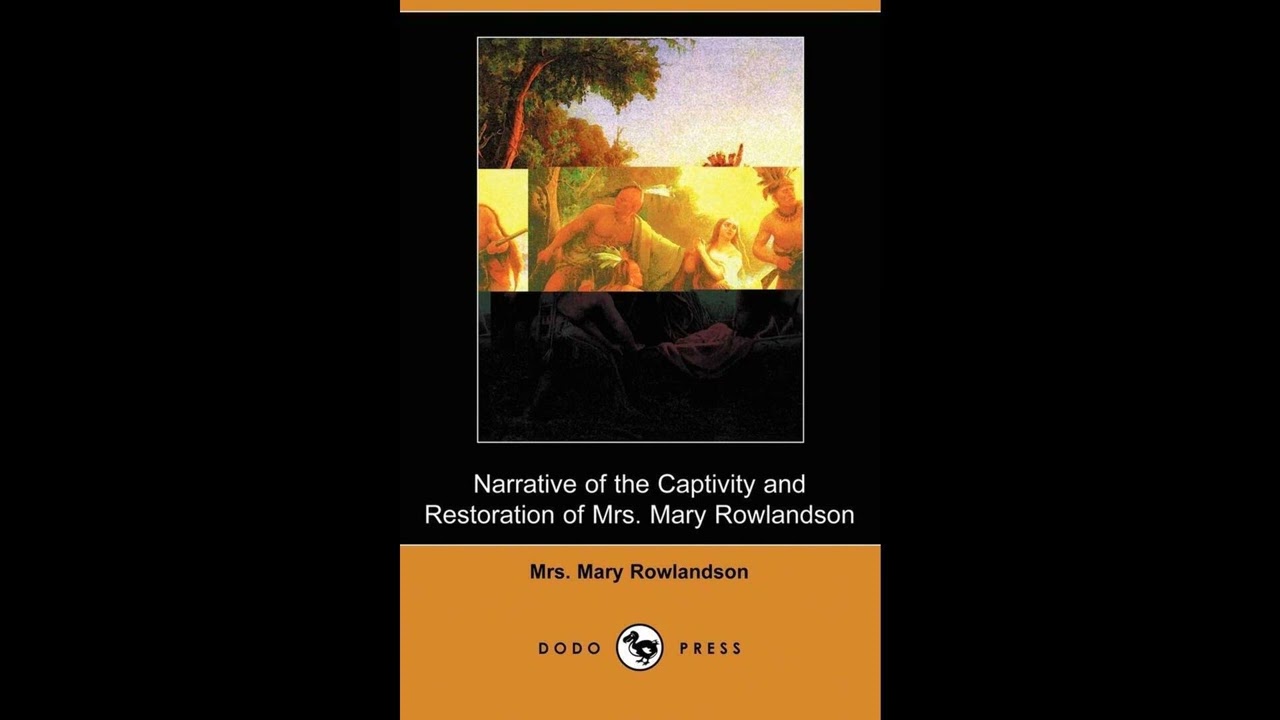
Step into the raw, unforgiving world of colonial New England with Narrative of the Captivity and Restoration of Mrs. Mary Rowlandson, an account that laid the very groundwork for American letters and continues to echo with profound relevance today. This is not merely a historical document; it is a gripping, intensely personal testament to survival, faith, and the clash of cultures on a brutal frontier. Rowlandson’s stark, unflinching prose plunges listeners into the immediate terror of a violent raid, the desperate struggle to endure the unimaginable, and the relentless search for meaning amidst chaos. It stands as a foundational text, offering an unparalleled window into the spiritual and physical trials of a Puritan woman in 17th-century America, her voice a beacon of human resilience that transcends centuries. The year is 1676, and the nascent English settlement of Lancaster, Massachusetts, teeters precariously on the edge of the vast, unknown wilderness. Mary Rowlandson, a minister’s wife and mother of four, lives a life defined by piety and the domestic rhythms of a frontier town. Suddenly, her world is shattered when a confederation of Native American warriors—primarily Nipmuc and Wampanoag, allied under the leadership of Metacom, known to the colonists as King Philip—descends upon Lancaster. The attack is swift and merciless, houses burned, many killed, and among the survivors taken captive are Rowlandson and her three children, one of whom is gravely wounded. From this moment, her familiar existence is ripped away, replaced by a terrifying uncertainty. Rowlandson’s narrative meticulously chronicles the eleven weeks and five days she spent as a captive. She is separated from her surviving children, forced to march relentlessly through the frozen New England landscape, enduring starvation, physical hardship, and the constant threat of violence. Her story becomes a harrowing record of “removes”—forced migrations from one Native encampment to another—as she witnesses daily customs, survival tactics, and the internal dynamics of her captors’ society. She often finds herself at the mercy of individual Native Americans, some of whom offer her small acts of kindness, others of whom treat her with disdain. Her internal struggle is as intense as her external one, as she grapples with grief, despair, and the relentless challenge to her devout Puritan faith. The narrative charts her transformation from a woman of domestic comfort to one stripped bare, relying solely on her wits and what she believes to be divine intervention. Mary Rowlandson, born Mary White around 1637 in England, immigrated with her family to Salem, Massachusetts, as a young child. She married Joseph Rowlandson, a minister, in 1656 and they subsequently moved to Lancaster, a frontier settlement, where he served as their spiritual leader. This life positioned her squarely within the Puritan establishment, a world defined by strict religious observance, community cohesion, and a profound belief in God's active hand in human affairs. Before the raid, her life was that of a respectable, educated woman of her time, managing a household and raising children in a challenging environment. It was only after her traumatic experience in 1676 that she gained a unique platform. Upon her eventual release and reunification with her husband—a story she reserves for the narrative itself—the Rowlandsons resettled, first in Boston and later in Wethersfield, Connecticut. Mary Rowlandson’s Narrative was first published in 1682, six years after her captivity. It was an instant sensation, quickly becoming a bestseller both in America and England. While not a prolific writer in the modern sense, this singular work cemented her place as a pioneering voice in early American literature, specifically within the emerging genre of the captivity narrative. Her precise death date is uncertain, though records suggest she passed away around 1711, leaving behind a powerful literary legacy from a life indelibly marked by extraordinary suffering and fortitude. At its core, Rowlandson’s Narrative serves as a profound meditation on the concept of divine providence. Throughout her ordeal, she interprets every twist of fate—from the smallest comfort like a piece of bear meat, to the most crushing loss like the death of her child—as a direct manifestation of God's will. When she recounts being given a Bible by a sympathetic Native woman, for instance, she frames it as a miraculous gift from above, providing her with the spiritual sustenance to endure. This unwavering belief in a purposeful, if sometimes inscrutable, God permeates every paragraph, demonstrating the Puritan conviction that all human experience, particularly suffering, holds a divine lesson. Beyond faith, the narrative offers invaluable insight into the colonial perception of Native American cultures. While Rowlandson often casts her captors through the lens of Puritan demonology, referring to them as "savages" or "heathen," her detailed observations inadvertently provide a rare, first-hand look at their daily lives, their resourcefulness, their social structures, and even moments of unexpected humanity. She describes their hunting practices, their food preparation, their council meetings, and even individual personalities, like the powerful squaw sachem Weetamoo. This duality—her theological condemnation alongside her precise, almost anthropological description—reveals the complexities of cross-cultural encounter during a period of intense conflict. The book also implicitly addresses the theme of survival and resilience, as Rowlandson navigates extreme hunger, cold, and grief, continuously finding the will to persevere for her remaining children and her eventual restoration. The emergence of Rowlandson’s Narrative is inextricably linked to the tumultuous period known as King Philip’s War (1675-1678). This brutal and devastating conflict was the last major effort by the Native Americans of southern New England to drive out the English colonists. Fueled by escalating tensions over land encroachment, religious differences, and broken treaties, the war resulted in immense casualties on both sides and profound societal disruption. Rowlandson’s town of Lancaster was one of many frontier settlements targeted in coordinated attacks. Within this religiously charged atmosphere, her story resonated deeply with Puritan audiences, who saw the war not just as a military conflict, but as a test of their faith and a divine judgment upon their community. The publication served multiple purposes: it offered spiritual comfort by showcasing God's power even in adversity, it galvanized support against Native American tribes, and it reinforced the Puritan worldview of a divinely ordered struggle against "savage" forces. Listening to Narrative of the Captivity and Restoration of Mrs. Mary Rowlandson as an audiobook offers an exceptionally intimate experience with this foundational text. The archaic language, while sometimes challenging on the page, comes alive through skilled narration, allowing the listener to truly immerse themselves in Rowlandson's 17th-century voice. The several hours of listening time provide ample opportunity to absorb the deliberate pacing of her prose, which often balances urgent descriptions of her physical suffering with introspective, scriptural reflections. A clear, measured vocal performance can effectively convey both the terror of the initial raid and the steadfast devotion that anchors her through seemingly insurmountable trials. It brings immediacy to her desperate pleas, her moments of despair, and her unyielding hope, making her harrowing tale of survival resonate with an emotional depth impossible to achieve through silent reading alone.
Enjoyed Narrative of the Captivity and Restoration of Mrs. Mary Rowlandson? A few ways to support us
Audible & Amazon links are affiliate; we may earn a small commission at no extra cost.
About this production
Human narration by a volunteer reader from LibriVox.org, the public-domain audiobook project. LibriVox volunteers record literary works whose copyright has expired in the United States, releasing the resulting recordings into the public domain.
Narrative of the Captivity and Restoration of Mrs. Mary Rowlandson by Mary Rowlandso. The underlying text is in the U.S. public domain. We do not republish any modern copyrighted edition, translation, or commentary.
The 4K cinematic visuals accompanying this audiobook are generated by an AI image model from prompts derived from the source text. No copyrighted photos, paintings, or stock footage are used. AI generation is disclosed on every video on our YouTube channel as required by YouTube's altered/synthetic content policy.
English subtitles are transcribed from the LibriVox recording with OpenAI Whisper. Translations into the 11 other supported languages are produced by Meta's NLLB-200 neural translation model. No human translator's copyrighted translation is used.
Questions about sourcing or rights? See our DMCA & Sourcing policy or contact us.
Enjoyed this audiobook?
If you'd like to own a copy of Narrative of the Captivity and Restoration of Mrs. Mary Rowlandson or hear a professionally produced edition, the links below help support free audiobook production at no extra cost to you.
As an Amazon Associate we earn from qualifying purchases. Audible / print links are affiliate.