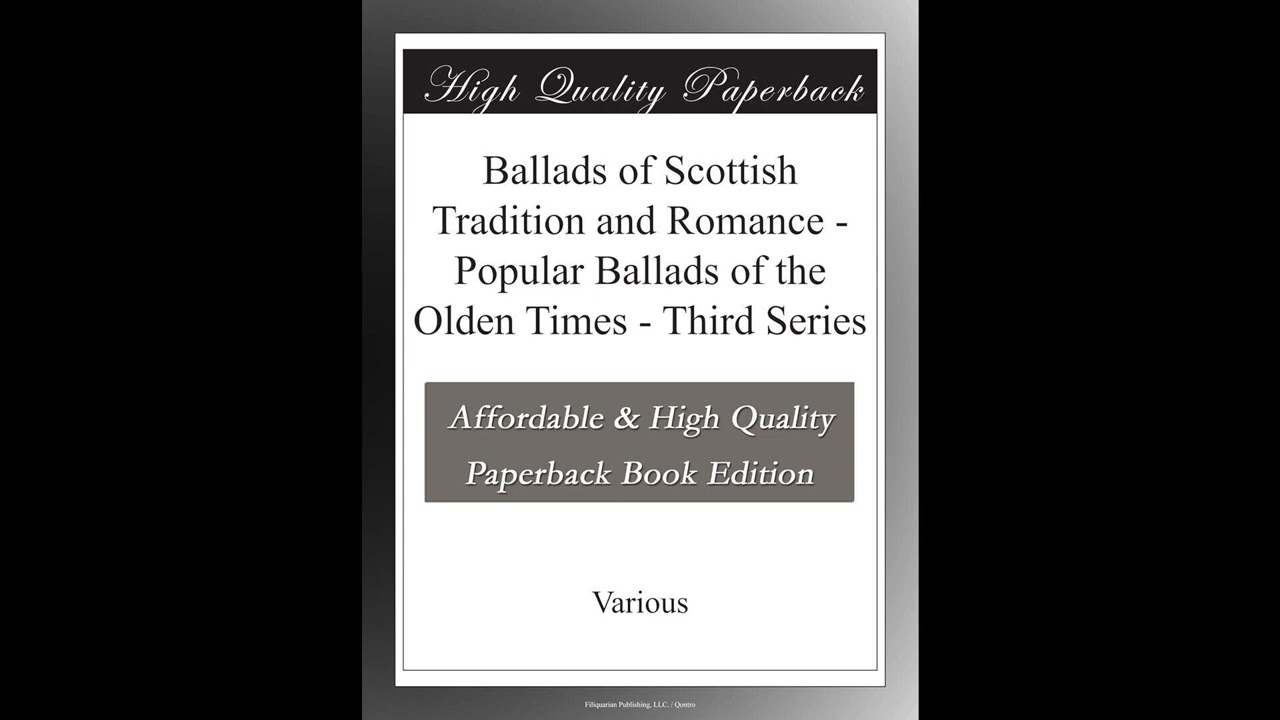
Ballads of Scottish Tradition and Romance - Popular Ballads of the Olden Times - Thi- Full Audiobook
Step into a world where ancient voices echo across mist-shrouded glens and crumbling castle walls, where the power of story was the very breath of a people. "Ballads of Scottish Tradition and Romance – Popular Ballads of the Olden Times" is not merely a collection of verses; it is a resonant archive of a nation's soul, a direct link to the emotional heart of Scotland’s past. These are the tales that shaped generations, sung around hearths and on battlefields, passed from memory to memory for centuries. They speak of universal human experiences—love and loss, courage and betrayal, the struggle against fate and the glimmer of hope—themes that remain as potent and moving today as they were when first chanted under a northern sky. Listening to these ballads offers a unique opportunity to reconnect with the enduring power of oral storytelling, reminding us that the human need for narrative is truly ageless. The stories woven into these ballads transport the listener directly to the heart of historical and legendary Scotland. You will find yourself in dimly lit keeps where noble lords make fateful decisions, on windswept moors where lovers meet in secret, and in the midst of fierce clan battles fought for honor and survival. The characters who populate these verses are archetypes of humanity: the valiant knight, the loyal maiden, the cunning outlaw, the grieving mother, and sometimes, figures from the otherworld—fairies, ghosts, and mythical beasts that blur the lines between reality and the supernatural. Central conflicts often revolve around loyalty to family or clan, the rigid demands of honor, forbidden affections, or desperate acts of courage in the face of overwhelming odds. Each ballad unfolds a concise, dramatic narrative, often beginning in medias res to immediately hook the audience into a scene of high tension or profound emotion. Though each tale stands alone, together they form a sprawling panorama of a culture’s values, fears, and dreams. While specific characters and settings shift from one ballad to the next, a consistent narrative thread binds them: the human heart grappling with destiny. We witness tales of tragic romance where lovers are torn apart by social divides or cruel fate, as well as accounts of fierce vengeance sparked by perceived slights or genuine injustices. There are stories of ordinary folk encountering the strange and unexplained, and legendary heroes performing deeds that defy belief. The dramatic arc within each ballad typically moves swiftly from an initiating incident to a climactic confrontation or revelation, concluding often with a stark, powerful statement on the human condition or the consequences of a particular action. There is a raw honesty to these narratives, reflecting lives lived close to nature and subject to sudden, profound changes, ensuring that the listener remains deeply engaged with the unfolding drama, even as the details of each story are withheld until their proper, sometimes devastating, moment. The "author" of these ballads is not a single person with a known name and date, but rather the collective voice of a people across many generations. These were originally songs and poems created and modified anonymously within the oral tradition. Minstrels, bards, and common folk alike shaped them through performance and retelling, adding new verses, altering phrases, and adapting them to local dialects and circumstances. This process of communal authorship means that each ballad existed in numerous "versions" before scholars began the work of collecting and committing them to print. Figures such as Sir Walter Scott, Robert Burns, and Bishop Thomas Percy were instrumental in the late 18th and early 19th centuries in gathering these precious fragments of oral tradition, transcribing them from memory, and preserving them for posterity. Their efforts captured the lyrical power and narrative drive that had sustained these stories through centuries, ensuring that the essence of Scotland's poetic heritage would not be lost. The beauty of these ancient narratives lies in their capacity to articulate profound human experiences through simple, direct language. One recurring theme is the fragility of human life and happiness, often shown through sudden, devastating loss. Many ballads depict characters who suffer cruel fates—lovers separated by death, warriors falling in battle, or individuals undone by betrayal. For example, tales of doomed romance frequently highlight the societal pressures or class divisions that prevent true love from flourishing, underscoring the idea that even the strongest affection can be thwarted by external forces. Another central theme is courage and honor, particularly in the context of clan loyalty and warfare. Ballads celebrating legendary battles or acts of defiance illuminate the value placed on bravery and steadfastness in the face of danger, often detailing heroic last stands or clever stratagems employed in conflict. A third prominent theme is the supernatural and the unseen forces that often intervene in human affairs. Stories featuring fairies, ghosts, and mystical creatures serve not just as entertainment, but as reflections of a worldview where the veil between worlds was thin. These narratives often carry a moral warning or explain inexplicable events through otherworldly agency. Finally, the ballads frequently confront justice and vengeance, exploring the cycle of retaliation and the often-grim pursuit of retribution for wrongs committed. Scenes depicting a wronged party seeking redress, or the inexorable march of consequences for a villainous deed, resonate with an ancient sense of moral order, however harsh it might appear to modern sensibilities. Through these specific narrative structures and character interactions, the ballads create a powerful commentary on human nature and the societal structures that shaped lives in bygone eras. These ballads emerged from a period long before widespread literacy, when storytelling and song were primary forms of entertainment, education, and historical record-keeping. They flourished in a Scotland characterized by distinct cultural regions, a strong oral tradition, and a history marked by both fierce independence and repeated conflict with its southern neighbor, England. Clan loyalties were paramount, and life was often harsh, subject to the whims of nature and the constant threat of inter-clan feuds or larger geopolitical struggles. The stories reflect this environment, providing a window into the daily lives, beliefs, and values of the people. Later, during the Scottish Enlightenment and the Romantic era of the late 18th and early 19th centuries, there was a fervent interest in national identity, folklore, and the preservation of ancient traditions. This intellectual climate fueled the efforts of collectors who recognized the immense cultural value of these fading oral narratives, leading to their transcription and publication, ensuring they survived beyond the memories of a few gifted storytellers. Listening to "Ballads of Scottish Tradition and Romance" as an audiobook brings these ancient verses back to their original, intended form. Ballads were meant to be heard, recited, and often sung, their rhythm and emotional impact carried by the human voice. The narrator’s skill in pacing and emphasis breathes life into characters and events, drawing out the drama of a clandestine meeting or the sorrow of a lost love. The multiple hours of content allow for deep immersion, enabling you to truly settle into the world of each tale without interruption. You can appreciate the lyrical quality of the language, the repetition that builds tension or emphasizes a point, and the distinct voices given to different characters. The spoken word adds a layer of authenticity, transporting you directly to a time when these narratives were the very heartbeat of a community, making the atmosphere of distant Scottish history immediate and profoundly affecting.
Enjoyed Ballads of Scottish Tradition and Romance - Popular Ballads of the Olden Times - Thi- Full Audiobook? A few ways to support us
Audible & Amazon links are affiliate; we may earn a small commission at no extra cost.
About this production
Human narration by a volunteer reader from LibriVox.org, the public-domain audiobook project. LibriVox volunteers record literary works whose copyright has expired in the United States, releasing the resulting recordings into the public domain.
Ballads of Scottish Tradition and Romance - Popular Ballads of the Olden Times - Thi- Full Audiobook. The underlying text is in the U.S. public domain. We do not republish any modern copyrighted edition, translation, or commentary.
The 4K cinematic visuals accompanying this audiobook are generated by an AI image model from prompts derived from the source text. No copyrighted photos, paintings, or stock footage are used. AI generation is disclosed on every video on our YouTube channel as required by YouTube's altered/synthetic content policy.
English subtitles are transcribed from the LibriVox recording with OpenAI Whisper. Translations into the 11 other supported languages are produced by Meta's NLLB-200 neural translation model. No human translator's copyrighted translation is used.
Questions about sourcing or rights? See our DMCA & Sourcing policy or contact us.
Enjoyed this audiobook?
If you'd like to own a copy of Ballads of Scottish Tradition and Romance - Popular Ballads of the Olden Times - Thi- Full Audiobook or hear a professionally produced edition, the links below help support free audiobook production at no extra cost to you.
As an Amazon Associate we earn from qualifying purchases. Audible / print links are affiliate.
More by Unknown
More Audiobooks
Ballads Of Mystery And Miracle And Fyttes Of Mirth; Popular Ballads Of The Olden Tim- Full Audiobook
Songs of Angus and More Songs of Angus
Selections From Wordsworth and Tennyson
Quaint Gleanings from Ancient Poetry. A Collection of Curious Poetical Compositions