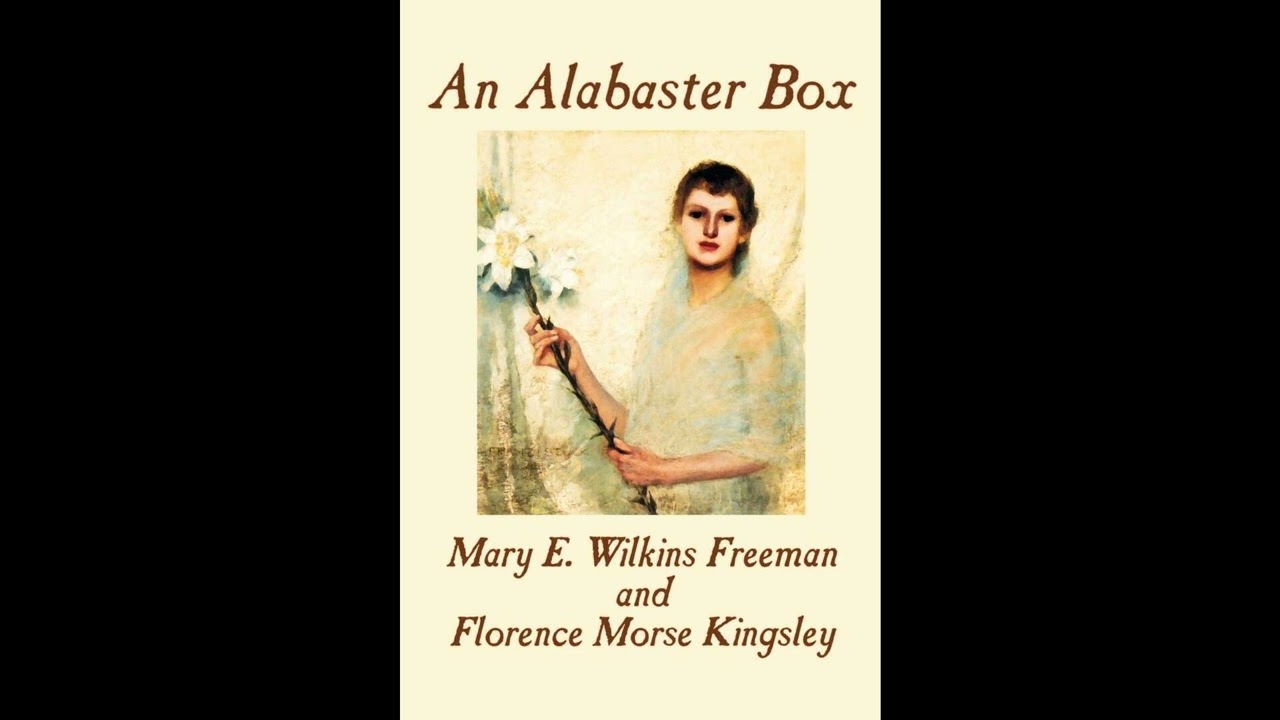
An Alabaster Box
Step into a quiet New England village, where tradition and suspicion are as deeply rooted as the ancient trees, and discover a narrative that questions the very nature of charity, reputation, and the hidden lives that pulse beneath a placid surface. Mary Eleanor Wilkins Freeman’s "An Alabaster Box" offers listeners a poignant glimpse into a community wrestling with moral complexities, revealing how easily judgment can eclipse understanding. This compelling novel, with its subtle psychological depth and vivid characterizations, still resonates today, challenging us to examine our own preconceptions about altruism, scandal, and the powerful sway of public opinion. It asks whether true goodness can ever be fully appreciated when veiled by the shadows of a misunderstood past. The story unfolds in the seemingly tranquil setting of a small, insular New England town, where gossip travels faster than the church bell’s chime and reputations are meticulously guarded. At its heart is the peculiar establishment known as the Willows, a communal home for a group of impoverished elderly women—the "Poor Ladies of the Willows." These women, set in their ways and deeply entrenched in the village’s conservative values, are the beneficiaries of an unusual and somewhat extravagant charitable bequest from a recently deceased, wealthy spinster. Their lives of quiet, if somewhat pinched, comfort are irrevocably altered by the arrival of Lydia Maxwell. Lydia is presented as a young woman of ambiguous past, her arrival in town immediately sparking whispers and speculation. She is tasked with overseeing the Willows and managing its affairs, a role that places her squarely in the spotlight of village scrutiny. Her quiet demeanor, her unconventional approach to her duties, and the persistent hints of a shadowed history quickly make her an object of suspicion among the Poor Ladies and the wider community. The central conflict emerges from the villagers’ relentless attempts to decipher Lydia’s true character and intentions, as they struggle to reconcile their preconceived notions with her quiet acts of service. The narrative expertly builds tension through escalating gossip and the internal struggles of characters grappling with their own moral compasses, creating a powerful examination of how prejudice can take root and flourish. Mary Eleanor Wilkins Freeman, born in 1852 in Randolph, Massachusetts, and passing in 1930, stands as a cornerstone of American literary realism and local color fiction. Her life, marked by moves between Massachusetts and Vermont, and by periods of financial strain after her family’s fortunes declined, informed her profound understanding of New England’s rural communities. She began writing to support herself, quickly gaining recognition for her meticulously crafted short stories and novels. Freeman married Charles Manning Freeman later in life, a union that proved challenging for the independent and artistically driven writer. Freeman’s literary legacy is cemented by works like A New England Nun and Other Stories and Pembroke, which, like "An Alabaster Box," vividly render the often-stifled lives of ordinary New Englanders, particularly women. She was celebrated for her unsentimental yet deeply empathetic portrayals of characters constrained by societal norms, economic hardship, and the lingering influence of Puritanical heritage. Freeman’s place in the literary canon is that of a keen observer who gave voice to the inner lives of individuals in isolated communities, capturing their dialects, psychological landscapes, and quiet acts of resilience, thereby offering an enduring record of a specific American regional experience. "An Alabaster Box" skillfully enacts several enduring themes, providing ample ground for contemplation. Foremost among them is the delicate balance between genuine charity and the corrosive nature of judgment. The mysterious bequest to the Poor Ladies, a gesture of almost lavish giving, is constantly undermined by the villagers' incessant need to scrutinize and condemn Lydia Maxwell, the woman associated with its administration. One scene might find the elderly women dissecting Lydia's every decision, her quiet kindness misinterpreted as an ulterior motive, highlighting how suspicion can taint even the purest acts of benevolence. Another significant theme revolves around reputation and the relentless pressure of social conformity. Lydia’s struggle throughout the novel is largely defined by her efforts to establish herself in a community that has already decided her worth based on rumor and a past she cannot fully escape. Freeman illustrates how a community, through its fear of scandal, can collectively ostracize an individual, preferring to uphold its own rigid moral codes over true understanding. The novel also illuminates the complex interplay of female agency and constraint within the late nineteenth and early twentieth centuries. The lives of the Poor Ladies, dependent on charity and living communally, are circumscribed by their gender and social standing, yet they exert a peculiar power through their collective moral authority. Lydia, though seemingly more independent, constantly navigates a landscape where her actions are judged through the lens of gendered expectations. Freeman often depicted women finding dignity or subtle forms of rebellion within these societal limitations. Finally, the story examines the dual nature of community—its capacity for both support and suffocating scrutiny. The close-knit village offers a sense of belonging, but it also creates an environment where gossip, prejudice, and a narrow-minded adherence to tradition can thrive, illustrating the profound impact a collective consciousness can have on individual lives. The novel emerged during a significant period in American history—the late nineteenth and early twentieth centuries. This era, following the Civil War, saw rapid industrialization and urbanization across much of the nation. However, Freeman deliberately focused her lens on the economically stagnant, often isolated rural New England, a region grappling with its own changing identity. It was a time when the lingering influence of Puritan heritage still shaped morality, work ethic, and community judgment, even as the specific religious fervor waned. This context helps to explain the villagers' rigid moral outlook and their deep suspicion of anything perceived as unconventional or disruptive to their established order. The rise of realism as a literary movement, which sought to represent life accurately and often unsentimentally, provided Freeman with the perfect artistic framework to document and analyze these regional cultures before they were entirely transformed by modernizing forces, giving "An Alabaster Box" its unique historical resonance. Listening to "An Alabaster Box" as an audiobook allows the inherent richness of Freeman’s prose to truly unfold. An expressive narrator can bring out the nuanced inner lives of the characters, especially Lydia’s quiet fortitude and the individual peculiarities of the Poor Ladies, giving each voice a distinct presence. The seemingly slow, contemplative pace of village life, which is central to the story’s atmosphere, becomes particularly absorbing through vocal performance, allowing listeners to sink into the rhythms of the narrative. The subtle buildup of tension, propelled by whispers and unspoken judgments, is enhanced by the narrator’s control of rhythm and emotional resonance. The distinctive New England cadences, the pointed dialogue that often masks deeper judgments, and the solemn pronouncements of the elderly women all become more immediate and impactful when heard aloud. The multi-hour length allows for a gradual, immersive appreciation of the story’s intricate social dynamics and the carefully crafted atmosphere of a community on the precipice of change.
Enjoyed An Alabaster Box? A few ways to support us
Audible & Amazon links are affiliate; we may earn a small commission at no extra cost.
About this production
Human narration by a volunteer reader from LibriVox.org, the public-domain audiobook project. LibriVox volunteers record literary works whose copyright has expired in the United States, releasing the resulting recordings into the public domain.
An Alabaster Box by Mary Eleanor Wilkins Freeman. The underlying text is in the U.S. public domain. We do not republish any modern copyrighted edition, translation, or commentary.
The 4K cinematic visuals accompanying this audiobook are generated by an AI image model from prompts derived from the source text. No copyrighted photos, paintings, or stock footage are used. AI generation is disclosed on every video on our YouTube channel as required by YouTube's altered/synthetic content policy.
English subtitles are transcribed from the LibriVox recording with OpenAI Whisper. Translations into the 11 other supported languages are produced by Meta's NLLB-200 neural translation model. No human translator's copyrighted translation is used.
Questions about sourcing or rights? See our DMCA & Sourcing policy or contact us.
Enjoyed this audiobook?
If you'd like to own a copy of An Alabaster Box or hear a professionally produced edition, the links below help support free audiobook production at no extra cost to you.
As an Amazon Associate we earn from qualifying purchases. Audible / print links are affiliate.