Among the Tibetans
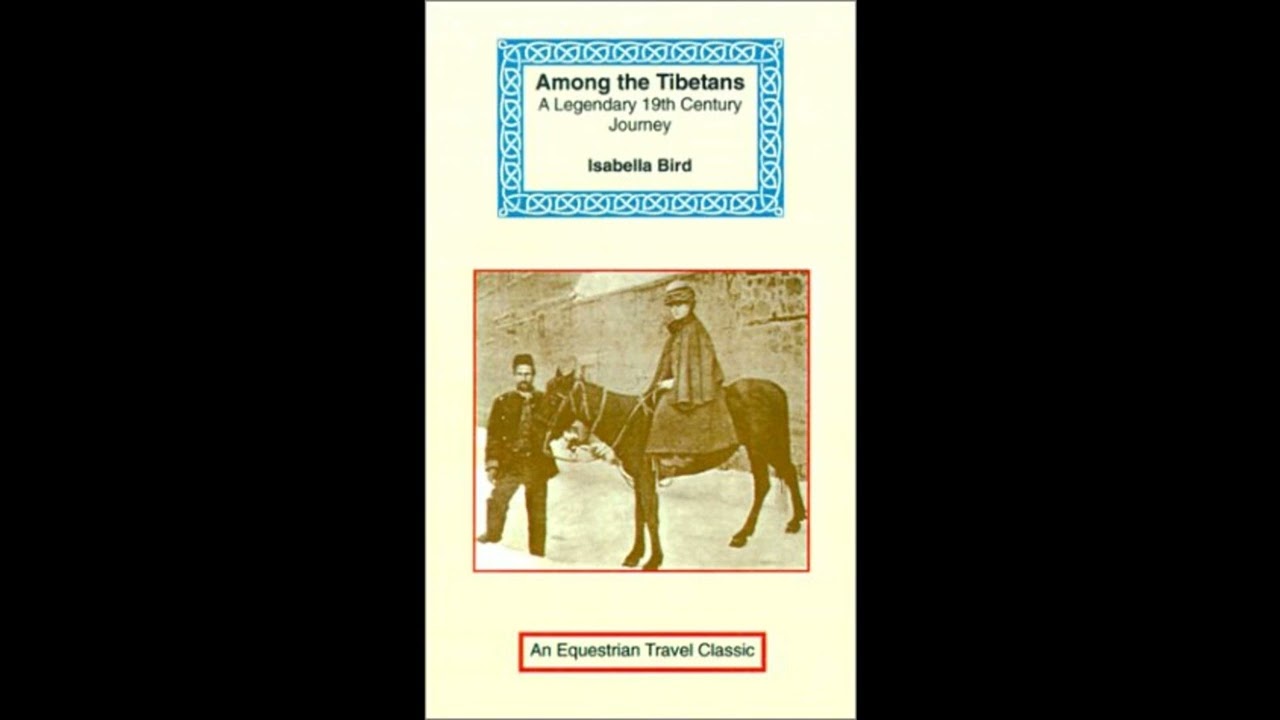
Step into a world barely glimpsed by outsiders, a rugged, high-altitude landscape where ancient traditions held sway and foreign visitors were rare and often unwelcome. Among the Tibetans, by the intrepid Victorian traveler Isabella L. Bird, offers a rare, firsthand account of a region then shrouded in mystery. Published in 1891, it is more than just a travelogue; it is a testament to human resilience, a meticulous record of a vanishing way of life, and a powerful document from a pioneering woman who defied the rigid expectations of her era. For today's listener, this book provides an unparalleled window into a pivotal historical moment, allowing us to bear witness to cultural encounters that shaped our understanding of the world, all through the keen eyes of an extraordinary observer. Bird's narrative transports the listener directly into the heart of the vast Tibetan plateau, a land of stark beauty and formidable challenges. Her account chronicles her experiences traveling through the eastern reaches of what was then a largely closed kingdom, sharing the daily realities of its people, their customs, and their stark environment. We follow her as she navigates treacherous mountain passes, endures extreme weather, and sleeps in humble accommodations—sometimes in yurts, sometimes in tents, often simply in the open air. Her primary "characters" are the various Tibetan nomads, traders, lamas, and villagers she encounters along her route, each interaction offering a window into their unique culture and spiritual practices. The central arc of the story is the unfolding of Bird’s observations and the challenges she faces as she strives to understand a society profoundly different from her own, all while contending with the physical rigors and cultural barriers that define her adventure. As she moves across the high plains, Bird meticulously details everything from the unique architecture of remote monasteries to the intricacies of Buddhist rituals, the practicalities of a yak herder's life, and the vibrant attire worn by different tribal groups. She describes the food, the communal living arrangements, the methods of trade, and the ever-present influence of the Buddhist faith on daily life. Her writing captures both the generosity and the occasional suspicion of the people she meets, illustrating the complex dynamics between an inquisitive Western woman and the inhabitants of a land fiercely protective of its independence. The "conflict" is not always dramatic; it often manifests as the subtle tension of cultural misunderstanding, the struggle to communicate across language barriers, and the relentless effort required to simply survive and progress in an unforgiving landscape, all contributing to a compelling human story that unfolds with each passing mile. Isabella Lucy Bird (later Bishop), born in Boroughbridge, Yorkshire, in 1831, was a woman whose life defied the conventions of her time. Plagued by spinal problems and chronic illness in her youth, she was advised by her doctor to travel as a means of improving her health. This prescription inadvertently launched one of the most remarkable careers in travel writing. Her initial voyage across the Atlantic to North America in 1854 led to her first book, The Englishwoman in America. From this point, Bird became a ceaseless wanderer, traversing continents and recording her experiences with an almost unparalleled precision and wit. She traveled alone or with minimal accompaniment through the Rocky Mountains, Japan, Hawaii, Persia, Kurdistan, China, and Korea, often in places rarely visited by Westerners, let alone a lone woman. Bird's literary output positioned her firmly within the canon of Victorian travel writers, though her perspective often stood apart. Her work is characterized by keen observation, a clear and unsentimental style, and a profound respect for the cultures she encountered, even as she maintained a distinctly Victorian perspective. Her other notable works include A Lady's Life in the Rocky Mountains (1879), Unbeaten Tracks in Japan (1880), and The Golden Chersonese and the Further White (1883). Her accomplishments were recognized in 1892 when she became the first woman to be elected a Fellow of the Royal Geographical Society, a testament to her groundbreaking contributions to geography and exploration. Bird's remarkable life concluded in Edinburgh in 1904, leaving behind a legacy of adventure and some of the most enduring travel literature ever written. The pages of Among the Tibetans resonate with several powerful themes. One significant thread is the courage of the individual in the face of daunting adversity. Bird’s personal grit is evident in every chapter, whether she is battling blizzards on a high mountain pass, enduring physical discomfort, or navigating potentially hostile situations with only her wits and a translator. She constantly pushes her own boundaries, demonstrating a resilience that challenges the gendered expectations of her era. For instance, her descriptions of sleeping outside in freezing temperatures, often without adequate shelter, speak volumes about her determination. Another central theme is cultural encounter and ethnographic observation. Bird's meticulous descriptions of Tibetan Buddhist practices, their social structures, and daily customs offer an invaluable, sympathetic, if still outsider's, perspective. We witness her efforts to understand the nuances of a prayer wheel's symbolism or the communal harmony of a nomadic camp, illustrating her genuine desire to document and comprehend. Furthermore, the book beautifully illustrates the sublime power and indifference of nature. The vast, unforgiving landscape of the Tibetan plateau is almost a character in itself, shaping the lives and beliefs of its inhabitants and constantly testing Bird's resolve. Her descriptions of the wide-open spaces, the towering peaks, and the ever-present challenges of altitude and weather vividly portray a world where humanity exists on nature's terms. A fourth prominent theme is the clash and convergence of tradition and modernity, as Bird, a product of Victorian industrialization, observes a society rooted in ancient ways. While she admires the spiritual devotion and communal structures, she also notes the perceived "backwardness" from her Western vantage point, offering a nuanced look at cultural differences at a time when the world was rapidly shrinking. Isabella Bird's work emerged during a fascinating and complex historical period—the late 19th century. This was the zenith of the British Empire, a time when global exploration was still vibrant, and "blank spots" on maps were eagerly filled. Central Asia, particularly Tibet, was a focal point of the "Great Game," the geopolitical rivalry between the British and Russian empires vying for influence in the region. Tibet itself was renowned for its isolationist policies, often referred to as a "forbidden land," adding to its allure and the difficulty of accessing it. Western powers were intensely curious about its unique form of Buddhism and its potential strategic importance. This era also saw a growing interest in travel literature, fueled by an expanding middle class with leisure time and a thirst for knowledge of distant lands. Bird's writings, therefore, tapped into a broad public fascination with the unknown and exotic. Her ability to penetrate regions closed to most Westerners, coupled with her gender, made her accounts particularly compelling. Her works also subtly reflect the burgeoning scientific curiosity of the era, combining personal narrative with detailed observations of geography, ethnography, and natural history, making them valuable documents for both entertainment and serious study. To experience Among the Tibetans as an audiobook is to immerse oneself fully in Isabella Bird's remarkable journey. The spoken word brings her vivid descriptions to life, allowing the listener to truly feel the biting wind of the plateau, hear the rustle of prayer flags, and witness the daily rhythms of Tibetan life through her precise and often lyrical prose. The run length, several hours, makes it an ideal companion for long commutes, quiet evenings, or moments of focused reflection. A skilled narrator can deftly convey Bird's distinctive voice—her sharp intellect, her unwavering courage, and her occasional wry humor—bringing out the subtle inflections in her observations and the dramatic tension of her encounters. Listen for the pacing, which often shifts from the steady rhythm of travel to moments of contemplative stillness as she reflects on the landscapes or the people she meets. The interplay of descriptive passages and snippets of dialogue, often mediated through interpreters, paints a rich auditory picture, transporting you directly into the heart of a remote and unforgettable world.
Enjoyed Among the Tibetans? A few ways to support us
Audible & Amazon links are affiliate; we may earn a small commission at no extra cost.
About this production
Human narration by a volunteer reader from LibriVox.org, the public-domain audiobook project. LibriVox volunteers record literary works whose copyright has expired in the United States, releasing the resulting recordings into the public domain.
Among the Tibetans by Isabella L. Bird. The underlying text is in the U.S. public domain. We do not republish any modern copyrighted edition, translation, or commentary.
The 4K cinematic visuals accompanying this audiobook are generated by an AI image model from prompts derived from the source text. No copyrighted photos, paintings, or stock footage are used. AI generation is disclosed on every video on our YouTube channel as required by YouTube's altered/synthetic content policy.
English subtitles are transcribed from the LibriVox recording with OpenAI Whisper. Translations into the 11 other supported languages are produced by Meta's NLLB-200 neural translation model. No human translator's copyrighted translation is used.
Questions about sourcing or rights? See our DMCA & Sourcing policy or contact us.
Enjoyed this audiobook?
If you'd like to own a copy of Among the Tibetans or hear a professionally produced edition, the links below help support free audiobook production at no extra cost to you.
As an Amazon Associate we earn from qualifying purchases. Audible / print links are affiliate.