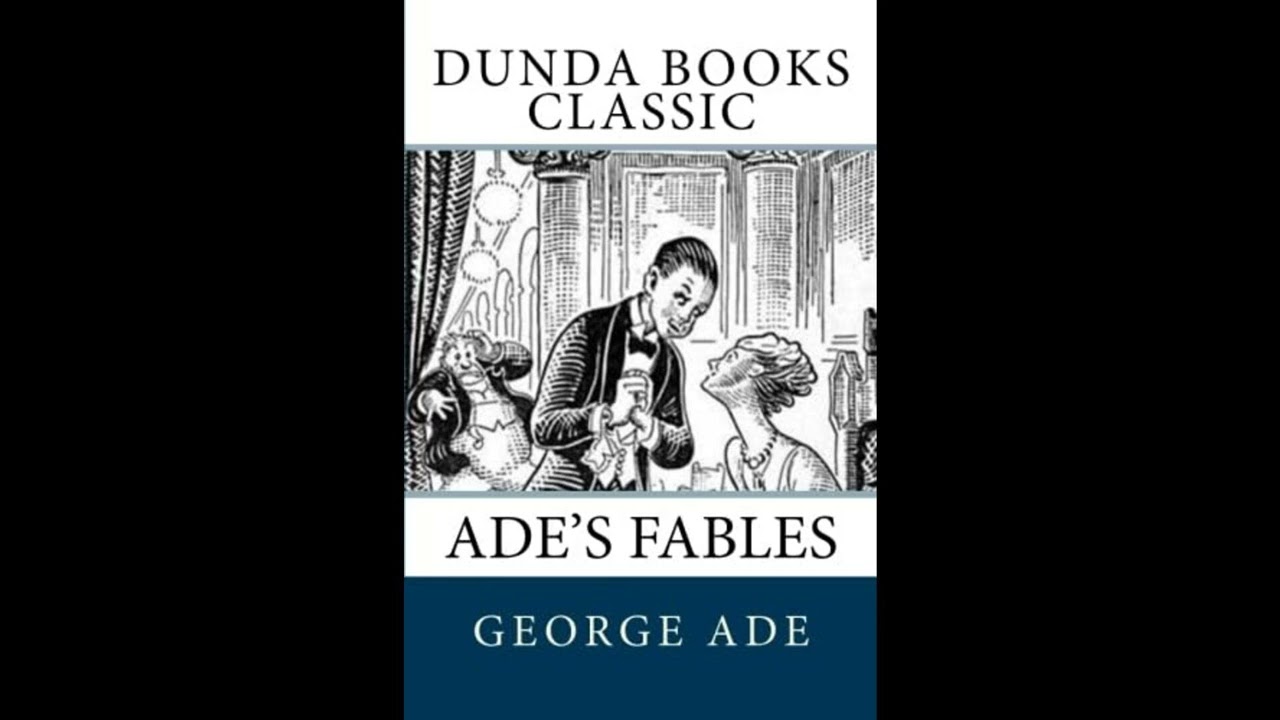
Ade's Fables
Before the internet, before television, even before the silver screen dominated American entertainment, there was George Ade. His “Fables” offered a singular and often hilarious lens through which to view the burgeoning complexities of American life. This collection of short, satirical sketches is more than just a historical curiosity; it is a remarkably incisive look at human nature, ambition, and the curious ways we navigate social expectations. Ade’s distinctive voice, steeped in the evolving American idiom of the late nineteenth and early twentieth centuries, allows listeners to encounter characters and situations that, despite their period trappings, echo with a surprising familiarity in our own era of quick judgments and social posturing. This is a chance to laugh with – and perhaps at – ourselves through the eyes of a truly original American humorist. The narratives within “Ade’s Fables” do not follow a single continuous plot line but rather present a series of distinct, self-contained vignettes. Each fable introduces a fresh cast of characters, often drawn from the archetypes of turn-of-the-century America: the wide-eyed country bumpkin venturing into the big city, the relentless social climber desperate for acceptance, the business magnate convinced of his own infallibility, or the earnest young woman seeking an advantageous marriage. These figures populate settings that range from bustling city saloons and exclusive clubrooms to small-town parlors and quiet Sunday picnics. The central conflict in many of Ade’s stories emerges from the collision of individual aspirations with societal norms, often exaggerated for comedic effect. A character might attempt a grand scheme to gain wealth or status, only to be undone by their own vanity, a simple misunderstanding, or the sheer absurdity of the situation. Each fable progresses with a light, anecdotal touch, building towards a humorous climax and concluding with a pithy, often ironic moral that encapsulates the folly or wisdom observed. The stories collectively paint a vivid picture of a nation grappling with rapid change, where old values met new money and the rules of social engagement were constantly being rewritten, all seen through Ade's characteristically wry and unsentimental gaze. George Ade, born in Kentland, Indiana, in 1866, was a genuine voice of the American Midwest who rose to national prominence. After graduating from Purdue University, he began his career in journalism, working for the Lafayette Morning News and later the Chicago Record. It was during his time at the Chicago Record in the late 1890s that his famous "fables in slang" first appeared, quickly gaining a devoted readership. Ade’s innovative use of colloquial language and his sharp observations of everyday life distinguished him from his contemporaries. His success with the fables led to a prolific career as a writer, encompassing not only more collections of his distinctive fables but also popular Broadway plays like The Sultan of Sulu and The College Widow. Ade became a significant figure in American letters, known for his ability to capture the authentic rhythms of American speech and the nuances of its emerging social landscape. He was an astute observer of human behavior, holding a mirror to the foibles and pretensions of his time, often with an underlying current of gentle satire rather than harsh judgment. His work carved out a unique place in the canon of American humor, bridging the gap between earlier sentimental writers and the grittier realists who would follow. He passed away in 1944, leaving behind a legacy of witty and insightful social commentary. A recurring theme woven throughout "Ade's Fables" is the pervasive desire for social advancement and the often-comical lengths people will go to achieve it. Ade frequently presents characters who are obsessed with appearances, attempting to project an image of sophistication or success that often clashes with their true circumstances. For instance, one might encounter a well-meaning but misguided young man who, upon arriving in the city, purchases an elaborate but ill-fitting suit, adopts an exaggerated accent, and meticulously studies etiquette books, only to make a series of embarrassing blunders at a supposedly high-class gathering. Through such scenarios, Ade gently skewers the superficiality of status symbols and the universal human urge to belong, or to rise above one's station, often at the expense of authenticity. Another prominent theme concerns the changing nature of communication and the rise of popular slang. Ade was fascinated by how language reflected and shaped social identity, and his fables are replete with clever, stylized "slang" that, while specific to his era, speaks to the enduring human tendency to create and adopt trendy expressions. Consider a character who uses a newly fashionable phrase to sound intelligent or worldly, only to misapply it, resulting in a humorous misunderstanding that reveals their lack of true comprehension. Ade shows how language can be a tool for both connection and division, a way to signal belonging, but also a source of awkwardness or even ridicule when wielded without genuine understanding. George Ade's work emerged during a period of immense transformation in the United States. The late nineteenth and early twentieth centuries were characterized by rapid industrialization, burgeoning urbanization, and significant social shifts, often referred to as the "Gilded Age" and the Progressive Era. New technologies, mass migration, and a booming economy created both unprecedented opportunities and stark social inequalities. The traditional values of rural America were clashing with the complexities and anonymity of city life. Literarily, this was a time when realism was gaining traction, moving away from earlier romantic and sentimental traditions. Ade, while a humorist, contributed to this realistic impulse by depicting ordinary Americans and their everyday struggles and ambitions. His "fables" were published initially in newspapers, a medium that itself was experiencing explosive growth and becoming a primary source of news and entertainment for a mass audience. This context of widespread literacy and a hunger for accessible, relevant commentary made Ade's observational humor, written in an approachable style, incredibly popular and culturally significant, offering a comedic reflection of the nation's evolving identity. Listening to "Ade's Fables" as an audiobook offers a unique and particularly fitting way to experience these distinct literary creations. The rhythmic cadence of Ade’s prose, with its clever turns of phrase and playful "slang," truly comes alive through a skilled narration. Imagine a voice actor embodying the slightly puffed-up self-importance of a newly rich businessman, or the earnest, hopeful lilt of a young woman navigating the social scene, or the dry, understated tone of the omniscient narrator delivering the punchline. The brief, self-contained nature of each fable makes it perfect for listening in short segments, whether during a morning commute, while performing household tasks, or as a thoughtful companion during a quiet break. The oral presentation accentuates the wit and timing inherent in Ade’s writing, allowing the listener to fully appreciate the precise comedic beats and the underlying wisdom in his enduring observations on human behavior.
Enjoyed Ade's Fables? A few ways to support us
Audible & Amazon links are affiliate; we may earn a small commission at no extra cost.
About this production
Human narration by a volunteer reader from LibriVox.org, the public-domain audiobook project. LibriVox volunteers record literary works whose copyright has expired in the United States, releasing the resulting recordings into the public domain.
Ade's Fables by George Ade. The underlying text is in the U.S. public domain. We do not republish any modern copyrighted edition, translation, or commentary.
The 4K cinematic visuals accompanying this audiobook are generated by an AI image model from prompts derived from the source text. No copyrighted photos, paintings, or stock footage are used. AI generation is disclosed on every video on our YouTube channel as required by YouTube's altered/synthetic content policy.
English subtitles are transcribed from the LibriVox recording with OpenAI Whisper. Translations into the 11 other supported languages are produced by Meta's NLLB-200 neural translation model. No human translator's copyrighted translation is used.
Questions about sourcing or rights? See our DMCA & Sourcing policy or contact us.
Enjoyed this audiobook?
If you'd like to own a copy of Ade's Fables or hear a professionally produced edition, the links below help support free audiobook production at no extra cost to you.
As an Amazon Associate we earn from qualifying purchases. Audible / print links are affiliate.