Aboriginal American Authors
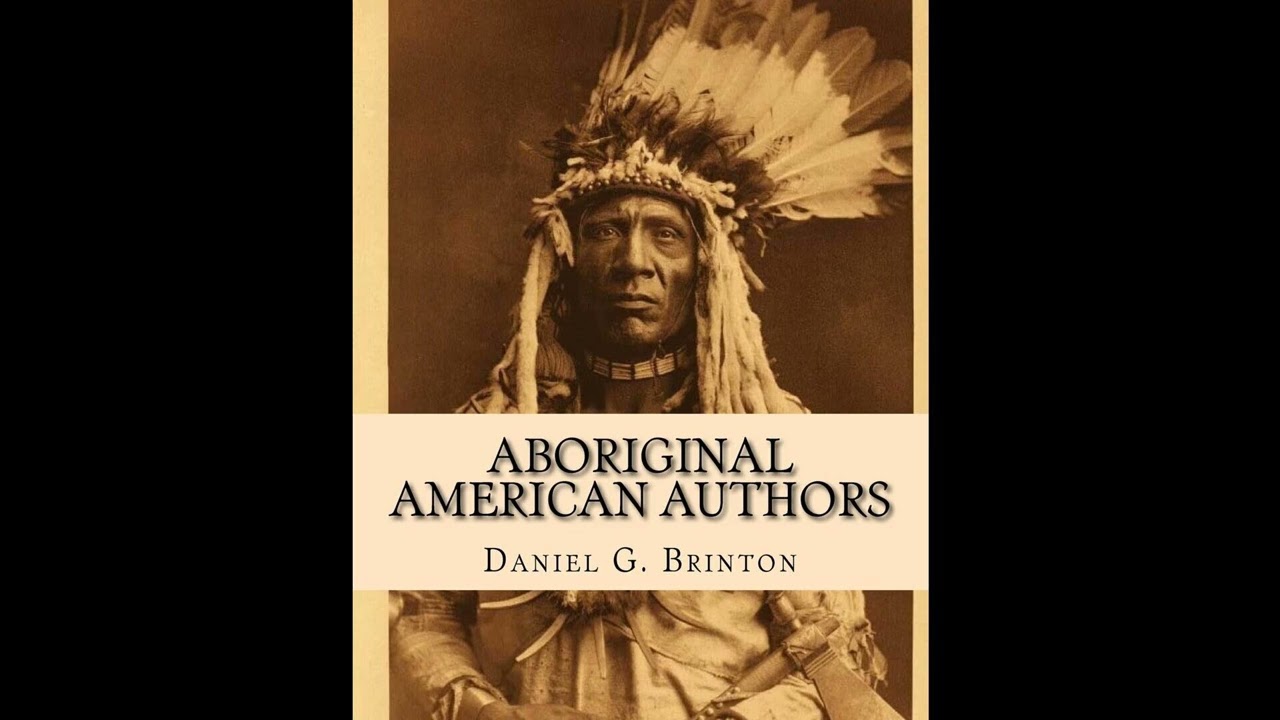
In the shifting currents of intellectual history, certain books stand as significant markers, not only for what they contain but for what they represent about the era in which they were conceived. Daniel G. Brinton's Aboriginal American Authors is one such volume, a pioneering effort from the late nineteenth century that sought to document and analyze the literary heritage of Indigenous peoples across the Americas. For a modern listener, this work offers a rare dual perspective: it is a window into the profound creativity and diverse intellectual traditions of Native nations, and simultaneously, it is a lens through which to examine the early formation of American anthropology and its complex relationship with the cultures it studied. To engage with Brinton's text today means confronting both the enduring power of Indigenous expression and the historical frameworks through which such expression was—and often still is—understood. Far from a conventional narrative with characters and a linear story, Aboriginal American Authors presents a scholarly survey, a meticulous inventory of oral traditions, written scripts, and symbolic systems that Brinton argues constitute a legitimate, sophisticated body of literature. The "setting" for this monumental undertaking is the vast cultural landscape of North, Central, and South America, as conceptualized by a leading American ethnologist of his time. Brinton methodically categorizes and discusses various forms of Indigenous intellectual output, from creation myths and epic poems to historical records and ceremonial speeches. He draws on examples ranging from the glyphs of Mesoamerican civilizations to the oral narratives of Plains tribes, attempting to demonstrate the universality of literary impulse across diverse societies. The central tension lies in Brinton's effort to apply Western academic definitions of "authorship" and "literature" to cultural expressions that often originated in communal creation, performance, and oral transmission, challenging prevailing notions that "primitive" peoples lacked such sophisticated intellectual output. The arc of the book follows Brinton's systematic argument, moving from broader philosophical considerations of what constitutes literature to specific examples and analyses of various Indigenous forms. He examines the structures of narrative, the poetic devices employed, and the philosophical underpinnings embedded within these traditions. His goal is not to present a single story, but to construct a compelling argument for the existence and merit of a vast, underappreciated canon. The careful listener will appreciate the breadth of the material Brinton references and the sheer ambition of his project, which aimed to gather and dignify forms of expression that were often dismissed or misunderstood by the dominant culture. While the work offers no dramatic climax in the traditional sense, its intellectual crescendo builds as Brinton marshals evidence to support his revolutionary claim that Indigenous Americans were indeed authors in their own right, deserving of scholarly recognition. Daniel Garrison Brinton, born in 1837 in Chester County, Pennsylvania, was a formidable intellectual figure of his era. Originally trained as a physician, he served as a surgeon during the American Civil War, an experience that likely broadened his exposure to diverse human experiences and led him to a career in ethnology and anthropology. After the war, Brinton dedicated himself to the study of Indigenous cultures, particularly those of the Americas. He held the prestigious chair of American Archaeology and Linguistics at the University of Pennsylvania, a testament to his standing in the academic community. His scholarship was characterized by an intense focus on linguistics, mythology, and the comparative study of cultures, areas in which he produced a significant body of work. Beyond Aboriginal American Authors, Brinton left an extensive legacy. His other notable publications include Myths of the New World (1868), an early attempt at comparative mythology, and The American Race (1891), a comprehensive classification of the Indigenous peoples of the Americas. He also authored Essays of an Americanist (1890), a collection of papers covering a wide range of topics related to American antiquities and ethnology. Brinton was a prodigious writer and a vocal advocate for the scientific study of Native American cultures, distinguishing himself as a prominent member of a generation of scholars who laid the groundwork for modern anthropology in the United States. While some of his theories, particularly those influenced by 19th-century racial science, have since been superseded and critiqued, his dedication to the documentation and study of Indigenous languages and traditions was pioneering and helped establish American anthropology as a legitimate academic discipline. At its core, Brinton's book addresses the theme of the definition of literature and authorship. He actively questions and expands the Eurocentric understanding of what constitutes a "written" or "authored" work, arguing that oral traditions, mnemonic devices, and pictographic scripts are equally valid forms of literary expression. For example, he might cite the intricate storytelling cycles of the Iroquois or the ritual poetry of the Aztecs, dissecting their structural complexity and thematic depth to illustrate their literary merit, much like one would analyze a classical Greek epic. Another key theme is cultural recognition and intellectual dignity. In an era when Indigenous peoples were frequently denigrated and their cultures dismissed as primitive, Brinton’s very project was an assertion of their intellectual capacity and the richness of their heritage. He brings forward examples of Indigenous rhetorical skill in diplomacy or the philosophical sophistication embedded in their cosmologies, aiming to elevate these traditions in the eyes of his Western readership. A third prominent theme is the challenge of translation and interpretation across cultures. Brinton grapples with the inherent difficulties of rendering complex Indigenous concepts and oral narratives into English and fitting them into Western academic frameworks. This can be seen in his discussions of how certain symbolic meanings or grammatical structures in Native languages resist direct translation, highlighting the nuanced relationship between language, thought, and culture. Finally, the work serves as an important, if complex, example of early anthropological methodology and its biases. While Brinton genuinely sought to understand and validate Indigenous literatures, his approach reflects the comparative and sometimes hierarchical scientific thinking of his time, which measured other cultures against Western norms. Listening to his analysis allows for an examination of how scholarly perspectives evolve and how even well-intentioned efforts can be colored by the cultural lenses through which they are viewed. The late nineteenth century, when Daniel G. Brinton's work gained prominence, was a period of immense change and tension in American society. Politically, the United States was expanding westward, often at the expense of Native American lands and sovereignty, a process marked by conflict and forced assimilation policies. Culturally, there was a growing interest in scientific classification and evolutionary theory, which extended to the study of human societies. Anthropology was emerging as a distinct academic discipline, seeking to understand human diversity through systematic observation and comparison. The prevailing intellectual climate, however, often framed non-Western cultures through a lens of "savagery" versus "civilization," influencing how Indigenous traditions were perceived. Brinton's work emerged from this context, positioned as an attempt to apply rigorous scientific methods to the study of Indigenous intellectual life, even as it operated within some of the problematic paradigms of its time regarding race and cultural development. He was part of a generation that felt compelled to document what they believed to be rapidly disappearing cultures, driven by a mix of scientific curiosity and an underlying sense of their historical inevitability. Listening to Aboriginal American Authors as an audiobook offers a singular experience, particularly for a work of this scholarly nature. A clear, measured narration allows the listener to fully absorb Brinton's detailed arguments and the often-dense prose characteristic of 19th-century academic writing. The approximately several-hour length makes it suitable for focused sessions, perhaps while commuting or engaged in quiet contemplation, allowing ample time to process the intricate points he raises. Pay attention to the narrator's pacing, which will likely emphasize the methodical structure of Brinton's reasoning, highlighting the specific examples he uses to bolster his claims. The voice chosen for such a text should convey an authoritative yet approachable tone, guiding listeners through a significant intellectual landscape. This is not a book for fast consumption; rather, it invites careful, reflective listening, transforming a historical text into an auditory experience that illuminates both the subject matter and the scholarly mind behind it.
Enjoyed Aboriginal American Authors? A few ways to support us
Audible & Amazon links are affiliate; we may earn a small commission at no extra cost.
About this production
Human narration by a volunteer reader from LibriVox.org, the public-domain audiobook project. LibriVox volunteers record literary works whose copyright has expired in the United States, releasing the resulting recordings into the public domain.
Aboriginal American Authors by Daniel G. Brinton. The underlying text is in the U.S. public domain. We do not republish any modern copyrighted edition, translation, or commentary.
The 4K cinematic visuals accompanying this audiobook are generated by an AI image model from prompts derived from the source text. No copyrighted photos, paintings, or stock footage are used. AI generation is disclosed on every video on our YouTube channel as required by YouTube's altered/synthetic content policy.
English subtitles are transcribed from the LibriVox recording with OpenAI Whisper. Translations into the 11 other supported languages are produced by Meta's NLLB-200 neural translation model. No human translator's copyrighted translation is used.
Questions about sourcing or rights? See our DMCA & Sourcing policy or contact us.
View 10 famous quotes from this book →
Enjoyed this audiobook?
If you'd like to own a copy of Aboriginal American Authors or hear a professionally produced edition, the links below help support free audiobook production at no extra cost to you.
As an Amazon Associate we earn from qualifying purchases. Audible / print links are affiliate.