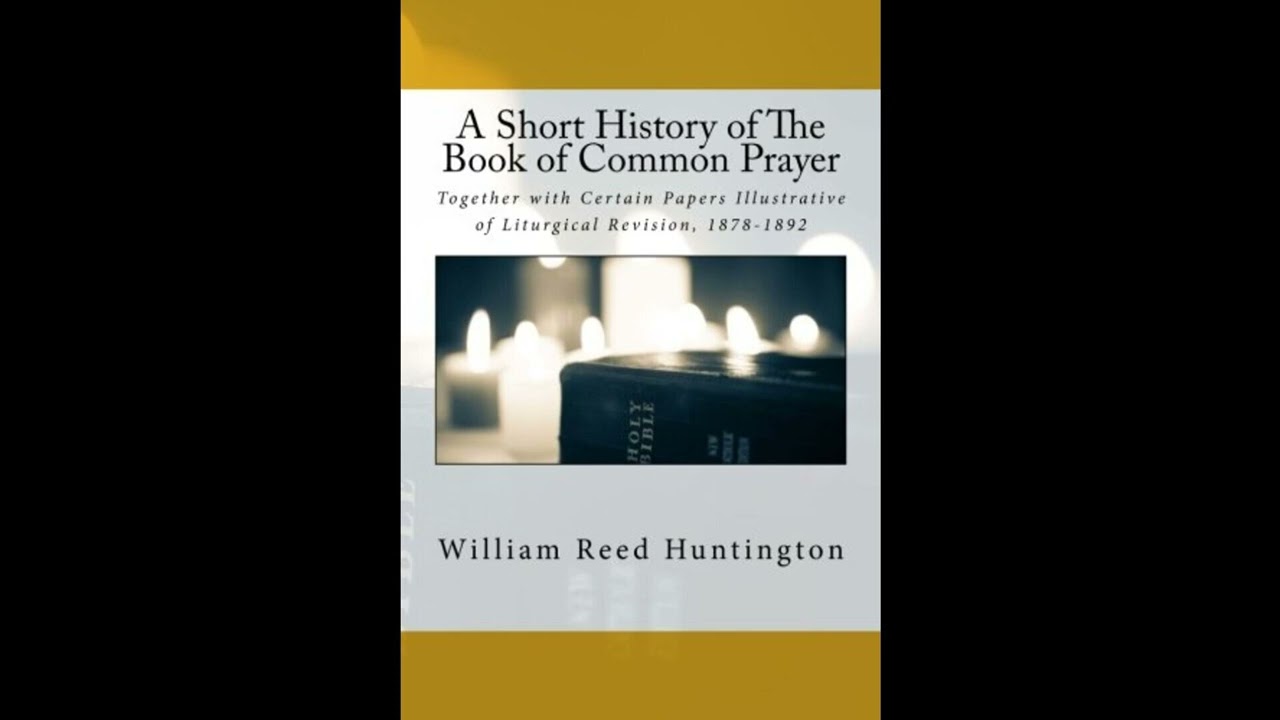
Read sample Follow the author William Reed Huntington William Reed HuntingtonWill- Full Audiobook
Step into the profound intellectual and spiritual currents of American life at the turn of the twentieth century with this comprehensive collection of works by William Reed Huntington. Far from being a mere historical curiosity, Huntington's writings offer a compelling vision of faith, unity, and social responsibility that resonates with striking relevance even today. He grappled with questions of ecclesiastical division, the church’s role in an industrializing society, and the enduring truths of Christian belief in an age of scientific advancement. His arguments for a broad, inclusive Christianity, deeply rooted in tradition yet forward-looking in its social engagement, provide a powerful framework for anyone seeking to understand the historical trajectory of American Protestantism or to find clarity amidst contemporary challenges to faith and community. Listeners will find themselves immersed in the intellectual landscape shaped by one of America's most influential Episcopal thinkers. Huntington's writings unfold as a carefully constructed argument for the reorientation and revitalization of Christian witness. He begins by observing the fragmentation of the Christian church, diagnosing the various theological and practical schisms that plagued Protestantism in his era. His central concern is to articulate a path toward a unified Christian body, not through forced conformity, but through the recognition of shared fundamental principles. He presents these principles with careful reasoning, outlining a vision where diverse traditions can coexist and cooperate by affirming core scriptural truths, ancient creeds, essential sacraments, and a historically continuous ministry. This vision forms the backbone of his thought, providing a consistent lens through which he examines various issues facing the church and society. Beyond ecclesiastical structure, Huntington consistently turns his attention to the practical implications of faith for the world. He grapples with the pressing social inequalities born from rapid industrialization and urbanization, issues he saw as directly challenging the moral conscience of the church. His writings portray a church called to active engagement with the needs of the poor, the marginalized, and the laboring classes, arguing that true Christianity demands more than individual piety—it necessitates collective action for justice. His persuasive prose guides listeners through the complexities of applying theological ideals to concrete societal problems, always striving to bridge the gap between spiritual aspiration and worldly reality, proposing reforms both within the sanctuary and out in the wider community. William Reed Huntington, born in 1838 in the quiet town of Lowell, Massachusetts, and passing away in 1909, was a towering figure in the American Episcopal Church, leaving an indelible mark on its liturgy, theology, and social conscience. Educated at Harvard College, he was ordained an Episcopal priest in 1862, embarking on a distinguished career that saw him lead some of the nation's most prominent parishes. His rectorship at All Saints' Church in Worcester, Massachusetts, and later at the prestigious Grace Church in New York City, provided him with influential platforms from which to articulate his vision for a reformed and socially conscious church. Huntington was far more than a parish priest; he was a scholar, a prophet, and a tireless advocate for Christian unity and liturgical renewal. His significant contributions extended beyond his pastoral duties, particularly his efforts in advancing the cause of Christian unity. He is widely credited as the architect of the "Quadrilateral," a set of four principles—the Holy Scriptures, the Nicene and Apostles' Creeds, the two Sacraments ordained by Christ, and the Historic Episcopate—that he proposed as a basis for Christian reunion. This framework, first outlined in his book The Church-Idea (1870), gained international recognition and was formally adopted by the Lambeth Conference of Anglican bishops in 1888, becoming known as the Lambeth Quadrilateral. This achievement cemented his place in ecclesiastical history as a significant leader in the nascent ecumenical movement. He also played a pivotal role in the revision of the American Book of Common Prayer, advocating for a liturgy that was both ancient in its dignity and modern in its accessibility, further demonstrating his impact on the worship life of millions. One of the central themes woven through Huntington's thought is the profound call for Christian unity. He saw denominational divisions not as mere theological disagreements, but as a practical hindrance to the church's mission in the world. For instance, in his writings on the Quadrilateral, he didn't simply list the four points; he articulated why each element—from the authority of Scripture to the continuity of the historic episcopate—was essential for authentic Christian identity and therefore a necessary foundation for reconciliation among fragmented Christian bodies. He envisioned a church united in essentials, allowing for liberty in non-essentials, a concept he continually argued for as a path to greater spiritual power and social efficacy. Alongside unity, Huntington was a powerful voice for what would come to be known as the Social Gospel. He challenged the prevailing individualistic piety of his era, insisting that faith had profound implications for society's structures and systems. He often drew from the prophetic traditions of the Old Testament, calling for justice for the marginalized and lambasting the excesses of industrial capitalism. Listeners will encounter passages where he confronts the moral failures of his time, such as the plight of factory workers or the stark poverty in urban tenements, arguing that the church was morally obligated to address these issues not merely through charity, but through systemic change and advocacy for human dignity. His sermons and essays frequently urged congregants to connect their spiritual lives with their civic responsibilities, seeing active participation in social reform as an inherent aspect of Christian discipleship. Huntington’s works emerged during a period of immense transformation in American society, roughly spanning the latter half of the nineteenth century and the very early twentieth century. This was an era marked by rapid industrialization, massive immigration, burgeoning urban centers, and profound social unrest. The economic disparities of the "Gilded Age" were stark, leading to labor movements and calls for social reform. Intellectually, the rise of scientific inquiry, particularly Darwin’s theory of evolution, presented significant challenges to traditional religious dogma, prompting many to re-evaluate the relationship between faith and reason. Within the Protestant church, these societal shifts fueled intense debates. There was fragmentation between various denominations, as well as internal divisions between "High Church" traditionalists, "Low Church" evangelicals, and an emerging "Broad Church" movement that sought to reconcile faith with modern thought and address social issues. Huntington, firmly situated within the Broad Church tradition, crafted his writings as a direct response to these specific pressures. He believed the church needed to adapt without abandoning its core truths, to heal its internal divisions to better serve a world in flux, and to speak with moral authority on the pressing social concerns of the day. His literary output was, in many ways, an intellectual bulwark against the forces of secularization and a clarion call for a more relevant, unified, and socially responsible Christianity. Listening to William Reed Huntington's collected works as an audiobook offers a unique opportunity to engage deeply with his thought, allowing his carefully constructed arguments and eloquent prose to unfold over several hours. His writings, often having their genesis as sermons or lectures, possess an inherent oratorical quality that comes alive when narrated. The pacing of the narration can highlight the gravitas of his theological assertions, emphasize the urgency of his social critiques, and allow listeners to reflect on the nuances of his calls for unity. Hearing his words rather than simply reading them creates a more immersive experience, enabling a sustained focus on the development of his ideas and the persuasive power of his rhetoric, making his vision for the church and society particularly accessible and resonant in its spoken form.
Enjoyed Read sample Follow the author William Reed Huntington William Reed HuntingtonWill- Full Audiobook? A few ways to support us
Audible & Amazon links are affiliate; we may earn a small commission at no extra cost.
About this production
Human narration by a volunteer reader from LibriVox.org, the public-domain audiobook project. LibriVox volunteers record literary works whose copyright has expired in the United States, releasing the resulting recordings into the public domain.
Read sample Follow the author William Reed Huntington William Reed HuntingtonWill- Full Audiobook by William Reed Huntington. The underlying text is in the U.S. public domain. We do not republish any modern copyrighted edition, translation, or commentary.
The 4K cinematic visuals accompanying this audiobook are generated by an AI image model from prompts derived from the source text. No copyrighted photos, paintings, or stock footage are used. AI generation is disclosed on every video on our YouTube channel as required by YouTube's altered/synthetic content policy.
English subtitles are transcribed from the LibriVox recording with OpenAI Whisper. Translations into the 11 other supported languages are produced by Meta's NLLB-200 neural translation model. No human translator's copyrighted translation is used.
Questions about sourcing or rights? See our DMCA & Sourcing policy or contact us.
Enjoyed this audiobook?
If you'd like to own a copy of Read sample Follow the author William Reed Huntington William Reed HuntingtonWill- Full Audiobook or hear a professionally produced edition, the links below help support free audiobook production at no extra cost to you.
As an Amazon Associate we earn from qualifying purchases. Audible / print links are affiliate.