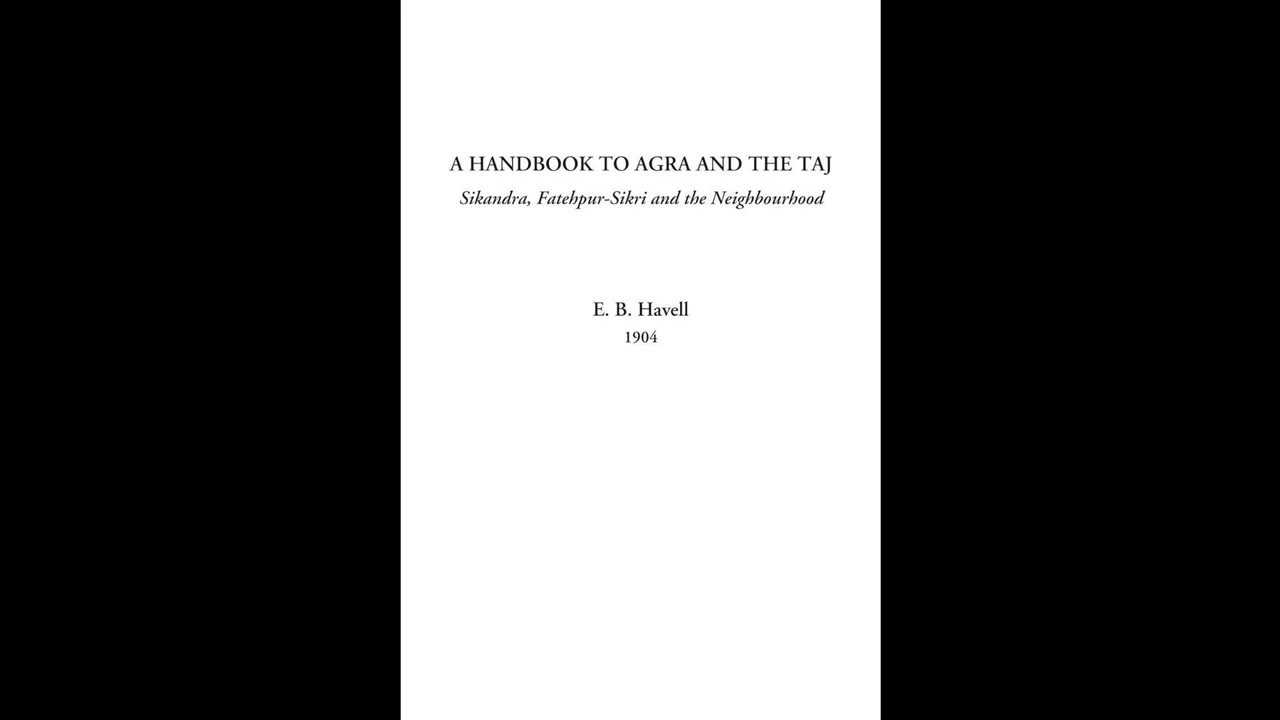
A Handbook to Agra and the Taj (Sikandra, Fatehpur-Sikri and the Neighbourhood)
For those drawn to the echoes of forgotten empires, to the silent grandeur of architecture that speaks across centuries, there is a particular kind of allure in a meticulously crafted guide. "A Handbook to Agra and the Taj (Sikandra, Fatehpur-Sikri and the Neighbourhood)" offers precisely this: a detailed, illuminating companion to one of the world's most celebrated architectural wonders and its historical surroundings. It is more than just a collection of facts; it is an invitation to step back in time, to walk through courtyards and beneath domes, to understand the motivations, the genius, and the heartbreak that built these magnificent structures. This work, though created in a different era, remains a vital lens through which to appreciate the enduring power of human creation and the stories etched in stone, making it as relevant for the armchair traveler as for the aspiring adventurer today. This compelling handbook guides the listener through the historical heartland of the Mughal Empire, focusing primarily on Agra, the city that once served as its glittering capital. The narrative—if we consider the book's systematic presentation of sites a form of narrative—begins by establishing Agra as a central point of fascination, a city steeped in imperial history and domestic splendor. From there, it moves with careful precision to its most renowned jewel, the Taj Mahal. The "story" unfolds not through characters in a novel, but through the detailed description of each monument, its construction, and the personal histories entwined with its existence. The listener is introduced to the visionaries and artisans behind these constructions, the powerful emperors like Akbar, Jahangir, and Shah Jahan, whose reigns shaped the region's cultural and architectural identity. The arc of this particular guide moves outward from the city's core, meticulously detailing not just the Taj Mahal, but also the formidable red sandstone walls of the Agra Fort, a testament to Mughal military might and administrative power. Listeners are then taken further afield, to Sikandra, the mausoleum of Emperor Akbar, an architectural complex that beautifully synthesizes various styles. The final major destination in this carefully curated tour is Fatehpur-Sikri, the "City of Victory," a remarkable, preserved ghost city built by Akbar, suddenly abandoned, and left frozen in time. The central "conflict," if one were to imagine it, is perhaps the human struggle against time and decay, the ambition to create something eternal, and the poignant stories of love, loss, and empire that animate these colossal structures. The book maintains a respectful distance from speculation, preferring to lay out the known facts, historical accounts, and architectural specificities, allowing the listener to draw their own conclusions about the grandeur and ultimate ephemerality of human endeavors. Given the designation "Unknown Author" and "Year: 0," this handbook stands as a testament to the collective fascination with India's historical treasures rather than the singular vision of an individual writer. Such detailed guides were often compiled by British civil servants, archaeologists, or scholars during the era of the British Raj. These individuals, deeply embedded in the administration or scholarly pursuits of the subcontinent, possessed the resources and access to meticulously document monuments, translate inscriptions, and collate local traditions. They typically saw themselves as preservers of knowledge, contributing to a broader understanding of India's past, often for an audience of fellow Europeans, administrators, and nascent tourists. The creation of such a work would have required extensive on-site research, consultation with local experts and historians, and a profound dedication to accuracy, reflecting a widespread intellectual current of cataloging and understanding the colonies. This tradition of detailed historical and architectural survey writing sought to bring order and comprehensive description to the vast and often overwhelming cultural landscape of India. The book enacts several significant themes, foremost among them being the grandeur of architectural vision. Through its detailed descriptions, listeners can visualize the scale and precision of constructions like the Taj Mahal, where every marble inlay and every intricate carving speaks to an uncompromising pursuit of beauty. The text might describe the perfectly symmetrical gardens, the precisely calibrated proportions of the main dome, or the delicate floral motifs that adorn the interior, demonstrating how human ingenuity can transform raw materials into breathtaking art. Another powerful theme is the intertwining of history and personal narrative. The monuments are not presented as mere buildings but as living testaments to the lives and legacies of their creators. For example, the Taj Mahal itself is a profound expression of Shah Jahan's grief for his wife, Mumtaz Mahal, a story of undying love materialized in white marble. This handbook ensures that while appreciating the architectural marvel, one never loses sight of the human emotions that inspired its creation. A third significant theme is the dialogue between cultures. The architecture described in the handbook showcases a remarkable synthesis of indigenous Indian, Persian, and Islamic styles. Examples abound in the use of red sandstone contrasting with white marble, the intricate geometric patterns, and calligraphic inscriptions blending seamlessly with traditional Indian decorative elements. This fusion is particularly evident in structures like Fatehpur-Sikri, where Akbar's eclectic vision led to buildings that incorporate elements from various religious and artistic traditions. Finally, the work underlines the theme of preservation and documentation. The very act of compiling such a handbook speaks to an era's effort to record, categorize, and thus safeguard historical and architectural knowledge, ensuring that the details of these magnificent sites would not be lost to time or neglect, serving as a vital record for future generations. This handbook most likely emerged during the British colonial period, perhaps in the late nineteenth or early twentieth century, a time marked by significant developments in travel, archaeology, and historical scholarship in India. With the consolidation of British rule, improved infrastructure—such as the expansion of railways—made travel to distant historical sites more accessible for administrators, military personnel, and early tourists. Concurrently, there was a growing academic interest in Indian history and archaeology, driven by both scholarly curiosity and the desire to understand the heritage of the colonial domain. Societies like the Archaeological Survey of India were active in cataloging, excavating, and preserving monuments. This period saw the rise of publications aiming to educate Western audiences about India's past, often blending meticulous historical research with practical guidance for visitors. Such a handbook would have been invaluable for understanding the cultural and historical significance of these sites within the broader context of British imperial interests and burgeoning international tourism. Listening to "A Handbook to Agra and the Taj" as an audiobook offers a singular, immersive experience. The descriptive prose, carefully articulating architectural features and historical anecdotes, truly comes alive when read aloud by a skilled narrator. The length, several hours in total, allows for an unhurried pace, enabling listeners to fully absorb the detailed information and mentally reconstruct the magnificent sites. One should listen for the measured rhythm of the narration, which often mirrors the solemn grandeur of the monuments themselves, allowing images of marble domes, minarets, and intricate carvings to form vividly in the mind's eye. The narrator's voice, likely clear and authoritative, enhances the sense of being personally guided through these historical spaces, making the distant past feel immediate and tangible. It transforms a historical document into an auditory pilgrimage, inviting contemplation of beauty, history, and the enduring human spirit that shaped these enduring structures.
Enjoyed A Handbook to Agra and the Taj (Sikandra, Fatehpur-Sikri and the Neighbourhood)? A few ways to support us
Audible & Amazon links are affiliate; we may earn a small commission at no extra cost.
About this production
Human narration by a volunteer reader from LibriVox.org, the public-domain audiobook project. LibriVox volunteers record literary works whose copyright has expired in the United States, releasing the resulting recordings into the public domain.
A Handbook to Agra and the Taj (Sikandra, Fatehpur-Sikri and the Neighbourhood) by Ernest Binfield Havell. The underlying text is in the U.S. public domain. We do not republish any modern copyrighted edition, translation, or commentary.
The 4K cinematic visuals accompanying this audiobook are generated by an AI image model from prompts derived from the source text. No copyrighted photos, paintings, or stock footage are used. AI generation is disclosed on every video on our YouTube channel as required by YouTube's altered/synthetic content policy.
English subtitles are transcribed from the LibriVox recording with OpenAI Whisper. Translations into the 11 other supported languages are produced by Meta's NLLB-200 neural translation model. No human translator's copyrighted translation is used.
Questions about sourcing or rights? See our DMCA & Sourcing policy or contact us.
Enjoyed this audiobook?
If you'd like to own a copy of A Handbook to Agra and the Taj (Sikandra, Fatehpur-Sikri and the Neighbourhood) or hear a professionally produced edition, the links below help support free audiobook production at no extra cost to you.
As an Amazon Associate we earn from qualifying purchases. Audible / print links are affiliate.
More Audiobooks
Glimpses of Bengal Selected from the Letters of Sir Rabindranath Tagore 1885 to 1895- Full Audiobook
Notes of a Journey on the Upper Mekong, Siam

Egypt (La Mort de Philae)
Notes of an Overland Journey Through France and Egypt to Bombay