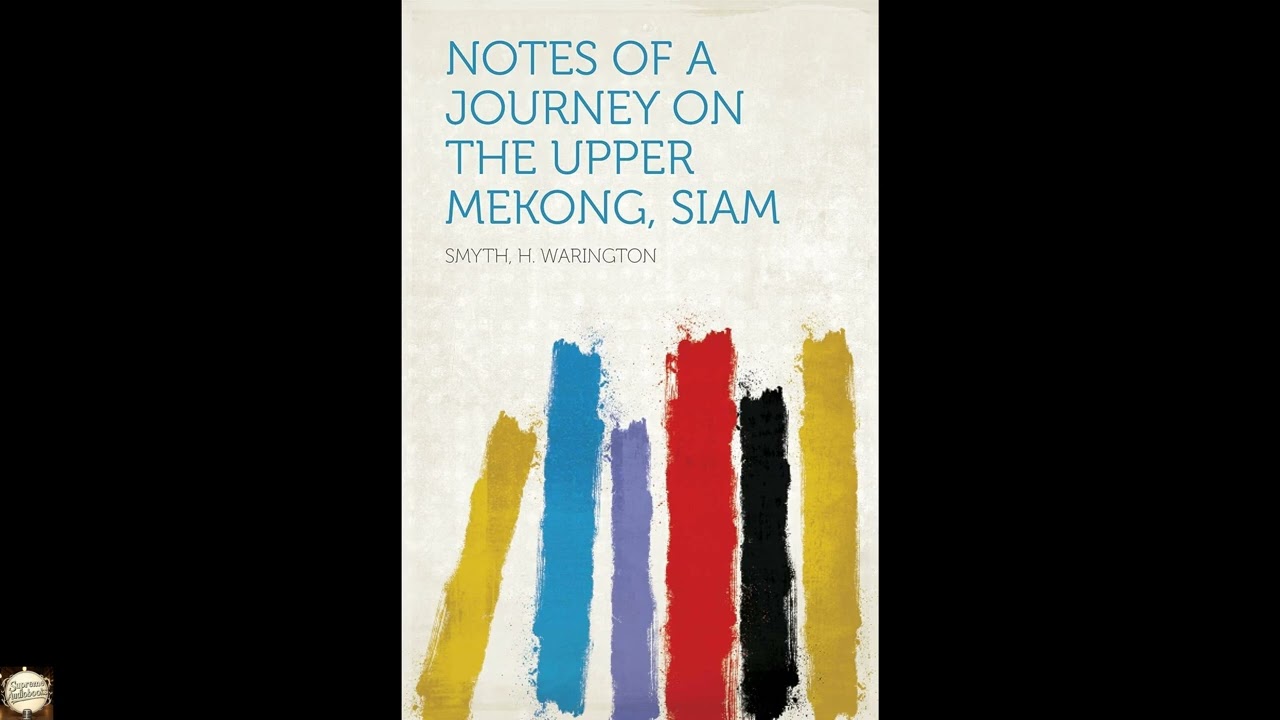
Notes of a Journey on the Upper Mekong, Siam
Step into a lost world of adventure, political intrigue, and breathtaking natural beauty with H. Warington Smyth's "Notes of a Journey on the Upper Mekong, Siam." This exceptional account transports you to the late 19th century, a pivotal era when the contours of modern Southeast Asia were being redrawn. Smyth’s meticulous observations offer an unparalleled firsthand glimpse into a region caught between ancient traditions and encroaching colonial powers, a landscape of dense jungles, powerful rivers, and diverse cultures on the brink of profound change. More than just a travelogue, this is a foundational document for understanding Siam’s struggle for independence, the challenges of geographical discovery, and the human spirit’s capacity for adaptability in the face of the unknown—insights that resonate even in our interconnected present. Smyth’s narrative unfolds in the remote and often treacherous upper reaches of the Mekong River, within the borders of what was then the independent kingdom of Siam—a territory now largely encompassing parts of modern Thailand and Laos. His mission, undertaken on behalf of the Siamese government, was to survey these vital waterways and the lands bordering French Indochina, mapping unknown territories and observing the peoples who inhabited them. The narrative begins as Smyth, a seasoned British official in Siamese service, prepares for his extended expedition, assembling his team of local guides, boatmen, and porters. From the outset, the setting itself is a formidable character: the mighty Mekong, with its shifting currents, dangerous rapids, and vast, untamed banks, dictates the pace and challenges of the undertaking. As Smyth’s boats push upstream, the story details the daily rhythm of river life: the grueling physical labor of navigating against the current, the resourcefulness required to secure supplies in isolated areas, and the constant vigilance against disease and the natural elements. He meticulously records the flora and fauna encountered—the calls of unseen birds, the rustling of creatures in the dense canopy, the towering trees unique to the region. His encounters with the local populations form a significant part of the narrative. He meets village chiefs, interacts with various ethnic groups—Lao, Khmer, and numerous hill tribes—observing their customs, their forms of governance, their trade practices, and their spiritual beliefs. These interactions, sometimes marked by suspicion, often by genuine curiosity and hospitality, paint a vivid picture of a social mosaic little understood by the outside world. The underlying tension of the era, the quiet struggle for influence between British and French empires, subtly permeates these encounters, with local officials often navigating their allegiances with delicate care. Herbert Warington Smyth, born in 1867, was a remarkable figure whose career bridged the worlds of diplomacy, exploration, and administration. Educated at Westminster School and Trinity College, Cambridge, Smyth initially pursued a career with the Siamese government, a testament to his adventurous spirit and intellectual acumen. He served for several years in Siam, first in the Department of Mines and later as the Director-General of the Royal Department of Mines and Geology. It was in this capacity that he undertook the critical surveys and observations detailed in "Notes of a Journey on the Upper Mekong, Siam," contributing significantly to Siam’s understanding of its own geography and resources at a time when such knowledge was vital for its sovereignty. Smyth’s deep understanding of the region, its languages, and its political landscape made his contributions invaluable. After his distinguished service in Siam, he joined the British Consular Service, holding various posts in Bangkok, Chiengmai, China, and Morocco, further broadening his global experience. His other notable literary contributions include the comprehensive two-volume "Five Years in Siam" (1898), which expanded upon his experiences and observations, offering a broader portrait of the kingdom. He also authored "Mast and Sail in Europe and Asia" (1906) and "Sea-Wake and Jungle-Trail" (1925), showcasing his lifelong interest in maritime life and natural history. Smyth passed away in 1943, leaving behind a legacy of detailed accounts that are essential reading for anyone interested in the history and ethnography of Southeast Asia during the late colonial period. He stands as a key figure within the tradition of British travel writing that sought to document and understand distant lands and cultures, albeit from a perspective often shaped by the imperial context. Several compelling themes emerge from Smyth's observations. One prominent thread is cultural encounter and the clash of civilizations. Smyth’s meticulous documentation of the diverse peoples along the Mekong—their daily rituals, their housing, their local economies, and their superstitions—highlights the vast array of human experiences in a relatively contained geographical area. He describes, for instance, the intricate weaving patterns of a particular tribe, or the quiet dignity of a village headman mediating a dispute, showing a keen eye for the nuances of distinct societal structures. Another significant theme is geographical documentation and the spirit of discovery. The primary objective of the expedition was to map and record, and Smyth’s prose is laden with precise details of river depths, geological formations, and the challenges of creating accurate charts in uncharted territory. He might describe the formidable stretch of rapids at Kemmarat, detailing the methods employed by his boatmen to navigate the roaring waters, underscoring the raw physical effort involved in literally putting a region on the map. Furthermore, the work subtly addresses the theme of colonialism and political maneuvering. Though Smyth is an employee of the independent Siamese government, his presence, and indeed the very need for such a survey, is a direct consequence of the encroaching European powers. He occasionally references the anxieties of local officials regarding the proximity of French garrisons across the river or the economic pressures exerted by foreign traders. This undercurrent reveals the precarious position of Siam as a buffer state, constantly negotiating its sovereignty. Finally, the narrative powerfully evokes man versus nature and the test of human endurance. The expedition is a continuous struggle against the overwhelming power of the environment—the relentless humidity, the threat of malaria and other diseases, the sheer physical toll of poling and rowing for endless hours upstream, often through formidable weather. Smyth’s descriptions of sleepless nights battling mosquitoes or the relief of finding fresh water after a long, arduous march underscore the raw, untamed nature of the Mekong wilderness and the resilience of those who traversed it. "Notes of a Journey on the Upper Mekong, Siam" emerged from a specific and turbulent historical moment in the late 19th century. This was the high tide of European imperialism, particularly in Southeast Asia. France was aggressively consolidating its Indochinese Union, absorbing Vietnam, Cambodia, and eventually Laos into its colonial sphere. Great Britain, while establishing its own colonial presence in Burma and Malaya, viewed Siam as a crucial buffer state, an independent kingdom whose continued existence served to prevent France from expanding directly to the borders of British India. Siam itself, under the visionary leadership of King Chulalongkorn (Rama V), was engaged in a sophisticated balancing act, implementing modernizing reforms to strengthen its administration and military in a desperate bid to preserve its independence amidst these powerful external pressures. Smyth’s expedition, commissioned by the Siamese government, was therefore not merely an academic exercise but a strategic imperative. Understanding the geography, resources, and demographics of its borderlands was critical for Siam to assert its claims and protect its sovereignty against French incursions. In the literary world, travel writing was a highly popular and respected genre, serving both as entertainment and as a means of informing the public about the vast, expanding empire and the exotic lands beyond its borders. Works by figures like Isabella Bird and Mary Kingsley captivated readers, blending adventure, scientific observation, and cultural commentary. Smyth's book fits squarely within this tradition, providing a meticulous, authoritative, and deeply personal account that offered both a window into an unfamiliar world and crucial intelligence for a nation fighting for its future. Listening to "Notes of a Journey on the Upper Mekong, Siam" as an audiobook offers a unique and deeply immersive experience. The narrator's voice becomes the conduit through which Smyth’s precise observations and thoughtful reflections truly come to life. You can almost feel the humid air and hear the buzz of insects as the prose describes the dense jungle, or sense the power of the river as the narrator details the rapids and currents. A skilled vocal performance enhances the conversational yet literate tone, making the detailed descriptions of local customs, flora, and fauna feel immediate and vivid. The run length of several hours makes this an ideal companion for a long drive, quiet evenings, or a focused period of historical listening, allowing ample time to sink into the rhythms of Smyth’s expedition without feeling rushed. Pay attention to the shifts in pacing—the measured, almost scientific recounting of geographical data giving way to moments of personal reflection or wry humor in interactions with local communities. The atmospheric descriptions, the precise names of places and peoples, and the underlying sense of a world on the cusp of profound change are all rendered more immediate and compelling when delivered through the spoken word, connecting you directly to a crucial historical moment through the ears of a discerning observer.
Enjoyed Notes of a Journey on the Upper Mekong, Siam? A few ways to support us
Audible & Amazon links are affiliate; we may earn a small commission at no extra cost.
About this production
Human narration by a volunteer reader from LibriVox.org, the public-domain audiobook project. LibriVox volunteers record literary works whose copyright has expired in the United States, releasing the resulting recordings into the public domain.
Notes of a Journey on the Upper Mekong, Siam by H. Warington Smyth. The underlying text is in the U.S. public domain. We do not republish any modern copyrighted edition, translation, or commentary.
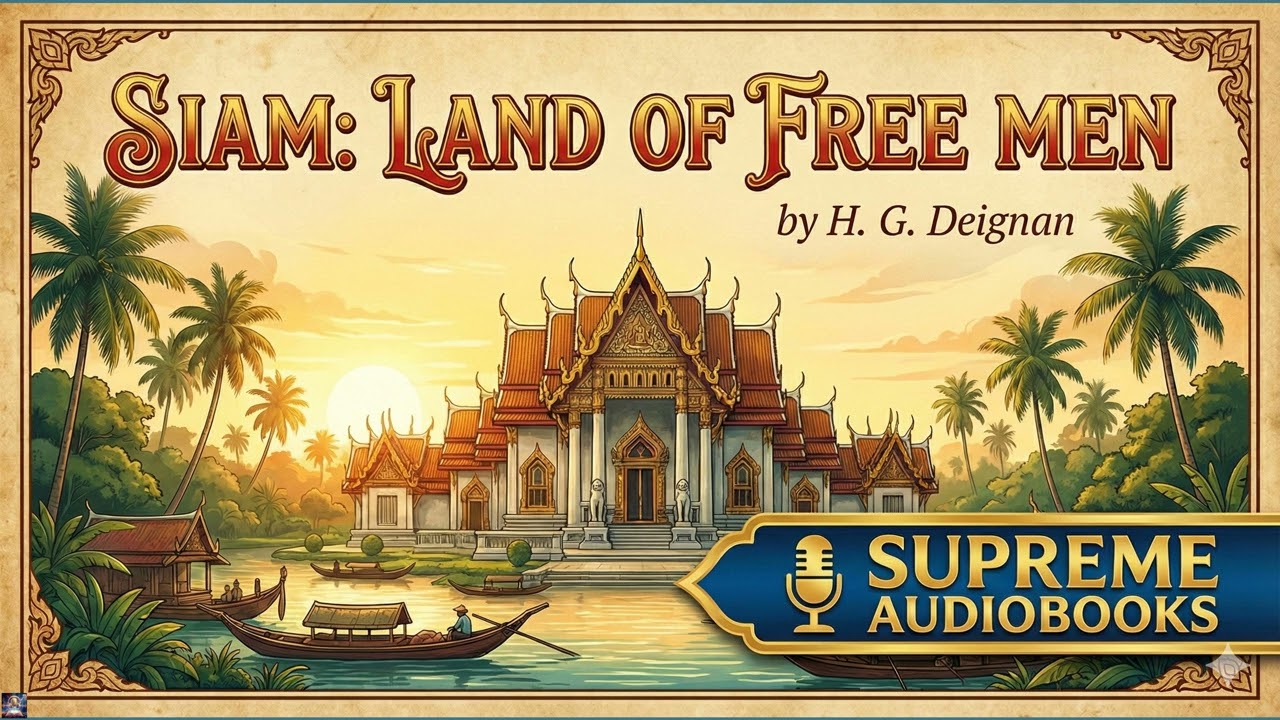
The 4K cinematic visuals accompanying this audiobook are generated by an AI image model from prompts derived from the source text. No copyrighted photos, paintings, or stock footage are used. AI generation is disclosed on every video on our YouTube channel as required by YouTube's altered/synthetic content policy.
English subtitles are transcribed from the LibriVox recording with OpenAI Whisper. Translations into the 11 other supported languages are produced by Meta's NLLB-200 neural translation model. No human translator's copyrighted translation is used.
Questions about sourcing or rights? See our DMCA & Sourcing policy or contact us.
View 10 famous quotes from this book →
Enjoyed this audiobook?
If you'd like to own a copy of Notes of a Journey on the Upper Mekong, Siam or hear a professionally produced edition, the links below help support free audiobook production at no extra cost to you.
As an Amazon Associate we earn from qualifying purchases. Audible / print links are affiliate.