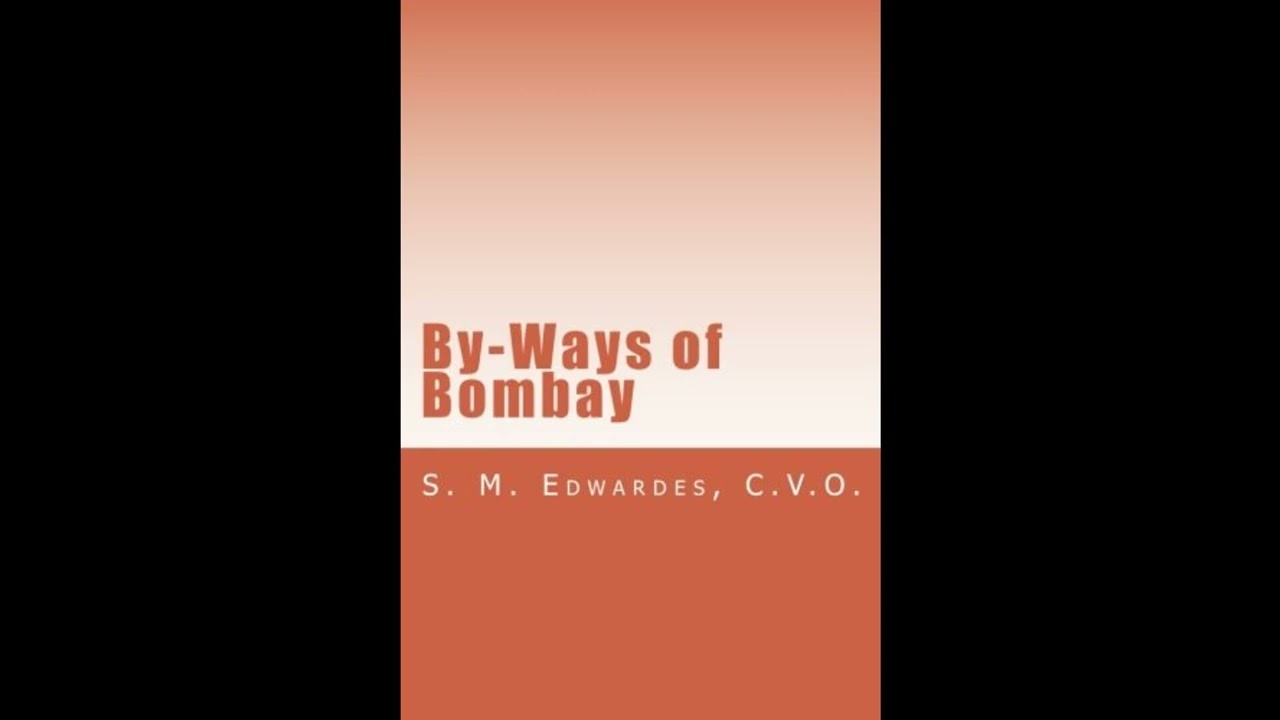
By-Ways of Bombay
Imagine stepping into a bustling, sun-drenched city at the dawn of the twentieth century, a place where ancient traditions met the relentless march of empire and modernity. By-Ways of Bombay by S. M. Edwardes offers precisely that invitation – a meticulously observed, deeply personal, and often surprising portrait of one of the world's most dynamic urban centers during a pivotal era. This is not a dry history text, but rather a collection of vivid impressions and astute analyses, penned by an Englishman who knew Bombay from its grand administrative halls to its most obscure alleyways. For anyone interested in the intricate layers of colonial life, the genesis of contemporary Indian cities, or simply the human experience distilled through a keen eye, Edwardes' work remains a compelling and uniquely positioned artifact, shedding light on a world both bygone and foundational to our own. Instead of a single narrative thread with a central protagonist, By-Ways of Bombay unfurls as a series of interconnected vignettes and sociological studies, painting a comprehensive picture of the city as Edwardes experienced it. The setting, of course, is Bombay itself—a teeming metropolis nestled on India’s west coast, a jewel in the British imperial crown, and a melting pot of cultures, languages, and religions. Edwardes guides the reader through the sprawling bazaars, where the scent of spices mingles with the cacophony of commerce, to the serene, verdant spaces of the wealthy, and into the labyrinthine residential quarters of various communities. The "characters" of the book are the people of Bombay in all their diversity: the industrious Gujarati merchants, the devout Parsi philanthropists, the stoic Maratha laborers, the Muslim artisans, and the British administrators and soldiers who oversaw the vast machinery of empire. Edwardes acts as both chronicler and interpreter, detailing their customs, their festivals, their daily routines, and their unique contributions to the city’s complex identity. While there is no overarching "conflict" in a fictional sense, the book subtly highlights the constant tension between traditional Indian society and the imposing structures of British colonial rule, the pressures of urbanization, and the intricate social hierarchies that defined life in the city. The story's arc is therefore one of revelation, moving from broad strokes to granular detail, gradually unveiling the manifold aspects of Bombay's soul without ever attempting to impose a singular conclusion on its multifaceted reality. The author, Stephen Meredyth Edwardes (1873-1948), was no casual observer but a distinguished figure within the British administration in India. Born in London but destined for a career that deeply intertwined him with the subcontinent, Edwardes was educated at Eton and Christ Church, Oxford, before joining the prestigious Indian Civil Service (ICS) in 1897. His most significant posting came in 1909 when he was appointed Commissioner of Police for Bombay, a position he held until 1916. This role granted him unparalleled access to the city's hidden corners and its diverse populace, from the highest echelons of society to its most impoverished denizens and the criminal underworld. Edwardes' professional life was marked by a blend of administrative acumen and a profound scholarly interest in Indian history and culture. He was a prolific writer, contributing not only By-Ways of Bombay but also several other authoritative works, including The Gazetteer of Bombay City and Island (1909), a foundational historical and topographical study, and The Bombay City Police: A Historical Sketch, 1672-1916 (1923). His work positioned him as a significant chronicler of colonial India, particularly Bombay, during a period when ethnographic and historical documentation by British officials was increasingly common. His unique perspective as an administrator with an academic bent allows his writings to bridge the gap between official records and more personal, observant accounts of Indian life. After his service in India, Edwardes continued his scholarly pursuits, earning recognition for his contributions to the understanding of South Asian history. One central theme Edwardes enacts is the intricate social stratification and urban demography of Bombay. He dedicates considerable space to delineating the distinct communities living side-by-side yet often separately. For example, he describes the wealthy Parsi community, with their unique religious practices, their grand residential quarters, and their significant philanthropic contributions that shaped much of modern Bombay's infrastructure, contrasting them with the daily struggles of Konkani fishermen along the city's shores or the migrant laborers arriving from the Deccan plateau. Another prominent theme is the interplay between tradition and modernity. Edwardes frequently points out how ancient religious festivals, like the boisterous Ganesh Chaturthi, continued with fervent devotion even as the city modernized with electric trams and bustling railway stations. He might describe a traditional astrologer setting up shop next to a newly opened European department store, illustrating the constant negotiation between old ways and new influences that defined Bombay’s character. A third significant theme is the nature of colonial observation and administration. Edwardes, as a British official, inherently approaches the city and its inhabitants from a particular vantage point, providing insight into the official mindset of the Raj. While his observations are detailed and often sympathetic, they are filtered through an imperial lens. He highlights, for instance, the challenges of policing a city with such cultural diversity, implicitly showcasing the British attempts to impose order on a complex society. Finally, the book stands as an act of historical preservation, capturing a specific moment in time. Edwardes meticulously records customs, professions, and urban landscapes that were already beginning to change, thereby providing an invaluable snapshot of a city on the cusp of significant transformation, documenting its "by-ways" before they were irrevocably altered by progress and political shifts. The period in which By-Ways of Bombay was published, 1912, was a time of relative stability for the British Raj, yet beneath the surface, profound cultural and political shifts were stirring. It was an era often referred to as the Edwardian period in Britain, marking the twilight years of high imperialism before the cataclysm of World War I. In India, nascent nationalist movements were gaining traction, though outright calls for independence were still some years away from becoming mainstream. Bombay itself was booming, solidifying its position as India's premier port and a crucial hub for trade, finance, and manufacturing. The city attracted migrants from across India, creating the vibrant, multi-ethnic population that Edwardes observed. This was also a time when British administrators and scholars increasingly sought to document and categorize the vast diversity of their Indian empire, driven by both a genuine intellectual curiosity and a desire to better understand and, therefore, more effectively govern their subjects. Edwardes' work emerged from this confluence of administrative necessity, scholarly endeavor, and a deep personal engagement with the life of the city he knew intimately. It offers a window into the prevailing attitudes of the time, both among the rulers and the ruled, illustrating why such a comprehensive, observational account of a colonial city became an important contribution to understanding that epoch. Listening to By-Ways of Bombay as an audiobook offers a unique opportunity to immerse oneself in Edwardes’ meticulously crafted observations. The running length of several hours allows the listener to truly settle into the rhythm of early twentieth-century Bombay, to let the details accumulate and build a vivid mental picture of the city. A skilled narrator can bring Edwardes’ descriptive prose to life, giving distinct vocal textures to the various communities and characters he discusses, from the measured tones describing British administration to the more animated passages recounting local festivals and street scenes. Listen for the author’s subtle shifts in perspective—sometimes the detached anthropologist, sometimes the engaged administrator, sometimes the fascinated visitor. The pacing of the narration will likely mirror the observational nature of the text, allowing moments of quiet reflection on the details, punctuated by more energetic descriptions of urban life. The experience becomes less about following a story and more about absorbing an atmosphere, allowing the sounds and voices of a bygone Bombay to echo through the spoken word, creating an almost cinematic impression of a world long past yet still resonant.
Enjoyed By-Ways of Bombay? A few ways to support us
Audible & Amazon links are affiliate; we may earn a small commission at no extra cost.
About this production
Human narration by a volunteer reader from LibriVox.org, the public-domain audiobook project. LibriVox volunteers record literary works whose copyright has expired in the United States, releasing the resulting recordings into the public domain.
By-Ways of Bombay by C.V.O. S. M. Edwardes. The underlying text is in the U.S. public domain. We do not republish any modern copyrighted edition, translation, or commentary.
The 4K cinematic visuals accompanying this audiobook are generated by an AI image model from prompts derived from the source text. No copyrighted photos, paintings, or stock footage are used. AI generation is disclosed on every video on our YouTube channel as required by YouTube's altered/synthetic content policy.
English subtitles are transcribed from the LibriVox recording with OpenAI Whisper. Translations into the 11 other supported languages are produced by Meta's NLLB-200 neural translation model. No human translator's copyrighted translation is used.
Questions about sourcing or rights? See our DMCA & Sourcing policy or contact us.
Enjoyed this audiobook?
If you'd like to own a copy of By-Ways of Bombay or hear a professionally produced edition, the links below help support free audiobook production at no extra cost to you.
As an Amazon Associate we earn from qualifying purchases. Audible / print links are affiliate.