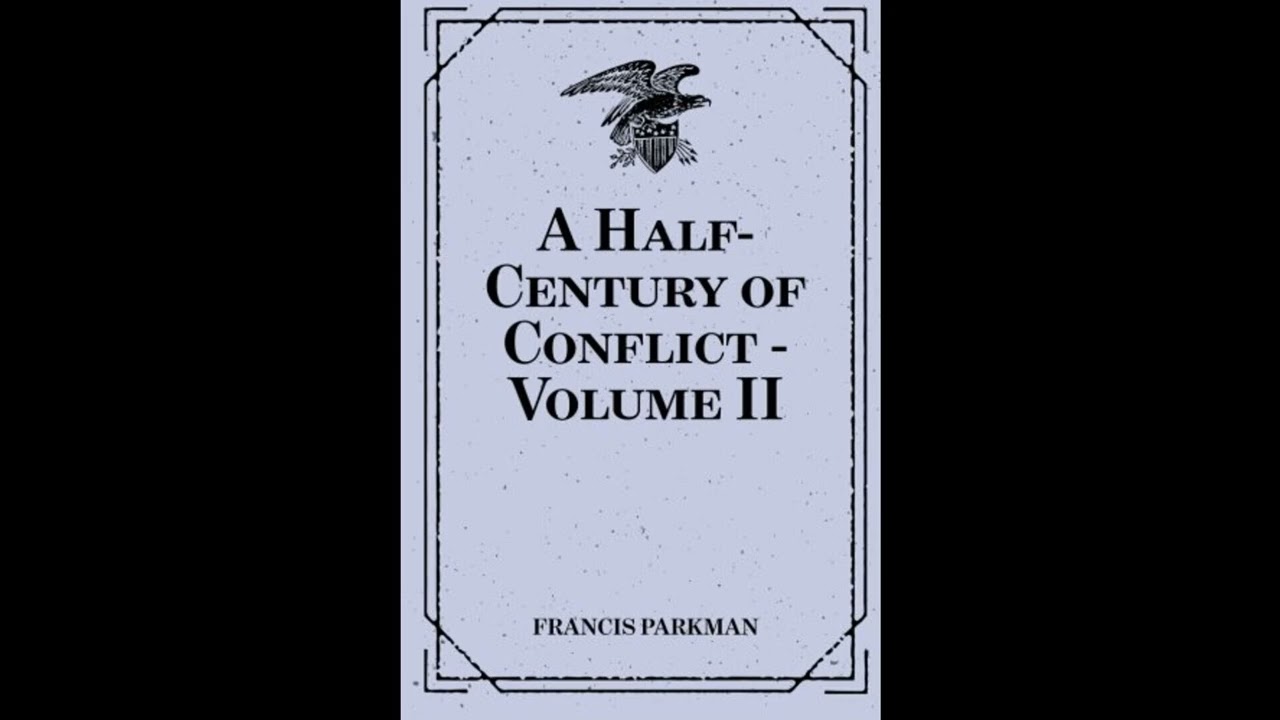
A Half-Century of Conflict - Volume II
Before the United States became a nation, before even the seeds of its revolution took root, the vast North American continent was a contested stage for European empires. Francis Parkman’s A Half-Century of Conflict - Volume II plunges listeners directly into this crucible, offering a meticulously researched yet dramatically rendered account of the decades-long struggle between France and Britain for ultimate control. This isn't just a dry recitation of dates and battles; it's a sweeping narrative that brings to life the strategic ambitions of kings, the cunning diplomacy of Native American leaders, and the rugged endurance of pioneers on a wild frontier. For anyone seeking to understand the deep historical currents that shaped modern North America, the foundational conflicts of empire, and the sheer human will to survive and dominate, Parkman’s work remains an essential and powerfully told story. This second volume picks up the narrative thread from the early eighteenth century, detailing the continuous, simmering tension and intermittent warfare that characterized the period between King William's War and the grander conflagration that would eventually decide the continent's fate. The setting is immense: from the fortified towns of French Canada to the expanding British colonies along the Atlantic seaboard, and west into the vast, often impenetrable wilderness. The principal players are not merely abstract nations but are personified through their governors, military commanders, Jesuit missionaries, and intrepid fur traders—individuals driven by faith, ambition, or the simple struggle for survival. We witness figures like the shrewd French governor, Marquis de Vaudreuil, striving to maintain his colony's precarious hold against the relentless pressure from the more populous and commercially robust British settlements. Across the border, British colonial assemblies often squabble and falter, yet their expansionist drive is undeniable, pushing ever further into lands claimed by both France and various Native American nations. The central conflict unfolds as a series of border skirmishes, brutal raids on isolated settlements, and the slow, strategic construction of forts designed to secure trade routes and territorial claims. Parkman meticulously documents the intricate web of alliances and antagonisms between the European powers and the diverse Native American tribes, from the powerful Iroquois Confederacy to the Abenaki and Huron peoples. These indigenous nations were not passive victims but active participants, leveraging their strategic positions and formidable knowledge of the land to play one European power against another, fighting for their own survival and sovereignty. Listeners will follow the desperate defenses of British frontier towns and the daring raids by French-allied Native Americans, each account painted with vivid detail, showcasing the relentless toll of this generational struggle and the human costs of imperial ambition. The arc of the story is one of escalating tension, a prolonged prelude to a coming storm, as both sides incrementally build their strength and solidify their positions, setting the stage for the definitive contest yet to arrive. The author, Francis Parkman, was one of America's most celebrated historians of the nineteenth century, renowned for his ability to combine rigorous research with a literary flair that made history come alive. Born in Boston in 1823 to a distinguished family, Parkman's early life was marked by a passion for the outdoors and an insatiable curiosity about the American wilderness and its past. He graduated from Harvard College and Harvard Law School, but his true calling lay in chronicling the epic struggle between France and England for North America. To prepare for this monumental task, he undertook a famous expedition to the American West in 1846, living for a time among the Lakota Sioux, an experience he documented in his celebrated work, The Oregon Trail. This immersive approach was characteristic of his historical method. Despite suffering from severe chronic illness, including partial blindness, crippling headaches, and nervous disorders for much of his adult life, Parkman persevered with extraordinary dedication. He employed amanuenses, read vast quantities of primary source material—much of it French archives translated for him—and visited numerous historical sites across Northis continent and in Europe. His life's work culminated in the seven-volume series, France and England in North America, which included titles such as Pioneers of France in the New World, La Salle and the Discovery of the Great West, and Montcalm and Wolfe. Parkman passed away in 1893, leaving behind a legacy that dramatically shaped how generations of Americans understood their colonial origins. He is recognized as a master of narrative history, his works appreciated not only for their foundational scholarship but also for their dramatic sweep and evocative prose. Parkman's writing enacts several profound themes that resonate well beyond the specific historical period he describes. One prominent theme is the imperial rivalry and the relentless drive for territorial control. Throughout A Half-Century of Conflict - Volume II, we see this in the methodical construction of French forts like Fort Niagara and Crown Point, strategically placed to control waterways and contain British expansion. Conversely, the narrative also illustrates the piecemeal but inexorable spread of British settlements, fueled by growing populations and commercial interests, pushing deeper into the Ohio Valley and other contested regions. This ceaseless back-and-forth demonstrates the high stakes of colonial dominion and the geopolitical chess game played out on a vast, unfamiliar board. Another significant theme is the cultural clash and adaptation on the frontier. Parkman vividly portrays the often-brutal encounters and complex relationships between European colonists and Native American peoples. He illustrates how European military tactics often faltered in the dense forests, forcing adaptations to a style of warfare perfected by indigenous fighters. Moreover, the book shows how Native American tribes, while suffering immensely from European diseases and encroachment, were not passive. They actively engaged in diplomacy, formed strategic alliances, and waged fierce resistance, as seen in the shifting loyalties of various tribes and their impactful raids on European settlements, such as the numerous attacks on New England towns depicted in chilling detail. This interplay reveals the struggle for identity and survival in a rapidly changing world. The work was penned during the latter half of the nineteenth century, a period of immense national consolidation and self-definition in the United States, following the trauma of the Civil War. Americans were looking to their past to understand their present and future, seeking narratives that could explain their origins and destiny. Parkman’s grand, sweeping histories of the colonial period perfectly fit this cultural appetite. He wrote at a time when historical scholarship was beginning to embrace more scientific methods of research, emphasizing primary sources and meticulous documentation. Yet, Parkman also belonged to a tradition of "romantic historians" who believed history should be told as a compelling story, with dramatic characters and vivid descriptions. His work provided a bridge between these approaches, offering a rigorously researched yet eminently readable account that appealed to both scholars and the general public, contributing significantly to a burgeoning sense of American national identity and a fascination with the nation’s rugged frontier past. Listening to A Half-Century of Conflict - Volume II as an audiobook offers a uniquely immersive way to experience Parkman's expansive historical narrative. The several hours of running time allow the story to unfold at a natural, unhurried pace, perfectly suited to the author's detailed descriptions and thoughtful analysis. A skilled narrator can bring Parkman's prose to life, giving voice to the myriad characters—from determined governors and fearless warriors to the quiet suffering of settlers. Listen for the careful pacing that builds tension during accounts of impending raids, the nuanced vocalizations that distinguish between different perspectives, and the descriptive power of the language that paints atmospheric pictures of dense forests, raging rivers, and besieged forts. Hearing this history allows the listener to connect directly with the dramatic flow of events, transforming a written record into an intimate, auditory experience that transports one back to the crucible of early North America.
Enjoyed A Half-Century of Conflict - Volume II? A few ways to support us
Audible & Amazon links are affiliate; we may earn a small commission at no extra cost.
About this production
Human narration by a volunteer reader from LibriVox.org, the public-domain audiobook project. LibriVox volunteers record literary works whose copyright has expired in the United States, releasing the resulting recordings into the public domain.
A Half-Century of Conflict - Volume II by Francis Parkman. The underlying text is in the U.S. public domain. We do not republish any modern copyrighted edition, translation, or commentary.
The 4K cinematic visuals accompanying this audiobook are generated by an AI image model from prompts derived from the source text. No copyrighted photos, paintings, or stock footage are used. AI generation is disclosed on every video on our YouTube channel as required by YouTube's altered/synthetic content policy.
English subtitles are transcribed from the LibriVox recording with OpenAI Whisper. Translations into the 11 other supported languages are produced by Meta's NLLB-200 neural translation model. No human translator's copyrighted translation is used.
Questions about sourcing or rights? See our DMCA & Sourcing policy or contact us.
Enjoyed this audiobook?
If you'd like to own a copy of A Half-Century of Conflict - Volume II or hear a professionally produced edition, the links below help support free audiobook production at no extra cost to you.
As an Amazon Associate we earn from qualifying purchases. Audible / print links are affiliate.