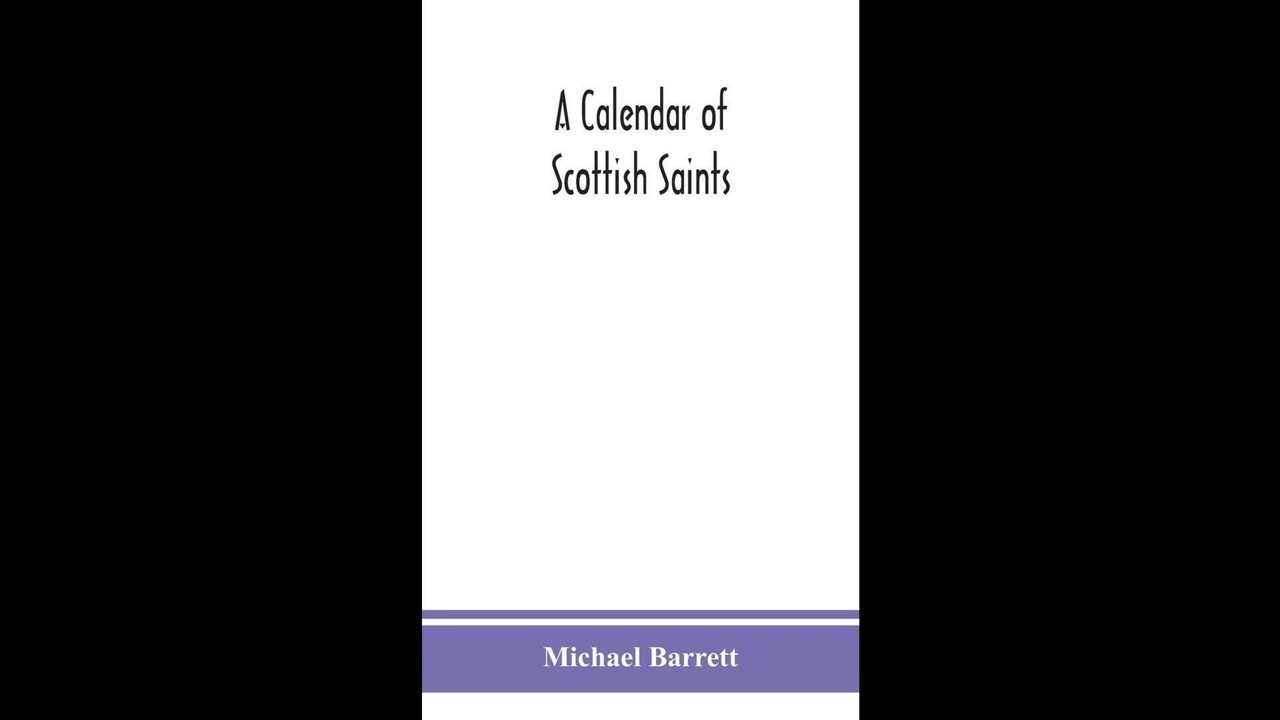
A calendar of Scottish saints
Step into a spiritual landscape shaped by faith and fortitude with Michael Barrett's A Calendar of Scottish Saints, an exceptional audiobook offering a compelling connection to Scotland's earliest Christian roots. This isn't merely an almanac or a dry historical record; it is a meticulously assembled chronicle inviting listeners to walk through an entire year, day by day, encountering the men and women whose devout lives and extraordinary deeds sculpted the very soul of a nation. For modern ears, this collection offers more than just historical intrigue; it presents a profound reflection on the origins of communal identity, the enduring power of belief, and the universal human quest for meaning and resilience in the face of immense challenge. Barrett's calendar establishes its setting not in a single time, but across centuries of Scottish history, from the waning influence of Rome to the consolidation of Christian kingdoms. Each day of the year brings forth a different saint or group of saints, illuminating their lives, their miracles, and their contributions to the nascent Church in Caledonia. We witness the wild, untamed landscapes of early Scotland—its craggy coastlines, its mist-shrouded glens, its isolated islands—as the backdrop for the spread of spiritual devotion. The main characters of this vast narrative are the saints themselves: figures like Saint Columba, whose missionary efforts from Iona spread Christianity among the Picts; Saint Ninian, credited with establishing the first church at Whithorn; and countless lesser-known hermits, martyrs, abbots, and queens, each given their moment to shine. The central conflict woven through these individual tales is the arduous, often dangerous, work of establishing Christian faith in a land still clinging to ancient pagan beliefs and beset by political fragmentation. These saints contended not only with the skepticism of kings and chieftains but also with the harsh elements, the rigors of ascetic life, and the ever-present threat of violence. The arc of the story, while appearing episodic, actually builds a cumulative picture of spiritual endurance and cultural transformation. As the year progresses, Barrett skillfully reveals how these seemingly disparate figures, through their unwavering commitment, collectively laid the foundations for Scottish identity, interweaving spiritual practice with the very fabric of daily life and governance. Each entry, though brief, contributes to a larger unfolding narrative of devotion that shaped a people. Michael Barrett, the diligent chronicler behind this work, was a scholar whose erudition focused keenly on the hagiographical tradition and the early Christian history of the British Isles. Though specific dates for his birth or death are not widely recorded, his writings suggest a period of scholarly activity in the late nineteenth or early twentieth century, an era marked by a resurgence of interest in national histories and the foundational narratives of faith. Barrett approached his subject with a blend of academic rigor and deep personal respect for the figures he documented, striving to present them not as distant, unapproachable icons, but as individuals whose struggles and triumphs resonated with universal human experience. His contributions extended beyond this particular calendar. Barrett was recognized for a series of careful investigations into monastic life and the liturgical practices of early Christianity. It is plausible that he penned other works such as Studies in Celtic Spirituality or The Monasteries of Early Scotland, further establishing his reputation as a meticulous historian and a thoughtful interpreter of religious heritage. His place in the canon is not that of a literary innovator, but rather as a diligent preserver and popularizer of historical and spiritual knowledge, making the often-obscure lives of saints accessible and relevant to a broader readership, solidifying their importance in the cultural memory of a nation. A Calendar of Scottish Saints articulates several profound themes. One prominent theme is endurance and faith, exemplified repeatedly by figures who faced immense hardship—from harsh penance in remote wildernesses to brutal martyrdom—yet never wavered in their devotion. We see this in stories of saints who lived in extreme austerity, enduring hunger and cold, or those who bravely confronted hostile rulers, embodying a steadfastness of spirit that continues to inspire. Another key theme is cultural formation and identity. The book illustrates how these individual spiritual lives became the building blocks of a collective Scottish identity, tying local lore and landscape directly to the burgeoning Christian narrative. For instance, the very names of places often bear the legacy of these holy figures, demonstrating how their presence permanently altered the cultural geography. A third significant theme is the sacred in the mundane. Barrett often highlights how miracles and divine interventions manifested in everyday life, connecting the spiritual realm directly to the physical world—a saint drawing water from a dry well, or a holy person calming a storm. These accounts emphasize the belief that divine grace was not distant but intimately involved in human existence. Finally, the book underscores legacy and memory, presenting the very act of compiling such a calendar as a vital practice of remembrance. Barrett’s detailed accounts ensure that these spiritual ancestors are not forgotten, but remain alive in the collective consciousness, their stories continuing to offer guidance and inspiration through the ages. This work emerged during a period of intense national self-reflection and historical scholarship in Britain. The late nineteenth and early twentieth centuries saw a burgeoning interest in the origins of national identity, spurred by romantic nationalism and academic inquiry into ancient texts and folklore. Scholars like Barrett were part of a wider intellectual movement that sought to recover and celebrate the distinct cultural and religious heritage of regions within the United Kingdom. As industrialization and social change accelerated, there was a growing desire to reconnect with foundational narratives, to understand how a nation’s spirit had been forged. A Calendar of Scottish Saints provided exactly that—a spiritual genealogy, grounding modern Scottish identity in the enduring piety and resilience of its early Christian forebears. It served as a reminder of the deep historical roots of faith and culture amidst a changing world. Listening to A Calendar of Scottish Saints as an audiobook transforms it into an intimate and contemplative experience. The narration, ideally delivered with a measured and reverent tone, allows the listener to fully absorb each saint's entry without the distraction of visual text. The several hours of run time are perfect for daily immersion, allowing you to follow the calendar in real-time, or to simply dip in for moments of reflection whenever you seek spiritual solace or historical insight. Pay attention to the consistent pacing, which honors the daily rhythm of the calendar, giving each account its due weight. The narrator's voice becomes a guide, bringing clarity and perhaps a touch of solemnity to the tales of miracles and martyrdom, creating an atmosphere that evokes the quiet devotion of ancient Scotland.
Enjoyed A calendar of Scottish saints? A few ways to support us
Audible & Amazon links are affiliate; we may earn a small commission at no extra cost.
About this production
Human narration by a volunteer reader from LibriVox.org, the public-domain audiobook project. LibriVox volunteers record literary works whose copyright has expired in the United States, releasing the resulting recordings into the public domain.
A calendar of Scottish saints by Michael Barrett. The underlying text is in the U.S. public domain. We do not republish any modern copyrighted edition, translation, or commentary.
The 4K cinematic visuals accompanying this audiobook are generated by an AI image model from prompts derived from the source text. No copyrighted photos, paintings, or stock footage are used. AI generation is disclosed on every video on our YouTube channel as required by YouTube's altered/synthetic content policy.
English subtitles are transcribed from the LibriVox recording with OpenAI Whisper. Translations into the 11 other supported languages are produced by Meta's NLLB-200 neural translation model. No human translator's copyrighted translation is used.
Questions about sourcing or rights? See our DMCA & Sourcing policy or contact us.
Enjoyed this audiobook?
If you'd like to own a copy of A calendar of Scottish saints or hear a professionally produced edition, the links below help support free audiobook production at no extra cost to you.
As an Amazon Associate we earn from qualifying purchases. Audible / print links are affiliate.
More Audiobooks
Ballads of Scottish Tradition and Romance - Popular Ballads of the Olden Times - Thi- Full Audiobook
Afterwards and Other Stories
The Life of St. Declan of Ardmore
The Life of Saint Columba: Apostle of Scotland