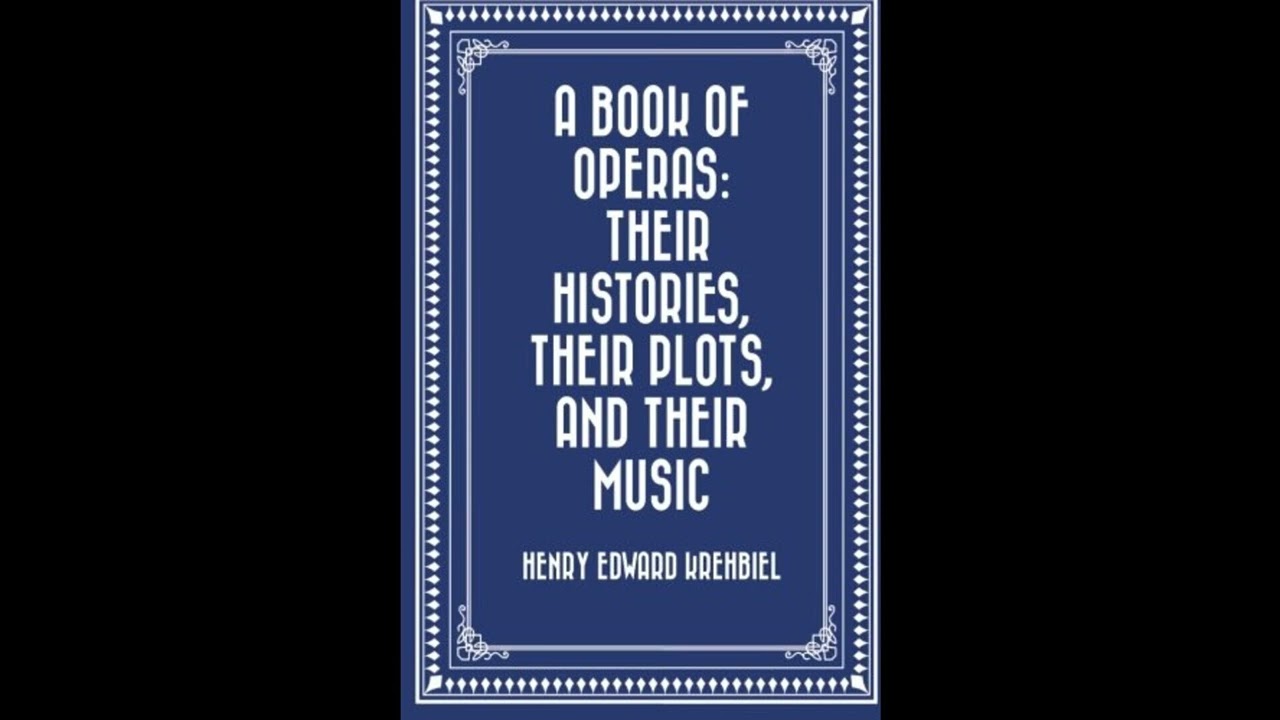
A Book of Operas: Their Histories, Their Plots, and Their Music
For anyone who has ever felt a tremor of curiosity about the world of opera, yet found themselves hesitant to approach its grandeur, A Book of Operas: Their Histories, Their Plots, and Their Music offers a truly remarkable key. This volume serves not merely as a guide, but as a welcoming hand extended across centuries, inviting listeners into an art form often perceived as exclusive or intimidating. It dismantles the barriers of language and specialized knowledge, revealing the raw emotional power and dramatic genius that lie at the heart of opera. Far from being a relic of the past, these stories and the music that carries them speak directly to the human condition, making this audiobook a potent portal to understanding universal themes of love, loss, ambition, and fate that resonate as profoundly today as they did upon their initial creation. The text itself unfolds like a carefully curated tour through the vast landscape of operatic achievement, moving from the audacious birth of the form in Italy to the towering German sagas, and the elegant French spectacles. It does not present a single narrative arc in the traditional sense, but rather a progression of enlightenment, guiding the listener through the development of opera as an art form. Each chapter, implicitly, introduces a new, compelling "character"—be it Verdi’s passionate Violetta in La Traviata, the fiery gypsy Carmen, or the mythological heroes and gods of Wagner’s Ring Cycle. The central conflict that the book addresses is the initial bewilderment many experience when faced with unfamiliar musical styles or non-English libretti; it resolves this by meticulously breaking down each selected work. Listeners will discover the setting of each opera, whether the streets of Seville, the lavish salons of Parisian society, or the mystical realms of Norse legend. The book clarifies who the main figures are in each drama, their relationships, and the driving forces behind their actions. It meticulously lays out the intricate webs of jealousy, sacrifice, and political machination that form the dramatic core. One learns how the young lovers in La bohème navigate poverty and illness, or how the titular character in Don Giovanni faces the ultimate reckoning for his libertine ways. The book constructs an understanding of these works piece by piece, building a foundational knowledge that allows the emotional impact of the music and story to hit with full force without spoiling the ultimate resolutions or final dramatic turns. While the author of this particular volume remains uncredited, a common occurrence for educational and popular compendiums of its era, A Book of Operas stands firmly within a revered tradition of scholarship designed to democratize high culture. Such works were vital during the late nineteenth and early twentieth centuries, a period marked by a growing middle class eager for cultural enrichment and a deeper understanding of the arts. These anonymous efforts often represented the collective wisdom of critics, scholars, and avid music lovers who sought to bridge the gap between complex artistic creations and an expanding general audience. Their primary goal was not individual fame, but the dissemination of knowledge and the fostering of appreciation for art forms like opera, which were then—as now—gaining broader appeal beyond courtly or aristocratic circles. This book is a testament to the enduring power of accessible explanation, serving as a silent, diligent guide that has shaped countless individuals’ first understanding of the operatic stage. The literary significance of this book stems from its ability to illuminate core human experiences through the lens of operatic drama. One major theme it enacts is the universal nature of emotion and destiny. It demonstrates how composers and librettists crafted narratives that resonate with profound feelings—think of the overwhelming grief and love in Aida, or the relentless pursuit of vengeance in Rigoletto. Through its careful plot summaries, the book reveals how individual characters are often caught in the powerful currents of their circumstances, facing choices that ripple through their lives with tragic or triumphant consequences. Another central idea is the transformative power of music itself. The book explains not just what happens in a story, but how specific musical elements—melodies, harmonies, instrumentation—are employed to underscore character emotions, foreshadow events, and elevate simple dialogue into moments of breathtaking pathos or ecstatic joy. For instance, it might describe how a particular aria perfectly captures a character's anguish, or how an orchestral interlude builds unbearable tension. The work also champions the theme of heroism and sacrifice, showing how many operatic figures face immense adversity, sometimes for love, sometimes for principle, often leading to personal ruin for a greater cause. Lastly, it touches upon societal critiques and moral dilemmas, as many operas, though set in historical or fantastical realms, comment pointedly on contemporary social issues, power structures, and individual accountability. This book, by making these grand narratives digestible, allows listeners to grasp how these artistic expressions comment on our shared human experience, fostering not just an understanding of specific operas but a deeper appreciation for the enduring questions they pose. A Book of Operas likely emerged during an era when public access to cultural institutions was expanding, but detailed background knowledge was not yet widely available through mass media. The late 1800s and early 1900s saw opera houses proliferate across Europe and America, attracting larger, more diverse audiences than ever before. Simultaneously, technological innovations like the gramophone were beginning to bring fragments of operatic performance into private homes. This convergence created a pressing need for guides that could explain the complexities of opera—its history, its often convoluted plots, and its musical language—to a burgeoning public. Publishers responded with works like this one, providing the essential context necessary for genuine appreciation, allowing new enthusiasts to fully engage with the dramatic narratives and musical genius on display without being overwhelmed by unfamiliar conventions or foreign languages. It represents a vital educational tool from a period when cultural literacy was actively being cultivated across society. Listening to A Book of Operas as an audiobook offers a particularly immersive and instructive experience. The generous run length, spanning several hours, makes it an ideal companion for a variety of listening occasions, whether you choose to absorb entire sections dedicated to a single opera or prefer to dip in and out, allowing you to gradually build your knowledge. A thoughtful narrator’s voice becomes your personal guide, delivering the historical facts and plot details with clarity and an appropriate sense of dramatic weight. You can listen for the deliberate pacing that allows complex storylines to unfold at a comprehensible speed, or the articulate descriptions that evoke the settings and emotional atmospheres of each opera. The spoken word here transforms potentially dense information into an engaging, conversational instruction, inviting you to imagine the grand stage and the sweeping music, preparing your ears and mind for the full operatic experience.
Enjoyed A Book of Operas: Their Histories, Their Plots, and Their Music? A few ways to support us
Audible & Amazon links are affiliate; we may earn a small commission at no extra cost.
About this production
Human narration by a volunteer reader from LibriVox.org, the public-domain audiobook project. LibriVox volunteers record literary works whose copyright has expired in the United States, releasing the resulting recordings into the public domain.
A Book of Operas: Their Histories, Their Plots, and Their Music by Henry Edward Krehbiel. The underlying text is in the U.S. public domain. We do not republish any modern copyrighted edition, translation, or commentary.
The 4K cinematic visuals accompanying this audiobook are generated by an AI image model from prompts derived from the source text. No copyrighted photos, paintings, or stock footage are used. AI generation is disclosed on every video on our YouTube channel as required by YouTube's altered/synthetic content policy.
English subtitles are transcribed from the LibriVox recording with OpenAI Whisper. Translations into the 11 other supported languages are produced by Meta's NLLB-200 neural translation model. No human translator's copyrighted translation is used.
Questions about sourcing or rights? See our DMCA & Sourcing policy or contact us.
Enjoyed this audiobook?
If you'd like to own a copy of A Book of Operas: Their Histories, Their Plots, and Their Music or hear a professionally produced edition, the links below help support free audiobook production at no extra cost to you.
As an Amazon Associate we earn from qualifying purchases. Audible / print links are affiliate.