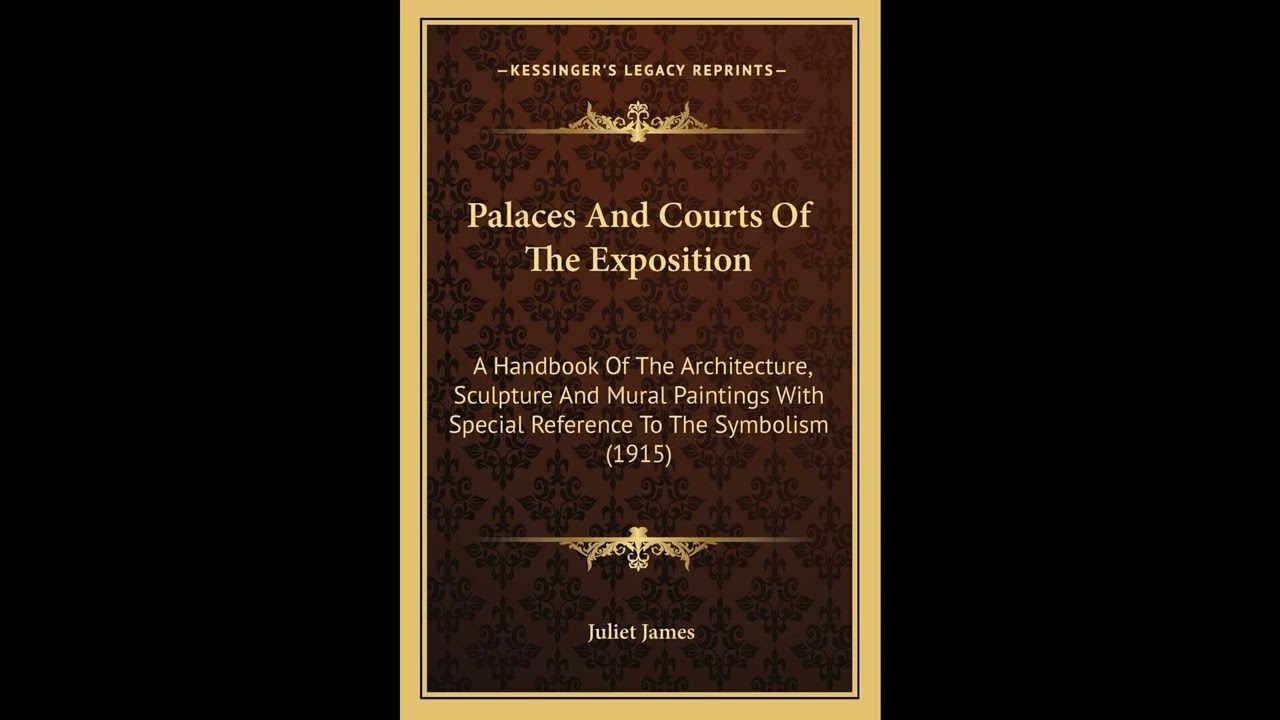
Palaces And Courts Of The Exposition: A Handbook Of The Architecture, Sculpture And
"Palaces And Courts Of The Exposition" offers a unique auditory portal to a world of architectural marvel and artistic ambition from a forgotten epoch. This isn't merely a dusty artifact; it's a living echo of a cultural moment when nations showcased their ingenuity and artistry on an unprecedented scale. For contemporary listeners, this handbook provides an invaluable insight into the aspirations, aesthetic sensibilities, and technological achievements that defined an earlier period. It invites us to witness the fleeting splendor of monumental constructions designed to astound and inspire—structures that, for the most part, no longer stand. Its enduring appeal lies in its ability to reconstruct a magnificent vision, allowing us to grasp the scale of human endeavor dedicated to beauty and progress. This handbook guides its audience through a monumental world’s fair, a temporary city built not of stone for eternity, but of plaster, steel, and dreams for a season of display. The narrative unfolds as a methodical yet evocative tour, commencing with the majestic entryways that served as grand portals. It meticulously details the principal edifices—the eponymous palaces—each dedicated to a different facet of human achievement, whether industry, agriculture, or the arts. Listeners are led from sweeping vistas of main thoroughfares, flanked by monumental fountains and allegorical statuary, into the more intimate "courts" housing specific exhibits. The "characters" of this descriptive panorama are the structures themselves: colossal domes reaching skyward, colonnades stretching into the distance, and intricate sculptural groups adorning every facade. The central challenge for the authors was to encapsulate the ephemeral magnificence of the exposition within the permanent medium of text. How does one convey the dizzying scale, the atmosphere, the sensory overload of thousands of exhibits and millions of visitors, using only words? The handbook endeavors to resolve this by focusing on precision and aesthetic appreciation, allowing the listener to mentally reconstruct the experience piece by piece. The arc of the handbook mirrors the physical progression of a visitor, moving from the exposition's grand exterior to the specific details of its interior life, inviting us to walk the grounds and feel the wonder they inspired. The anonymity of the authors behind "Palaces And Courts Of The Exposition" is emblematic of the collaborative, often institutional nature of such comprehensive guides from its period. While specific names are not appended, the meticulous detail and coherent organization suggest the involvement of a committee of experts—perhaps architects, art historians, or exhibition officials—or a highly skilled editorial team. This was common practice for official handbooks of great international expositions from the late nineteenth and early twentieth centuries, where the collective effort to document the event often overshadowed individual authorship. Such guides served a dual purpose. During the exposition’s run, they acted as indispensable companions for visitors, offering context to the overwhelming array of sights. After the gates closed and temporary structures were dismantled, these handbooks transformed into invaluable historical records, preserving the memory of these grand, fleeting spectacles. "Palaces And Courts Of The Exposition" stands squarely within this tradition of documentation, blending objective reporting with aesthetic criticism and cultural celebration. Its "classic literature" designation stems from its status as a definitive example of this specific, now historical, form of writing, offering a window into how an important cultural phenomenon was understood and presented. One prominent theme woven throughout "Palaces And Courts Of The Exposition" is the inherent tension between temporary spectacle and lasting impression. The handbook details structures like the vast "Palace of Fine Arts" or the towering "Machinery Hall" with a reverential tone, describing their elaborate facades and colossal dimensions. Yet, the reader is implicitly aware that these were transient constructions, often built of plaster-like staff and designed for a lifespan of mere months. The very act of documenting them so thoroughly in text is an attempt to defy their impermanence, to grant them a form of literary immortality that their physical reality could not sustain. The vivid descriptions of a triumphant arch, for instance, capture its immediate impact while underscoring its inevitable demolition, making the act of listening a poignant engagement with what was and what faded. Another significant theme is the celebration of human ambition and ingenuity, particularly as manifested in architecture and engineering. The text frequently marvels at the sheer scale of the exposition's construction, describing domes that rivaled ancient wonders and structural feats that pushed boundaries. For example, the detailed account of a central rotunda might emphasize not just its decorative elements but also the innovative structural system allowing for such a vast, unsupported span. The handbook acts as a testament to the collective human capacity for grand vision, precise execution, and artistic collaboration, bringing together countless designers, engineers, and artisans to create a unified, breathtaking environment. It underscores the belief that through organized effort, humanity could create temporary cities of unparalleled beauty and functional marvel, signaling progress and mastery over the physical world. The emergence of handbooks like "Palaces And Courts Of The Exposition" is inextricably linked to the zenith of the great international expositions, a phenomenon flourishing from the mid-19th through early 20th century. These world's fairs were more than mere trade shows; they were powerful cultural phenomena, serving as showcases for national pride, technological innovation, and artistic achievement. They were stages where nations presented their best selves, vying for prestige and demonstrating progress in the wake of the Industrial Revolution, characterized by rapid urbanization and scientific discovery. The demand for such comprehensive guides arose directly from the overwhelming scale and complexity of these events. Visitors needed assistance navigating the vast grounds and understanding countless exhibits. Culturally, there was a widespread thirst for knowledge and a belief in education through observation, which these fairs, and their accompanying handbooks, admirably fulfilled. This handbook is a document of an era that believed fervently in progress, the power of visual spectacle, and the importance of public education and display on a grand scale. Listening to "Palaces And Courts Of The Exposition" as an audiobook transforms what might appear to be a dry, factual account into an immersive historical experience. The several hours of narration provide ample time for the descriptive prose to unfold at a measured pace, allowing the listener to mentally construct the colossal vistas and intricate details without feeling rushed. A skilled narrator's voice lends gravitas to architectural descriptions, conveys the wonder intended by the original authors, and evokes the atmosphere of a bustling, magnificent temporary city. The auditory format brings the handbook to life, making the descriptions of allegorical figures, material choices, and grand perspectives more immediate and engaging, inviting an imaginative walk through a lost world of awe-inspiring human achievement.
Enjoyed Palaces And Courts Of The Exposition: A Handbook Of The Architecture, Sculpture And? A few ways to support us
Audible & Amazon links are affiliate; we may earn a small commission at no extra cost.
About this production
Human narration by a volunteer reader from LibriVox.org, the public-domain audiobook project. LibriVox volunteers record literary works whose copyright has expired in the United States, releasing the resulting recordings into the public domain.
Palaces And Courts Of The Exposition: A Handbook Of The Architecture, Sculpture And by Julius L. Klein. The underlying text is in the U.S. public domain. We do not republish any modern copyrighted edition, translation, or commentary.
The 4K cinematic visuals accompanying this audiobook are generated by an AI image model from prompts derived from the source text. No copyrighted photos, paintings, or stock footage are used. AI generation is disclosed on every video on our YouTube channel as required by YouTube's altered/synthetic content policy.
English subtitles are transcribed from the LibriVox recording with OpenAI Whisper. Translations into the 11 other supported languages are produced by Meta's NLLB-200 neural translation model. No human translator's copyrighted translation is used.
Questions about sourcing or rights? See our DMCA & Sourcing policy or contact us.
Enjoyed this audiobook?
If you'd like to own a copy of Palaces And Courts Of The Exposition: A Handbook Of The Architecture, Sculpture And or hear a professionally produced edition, the links below help support free audiobook production at no extra cost to you.
As an Amazon Associate we earn from qualifying purchases. Audible / print links are affiliate.