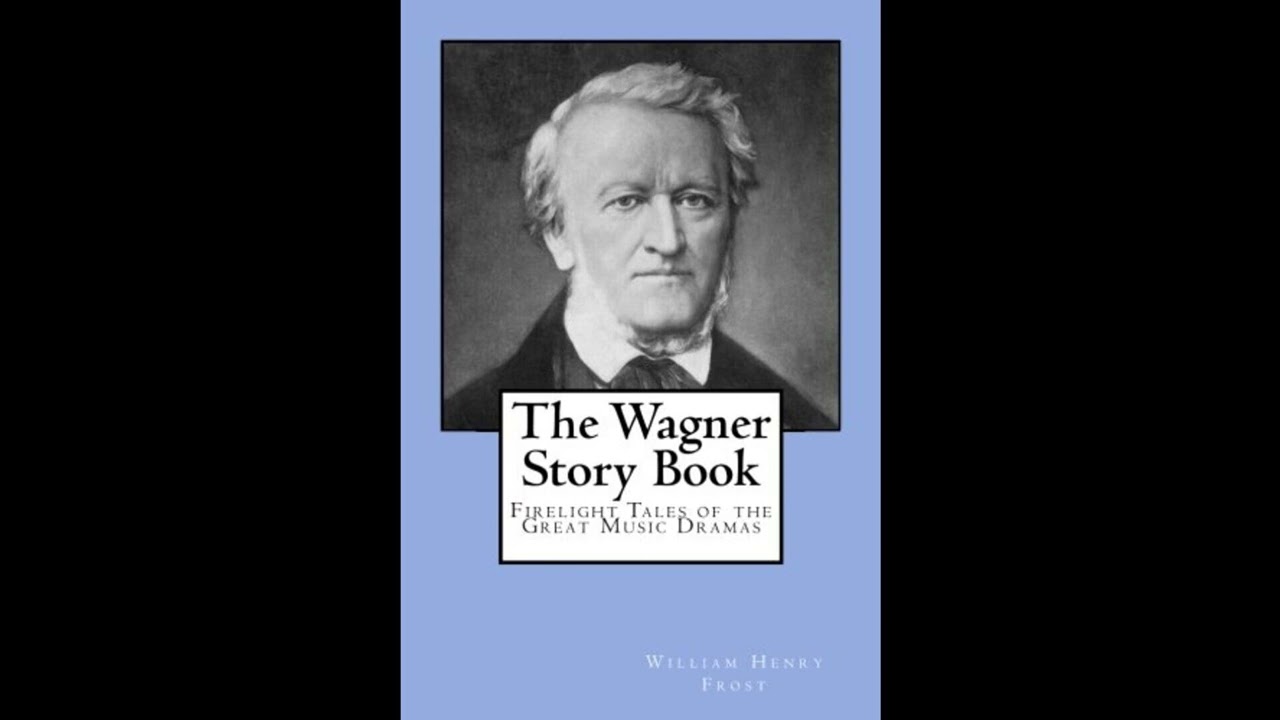
The Wagner Story Book: Firelight Tales of the Great Music Dramas
Richard Wagner's music dramas stand as monumental achievements in the history of art, vast sonic and dramatic canvases that redefine the very notion of opera. Yet, for many, the sheer scale and complexity of these works, often performed over many hours and demanding a deep familiarity with Teutonic mythology, can feel imposing. William Henry Frost's The Wagner Story Book: Firelight Tales of the Great Music Dramas offers an elegant and accessible solution, distilling the grandeur of Wagner's vision into prose narratives that retain the myths' power and emotional resonance. This collection isn't merely a summary; it's an invitation, drawing listeners into the legendary worlds that inspired the composer, presenting the foundational stories of heroes, gods, and fateful love affairs in a form as approachable as traditional folktales told around a hearth. For anyone curious about the wellsprings of some of the most influential music ever conceived, or simply seeking enthralling narratives rooted in ancient European lore, this book provides a perfect gateway. Frost's compilation transports us to a mythic Europe, a land of ancient forests, formidable castles, and cosmic dramas played out between mortals and divine beings. Listeners will find themselves immersed in the epic sweep of tales like The Ring of the Nibelung, a saga spanning generations where the dwarf Alberich's theft of Rhinemaidens' gold forges a cursed ring, setting in motion a chain of events that leads to the downfall of gods and the destruction of a world. The supreme god Wotan, driven by his ambition and bound by ill-made treaties, endeavors to regain the ring through cunning and surrogate heroes, only to find himself entangled in a web of deceit, betrayal, and his own moral compromises. We witness the tragic fates of the Wälsungs, Siegmund and Sieglinde, and the innocent might of their son, Siegfried, a hero born without fear who alone might wrest the ring from its current keeper, the dragon Fafner. Beyond the colossal Ring cycle, the collection also brings to life other unforgettable narratives. There is the doomed romance of Tristan und Isolde, where a love potion binds a knight and a princess in a passionate yet forbidden affection, leading them to defy societal norms and face the wrath of kings. Parsifal recounts the quest of a pure-hearted fool to reclaim the Holy Grail and heal the wounded Fisher King, a narrative steeped in spiritual seeking and the pursuit of redemption. Each story, whether detailing the machinations of gods, the sacrifices of heroes, or the overwhelming force of love and hate, is presented with a clarity and dramatic flair that foregrounds the core human — and superhuman — struggles at their heart. The author, William Henry Frost (1863-1902), was an American journalist and writer known for his ability to popularize complex subjects and classical literature for a general audience. Born in Chicago, Frost spent much of his career working in journalism, which honed his skills in clear, engaging prose. He possessed a particular affinity for folklore and mythology, recognizing their enduring power and their importance in shaping cultural understanding. Though his life was relatively brief, his literary output focused on bringing the magic and moral weight of ancient stories to a broader readership, especially younger people or those less familiar with the original sources. The Wagner Story Book remains his most recognized work, solidifying his place as a significant popularizer of classical narratives during a period of burgeoning cultural appreciation in America. Frost’s method of adapting these operatic narratives into accessible stories was part of a larger literary trend in the late nineteenth century. He was not merely summarizing librettos; he was translating the dramatic tension and thematic depth into a readable format. His other works, such as The Fairies and Folk of Ireland and The Knights of the Round Table, further demonstrate his commitment to preserving and re-presenting traditional tales. Frost’s work stands as a testament to the belief that profound stories, whether from ancient legends or the heights of artistic creation, could and should be made available to everyone, serving as both entertainment and a means of cultural education. The stories presented here resonate with several profound themes that transcend their specific mythical settings. One prominent idea is the tension between fate and free will. Characters like Wotan continually struggle against the destiny he himself helped create through his actions and pacts, while Siegfried, seemingly free and fearless, is nonetheless guided by forces beyond his full comprehension. Another central theme is the corrupting influence of power, vividly demonstrated by the cursed Nibelung ring, which brings sorrow and ruin to all who possess it, turning gods, giants, and mortals against each other. Frost's retellings clearly illustrate how the pursuit of absolute power inevitably leads to moral decay and tragic consequences. Furthermore, the collection consistently examines the redemptive power of love and sacrifice. Brünnhilde's ultimate act of self-immolation in Götterdämmerung breaks the ring's curse and purifies the world, while the unwavering, if ill-fated, devotion of Tristan and Isolde speaks to an unyielding emotional bond that defies death itself. These stories highlight the idea that genuine love, even when tragic, possesses a transcendent force capable of altering the cosmic order or achieving a form of spiritual purity. Frost, by presenting these narratives in their elemental form, allows listeners to grasp these profound ideas without the added complexity of Wagner’s musical score, revealing the universal human dilemmas at the heart of the mythological narratives. This book emerged from a particular moment in history—the late nineteenth century—when cultural forces were aligning to create a widespread interest in both classical music and the popularization of high culture. In America, following the Civil War and throughout the Gilded Age, there was a growing middle class with increased leisure time and a desire for self-improvement and cultural literacy. European opera, particularly the works of Wagner, had become a significant cultural phenomenon, but attending and understanding these lengthy, German-language productions was not universally accessible. Writers like Frost stepped into this gap, serving as cultural intermediaries. The period also saw a resurgence of interest in folklore, mythology, and national epics, fueled by Romantic nationalism and new scholarly endeavors in comparative mythology. Frost’s The Wagner Story Book capitalized on this cultural appetite, offering a bridge for audiences to connect with the grand narratives and powerful emotions of Wagner’s operas without requiring a musical background or linguistic expertise. It allowed the epic scope of Norse and Germanic myths, as reimagined by Wagner, to reach parlors and libraries, fostering an appreciation for these ancient tales and the operatic form that celebrated them. Listening to The Wagner Story Book as an audiobook transforms it into an experience that harkens back to the oral tradition from which many of these myths originally sprang. A skilled narrator can imbue each tale with the gravitas of a legendary saga or the intimacy of a fireside recounting, using vocal nuance to distinguish between the proud gods, the daring heroes, and the cunning villains. The several hours of listening time allow for a leisurely immersion into these complex narratives, perfect for long drives, quiet evenings, or moments of focused escape. As the narrator’s voice unfolds each scene, listeners can visualize the sweeping landscapes, the clash of swords, and the tender moments of affection, allowing the timeless power of these dramatic tales to resonate anew, unencumbered by the stage’s demands or the orchestra’s intensity.
Enjoyed The Wagner Story Book: Firelight Tales of the Great Music Dramas? A few ways to support us
Audible & Amazon links are affiliate; we may earn a small commission at no extra cost.
About this production
Human narration by a volunteer reader from LibriVox.org, the public-domain audiobook project. LibriVox volunteers record literary works whose copyright has expired in the United States, releasing the resulting recordings into the public domain.
The Wagner Story Book: Firelight Tales of the Great Music Dramas by William Henry Fr. The underlying text is in the U.S. public domain. We do not republish any modern copyrighted edition, translation, or commentary.
The 4K cinematic visuals accompanying this audiobook are generated by an AI image model from prompts derived from the source text. No copyrighted photos, paintings, or stock footage are used. AI generation is disclosed on every video on our YouTube channel as required by YouTube's altered/synthetic content policy.
English subtitles are transcribed from the LibriVox recording with OpenAI Whisper. Translations into the 11 other supported languages are produced by Meta's NLLB-200 neural translation model. No human translator's copyrighted translation is used.
Questions about sourcing or rights? See our DMCA & Sourcing policy or contact us.
Enjoyed this audiobook?
If you'd like to own a copy of The Wagner Story Book: Firelight Tales of the Great Music Dramas or hear a professionally produced edition, the links below help support free audiobook production at no extra cost to you.
As an Amazon Associate we earn from qualifying purchases. Audible / print links are affiliate.