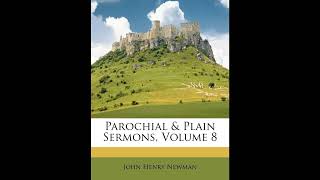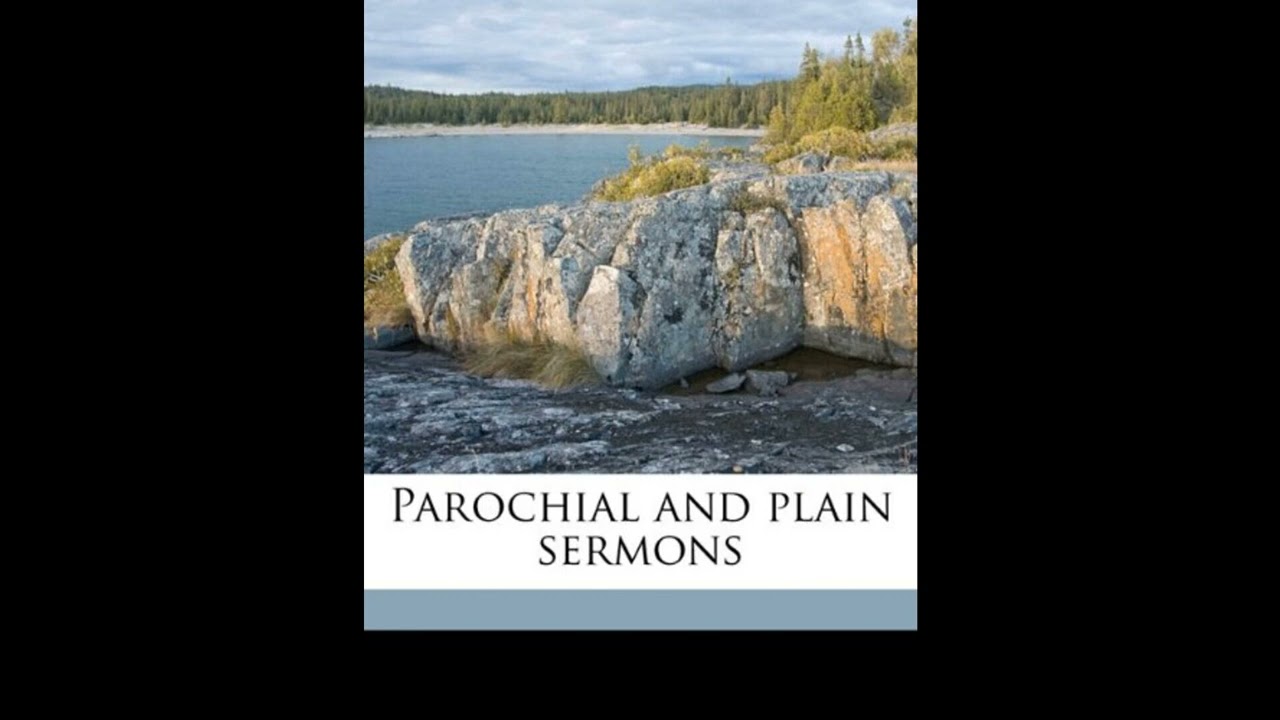
Parochial and plain sermons Volume 7
Step into the profound spiritual and intellectual landscape of the 19th century with Parochial and Plain Sermons Volume 7, a pivotal collection from the extraordinary mind of John Henry Newman. These are not mere historical documents; they are a direct address to the enduring human condition, offering guidance, challenge, and comfort across the centuries. Newman, a figure whose thought shaped generations and continues to resonate today, presents sermons that grapple with universal questions of faith, doubt, conscience, and the ultimate purpose of life. To engage with these words is to confront oneself, to consider the deeper currents beneath daily existence, and to participate in a conversation that transcends time, revealing truths as relevant in our complex world as they were in Victorian England. Within this seventh volume of the celebrated series, Newman continues his deep and often unsparing examination of Christian doctrine and its practical application to individual life. Each sermon serves as a focused meditation, typically beginning with a Scriptural passage and unfolding into a rigorous exposition that moves from theological principle to moral imperative. Listeners will find themselves immersed in a series of spiritual inquiries, each posing a distinct challenge to the soul. There is no single narrative plot in the conventional sense, but rather a sustained, cumulative dialogue with the listener, where Newman acts as a spiritual guide, meticulously dismantling self-deception and illuminating the path toward genuine faith. The central struggle that unites these individual discourses is humanity's constant tension between the demands of the spiritual and the temptations of the worldly, the persistent call to holiness against the inertia of habit and comfort. As the collection progresses, a subtle yet powerful arc emerges, tracing the incremental growth and struggles of the Christian soul. Newman portrays a kind of internal drama, where the "characters" are the universal aspects of human experience – the seeking heart, the wavering will, the discerning conscience – all under the scrutiny of divine truth. Each sermon presents a particular facet of this struggle, whether it be the nature of temptation, the necessity of repentance, the power of prayer, or the reality of the unseen world. Through incisive reasoning and eloquent exhortation, Newman constructs a persuasive argument for a life lived in conscious devotion, guiding his imagined congregants—and now his listeners—through the moral mazes of existence, never shying away from the hard truths required for spiritual maturity. John Henry Newman, born in London in 1801, was one of the most significant religious figures and literary stylists of the Victorian era. His early life saw him educated at Trinity College, Oxford, where he quickly distinguished himself as an intellectual prodigy. He was ordained an Anglican priest in 1824 and became a fellow of Oriel College, a hub of intellectual activity. It was during this period that he became a leading light of the Oxford Movement, also known as Tractarianism, advocating for a revival of Catholic traditions within the Church of England. This movement aimed to reassert the Anglican Church's divine origins and its standing as a branch of the universal Church, emphasizing apostolic succession and the importance of ritual and doctrine. His powerful sermons delivered at St Mary's, Oxford, were central to this effort, drawing immense crowds and influencing countless minds. Newman's spiritual and intellectual searching ultimately led to his momentous conversion to Roman Catholicism in 1845, a decision that sent shockwaves through English society and the Anglican Church. This act of conscience, detailed in his acclaimed autobiography Apologia Pro Vita Sua, marked a new chapter in his life. As a Catholic priest, he founded the Birmingham Oratory and dedicated himself to education and theological writing. His intellectual contributions were recognized when he was made a Cardinal by Pope Leo XIII in 1879, a testament to his profound impact on religious thought. Beyond his theological writings, Newman was also a poet, a philosopher, and an educational theorist, perhaps best known for The Idea of a University, a treatise on the aims of higher education that remains relevant today. His place in the literary canon is secured by the sheer elegance and precision of his prose, which even his detractors acknowledged as among the finest of his age. A recurrent theme throughout Parochial and Plain Sermons Volume 7 is the persistent call to acknowledge the reality of the unseen. Newman frequently argues that the spiritual world is not a distant abstraction but an ever-present force actively shaping the mundane. He shows, for instance, how seemingly ordinary decisions and habits accumulate moral weight, demonstrating that every individual action carries eternal significance. He might discuss how a seemingly minor act of deceit subtly erodes the soul, or conversely, how consistent acts of charity build spiritual fortitude. This insistence on the immanence of the divine and the gravity of everyday choices serves to awaken listeners to a deeper layer of reality, prompting introspection about their own conduct and motivations. Another powerful theme is the nature of an informed conscience and the imperative for moral discipline. Newman’s sermons are not simply abstract theological discussions; they are practical guides for living a virtuous life. He often illustrates the insidious nature of self-deception and the ease with which individuals rationalize their faults. Through vivid yet disciplined rhetoric, he compels listeners to examine their inner lives with unsparing honesty, urging them toward repentance and the cultivation of specific virtues. One might find a sermon detailing the nuanced differences between false humility and true self-awareness, or another dissecting the temptations that assail the devout, providing concrete examples of how one might discern spiritual truth amidst conflicting desires. His sermons are, in essence, a sustained argument for the cultivation of a robust inner life, one capable of discerning good from evil and striving for sanctity. These sermons emerged from a tumultuous period in 19th-century England, a time of profound social and intellectual upheaval. The Industrial Revolution was rapidly transforming the landscape, creating new wealth alongside stark poverty, while scientific advancements were beginning to challenge traditional religious orthodoxies. The Anglican Church itself was grappling with internal divisions and external pressures from parliamentary reforms. It was against this backdrop of change and uncertainty that Newman and his fellow Tractarians sought to reassert the spiritual authority and historical continuity of the Church. These sermons were not simply exercises in homiletics; they were vital instruments in a broader theological and cultural battle, designed to fortify the faith of ordinary believers and to articulate a coherent vision of Christianity that could withstand the intellectual and social currents of the age. They offered stability and meaning in a world that often seemed adrift. To experience Parochial and Plain Sermons Volume 7 as an audiobook is to connect directly with the original intent of these profound texts. Newman’s sermons were designed to be heard, to resonate with the congregation, and to stir the conscience through the power of the spoken word. A skilled narrator breathes life into his precise phrasing and rhetorical questions, allowing the listener to absorb the measured cadence and intellectual force of his arguments. The run length, measured in several hours, encourages sustained, thoughtful engagement, making this an ideal companion for reflective listening during commutes, quiet afternoons, or long walks. Listen for the subtle shifts in Newman's tone, from urgent warning to tender encouragement, and appreciate the deliberate pacing that allows complex theological points to sink in. The audiobook format delivers a direct, personal encounter with one of history's great spiritual communicators, creating an atmosphere of attentive contemplation.
Enjoyed Parochial and plain sermons Volume 7? A few ways to support us
Audible & Amazon links are affiliate; we may earn a small commission at no extra cost.
About this production
Human narration by a volunteer reader from LibriVox.org, the public-domain audiobook project. LibriVox volunteers record literary works whose copyright has expired in the United States, releasing the resulting recordings into the public domain.
Parochial and plain sermons Volume 7 by John Henry Newman. The underlying text is in the U.S. public domain. We do not republish any modern copyrighted edition, translation, or commentary.
The 4K cinematic visuals accompanying this audiobook are generated by an AI image model from prompts derived from the source text. No copyrighted photos, paintings, or stock footage are used. AI generation is disclosed on every video on our YouTube channel as required by YouTube's altered/synthetic content policy.
English subtitles are transcribed from the LibriVox recording with OpenAI Whisper. Translations into the 11 other supported languages are produced by Meta's NLLB-200 neural translation model. No human translator's copyrighted translation is used.
Questions about sourcing or rights? See our DMCA & Sourcing policy or contact us.
Enjoyed this audiobook?
If you'd like to own a copy of Parochial and plain sermons Volume 7 or hear a professionally produced edition, the links below help support free audiobook production at no extra cost to you.
As an Amazon Associate we earn from qualifying purchases. Audible / print links are affiliate.