The Princess And The Jewel Doctor
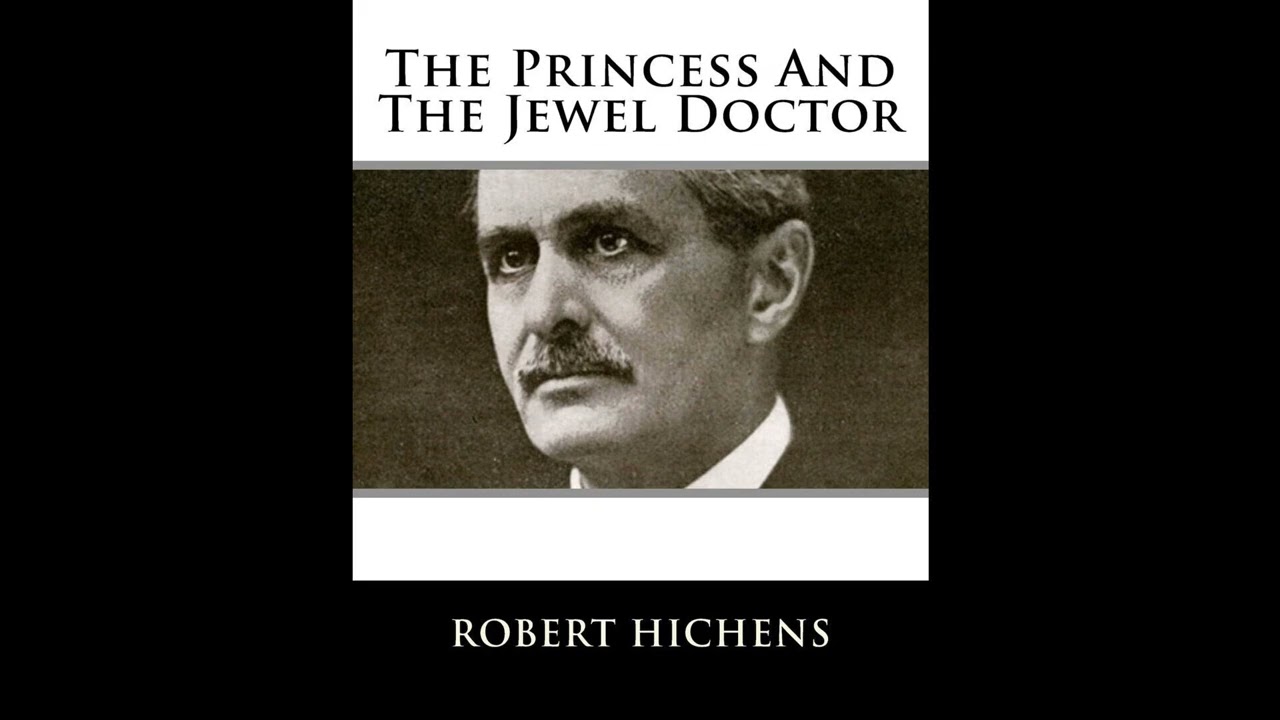
In a literary landscape often dominated by grand social epics or stark psychological studies, Robert Hichens carved a distinct niche, offering narratives that shimmered with an almost hallucinatory quality, often set against sun-drenched, exotic backdrops. The Princess And The Jewel Doctor stands as a superb example of his unique vision, a story that lures the listener into a world where beauty, obsession, and the hidden currents of the human spirit collide. It is a tale that, while echoing the anxieties and fascinations of its own time, resonates powerfully today with its incisive look at identity, the nature of desire, and the often-fragile boundary between rationality and the deeply felt, sometimes inexplicable, beliefs that shape our lives. Listeners seeking a narrative both spellbinding and thought-provoking will find this book an unexpected treasure, a compact yet profound examination of what truly defines us when confronted with the dazzling allure of the artificial. The story unfolds in an unspecified, yet distinctly Eastern-inflected, royal court, a place of ancient customs, veiled opulence, and a pervasive atmosphere of hushed mystery. Here dwells a young princess, a figure of delicate beauty, yet afflicted by an ailment so peculiar, so deeply rooted in her being, that it has baffled every traditional physician and healer in the kingdom. Her condition is inextricably linked to precious stones; she believes, with an unwavering conviction that borders on the uncanny, that her very essence is intertwined with the brilliance and essence of jewels. Her family, desperate and bewildered, finally seeks the help of the renowned "Jewel Doctor," a figure whose reputation precedes him as a man of uncommon insight, a specialist not merely in gems themselves, but in their perceived influence on the human psyche. The Jewel Doctor, a man of scientific temperament and keen observation, arrives at the court, prepared to confront not merely a physical malady, but a deeply entrenched psychological phenomenon. His mission is to unravel the intricate layers of the princess's belief, to distinguish between delusion and a profound, perhaps even mystical, connection to the glittering world she inhabits. The central conflict thus emerges from the clash of their two worlds: her realm of deeply held, almost spiritual conviction in the power of gems, and his methodical, rational approach to understanding and healing. As the doctor begins his observations and subtle interventions, the reader is drawn into a delicate dance of wills and perspectives, where the line between care and coercion, truth and comforting illusion, becomes increasingly blurred, leading to unexpected insights into both characters and the nature of belief itself. Robert Hichens, born in Speldhurst, Kent, England, in 1864, developed a profound interest in writing from an early age, though his initial studies were in music at the London School of Music and the Royal College of Music. This musical sensibility, perhaps, lent his prose a rhythmic quality and a sensitivity to atmospheric detail that became hallmarks of his literary output. He shifted to writing in the late 1880s, gaining early notoriety with The Green Carnation (1894), a thinly veiled satire of Oscar Wilde and the Aesthetic movement which he later regretted. His life took an important turn when he moved to live in Egypt for extended periods, a decision that profoundly influenced his later, more celebrated works. Hichens cultivated friendships with notable literary figures of his era, including Oscar Wilde and Lord Alfred Douglas, placing him firmly within the fin-de-siècle literary scene, though he outlived many of his contemporaries, continuing to write prolifically well into the mid-20th century. His best-known novel, The Garden of Allah (1904), set in North Africa, solidified his reputation as a master of atmospheric storytelling and psychological drama, often concerning individuals confronting their destinies in exotic, challenging landscapes. Other notable works include Bella Donna (1909) and The Way of Ambition (1910). Hichens’ place in the canon is that of a popular and often critically acclaimed author who bridged the gap between the decadent sensibilities of the late Victorian era and the emerging psychological realism of the Edwardian period, remembered particularly for his skill in creating vivid settings and exploring the inner lives of his characters. He passed away in Zurich, Switzerland, in 1950. Within The Princess And The Jewel Doctor, several recurring themes within Hichens' larger body of work come to light. One prominent idea concerns the tension between appearance and reality. The dazzling allure of the jewels and the princess's perceived affliction might mask a deeper, perhaps more mundane or emotionally rooted, struggle. The story suggests that what glitters on the surface is not always the true essence, echoing Hichens’ broader fascination with illusion. Another compelling idea is that of obsession and desire, particularly the way powerful fixations can distort perception and define identity. The princess’s singular focus on gems illustrates how an intense longing, whether for beauty or something more profound, can consume an individual, influencing their every thought and action. Furthermore, the narrative thoughtfully examines the collision of rationality and belief. The Jewel Doctor, a man of methodical intellect, represents the scientific, empirical worldview, while the princess embodies a more subjective, perhaps even mystical, connection to the world, a deep-seated belief system that defies easy explanation. A scene where the doctor attempts to logically explain the geological origins of a sapphire, only to be met by the princess's unwavering conviction in its inherent magic, powerfully illustrates this thematic tension. It highlights the difficulty, and perhaps the futility, of imposing one system of understanding upon another, asking whether truth lies solely in measurable fact or also in deeply felt conviction. The era in which Hichens penned this tale was a fascinating crossroads for Western society. The late nineteenth and early twentieth centuries were marked by an increasing interest in Eastern cultures, often romanticized and seen through a lens of exoticism. Writers and artists of the Aesthetic movement, with whom Hichens had early associations, glorified beauty for its own sake, often finding inspiration in non-Western art and philosophy. This period also saw the nascent development of psychological theories, with figures beginning to propose that many physical ailments had roots in the subconscious mind. The Princess And The Jewel Doctor emerged from this very ferment, a blend of orientalist fantasy, a high regard for aesthetic beauty, and an early, intuitive grappling with psychological concepts. It reflects a world where ancient superstitions were beginning to contend with new scientific explanations, and where the human mind itself was becoming an increasingly fertile, and often mysterious, landscape for literary exploration. Listening to The Princess And The Jewel Doctor as an audiobook offers a singular experience, allowing the story's rich atmosphere to truly envelop the listener. Over several hours of narration, the pacing can build the sense of quiet intrigue within the court, the subtle shifts in the princess's demeanor, and the measured observations of the Jewel Doctor. The vocal performance brings to life the princess’s otherworldly conviction and the doctor’s steady, analytical approach, allowing their contrasting personalities to resonate with greater depth. Dialogue, often hinting at unspoken truths and underlying motivations, gains a dramatic weight when spoken aloud, pulling the listener into the heart of the mystery. The auditory experience enhances the narrative's exotic setting, drawing attention to the hushed sounds of the palace, the rustle of rich fabrics, and the very specific language Hichens uses to describe the glittering stones, making the illusion of the princess’s world all the more palpable and compelling.
Enjoyed The Princess And The Jewel Doctor? A few ways to support us
Audible & Amazon links are affiliate; we may earn a small commission at no extra cost.
About this production
Human narration by a volunteer reader from LibriVox.org, the public-domain audiobook project. LibriVox volunteers record literary works whose copyright has expired in the United States, releasing the resulting recordings into the public domain.
The Princess And The Jewel Doctor by Robert Hichens. The underlying text is in the U.S. public domain. We do not republish any modern copyrighted edition, translation, or commentary.
The 4K cinematic visuals accompanying this audiobook are generated by an AI image model from prompts derived from the source text. No copyrighted photos, paintings, or stock footage are used. AI generation is disclosed on every video on our YouTube channel as required by YouTube's altered/synthetic content policy.
English subtitles are transcribed from the LibriVox recording with OpenAI Whisper. Translations into the 11 other supported languages are produced by Meta's NLLB-200 neural translation model. No human translator's copyrighted translation is used.
Questions about sourcing or rights? See our DMCA & Sourcing policy or contact us.
Enjoyed this audiobook?
If you'd like to own a copy of The Princess And The Jewel Doctor or hear a professionally produced edition, the links below help support free audiobook production at no extra cost to you.
As an Amazon Associate we earn from qualifying purchases. Audible / print links are affiliate.