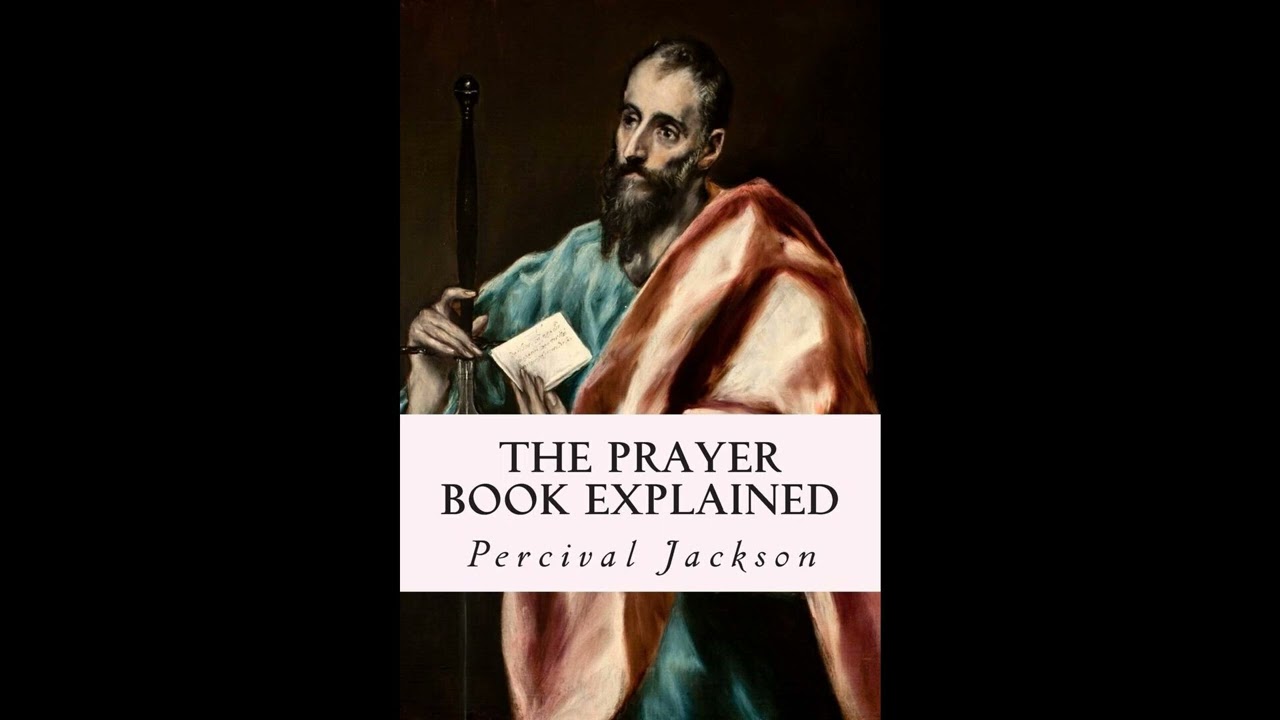
The Prayer Book Explained
For anyone who has ever held a copy of The Book of Common Prayer, whether in a pew or on a shelf, Percival Jackson’s "The Prayer Book Explained" offers more than just elucidation – it provides a profound education in a document that has shaped English spirituality, literature, and culture for centuries. This isn't merely a dry academic commentary; it is an invitation to understand the soul of a foundational text, to grasp the careful thought behind its structure, and to appreciate its enduring power. Jackson’s voice cuts through the perceived complexities, making accessible the historical layers, theological nuances, and practical applications of the Prayer Book, demonstrating why its influence continues to resonate even today, long after its initial compilation. It stands as a vital key for unlocking a shared heritage. Percival Jackson's work unfolds with the careful precision of a seasoned guide leading an attentive student through a venerable edifice. He begins by establishing the historical bedrock upon which the Prayer Book was built, introducing the listener to the tumultuous era of its initial formation. We are shown the crucible of Reformation England, where diverse theological streams converged and diverged, giving rise to the need for a standardized liturgy that could both unite a nation and articulate its evolving faith. Jackson then meticulously dissects the Prayer Book itself, section by section. He walks us through the Daily Offices of Morning and Evening Prayer, revealing the ancient monastic patterns from which they emerged and the theological principles embedded in their rhythms of confession, praise, and petition. He clarifies the purpose and structure of the Litany, demonstrating its role as a communal cry for mercy and guidance. The narrative arc of "The Prayer Book Explained" isn't one of a conventional story with characters and dramatic events, but rather the compelling intellectual arc of unveiling profound meaning. Jackson guides the listener through the calendar of the Christian Year, explaining the significance of each season, its associated scripture readings, and the thematic development woven through its collects and propers. He brings clarity to the occasional services – Baptism, Confirmation, Marriage, Burial of the Dead – by examining their historical development, their theological underpinnings, and their pastoral intent. The "conflict," if one can call it that, is the pervasive misunderstanding or superficial acquaintance with such a weighty document. Jackson takes up the challenge of dispelling assumptions, illuminating obscure references, and presenting the Prayer Book not as an arbitrary collection of ancient rites, but as a coherent and purposeful manual for corporate and private worship, rich with historical echoes and spiritual depth. He moves from the overarching design to the meticulous detail, showing how each phrase and rubric serves a greater liturgical and theological purpose. Percival Jackson, though a figure whose precise dates are not universally recounted in contemporary histories, occupies a significant place among scholars who dedicated their lives to illuminating the profound legacies of religious texts. He was a meticulous expositor, widely respected for his ability to translate complex theological and historical concepts into clear, accessible prose. Jackson belonged to a tradition of thinkers who recognized the enduring value of foundational ecclesiastical documents and dedicated their intellect to ensuring their understanding across generations. His work is characterized by its rigorous scholarship, drawing upon extensive knowledge of patristics, church history, and liturgical development, yet always maintaining a focus on the practical and spiritual application for the common worshipper. Beyond this particular volume, his contributions to the wider field of theological scholarship are recognized for their steady hand and deep insight, helping to cement the intellectual heritage of the institutions he served. Jackson's writing consistently demonstrated a profound reverence for his subject matter, coupled with an unwavering commitment to clarity, marking him as an educator of exceptional caliber whose influence shaped the understanding of countless students and parishioners. One of the central themes permeating "The Prayer Book Explained" is historical continuity, illustrating how the Book of Common Prayer functions as a living link to centuries of Christian tradition. Jackson masterfully shows how seemingly modern rites often contain echoes of ancient liturgical practices, demonstrating, for instance, the evolution of the collects from early Christian prayers and their careful adaptation through the English Reformation. Another prominent theme is theological precision. Jackson reveals the meticulous care with which the language of the Prayer Book was chosen, not merely for poetic effect, but to articulate specific doctrinal positions and avoid theological ambiguities. He might point to the careful wording of the Baptismal Service, showing how it balances concepts of grace, human agency, and the covenantal relationship with God. A third theme is liturgical order and beauty. Jackson consistently highlights how the structure of the Prayer Book—its daily and weekly cycles, its arrangement of prayers, lessons, and exhortations—is designed not only for coherence but also to cultivate an atmosphere of reverence and spiritual uplift. He reveals how the very rhythm and flow of Morning Prayer, with its progression from confession to absolution, then to praise and intercession, forms a spiritual discipline that shapes the worshipper's inner life. This illuminating text likely emerged during a period when understanding and preserving religious heritage was particularly vital, perhaps in the late nineteenth or early twentieth century. This era saw a renewed scholarly interest in the historical development of religious practices and texts, often in response to evolving theological thought or broader cultural shifts. As societies modernized and traditional forms of worship faced scrutiny or adaptation, there was a significant cultural impetus to explain the origins and enduring relevance of foundational documents like the Prayer Book. Such a work would have served not only as an academic resource but also as a guide for clergy and laity seeking a deeper appreciation for their liturgical roots, amidst debates about ritualism or the proper interpretation of Christian doctrine. It was a time when the intellectual rigor applied to faith questions was valued, and scholarly works aiming to make complex historical and theological subjects accessible to a wider educated public found a receptive audience. Listening to "The Prayer Book Explained" as an audiobook transforms the experience of engaging with such a foundational text. The narrator’s measured pace and thoughtful delivery provide the ideal atmosphere for absorbing complex historical details and theological insights, allowing the listener to truly process Jackson's careful explanations without the visual distraction of footnotes or cross-references. The run length, several hours in total, is perfectly suited for extended periods of contemplative listening, whether during quiet moments at home, on a walk, or during a long commute. The sustained, guiding voice of the narration encourages a deeper immersion into the subject matter, making the intricate logic of the Prayer Book’s construction and the rich layers of its history feel immediate and understandable. It allows the listener to hear the rhythm and flow of Jackson's arguments, much as one might appreciate the cadences of the prayers themselves, fostering a unique connection to the material and its profound cultural and spiritual resonance.
Enjoyed The Prayer Book Explained? A few ways to support us
Audible & Amazon links are affiliate; we may earn a small commission at no extra cost.
About this production
Human narration by a volunteer reader from LibriVox.org, the public-domain audiobook project. LibriVox volunteers record literary works whose copyright has expired in the United States, releasing the resulting recordings into the public domain.
The Prayer Book Explained by Percival Jackson. The underlying text is in the U.S. public domain. We do not republish any modern copyrighted edition, translation, or commentary.
The 4K cinematic visuals accompanying this audiobook are generated by an AI image model from prompts derived from the source text. No copyrighted photos, paintings, or stock footage are used. AI generation is disclosed on every video on our YouTube channel as required by YouTube's altered/synthetic content policy.
English subtitles are transcribed from the LibriVox recording with OpenAI Whisper. Translations into the 11 other supported languages are produced by Meta's NLLB-200 neural translation model. No human translator's copyrighted translation is used.
Questions about sourcing or rights? See our DMCA & Sourcing policy or contact us.
Enjoyed this audiobook?
If you'd like to own a copy of The Prayer Book Explained or hear a professionally produced edition, the links below help support free audiobook production at no extra cost to you.
As an Amazon Associate we earn from qualifying purchases. Audible / print links are affiliate.
More Audiobooks
Philosophy and Religion: Six Lectures Delivered at Cambridge
Wisdom of the East - Buddhist Psalms - Translated from the Japanese of Shinran Shoni- Full Audiobook
Parochial & Plain Sermons, Volume 8
Parochial and plain sermons Volume 7